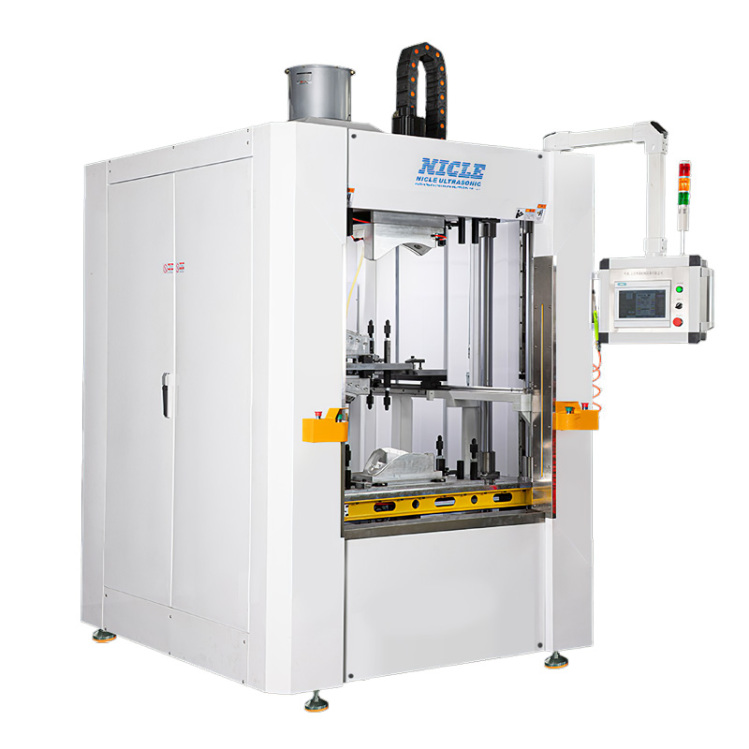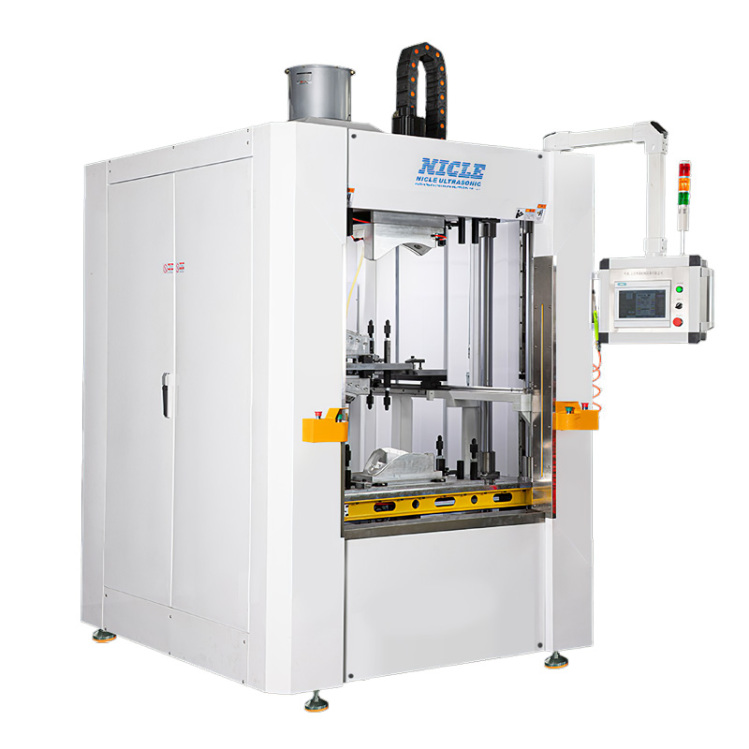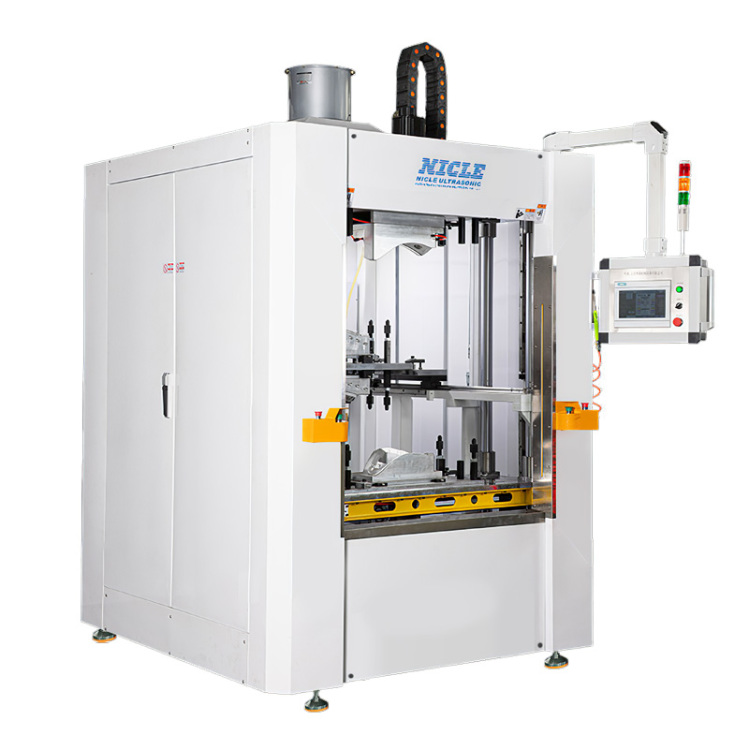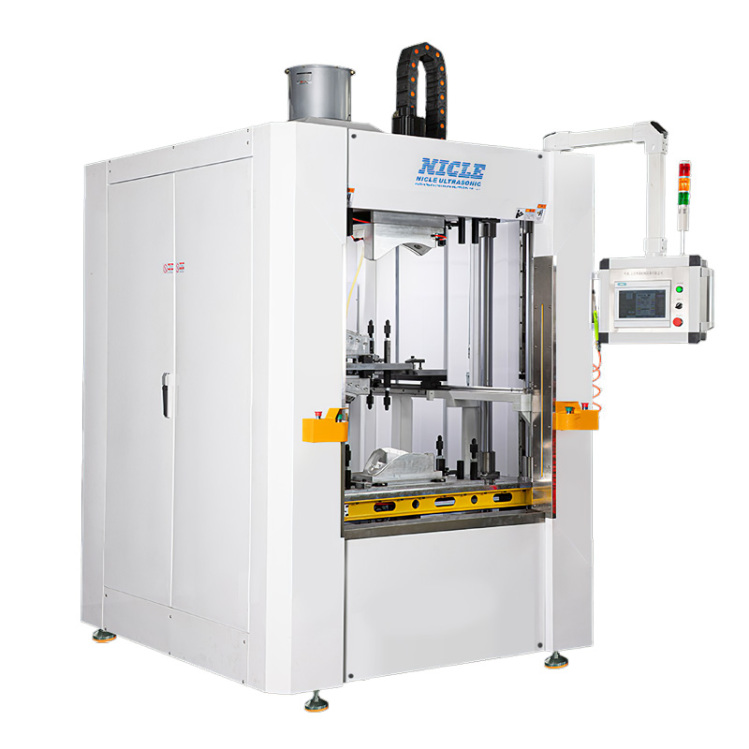

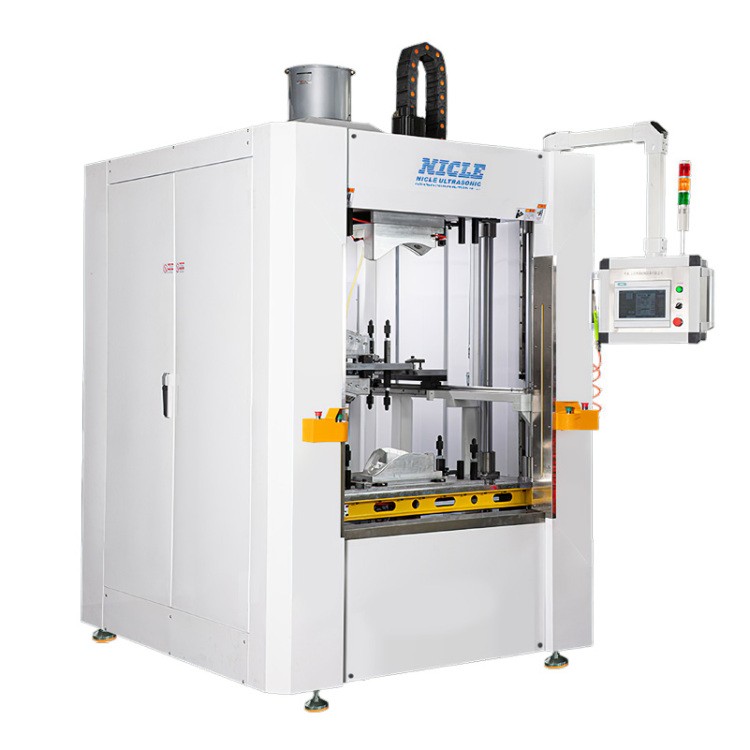

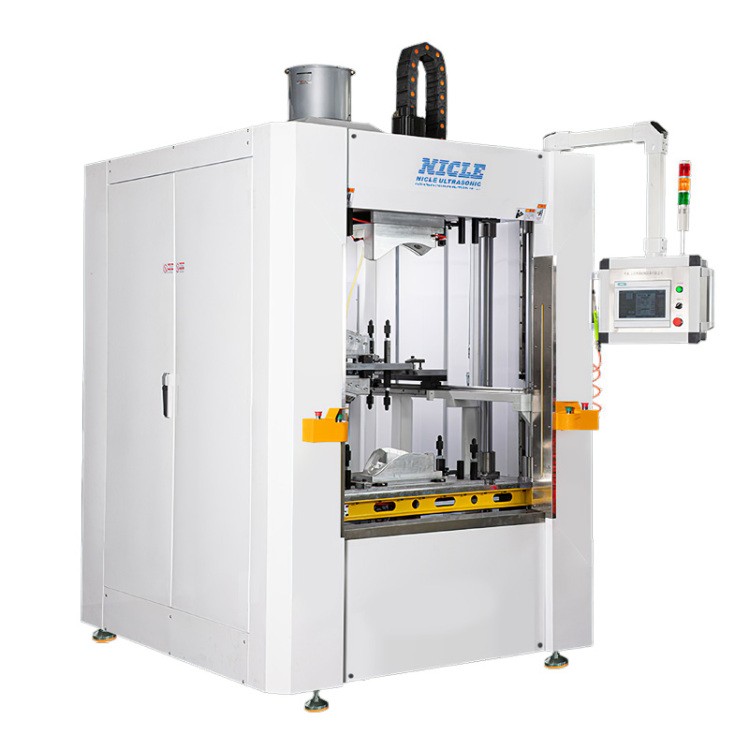












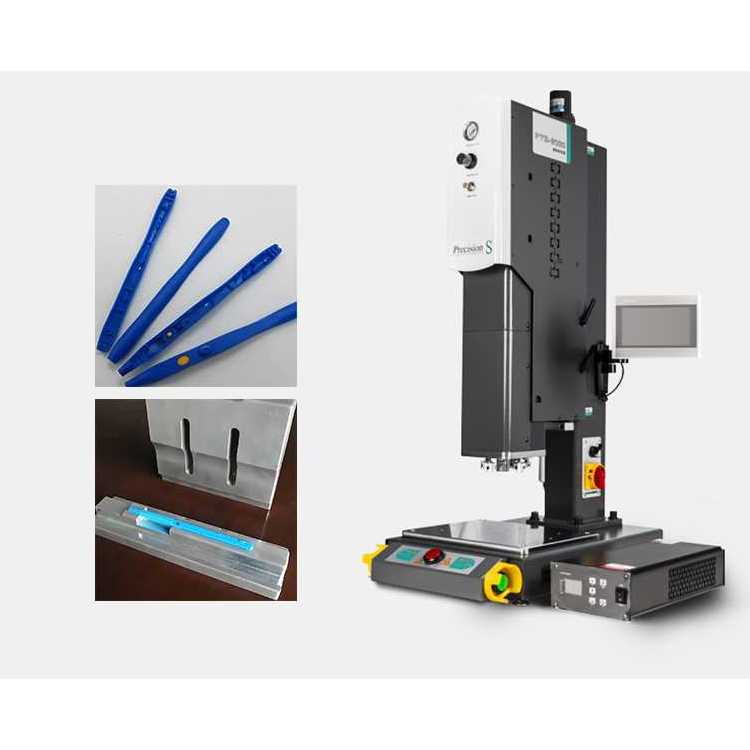
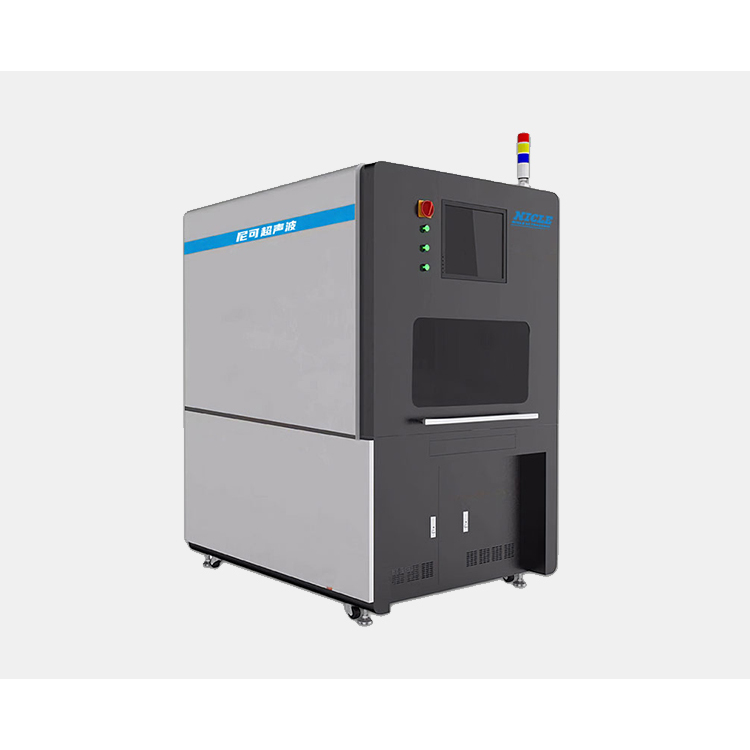
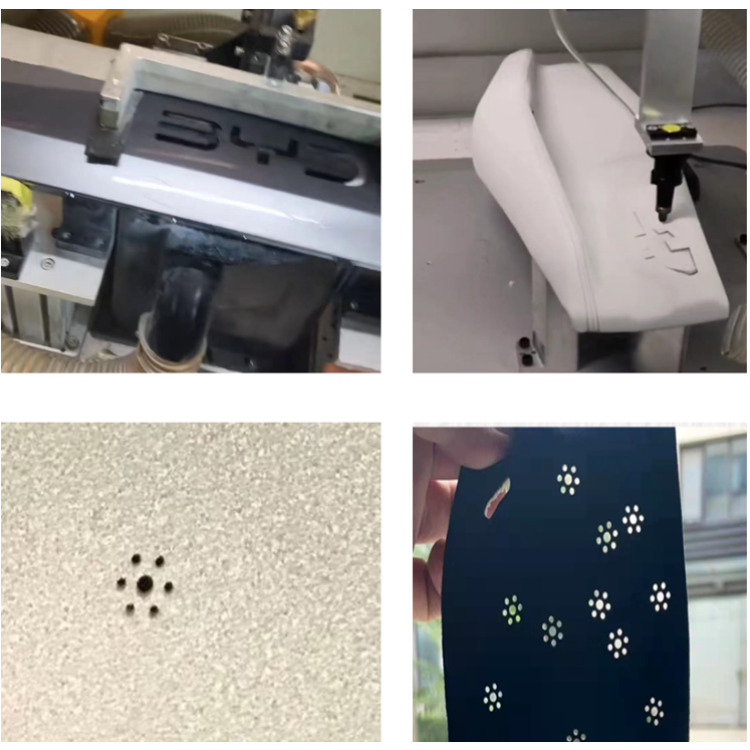
Servo heated plate welding machine working principle
The hot plate welder primarily welds plastic parts through temperature-controlled heating plates. During welding, the heating plate is placed between two plastic components. As the workpiece approaches the heating plate, the plastic begins to melt. After a predetermined heating time, the surface plastic of the workpiece will reach a certain degree of melting. At this point, the workpiece will separate from both sides, the heating plate is removed, and then the two workpieces will be joined together. Once a specific welding time and depth are achieved, the entire welding process is complete.
One, Advantages of Servo Hot Plate Welding Machines:
1. Innovative servo drive technology and an s-tvp closed-loop process control system deliver an unprecedented user experience.
2. Say goodbye to the broad control of traditional hot plate welding machines and enter the new era of precise hot plate welding.
Welding surfaces allow for plastic deformation compensation to ensure welding strength.
4. Welding processes can be adjusted according to the needs of various materials.
5. Drive methods can be pneumatic, hydraulic, or servo motor, depending on the size of the equipment.
6. High equipment stability ensures consistent welding results after processing and precise workpiece dimensions. Parameters such as welding temperature, heating time, cooling time, heating depth, welding depth, pressure, and switching time are adjustable.
7. Smoothly and rapidly exit the hot forging die within a short period
8. The heating plate, upper clamp, and lower clamp of the hot forging die are designed as a separate assembly part for easy installation and handling.
9. Principle of Operation for Imported Hot Plate Materials
Section 2: Servo Heat Plate Welding Machine Performance:
1. High work efficiency
2. The welding machine boasts high strength and excellent performance.
3. Equipped with automatic control technology, operation is simple and straightforward.
4. The moving parts are driven by servo, ensuring smooth, accurate, and efficient operation.
5. Pollution-free, waste-free, and more eco-friendly operations
Section 3: Servo Heat Plate Welding Machine Equipment Specifications:
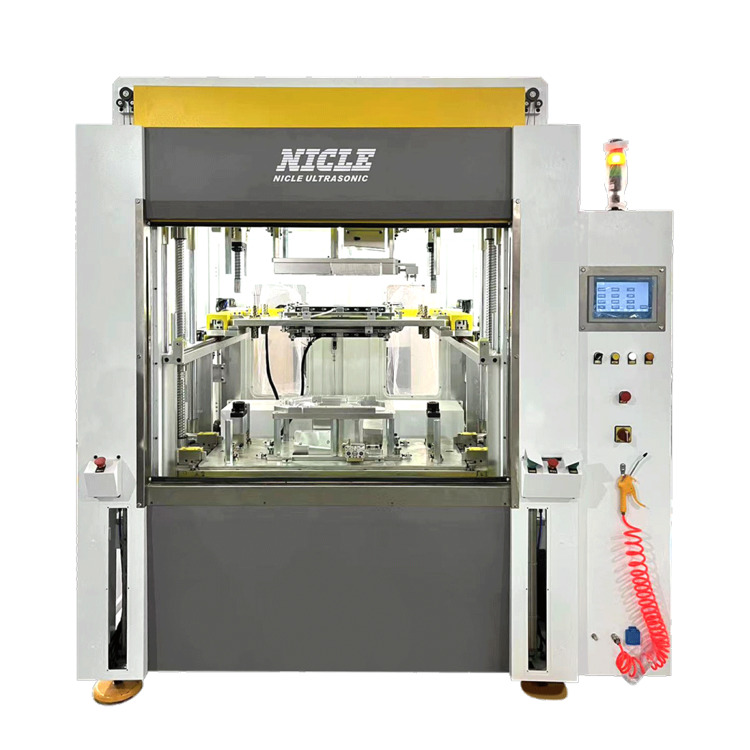
1. Based on the hot plate unit
2. Hot plate welders can be either vertical or parallel. Hot plate welding can be categorized as horizontal or lateral, meaning horizontal hot plate welders and horizontal hot plate welders.
3. The size of the hot plate welder depends on the size of the workpiece. Depending on the equipment size, the driving method can be pneumatic, hydraulic, or servo motor. In other words, pneumatic hot plate welder and hydraulic hot plate welder.
4. Options include semi-automatic or fully automatic welding methods, as per the welding process requirements. The equipment boasts excellent stability, consistent welding results after processing, and highly accurate workpiece dimensions. Adjustable parameters include welding temperature, heating time, cooling time, heating depth, welding depth, pressure, and switching time. Additional optional welding parameters can also be adjusted. For equipment with horizontal hot plate design, the hot plate can be rotated 90° for cleaning.