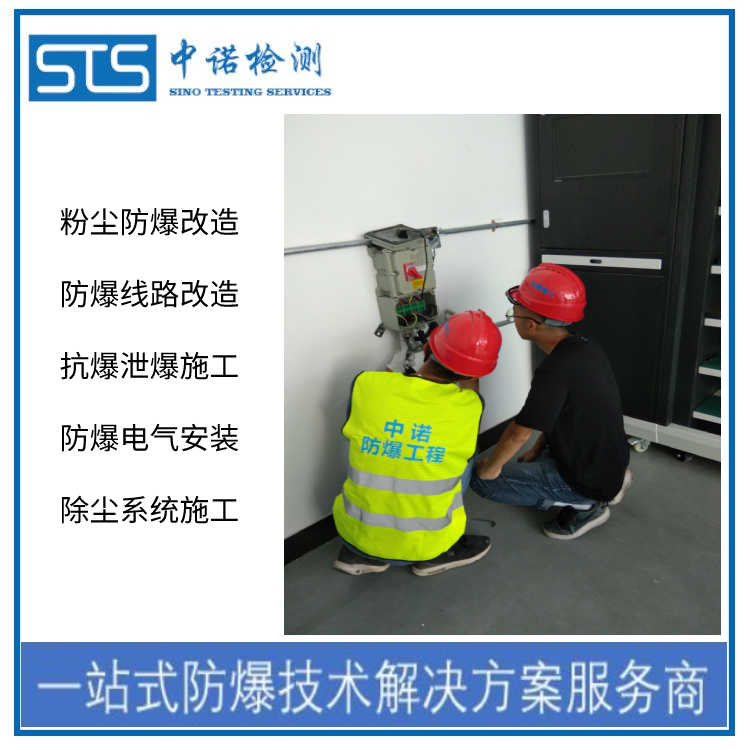

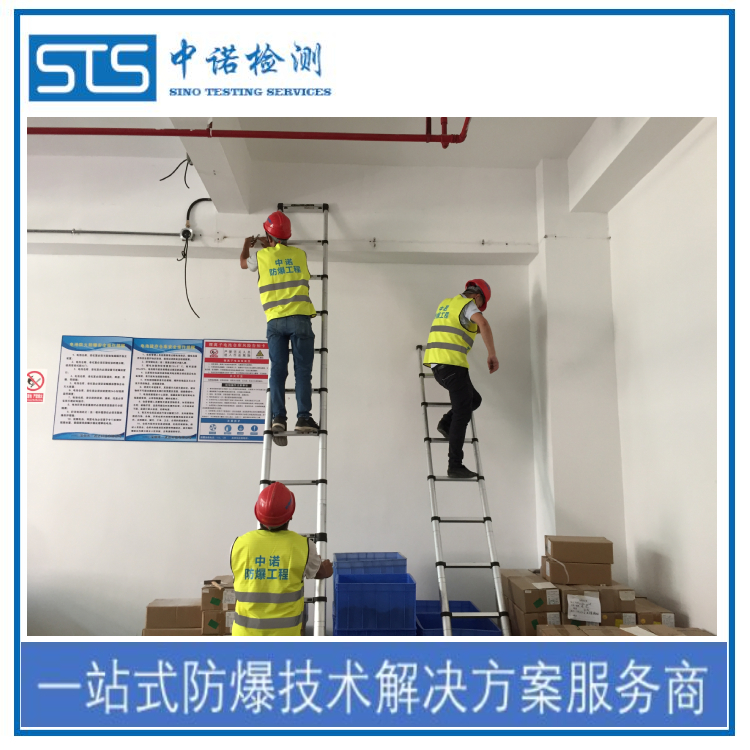
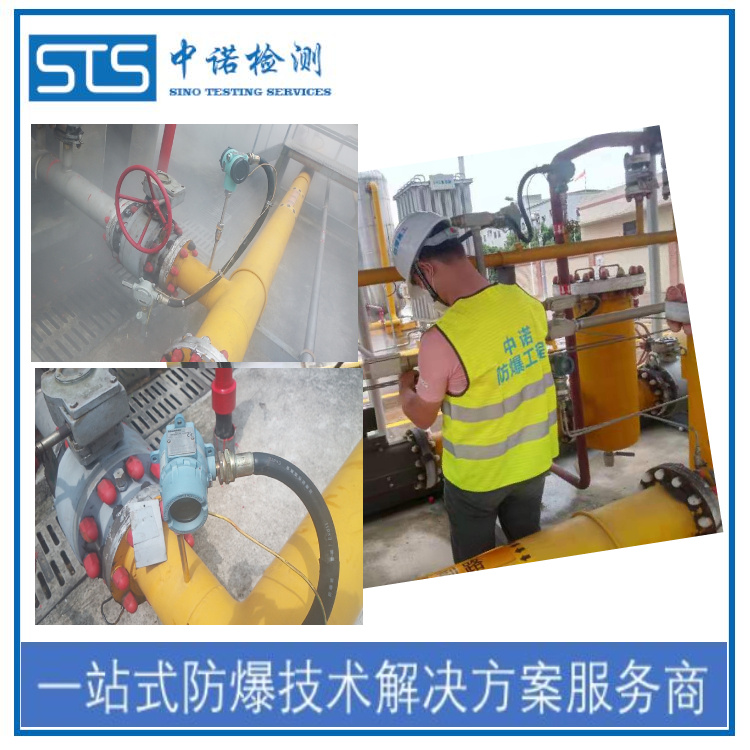



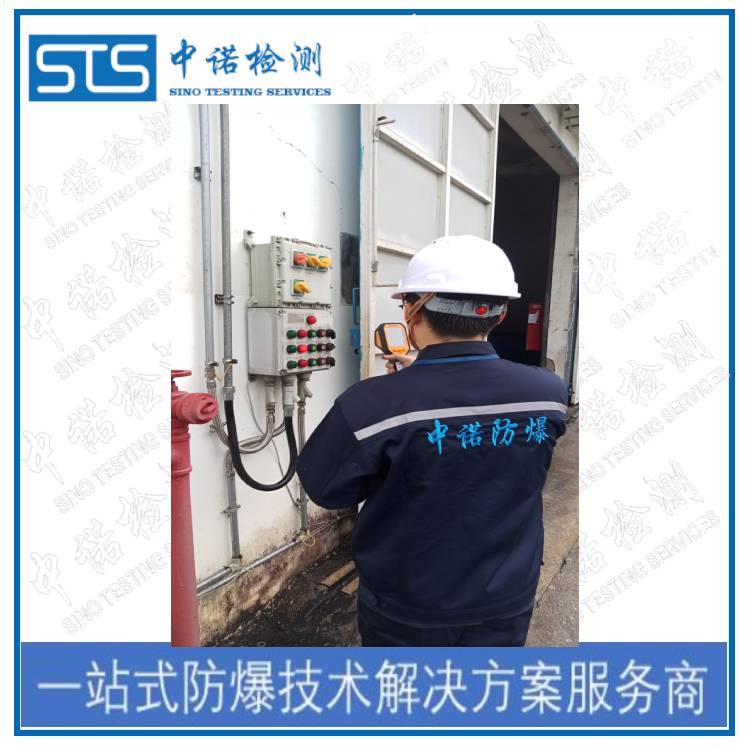








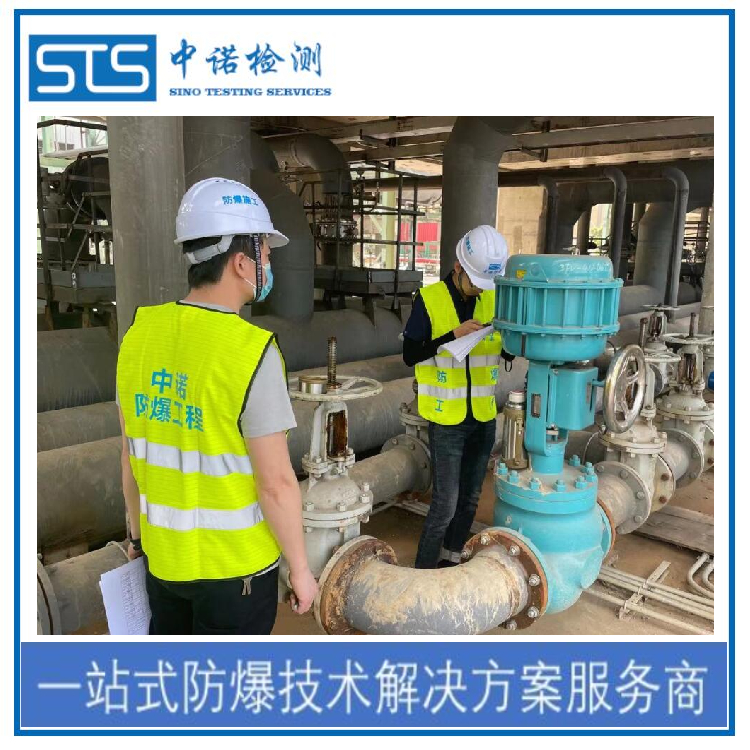
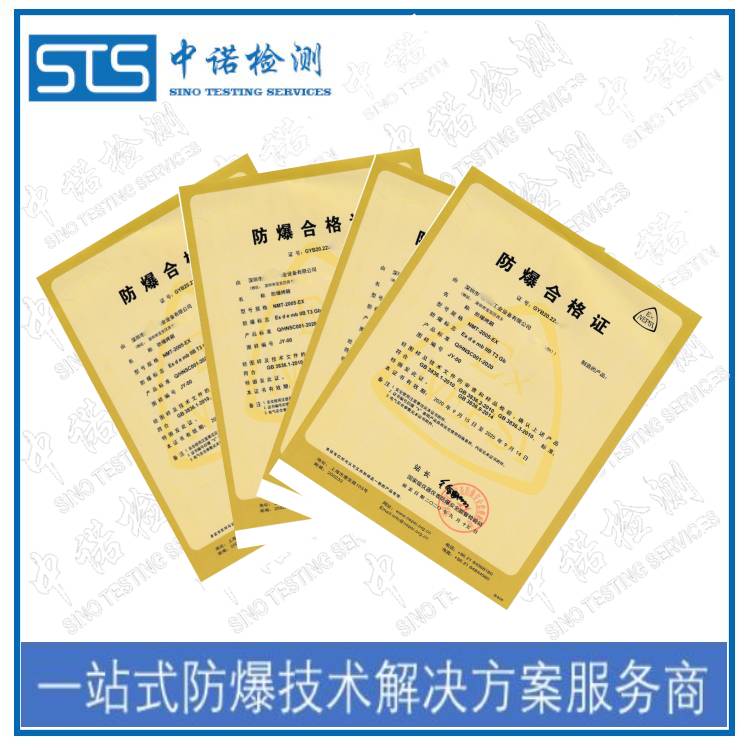
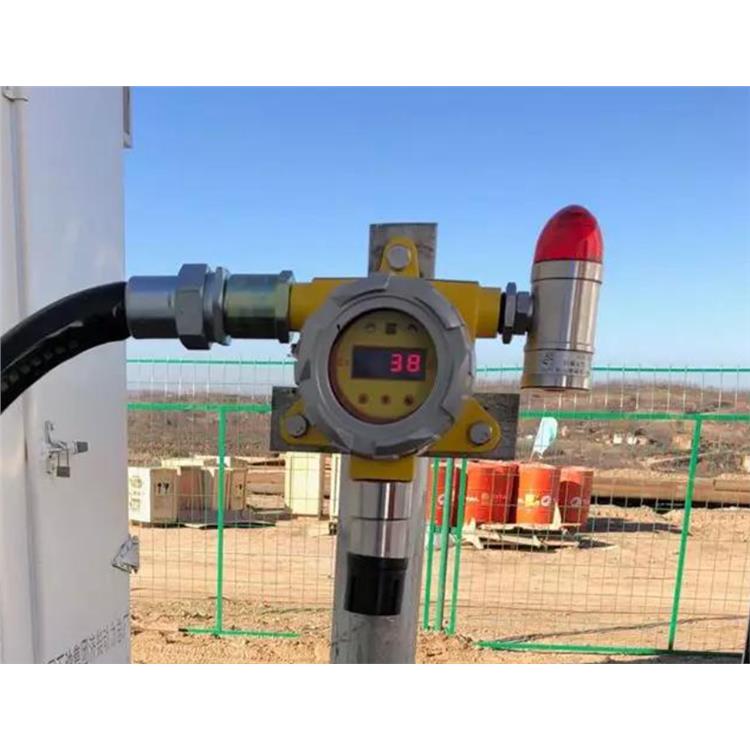
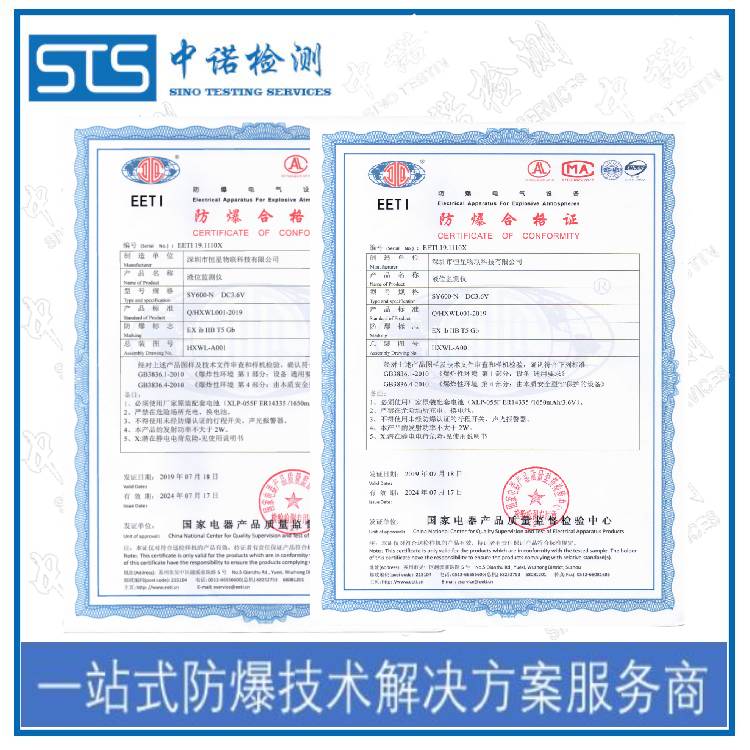
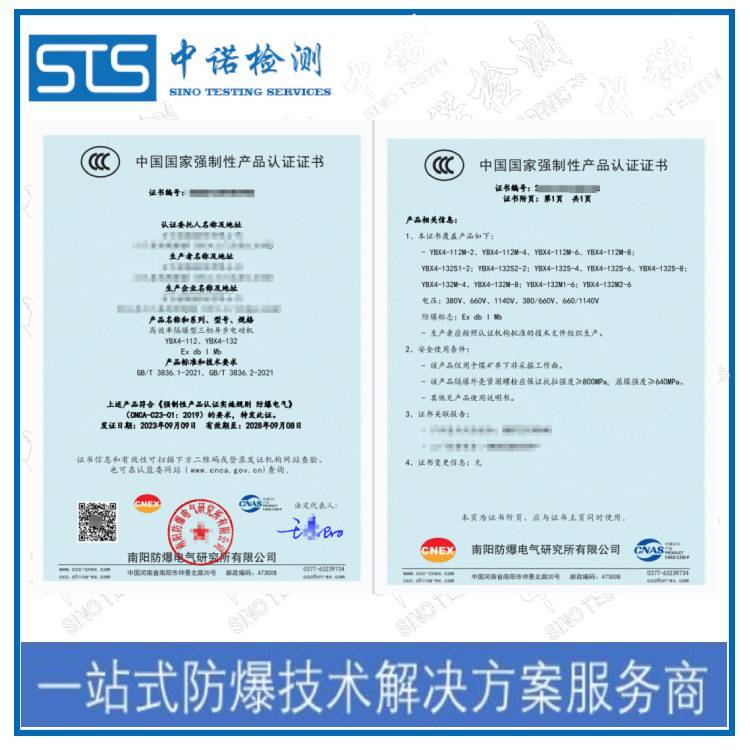

Shenzhen Zhongnuo Testing Technology Co., Ltd. is based in South China, offering on-site explosion-proof construction, safety inspections, renovations, project acceptance, and explosion-proof installation services. We are well-versed in explosion-proof construction standards, with experienced construction teams and a wealth of practical experience. We have served major corporations such as PetroChina, LG, Hanlan Environment, BOE Technology Group, and Sinovac Biotech, receiving consistent praise and trust from our clients!
Equipment grounding in explosive environments should comply with the following regulations (shared by Shenzhen ZhongNuo Testing Technology Co., Ltd.)
In accordance with the relevant provisions of the current standard "Code for Grounding Design of AC Electrical Installations" GB/T50065, the following parts that do not require grounding should still be grounded in explosive environments:
1) Equipment with normal non-electrified metal enclosures, rated for alternating current (AC) voltages below 1000V and direct current (DC) voltages below 1500V, on poor conductive ground surfaces.
2) In dry conditions, equipment with alternating current rated voltage of 127V or less and direct current voltage of 110V or less typically has a metal housing that is not usually charged.
3) Equipment installed on a grounded metal structure.
(2) In explosive hazardous environments, the exposed conductive parts of the equipment should be reliably grounded. All equipment within explosive zones 0, 20, and 21, as well as other equipment in zones 2 and 22 excluding lighting fixtures, should use a dedicated grounding wire. If this grounding wire is installed in the same protective conduit as the phase wire, it must have insulation equal to that of the phase wire. Lighting fixtures within explosive zones 2 and 22 can utilize a metal piping system with a reliable electrical connection as a grounding wire, but not a pipeline for conveying substances.
(3) In different directions of the slope in the explosion hazard area, the grounding main should connect to the grounding body at least twice.
Shenzhen Zhongnuo Testing Technology Co., Ltd. offers explosion-proof construction service in the field of:
Explosive gas environments and hazardous areas with explosive or flammable dust exist in various industries and fields, including petrochemicals, metal smelting, fine chemicals, petrochemical ground facilities (such as gas stations, refueling stations, and petrochemical storage and transportation), new energy, special equipment, nuclear power, tunnels, grain processing, wood processing, metal component manufacturing, environmental protection engineering, and more. Ensuring explosion-proof safety in these dangerous areas safeguards the防爆 safety of hazardous explosive sites for both our and the national economy's development.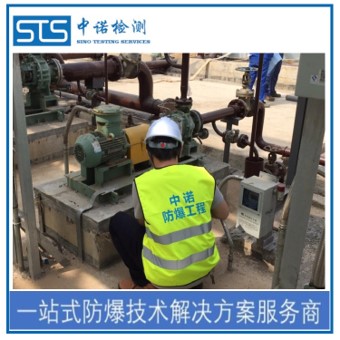
Basic Requirements for Explosion-Proof Electrical Installations in Hazardous Areas (Shared by Shenzhen ZhongNuo Testing Technology Co., Ltd.)
1. Oil-immersed equipment should be used under conditions of no vibration, no inclination, and fixed installation.
2. When using non-explosion-proof equipment for mechanical transmission in partition walls, the following regulations shall be observed:
The room housing electrical equipment should be separated from the explosive hazard area by a solid wall made of non-combustible material.
(2) Transmission shafts passing through partition walls should be sealed with gland packing or an equivalent sealing method.
(3) The exit of the electrical equipment room should lead to an environment free of explosive hazard areas.
(4) When the room where the equipment is installed must be connected to an explosive environment, the explosive environment should be maintained at a positive pressure relative to it.
3. Electrical wiring and equipment in explosive environments, excluding intrinsic safety circuits, should be equipped with overcurrent, short-circuit, and grounding protection. Overcurrent protection is not required for electrical equipment that cannot experience overloading. Motors in explosive environments should be equipped with phase failure protection in addition to the necessary protection as required by current standards. If the automatic shutdown of electrical equipment could pose a greater risk than the ignition hazard, an alarm device should be used instead of the automatic shutdown device.
4. In emergency situations, outside of hazardous areas, measures should be taken at suitable locations or sites to disconnect the power to the equipment in the hazardous area. Continuous operating equipment should not be included in the emergency shutdown circuit and should be installed on a separate circuit to prevent the occurrence of additional hazards.
5. The design of substation, distribution station, and control room shall comply with the following regulations:
Transformer stations, distribution stations (including distribution rooms, etc.), and control rooms should be located outside of explosive gas environments. When it is a pressurized room, they can be arranged within Zones 1 and 2.
(2) For explosive gas atmospheres heavier than air, the equipment floor of electrical and instrumentation in substations, distribution stations, and control rooms located in the additional 2 zone of the explosion hazard area should be elevated 0.6 meters above the external ground level.
Basic Knowledge and Requirements for Cable Usage in Explosion-Proof Construction Sites (Shared by Shenzhen ZhongNuo Testing Technology Co., Ltd.)
Installation methods for electrical wiring in explosive gas environments can be divided into cable wiring and conduit wiring methods.
Note: The installation of inherently safe circuits does not have to comply with the provisions of this article.
7.1 General Provisions
7.2 Electrical wiring should be installed in areas with lower explosion hazards or at a greater distance from the source of release, avoiding locations prone to mechanical damage, vibration, corrosion, dust accumulation, and those with hazardous temperatures. When avoidance is not possible, preventive measures should be taken.
7.3 The selected low-voltage cables or insulated conductors must have a rated voltage higher than the working voltage of the line and not less than 500V. Insulated conductors must be laid within conduits.
7.4 Prohibition of overhead lines with voltage of 10kV or below to cross explosive gas environments; the horizontal distance between overhead lines and explosive gas environments should not be less than 1.1 times the height of the pole tower.
7.5 Cables and their accessories shall be installed in such a position as to prevent them from being damaged by external mechanical forces, corrosion, or chemical influences (such as the effects of solvents), as well as from the effects of high temperatures (also see 6.1.2.4.4 for this safety circuit). If such conditions cannot be avoided, protective measures shall be taken during installation, such as using conduits or selecting appropriate cable types (armored cables, shielded wires, seamless aluminum sheathed cables, mineral insulated metal sheathed cables, or semi-rigid sheathed cables, etc., to minimize damage).
7.6 Single-core wire without a sheath should not be used for conductive wiring unless installed within a distribution board, housing, or conduit system.
explosion-proof electrical modifications for hazardous areas and site-based explosion-proof construction consulting services - Shenzhen ZhongNuo Testing Technology Co., Ltd.
WeChat Official Account

Scan to follow Official Account