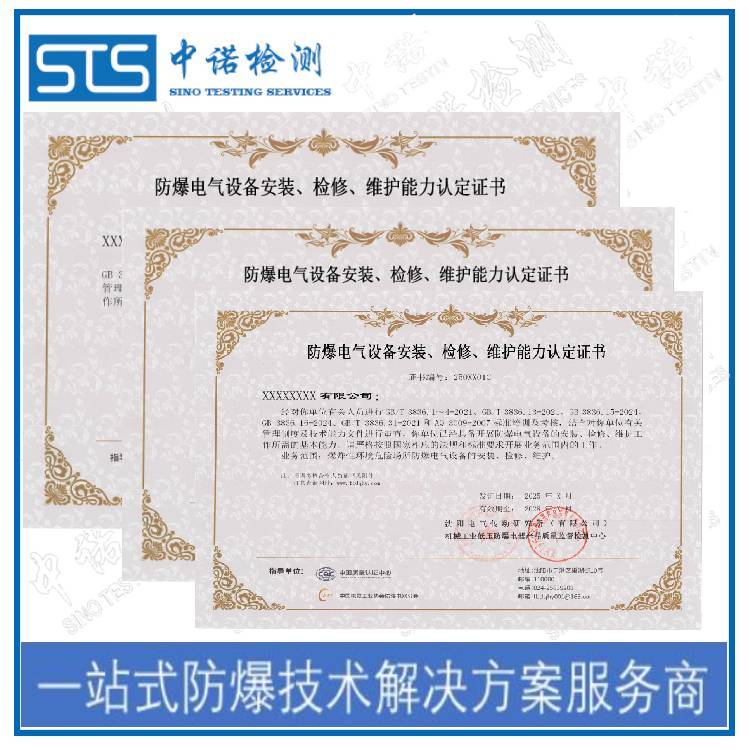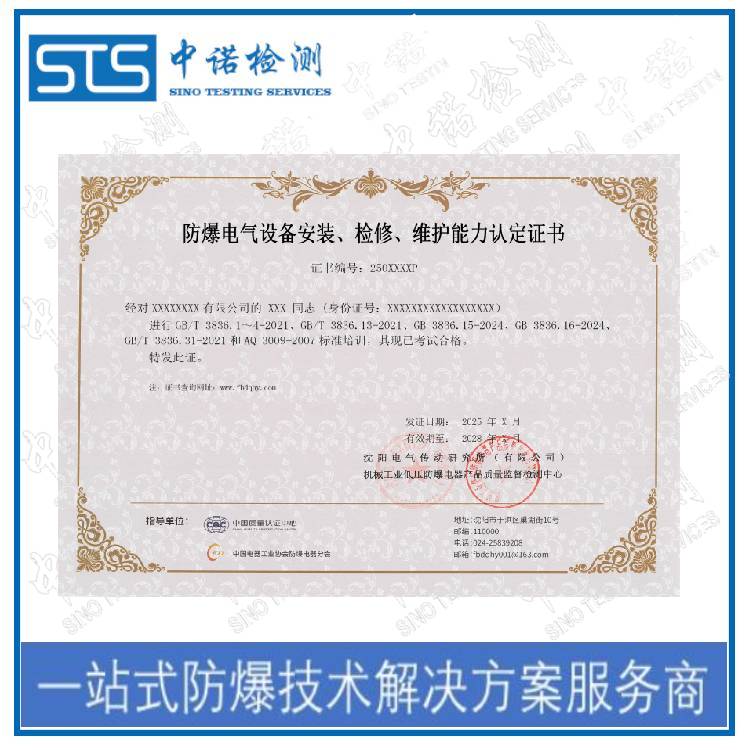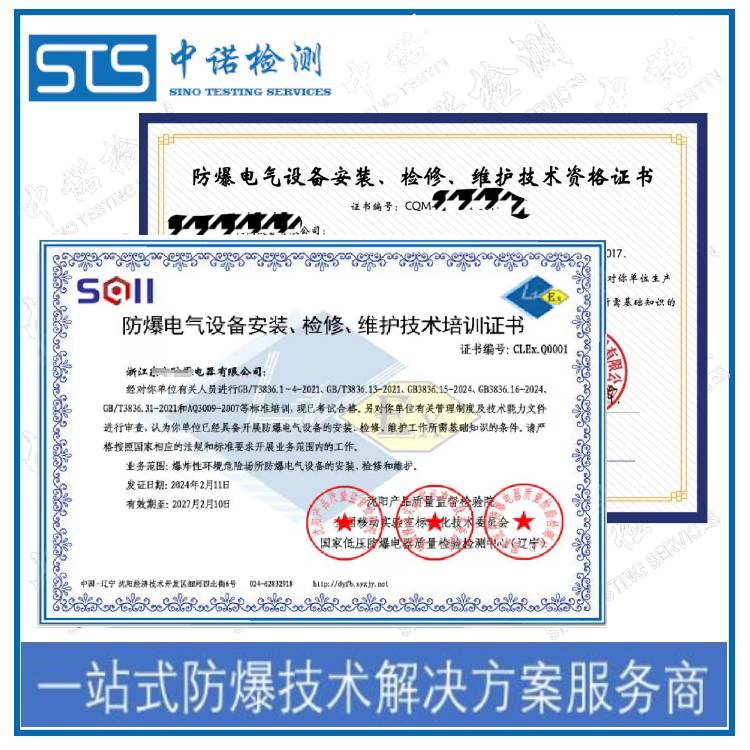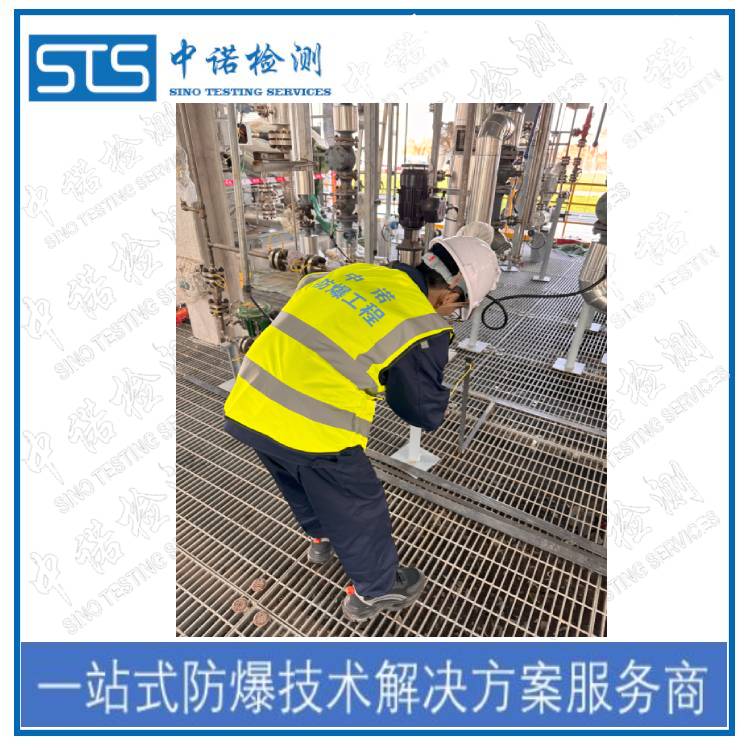
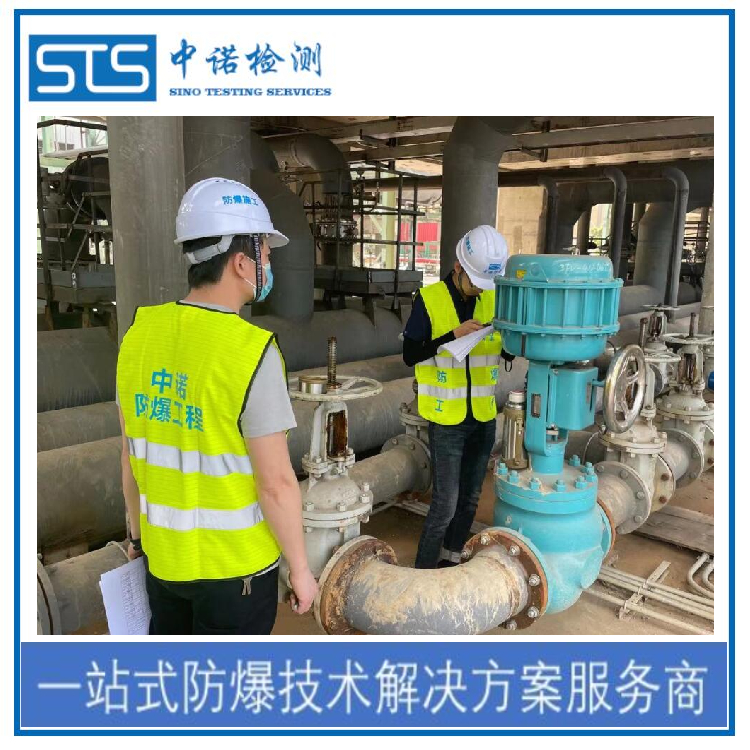


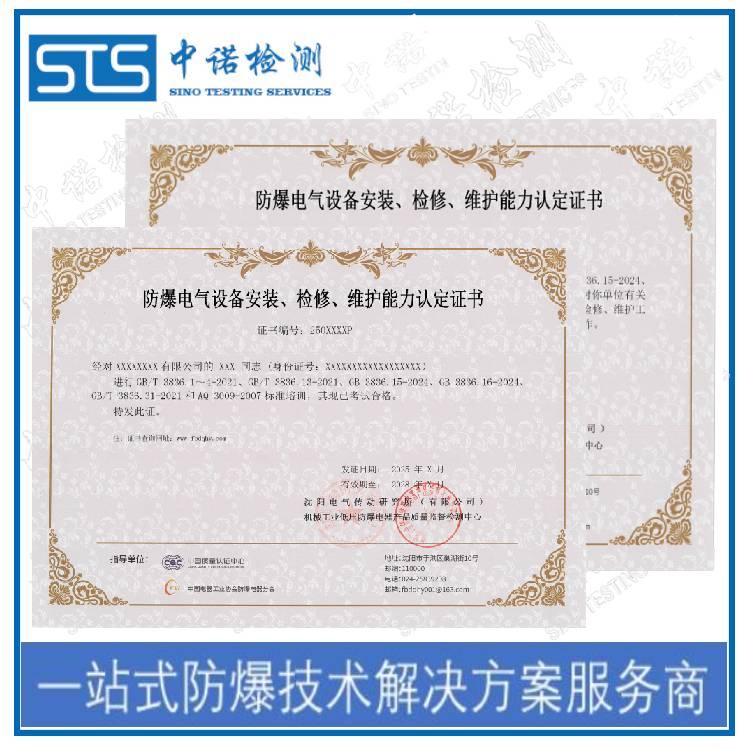
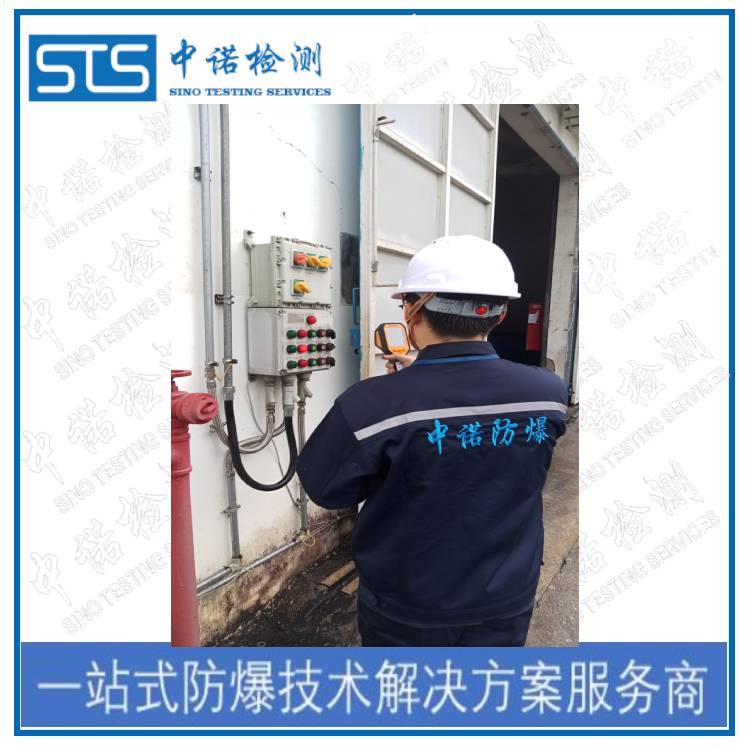
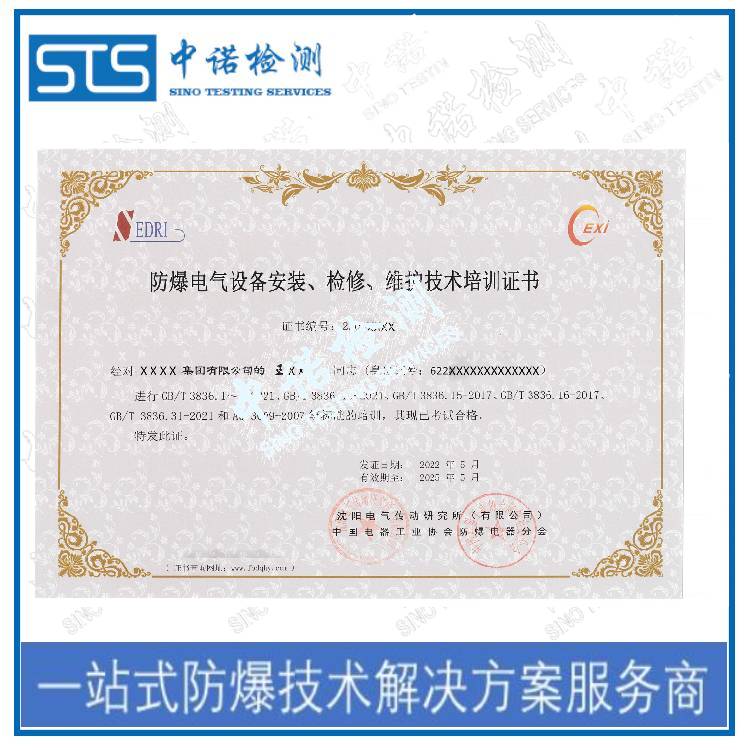
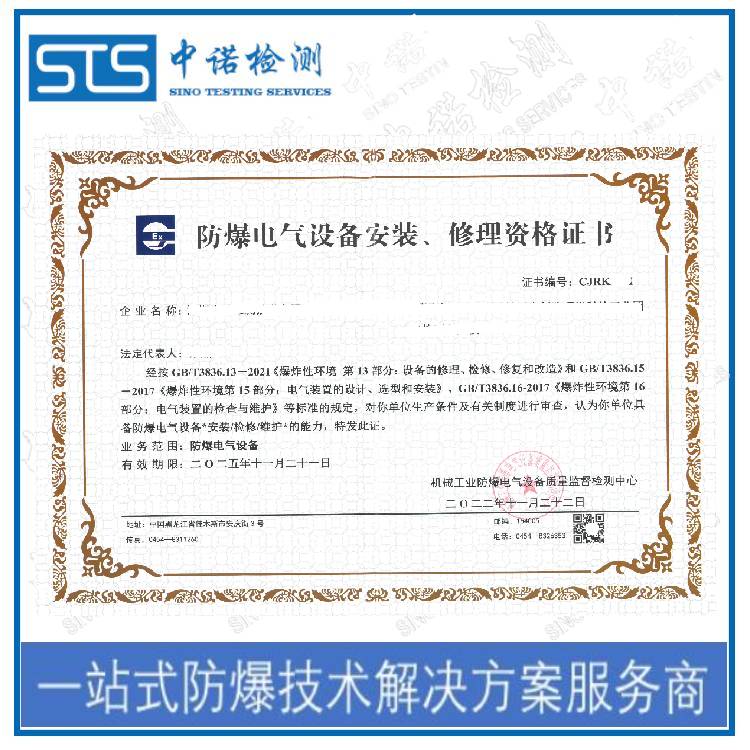
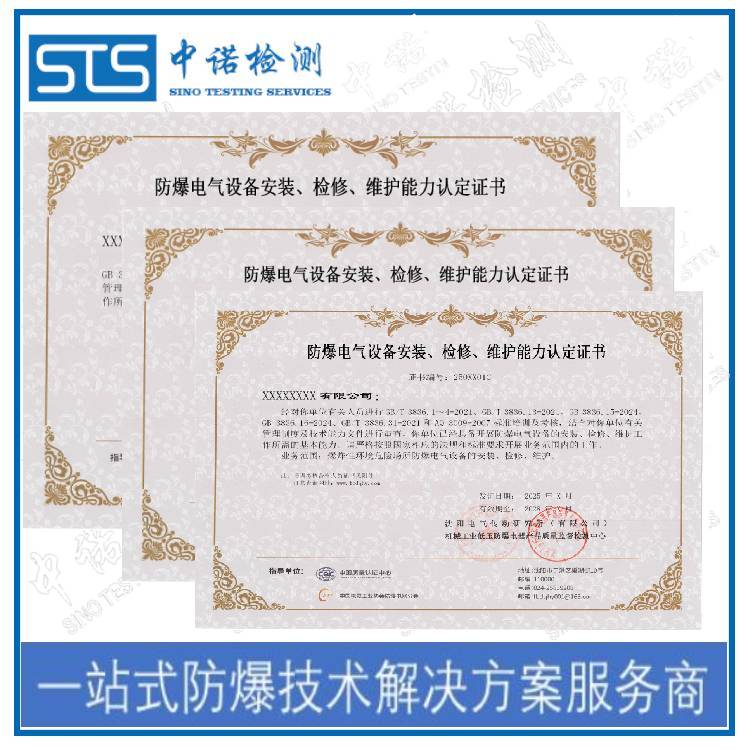





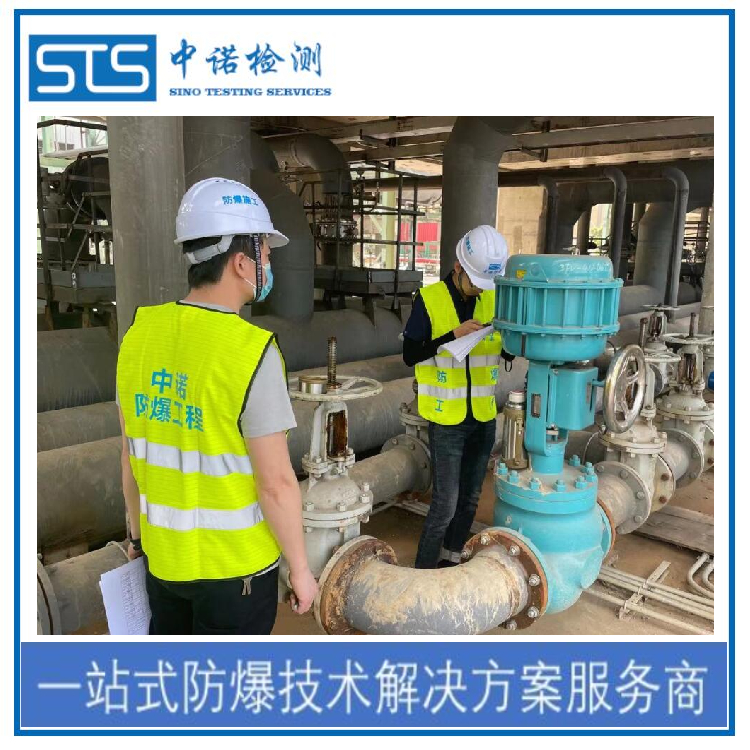
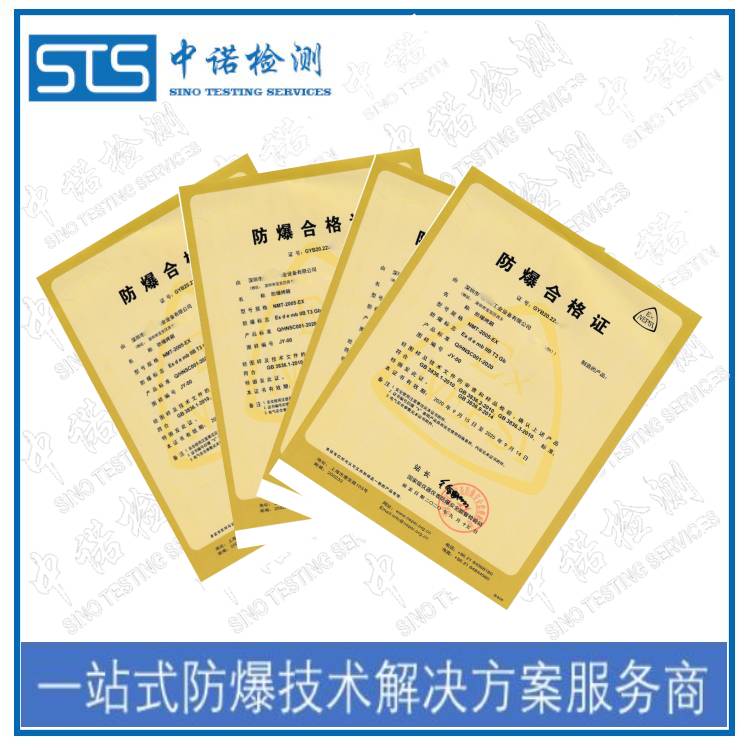
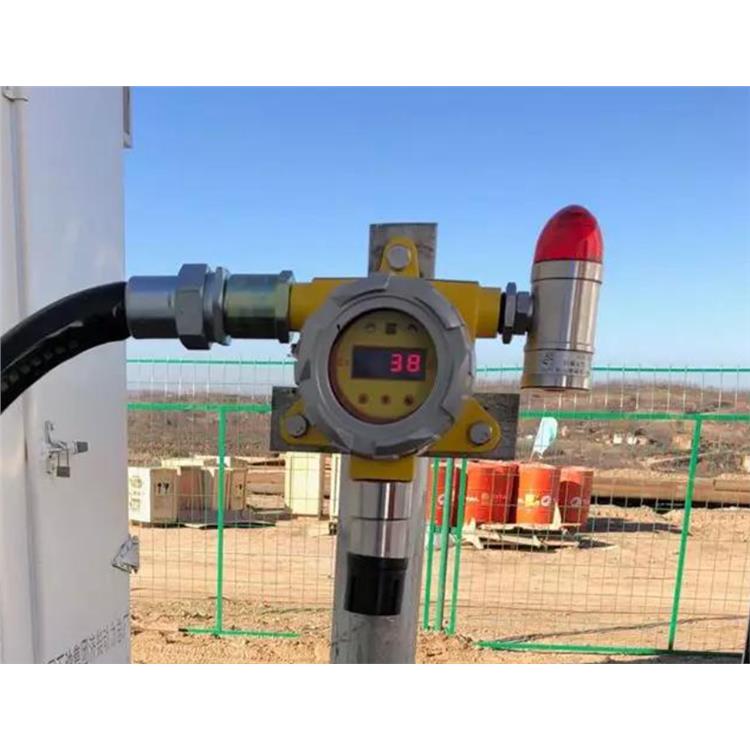
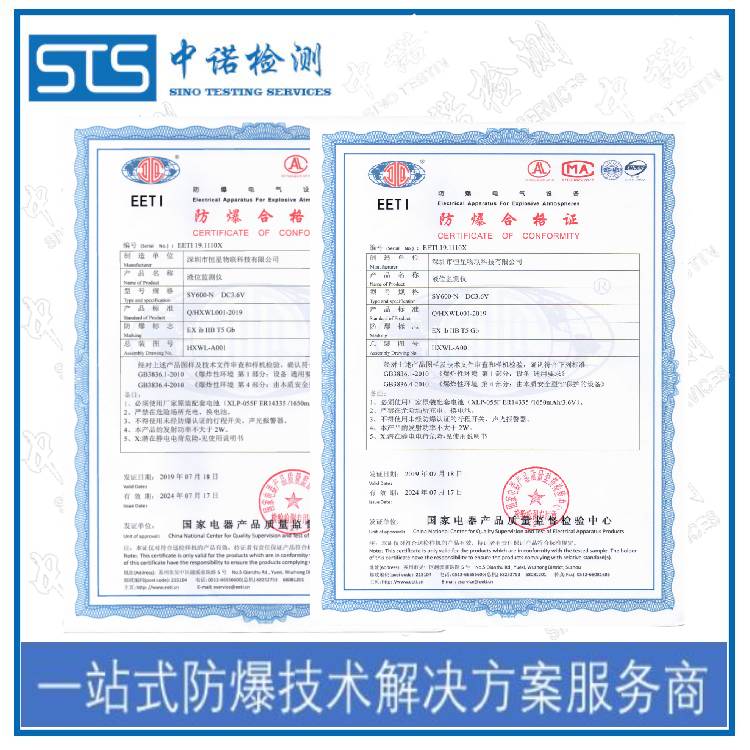
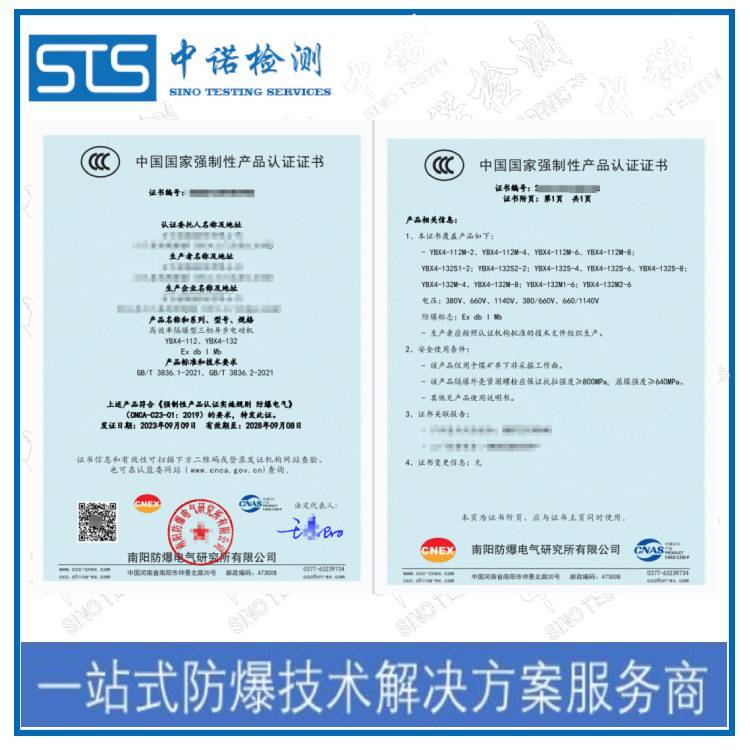

Shenzhen Zhongnuo Testing Technology Co., Ltd. offers on-site explosion-proof electrical inspection, explosion-proof project acceptance services, and can provide explosion-proof rectification and construction services for non-compliant items.
Safety Equipment Construction Completion Inspection Report Application Organization:
It's widely known that after electrical construction in explosive hazard areas is completed, a third-party organization must conduct a final inspection. Only after passing the inspection can the facility be put into use. Additionally, beyond the company's regular checks, a facility with explosion-proof inspection qualifications must perform regular inspections every three years.
Here, we first share what the main content of the acceptance inspection after completion includes?
1. Inspect the explosion-proof electrical equipment for the presence of a label, Ex marking, and clear identification of the type, class, and group of the explosion-proof equipment. Does the label indicate the explosion-proof certificate number issued by the inspection unit?
2. Inspect the type, class, group, environmental conditions, and special markings of explosion-proof electrical equipment to ensure compliance with regulations.
3. Inspect the shell of explosion-proof electrical equipment for cracks or damage; ensure the paint is intact, that the junction box cover is securely fastened, and that the fixing bolts and anti-loosening devices are in place.
4. Ensure that oil-filled electrical equipment is checked for oil leakage and seepage, and the oil level should meet the specified requirements.
5. Ventilation and exhaust systems of explosion-proof electrical equipment with positive pressure should be unobstructed, connections should be correct, and the installation positions of the inlets and outlets should meet the requirements.
6. Are the extra entry ports of explosion-proof electrical equipment properly sealed in accordance with regulations?
7. Installation of sealed or insulated devices in electrical circuits shall comply with regulations.
8. The wiring project for intrinsic safety explosion-proof electrical equipment shall comply with design requirements for routing and elevation; the lines should be marked with a sky blue sign.
9. Grounding or neutral connection of explosion-proof electrical equipment, as well as static electricity grounding, should meet design requirements and be firm and reliable.
10. Upon completion and acceptance, submit the relevant documents and materials, including the manufacturer's product user manual, test records, qualification certificates, and installation drawings, as well as other technical files.
11. At the time of inspection, the following measurement records should also be submitted:
Measurement records of single-side air gap for explosion-proof motor stator and rotor with increased safety type.
(2) Adjustments records for pressure-relief devices protecting explosion-proof electrical equipment against wind and air pressure, high-temperature records of the equipment's housing during trial operation, and test records of the grounding resistance for electrostatic discharge protection.
12. Explosion-proof electrical equipment operation records
The shell temperature of explosion-proof electrical equipment, including internal temperatures of intrinsically safe and non-sparking explosion-proof electrical equipment, should not exceed the specified value.
(2) After the internal wiring of the junction box is securely fastened, the electrical clearances and creepage distances between live parts and the metal housing should comply with the regulations.
(3) The exhaust of explosion-proof electrical equipment with positive pressure should not emit sparks. The micro-pressure relay should operate reliably when reducing wind pressure and air pressure.
(4) The protective devices and interlock devices of explosion-proof electrical equipment should operate correctly and reliably.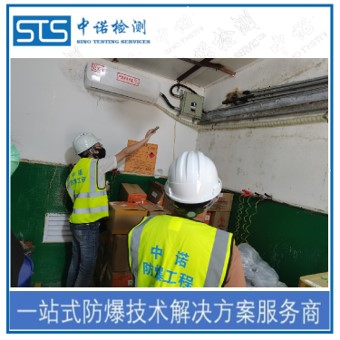
Dust Explosion Proof Safety Inspection Specification for Hazardous Areas
GB15577-2018 Dust Explosion Protection Regulations
GB 17440-2008 Dust Explosion Prevention Safety Standard for Grain Processing Enterprises
GB17918-2009 Dust Explosion Prevention Safety Standard for Bulk Grain Handling Systems at Ports
AQ4229-2013 Grain Storage Silo Dust Explosion Prevention Safety Specification
AQ4230-2013 Grain Flat Storage Dust Explosion Prevention Safety Standard
AQ4232-2013 Dust Explosion Prevention Standards for Plastic Production Systems
GB18245-2000 Processed System Dust Explosion Protection Safety Specification
GB19081-2008 Dust Explosion Prevention Safety Regulations for Feed Processing Systems
GB16543-2008 Specification for Dust Explosion Prevention in Blast Furnace Injection Coal System
GB17269-2003 Aluminum Processing System Dust Explosion Prevention Safety Specification
GB/T 16505-1995 Guide for Dust Explosion Relief
GB/T 17919-2009 Guide for Explosion-proof Dust Collector in Hazardous Dust Explosion Areas
General Guidelines for Preventing Static Electricity Accidents - GB12158-2006
AQ3009-2007 Electrical Explosion Protection Safety Standard for Hazardous Areas
GB50058-2014 Code for Design of Electrical Installations with Explosion and Fire Hazards
GB50257-2014 Code for Electrical Installation Engineering in Explosive and Flammable Gas and Dust Environments - Electrical Construction and Acceptance Standards
Explosion-proof Site Safety Inspection Standards
1. GB 50058-2014 "Code for Design of Electrical Installations in Explosive Hazardous Environments"
2. GB 3836.14-2014 "Part 14: Classification of explosive atmospheres — Explosive gas atmospheres"
3. AQ 3009-2007 "Electrical Explosion Protection Safety Code for Hazardous Areas"
4. GB 50257-2014 "Electrical Installation Engineering, Construction and Acceptance of Electrical Installations in Explosive and Fire Hazardous Environments"
5. GB15577-2018 "Safety Code for Dust Explosion Prevention"
Shenzhen ZhongNuo Testing Technology Co., Ltd. summarizes the past experience in explosion-proof electrical inspection, common non-compliant items found during on-site explosion-proof electrical inspections:
Currently, China's hazardous chemical production enterprises frequently experience accidents, thus demanding a high priority on safety production inspections. We should gradually explore the safety performance of products and equipment involving personal safety, and step by step, establish their significant role in safety production inspections. Now, safety inspections can provide substantial technical support to hazardous chemical enterprises, particularly the electrical explosion-proof safety inspections, which should be widely promoted, continuously guiding and serving the enterprises in ensuring safe production.
1. Inadequate design in hazardous area
Many companies are constrained by their corporate history, and at the same time, the production materials of the enterprises are continuously changing, making the demarcation of hazardous areas uneven and rather chaotic. The layout of equipment and facilities does not meet the explosion-proof requirements.
2. There is a weak understanding of explosion-proof knowledge.
In many hazardous chemical enterprises, there is no clear distinction between electrical explosion-proof safety inspections and fire protection electrical and building electrical inspections. In aspects such as temporary power use, hot work operations, equipment replacement, and electrical management systems, there is a lack of standardization.
3. Improper installation of explosion-proof electrical equipment
Although many companies now have explosion-proof features in electrical facilities, there are still many issues in installation, such as direct wiring connections, missing explosion-proof face screws, and using PVC pipes for wiring in incoming and outgoing pipelines. Additionally, the installation of switches and outlets, wiring terminals, power and lighting distribution boxes, grounding systems, and electrical wiring systems is not very reasonable, with many safety concerns.
4. Explosion-proof electrical wiring does not meet requirements.
In explosive environments, many companies currently do not give sufficient attention to explosion-proof electrical wiring, fail to correctly understand the technical parameters of hazardous materials in dangerous areas, and often wire arbitrarily.
5. Inadequate grounding of explosion-proof electrical equipment
For the grounding of explosion-proof electrical equipment, there are mainly internal neutral grounding, casing protection grounding, and anti-static grounding. The grounding of uncharged metal casings is often poorly executed, with frequent occurrences of grounding wires being connected to material pipelines.
6. Lack of overall planning for explosion-proof zones in the selection of power distribution and control rooms.
Many electrical control rooms and operation rooms are located within explosion-proof zones without adequate explosion-proof measures in place.
7. Inappropriate explosion-proof selection and requirements for explosion-proof electrical equipment
In electrical explosion-proof facilities, there is no distinction between environments with combustible dust and those with explosive gases; they are used interchangeably. Different hazardous areas have varying electrical explosion-proof specifications, explosion-proof markings, and types. Additionally, different levels and temperature classes may apply. However, many companies mix and match explosion-proof electrical equipment without distinguishing these differences.
On-site Explosion Proof Electrical Equipment Regular Inspection Consultancy Service - Shenzhen ZhongNuo Inspection Technology Co., Ltd.
WeChat Official Account

Scan to follow Official Account