


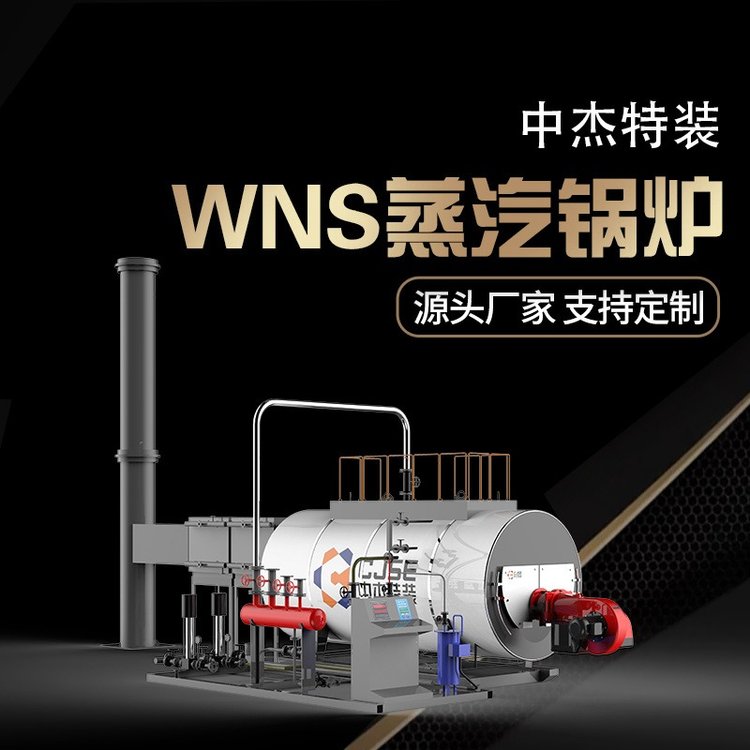

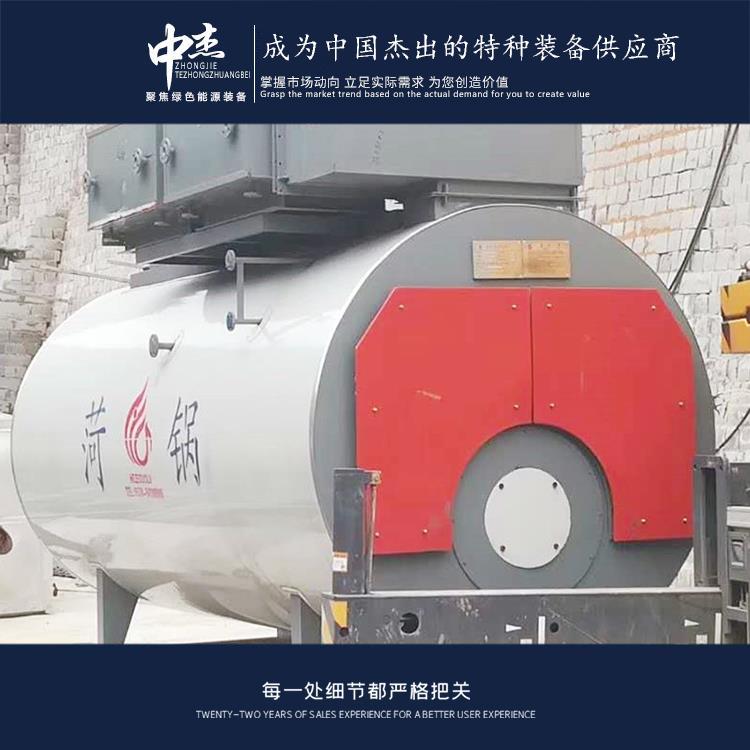
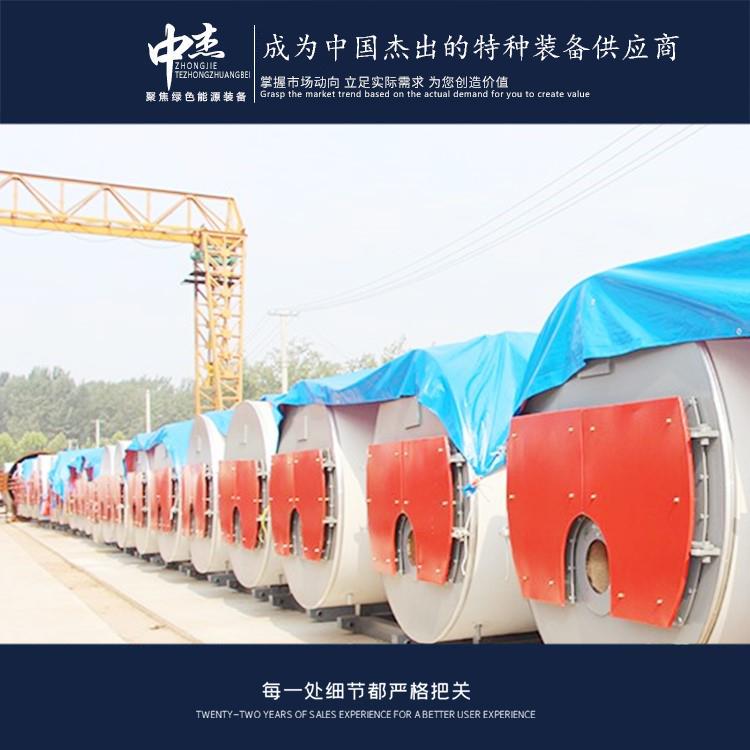


















Shandong Zhongjie Special Equipment's main products include: fuel (gas) boilers, organic heat carrier boilers, biomass boilers, waste heat boilers, and other boiler products; vacuum insulation cryogenic pressure vessels such as LNG tanks, oxygen/nitrogen/argon tanks, and CO2 tanks; pressure vessel products such as denitrification engineering equipment, heat storage and energy storage equipment, and complete chemical equipment sets; central air conditioning and HVAC equipment such as ground (water) source heat pumps, air source units, water-cooled screw units, and air-cooled modular units. Planned products include large-scale energy centers, LNG transport vehicles, LNG tank containers, and other green energy equipment.
In industrial boiler systems, the key functional parameters of pumps include the following aspects:
Flow Rate: The flow rate of a pump refers to the volume of liquid pumped per unit of time. In industrial boilers, the pump must provide sufficient flow to meet the boiler's water requirements. The size of the flow rate depends on the boiler's rated evaporation capacity and the design requirements of the circulating water system.
Head: The head of a pump is its ability to overcome liquid resistance and lift the fluid to a certain height. In industrial boilers, the pump must have adequate head to ensure smooth flow to all parts of the boiler, including the feedwater and circulating water systems.
Power: The power of a pump is the electrical or mechanical energy required to drive the pump. In industrial boilers, the power of the pump must be determined based on the flow rate and head to meet the system's needs.
Efficiency: The efficiency of a pump is the ratio of the energy input to the output fluid energy. High-efficiency pumps can reduce energy consumption and operating costs. In industrial boilers, choosing high-efficiency pumps can improve the system's energy efficiency performance.
Operational Stability and Reliability: Pumps in industrial boiler systems must have good operational stability and reliability. Pumps should be able to run stably for long periods without being affected by external interference or fluctuations and should be adaptable to different operating conditions.
It is necessary to select the appropriate pump based on the specific industrial boiler system and design requirements, ensuring that the functional parameters of the pump meet the system's needs. At the same time, the selection and operation of the pump must comply with relevant standards and regulations to ensure safe and reliable operation.
Excessive exhaust gas temperature in a thermal oil boiler may be due to several reasons: Incomplete combustion: If the fuel is not fully combusted during the boiler's combustion process, it leads to a high concentration of unburned fuel and harmful substances in the flue gas, causing the exhaust gas temperature to rise. Possible causes include insufficient fuel supply, improper adjustment of the burner, and burner wear. Excessive air: Excess air can lower the combustion temperature, making the heat in the flue gas insufficient to reduce the flue gas temperature to a reasonable level. Reasons for excessive air may include improper burner adjustment and excessively open air doors. Flue blockage: Accumulated ash, slag, or other impurities in the flue can obstruct flue gas flow, increasing the residence time of the flue gas and raising the exhaust gas temperature. Abnormal thermal oil flow: Abnormal thermal oil flow, whether too high or too low, can lead to uneven heat transfer, causing the flue gas temperature to rise. Overheating of the boiler: Improper temperature control in the thermal oil boiler can lead to overheating, increasing the exhaust gas temperature. Design issues of the boiler: Design problems such as a small flue or poor flue gas flow may also cause the exhaust gas temperature to be too high. To address the issue of excessive exhaust gas temperature, a comprehensive inspection and analysis of the thermal oil boiler is required. Solutions can include adjusting burner parameters, cleaning the flue, checking thermal oil flow and temperature control, etc. If the problem is severe, boiler system modification or repair may be necessary. Additionally, regular maintenance and inspections are crucial preventive measures against excessive exhaust gas temperature.
During the production welding of thermal oil boilers, the following points should be noted:
- Welder Qualification: Ensure that the welders involved in the welding work have appropriate qualifications and experience, and are familiar with the welding processes and operation procedures.
- Welding Material Selection: Choose welding materials suitable for thermal oil boilers, ensuring their compatibility with the thermal oil and high-temperature resistance.
- Welding Process Control: Select an appropriate welding process based on the material and design requirements of the thermal oil boiler, such as manual arc welding, gas shielded welding, etc. Control welding parameters such as current, voltage, and welding speed to ensure the quality and strength of the weld.
- Welding Area Protection: During the welding process, the welding area must be protected to prevent contamination from the thermal oil and welding materials. Use welding screens, welding shields, and other equipment to ensure the cleanliness and safety of the welding area.
- Post-Welding Treatment: After welding, post-treatment of the welds is required, such as slag removal, grinding, and cleaning. Ensure the flatness and surface quality of the welds.
- Welding Quality Inspection: Conduct welding quality inspections, including visual inspections of the welds, dimensional measurements, and non-destructive testing, to ensure the welding quality meets requirements.
- Safety Measures: Pay attention to safety measures during the welding process, such as wearing protective goggles, gloves, fire-resistant clothing, etc., to ensure the safety of welding operations.
- It is important to follow relevant standards and specifications during the welding process to ensure the quality and safety of welding. If unsure about how to proceed with welding or if there are safety hazards, seek advice from a welding engineer or consult relevant agencies.
A gas boiler is a heating equipment that uses gas or similar fuels. It generates heat by burning gas to heat water into steam or hot water, which is used for heating, hot water supply, or industrial production, among other applications. The working principle of a gas boiler involves mixing gas with air, igniting it to produce high-temperature combustion gases, and then transferring the heat to the water through a heat exchanger, thereby raising the water temperature. Gas boilers offer advantages such as environmental friendliness, safety, and are widely used in residential, commercial, and industrial sectors.
Our company attaches great importance to technological innovation and R&D design. We have one municipal-level enterprise technology center in Heze City, with testing facilities for non-destructive testing, physical and chemical testing, welding testing, hydrostatic testing, etc. We are equipped with over 600 various instruments and equipment, including CNC machine tools, X-ray flaw detectors, digital ultrasonic flaw detectors, mechanical property testing machines, chemical analyzers, spectrometers, tensile testing machines, plasma welding machines, and more. Our key products and technologies, such as temperature and pressure vessel welding, biomass boiler emissions reduction, and waste heat utilization, have successively been selected for multiple Shandong Provincial Department of Industry and Information Technology science and technology projects, Shandong Provincial key projects, and Heze City innovative and excellent projects. We have accumulated 27 authorized utility models, 16 authorized inventions, participated in drafting 2 standards, 2 industry standards, and registered 15 trademarks. The technical team, in collaboration with Professor Yajiang Li from Shandong University, has developed deep cryogenic container processing technology using the international plasma arc + filler wire tungsten inert gas (PAW-GTAW) welding technology. The provincial-level scientific and technological achievement identification has confirmed that our technology level in deep cryogenic container manufacturing has reached an international standard.
Choose ZJETT Customized Solutions, let's create brilliance together!
WeChat Official Account

Scan to follow Official Account



















