


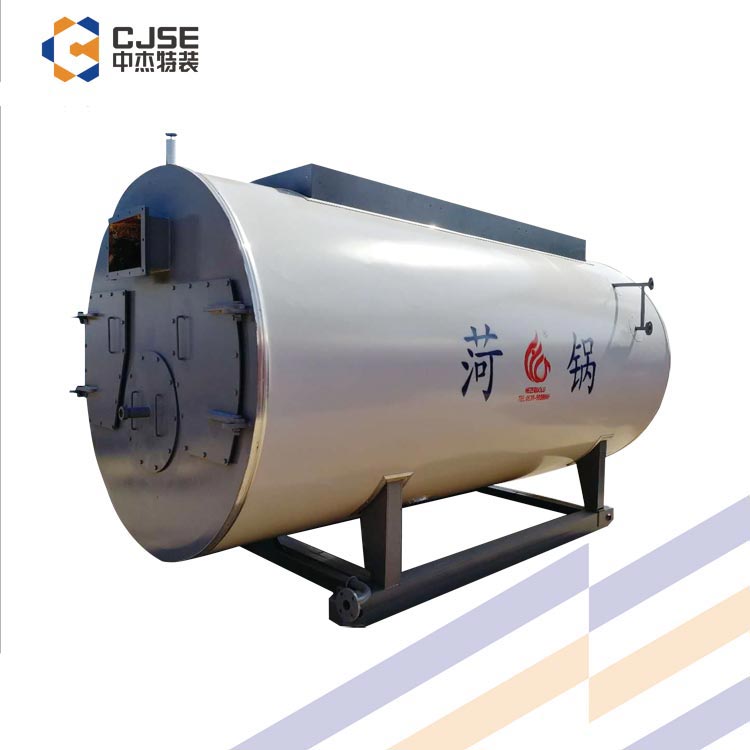

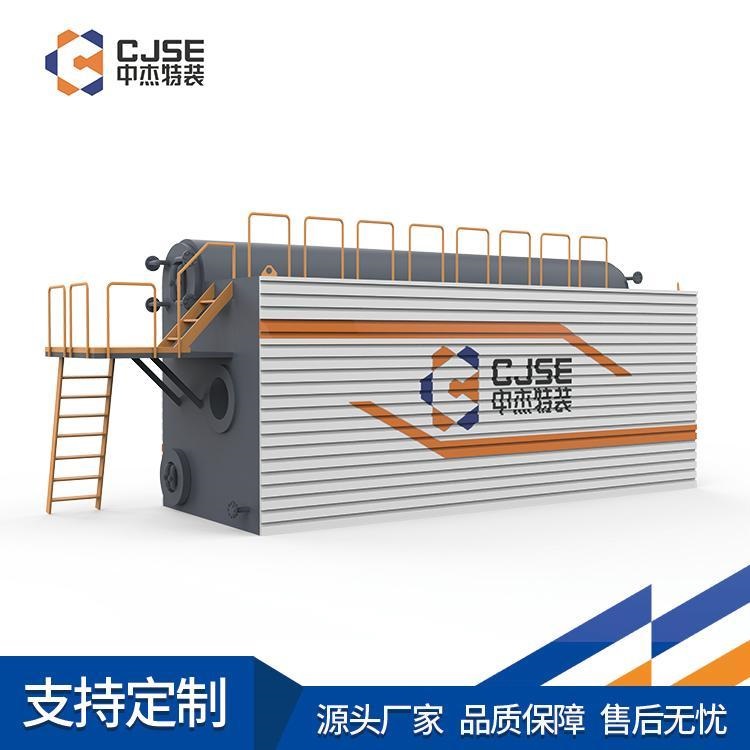
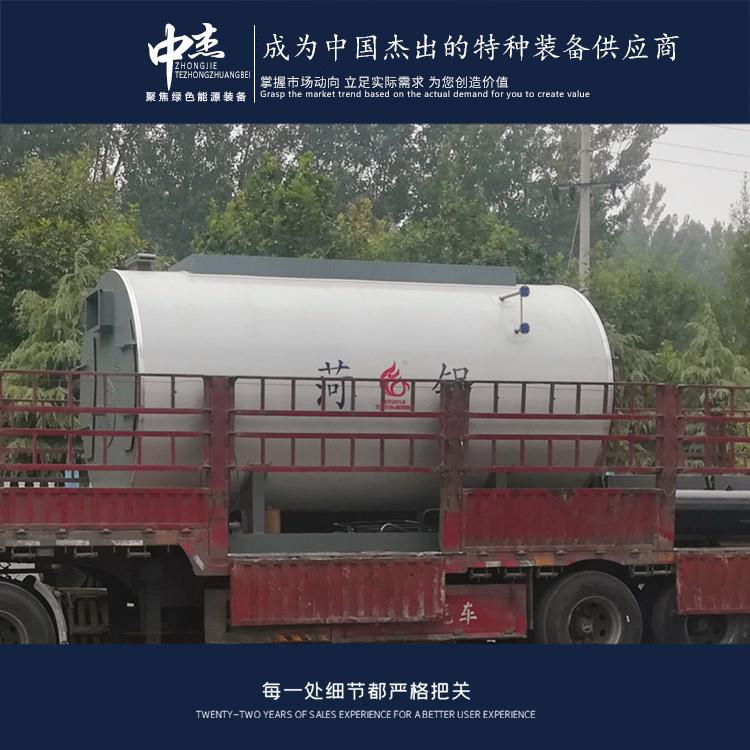


















Shandong Zhongjie Special Equipment's main products include: fuel (gas) boilers, organic heat carrier boilers, biomass boilers, waste heat boilers, and other boiler products; vacuum insulation cryogenic pressure vessels such as LNG tanks, oxygen-nitrogen-argon tanks, and CO2 tanks; pressure vessel products such as denitrification engineering equipment, heat storage and energy storage equipment, and complete chemical equipment; central air conditioning and ventilation equipment such as ground (water) source heat pumps, air source units, water-cooled screw units, and air-cooled modules. Planned products include large-scale energy centers, LNG transport vehicles, LNG tank containers, and other green energy equipment.
Before ignition, the preparation of a steam boiler involves the following steps:
1. Clean the boiler: First, clean the internal and external dirt and impurities from the boiler. Remove ash, sediments, and dirt to ensure combustion and heat exchange efficiency.
2. Check fuel supply: Inspect the fuel supply system to ensure a smooth fuel supply. Check the fuel storage tank, transport pipelines, and filters, clear blockages, and replace damaged parts.
3. Inspect the burner: Check the operating condition and cleanliness of the burner. Clean the burner's nozzle and flame detector to ensure proper burner operation.
4. Check the gas system: For gas boilers, inspect the gas supply system. Check the gas pipelines, valves, and pressure regulators to ensure safe and stable gas supply.
5. Check water level and pressure: Inspect the boiler's water level and pressure. Ensure the water level is within the normal range, pressure is stable, and meets requirements. Add water and adjust pressure if necessary.
6. Check safety devices: Inspect the boiler's safety devices such as safety valves, pressure switches, and water level controllers. Ensure these devices operate normally to guarantee safe boiler operation.
7. Prepare ignition tools: Prepare the tools and equipment needed for ignition, such as an ignition rod, igniter, and lighters. Ensure these tools work properly and are safe.
When performing the above preparation tasks, follow relevant operational procedures and safety requirements to ensure safety and effectiveness. If unsure about the preparation process, consult with experts or the boiler manufacturer for advice.
Common issues and troubleshooting methods for gas boiler burners are as follows:
1. No flame or unstable flame: Check if the gas supply is normal and ensure the gas valve is open. Clean the burner nozzle to ensure the passage is clear. Inspect the ignition electrode for cleanliness, carbon buildup, or dirt. Adjust the gas-to-air ratio to ensure the correct mixture.
2. Incomplete combustion or black smoke: Check if the gas supply is sufficient and adjust the gas pressure. Clean the burner nozzle and combustion chamber to ensure the passage is clear. Adjust the gas-to-air ratio to ensure the correct mixture. Check for carbon buildup or dirt in the burner and clean or replace damaged parts.
3. Difficulty or failure to ignite: Inspect the ignition electrode for cleanliness, carbon buildup, or dirt. Adjust the position and gap of the ignition electrode to ensure normal spark generation. Check if the ignition transformer or controller is functioning properly, and repair or replace damaged parts.
4. Abnormal noise from the burner: Check if the gas supply is normal and ensure the gas valve is open. Inspect the burner and combustion chamber for loose parts and tighten or replace damaged parts. Clean the burner and combustion chamber to ensure no carbon buildup or dirt.
If the above methods do not resolve the issue, it is recommended to contact a gas boiler maintenance technician for inspection and maintenance. Additionally, to ensure safety, follow the relevant safety operating procedures when using a gas boiler.
Industrial boilers, during their long-term operation, can accumulate scale and deposits, affecting heat exchange efficiency and the normal operation of the boiler. Here are some effective descaling methods:
1. Mechanical Cleaning: Utilizes cleaning equipment and tools to wash away scale and deposits inside the boiler with high-pressure water or mechanical brushes. This method is suitable for lighter scale and deposits.
2. Chemical Cleaning: Uses chemical cleaning agents to dissolve scale and deposits through chemical reactions. Select an appropriate cleaning agent based on the composition and nature of the scale, and follow the instructions provided. Chemical cleaning requires safe operation to prevent damage to equipment and the environment.
3. Acid Cleaning: A common descaling method for difficult-to-dissolve scale and deposits. Common acid cleaning agents include... Select the appropriate cleaning agent and concentration based on the specific situation. Acid cleaning requires safe operation to avoid injury to equipment and personnel.
4. Alkaline Cleaning: A descaling method for certain specific scales, suitable for alkaline scales. Common alkaline cleaning agents include... Select the appropriate cleaning agent and concentration based on the specific situation. Alkaline cleaning requires safe operation to avoid injury to equipment and personnel.
5. Physical Descaling: Physical descaling methods include ultrasonic cleaning and electro-dissolution. Ultrasonic cleaning uses the vibration effect of ultrasound to shake the scale to pieces. Electro-dissolution uses the principle of electrolysis to dissolve scale through the action of electricity. These physical descaling methods are suitable for special situations and specific scales.
When selecting a descaling method, consider the specific conditions of the boiler.
For the maintenance of industrial gas-fired boilers, here are some common methods and precautions:
* Clean the burner: Regularly clean the interior and nozzle of the burner to ensure normal combustion of gas, avoiding carbon buildup and blockages.
* Inspect the gas supply system: Regularly check the gas supply system, including gas pipelines, valves, and pressure regulators, to ensure normal supply, no leaks, or blockages.
* Clean the flue and heat exchanger: Regularly clean the flue and heat exchanger to remove dust and dirt, maintaining heat exchange efficiency, and avoiding overheating and energy loss.
* Check water level and pressure: Regularly inspect the boiler's water level and pressure to ensure safe operation within the specified range. Top up water and adjust pressure to avoid issues caused by low or high water levels.
* Inspect safety devices: Regularly check the boiler's safety devices, including safety valves, pressure switches, and water level controllers, to ensure they are functioning properly, ensuring safe boiler operation.
* Check the control system: Regularly inspect the boiler's control system, including automatic controllers, sensors, and instruments, to ensure accuracy and reliability, and to detect and repair faults promptly.
* Regular maintenance: Conduct regular maintenance, including lubricating components, replacing worn parts, and checking electrical connections, to extend the boiler's lifespan and stability.
* Keep records: Record the boiler's operating parameters, maintenance records, and fault situations to help promptly identify issues and analyze operating conditions.
* Train operators: Ensure operators are sufficiently trained.
Our company places great emphasis on technological innovation and research and development. We possess one municipal-level enterprise technology center in Heze City, featuring testing facilities for non-destructive testing, physical and chemical testing, welding testing, hydrostatic testing, etc. We are equipped with over 600 various instruments and equipment, including CNC machine tools, X-ray flaw detectors, digital ultrasonic flaw detectors, mechanical property testing machines, chemical analyzers, spectrometers, tensile testing machines, plasma welding machines, and more. The key products and technologies we have developed, such as welding of temperature and pressure vessels, reduction of biomass boiler emissions, and waste heat utilization, have successively been selected for multiple Shandong Provincial Department of Industry and Information Technology science and technology innovation projects, Shandong Provincial key projects, and Heze City innovative excellence projects. We have accumulated a total of 27 authorized utility models, 16 authorized inventions, participated in drafting 2 standards, 2 industry standards, and registered 15 trademarks. The technical team of our company, in collaboration with Professor Yajiang Li from Shandong University, has jointly developed deep cryogenic container processing technology using the international plasma arc + filler wire argon arc welding (PAW-GTAW) technology. This technology has been appraised as reaching an international level in the field of deep cryogenic container manufacturing by the provincial-level science and technology achievement evaluation.
Choose JETSTAR Customized Solutions, let's create brilliance together!
WeChat Official Account

Scan to follow Official Account



















