


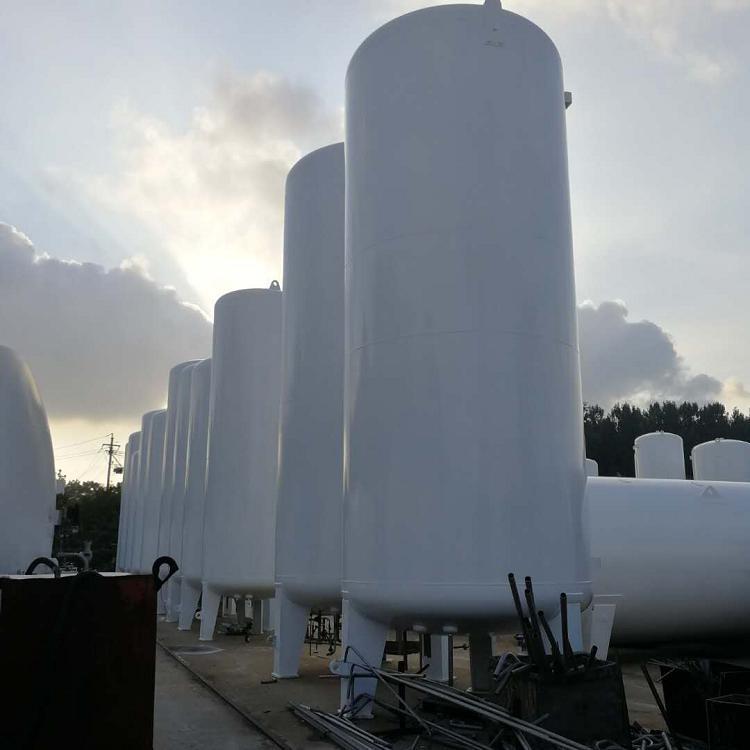

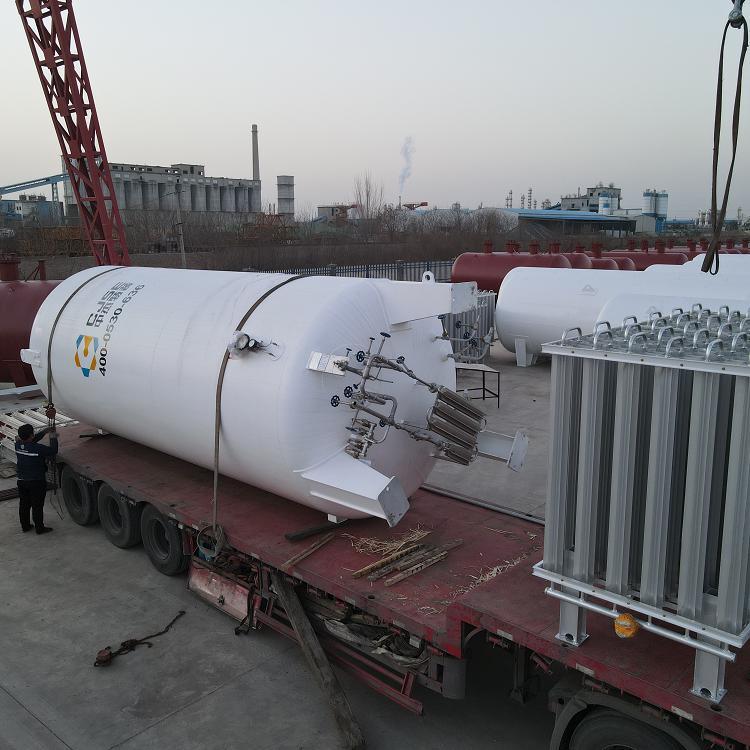
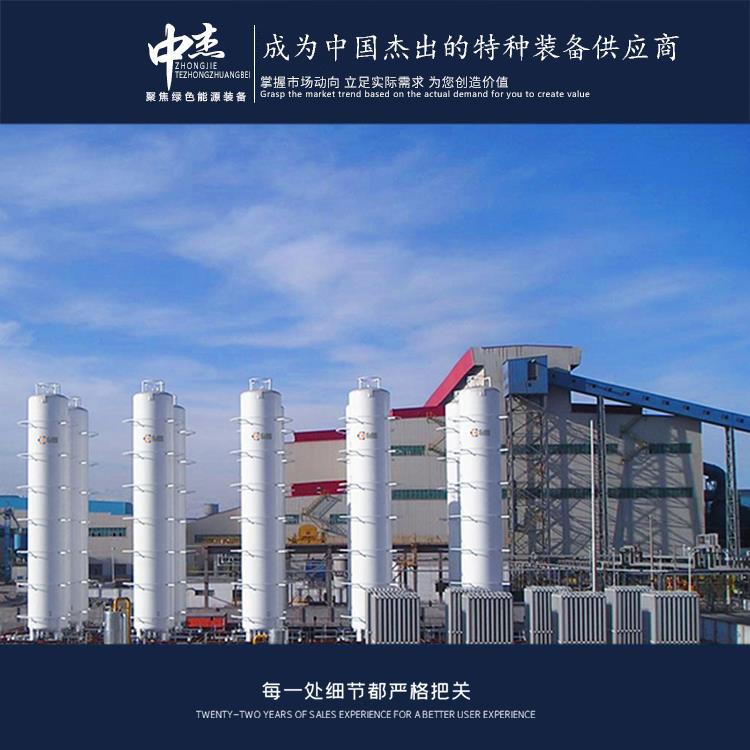


















Shandong Zhongjie Special Equipment's main products include: fuel (gas) boilers, organic heat carrier boilers, biomass boilers, waste heat recovery boilers, and other boiler products; vacuum insulation deep-freeze pressure vessels such as LNG storage tanks, oxygen-nitrogen-argon storage tanks, and CO2 storage tanks; pressure vessel products like denitrification engineering equipment, heat storage and energy storage equipment, and complete chemical equipment sets; central air conditioning and HVAC equipment such as ground (water) source heat pumps, air source units, water-cooled screw units, and air-cooled modular units. Planned products include large-scale energy centers, LNG transport vehicles, LNG tank containers, and other green energy equipment.
The primary reason for pre-cooling a liquid oxygen tank before use is to lower the tank's internal temperature to below the boiling point of liquid oxygen, facilitating the conversion of oxygen into a liquid state.
The boiling point of liquid oxygen is -183°C; at room temperature, oxygen exists in a gaseous state. Liquid oxygen tanks require cooling the oxygen below its boiling point to convert it into a liquid for storage and supply.
The pre-cooling process typically involves the following steps:
Clean Storage Tanks: First, the tank must be thoroughly cleaned to ensure there are no impurities or contaminants inside, in order to avoid affecting liquid oxygen.
Drainage and Exhaust: To empty the gas inside the tank and expel it through the exhaust system to reduce the gas content within the tank.
Add Liquid Nitrogen: Inject liquid nitrogen into the storage tank, where its low temperature rapidly cools the air inside and the tank walls, thereby reducing the tank's temperature.
Waiting for cooling: The liquid nitrogen in the tank will gradually lower the temperature inside the tank through the process of heat conduction until it reaches below the boiling point of liquid oxygen.
The purpose of pre-cooling is to ensure that the temperature inside the storage tank is low enough to meet the storage and supply requirements for liquid oxygen. Pre-cooling can reduce the evaporation and loss of liquid oxygen, as well as help maintain the safety and stability of the tank.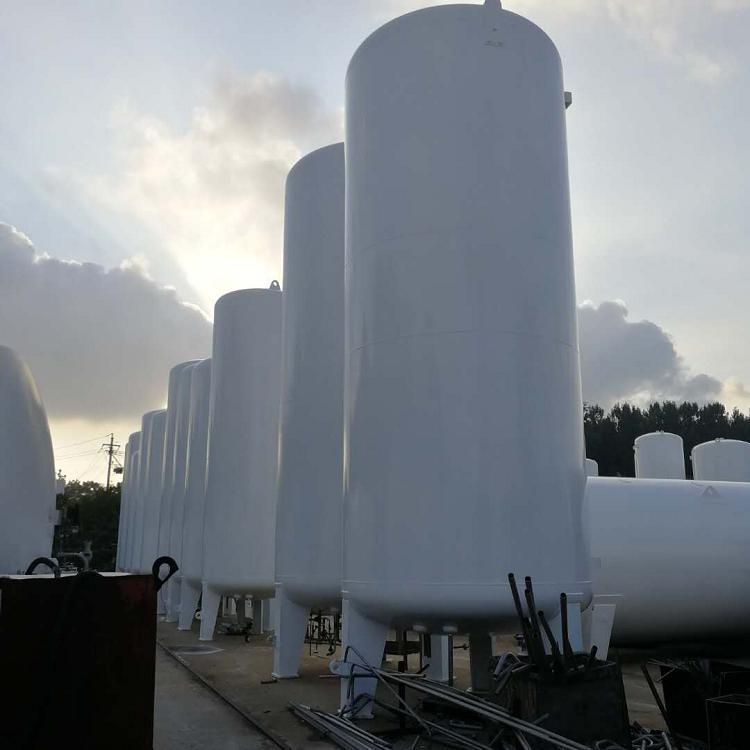
The cooling process and precautions for liquid argon cylinders are as follows:
Cooling Process Analysis:
Clean the Cylinder: Prior to cooling the liquid argon cylinder, ensure the interior is clean and free of impurities and contaminants. Use an appropriate cleaning agent for washing and rinse thoroughly.
Drainage and Exhaust: Empty the gas inside the drum and expel it through the exhaust system to reduce the gas content within the drum.
Add Liquid Nitrogen: Inject liquid nitrogen into the tank, which will rapidly cool the air and walls inside, thereby lowering the tank's temperature.
Wait for Cooling: Liquid nitrogen will gradually lower the temperature inside the tank through heat conduction until it reaches the desired low temperature.
Cautionary Notes:
Safety Protection: Necessary safety precautions must be taken during the cooling process of liquid argon cylinders. Liquid argon has low temperatures and high flammability, so operators should wear protective suits, gloves, and other personal protective equipment to ensure safe operation.
Fire Prevention Measures: Liquid argon is highly flammable; therefore, during the cooling process of liquid argon tanks, it is essential to ensure there are no ignition sources in the surrounding environment and to equip with appropriate fire extinguishing equipment.
Temperature Control: During the cooling process of the liquid argon cylinder, it is necessary to control the cylinder's temperature to prevent overcooling or insufficient cooling. Temperature sensors and a temperature control system can be used to monitor and control the cylinder's temperature.
Insulation and Heat Retention: Liquid argon tanks are typically designed with double or multi-layer structures, filled with insulating material in the middle to minimize heat transfer and evaporation of the liquid argon. Ensure the integrity and good insulating properties of the insulation layer.
Liquid oxygen storage tanks may deform during use. The following are common deformation defects in liquid oxygen storage tanks:
Elastic deformation: Liquid oxygen tanks may undergo elastic deformation when subjected to external pressure or temperature changes. This deformation is typically reversible, meaning the tank will return to its original shape once the external pressure is removed or the temperature returns to normal.
Plastic Deformation: When a liquid oxygen tank is subjected to significant external force or pressure, it may experience plastic deformation. This deformation is irreversible, and the tank cannot return to its original shape. Plastic deformation can cause changes in the tank's shape, such as dents or warping.
Hot Deformation: Liquid oxygen tanks may experience thermal deformation when exposed to high temperatures or temperature changes. Thermal deformation can cause the tank to change shape, expand, or contract.
Cold Deformation: Liquid oxygen tanks may experience cold deformation when subjected to low temperatures or temperature changes. Cold deformation can lead to changes in the tank's shape, shrinkage, or cracking.
These deformation defects may affect the structural integrity and safety of liquid oxygen storage tanks. Therefore, it is important to regularly inspect and assess the deformation of liquid oxygen storage tanks to ensure their normal operation and safe use. If deformation defects are found in the tanks, prompt repair or replacement measures should be taken to avoid further damage and safety risks.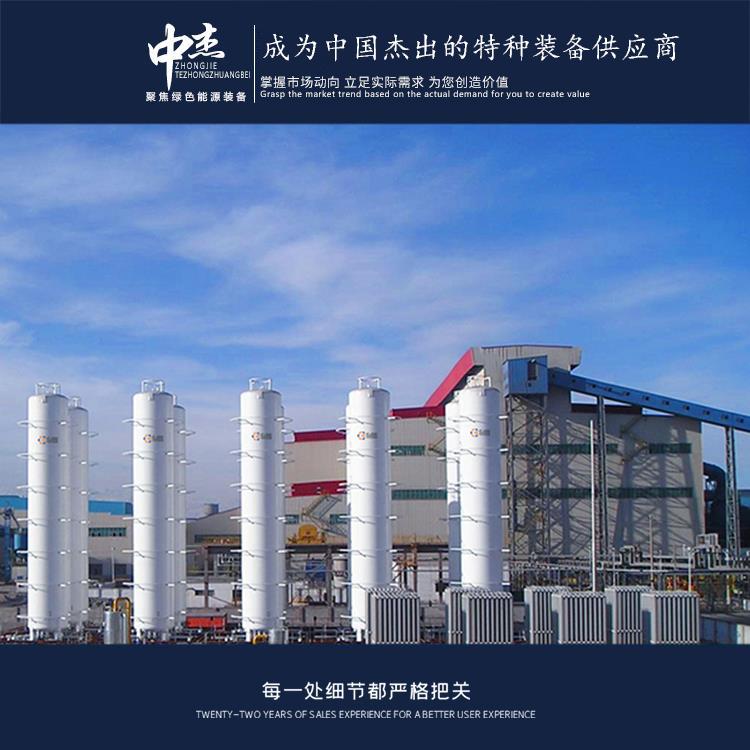
Liquefied nitrogen tanks feature the following characteristics during the construction process:
Low Temperature Construction: The construction of liquid nitrogen tanks must be carried out in low-temperature conditions, as the boiling point of liquid nitrogen is low, approximately -196 degrees Celsius. Construction personnel must take appropriate protective measures, such as wearing thermal protective clothing and gloves, to safeguard against low-temperature injuries.
Welding Technology: Extensive welding is required during the manufacturing process of liquid nitrogen tanks, including the joining of wall panels, bottom plates, top plates, and seams. Welding technology is crucial for the quality and safety of the tank, necessitating the use of appropriate welding methods and materials to ensure the strength and sealing integrity of the welds.
Insulation Layer Construction: Liquid nitrogen storage tanks must have excellent insulation properties to reduce heat conduction and retain the low-temperature state of liquid nitrogen. The construction of the insulation layer requires materials such as polyester foam and glass wool, ensuring the thickness and quality of the insulation layer.
Proper installation steps for a liquid nitrogen tank are as follows:
Site Preparation: Select a suitable site for tank installation, ensuring the area is level, sturdy, and has adequate load-bearing capacity. The site should be kept away from flammable, explosive materials, and other hazardous sources.
Foundation Construction: Construction of the foundation is based on the tank's dimensions and weight, including excavation of the foundation pit and casting of the concrete foundation. The design and construction of the foundation must comply with relevant standards and specifications.
Tank Installation: Transport the tank to the site and perform vertical installation. Appropriate lifting equipment and safety measures are required during the installation process to ensure stability and safety of the tank.
Pipe Connections: Connect the storage tank to the relevant pipeline system as required, including intake pipes, exhaust pipes, and liquid supply pipes, etc. Sealing and testing are necessary during the connection process to ensure pipeline safety.
ZJ Special Equipment adheres to the great vision of "Realizing employees' dreams, creating value for customers, and striving for the prosperity and strength of our motherland," and is dedicated to the development of the green energy equipment industry. We offer society high-value products and services!
WeChat Official Account

Scan to follow Official Account



















