


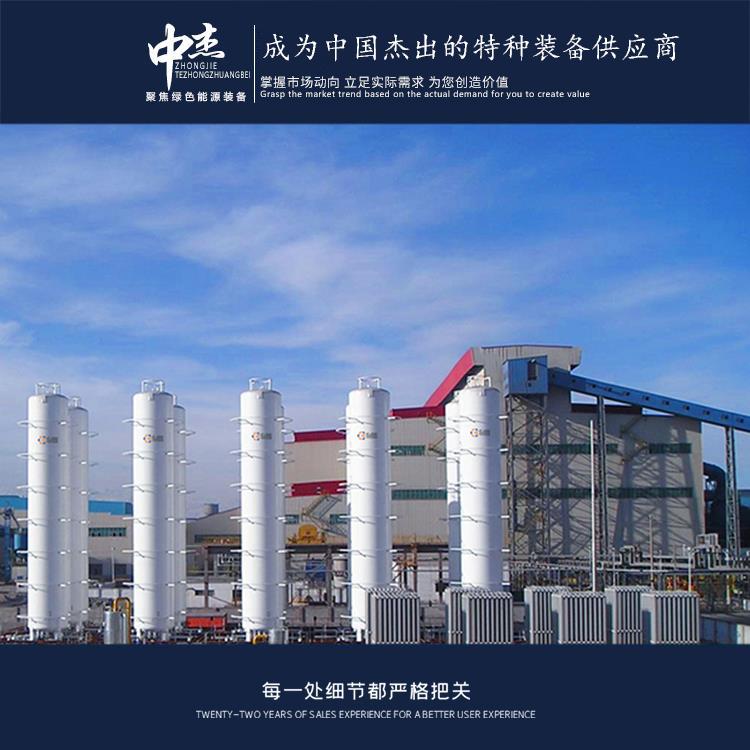

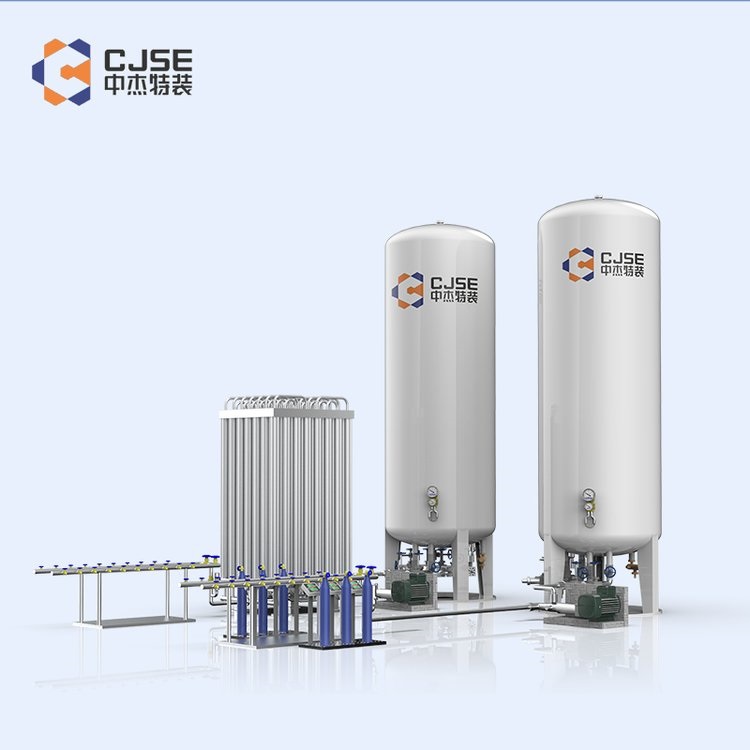
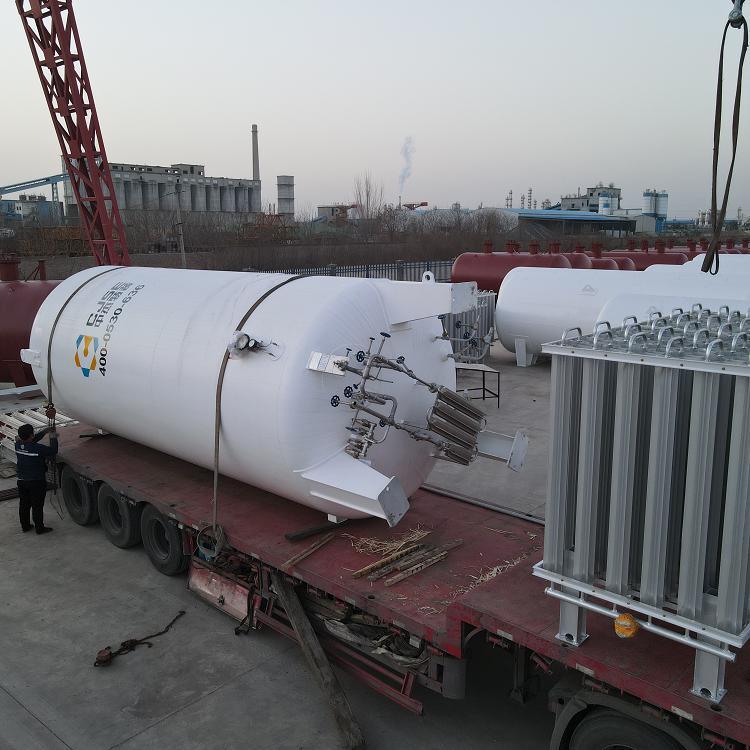


















Shandong Zhongjie Special Equipment (formerly Heze Boiler Factory Co., Ltd.) holds an A-grade boiler manufacturing license, A2-grade pressure vessel manufacturing license, A2-grade pressure vessel design license, B-grade boiler installation, and GB2/Class, GC2/Class pressure pipeline installation licenses, as well as equipment and machinery installation contracting qualifications. It is a member of the China Boiler and Water Treatment Association, the China Chemical Equipment Association, and a director unit of the Shandong Equipment Manufacturing Association. The company has also passed the ISO9001 Quality Management System, ISO14001 Environmental Management System, OHSAS18001 Occupational Health and Safety Management System certifications, and the American ASME/U2 certification.
Carbon dioxide tanks are widely used across various industries. Below are some common sectors where carbon dioxide tanks are employed as examples:
- Beverage and Food Industry: Carbon dioxide is used as a carbonating agent for beverages and food, in the production of sodas, beers, soft drinks, etc. Tanks are used for storing and supplying carbon dioxide to meet production line requirements.
- Industry: Carbon dioxide has multiple applications in the industry, such as anesthesia, respiratory care, tissue freezing, etc. Tanks are used for storing and supplying medical-grade carbon dioxide to meet facility needs.
- Fire Extinguishing: Carbon dioxide is extensively used in fire suppression systems, particularly for electrical and sensitive equipment. Tanks are used for storing and supplying carbon dioxide for fire extinguishing purposes.
- Gas Industry: Carbon dioxide is also a significant product in the gas industry, used in the production of chemicals, metal processing, welding, and gas shielding, etc. Tanks are used for storing and supplying industrial-grade carbon dioxide.
- Greenhouse Agriculture: Carbon dioxide can be used to promote plant growth in greenhouses, providing additional carbon dioxide concentration. Tanks are used to supply the required carbon dioxide for greenhouse use.
- Automotive Industry: Carbon dioxide is used for tire inflation and airbag systems in vehicles. Tanks are used for storing and supplying carbon dioxide to meet the needs of vehicle manufacturing and maintenance.
These are just a few common industry examples. In reality, carbon dioxide tanks have widespread applications in many other industries, such as chemicals and frozen food processing. Specific usage will vary depending on industry needs and application scenarios.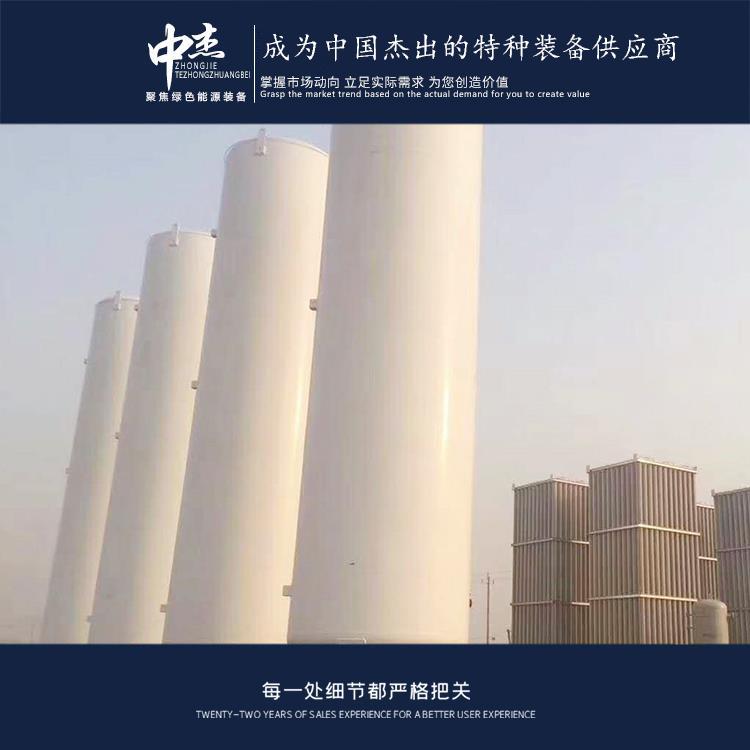
Design requirements for carbon dioxide storage tanks typically include the following aspects: Pressure Vessel Design: Carbon dioxide storage tanks are generally designed as high-pressure vessels capable of withstanding high pressure. The design must comply with relevant standards and regulations, such as Standard GB150 "Steel Pressure Vessels." Material Selection: The choice of material for the tank should consider the properties of carbon dioxide, such as high pressure, high oxidizability, and corrosiveness. Common materials include carbon steel and stainless steel, with selection based on specific working conditions and requirements. Safety Valve and Pressure Control: The tank should be equipped with a safety valve and pressure control device to ensure the internal pressure remains within a safe range. The safety valve should be selected according to design requirements and should be inspected and tested regularly to ensure proper operation. Insulation Performance: As carbon dioxide needs to remain in a liquid state at low temperatures, the tank should have good insulation properties to prevent excessive evaporation of liquid carbon dioxide and energy loss. The selection and design of insulation materials and layers should consider working temperature and environmental conditions. Leak Detection and Alarm: The tank should be equipped with leak detection devices and alarm systems, along with corresponding monitoring equipment. These devices can detect leaks in a timely manner and trigger alarms, allowing for appropriate measures to be taken. Structural Strength and Stability: The structural design of the tank should be sufficient in strength and stability to withstand internal pressure and external loads. The structural design must comply with relevant standards and regulations, such as Standard GB12337 "Design Code for Pressure Vessels." Safe Operation and Maintenance: The design of the tank should consider the ease of safe operation and maintenance, such as the placement of manholes, inspection openings, and drain ports.
The installation of a safety valve on a CO2 storage tank is a crucial measure to ensure the tank can safely release pressure in the event of overpressure. Below are general installation steps:
1. Select the appropriate safety valve: Choose a safety valve that meets the tank's design pressure and flow requirements. Ensure the rated pressure and flow of the safety valve align with the tank's specifications.
2. Installation location: Select a suitable location for the safety valve, typically on the top or side of the tank. Ensure the valve can discharge pressure smoothly and is not obstructed by other equipment or structures.
3. Preparations: Clean the tank surface at the installation location to ensure there are no debris or dirt. Check the seal integrity of the safety valve and connecting pipes, ensuring no damage or leaks.
4. Install the safety valve: Connect the safety valve to the tank using the appropriate fittings and sealing materials. Follow the installation instructions for the safety valve to ensure a secure and reliable connection to the tank.
5. Adjustment and testing: Adjust and test the safety valve according to its specifications and requirements. Ensure the valve operates normally within the set pressure range and can release pressure promptly.
6. Identification and record: Label relevant information on the safety valve and tank, such as the rated pressure and flow of the safety valve, installation date, etc. Record the installation process and test results for future reference and maintenance.
Please note that installing a CO2 storage tank safety valve must follow relevant safety operation procedures and standards. If you do not have the necessary knowledge and experience, it is recommended to consult professionals or manufacturers for installation.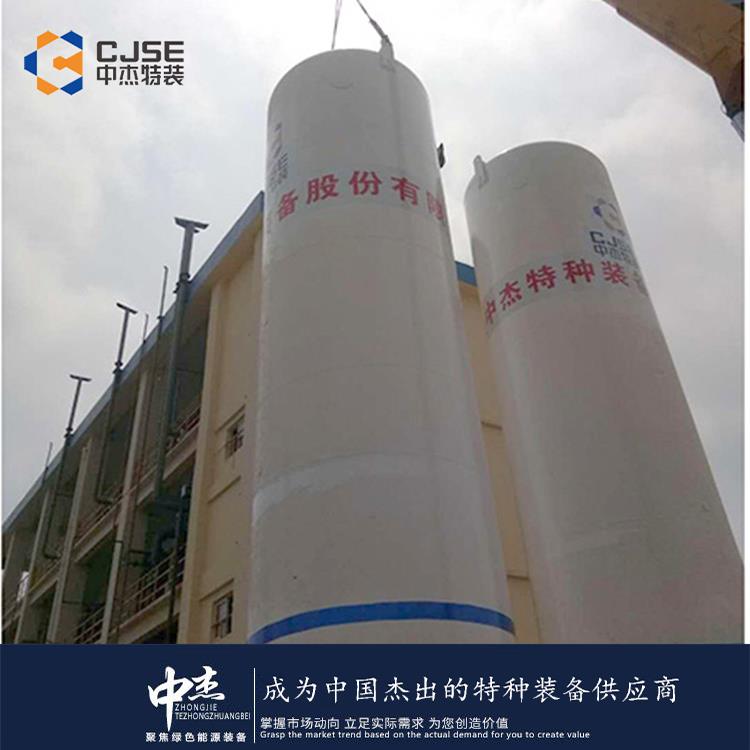
Common defects in carbon dioxide storage tanks during use include deformation. Here are some reasons that may cause tank deformation: Overpressure: When the internal pressure of the tank exceeds its design pressure, it may lead to deformation. This could be due to operational errors, system failures, or other causes. Temperature Changes: Carbon dioxide storage tanks expand and contract with temperature changes, and if the temperature changes are too great or too rapid, it may cause deformation. Internal Corrosion: If there is internal corrosion in the tank, it can damage the structural integrity of the tank, leading to deformation. External Damage: External impacts, compressions, or other physical damages can cause tank deformation. Incorrect Installation or Use: Incorrect installation or usage methods can lead to uneven stress on the tank, causing deformation. Tank deformation can reduce the structural integrity of the tank and even pose risks of leakage or rupture. Therefore, it is important to regularly inspect and maintain the integrity of the tank, as well as to follow proper operational and installation procedures. If tank deformation or other defects are detected, the tank should be immediately stopped from use and professional assistance should be sought for inspection and repair. Do not attempt to repair or continue using a defective tank to ensure operational safety.
Zhongjie Special Equipment adheres to the grand vision of "realizing employees' dreams, creating customer value, and striving for the prosperity and strength of our motherland," and is dedicated to the development of the green energy equipment industry. We offer society products and services with high cost-performance!
WeChat Official Account

Scan to follow Official Account



















