


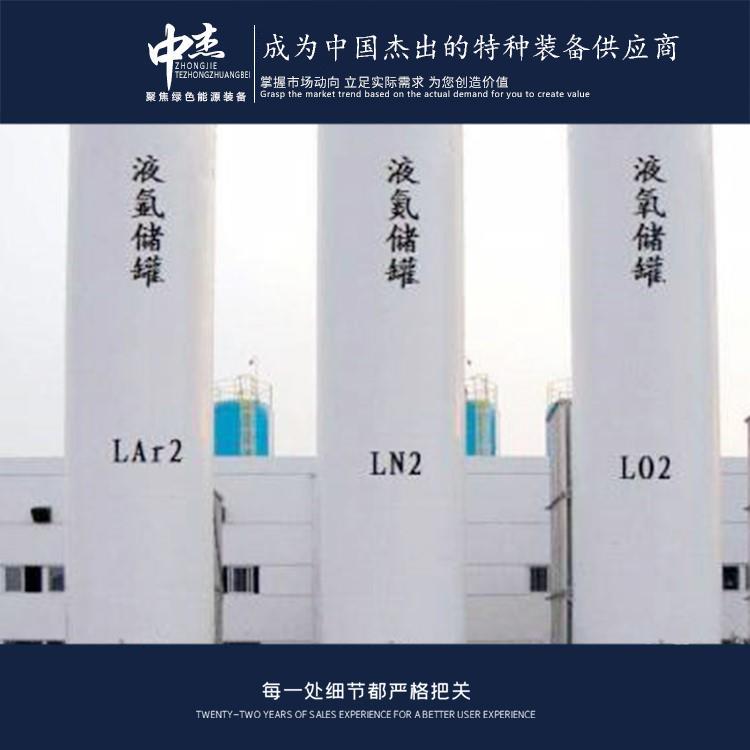

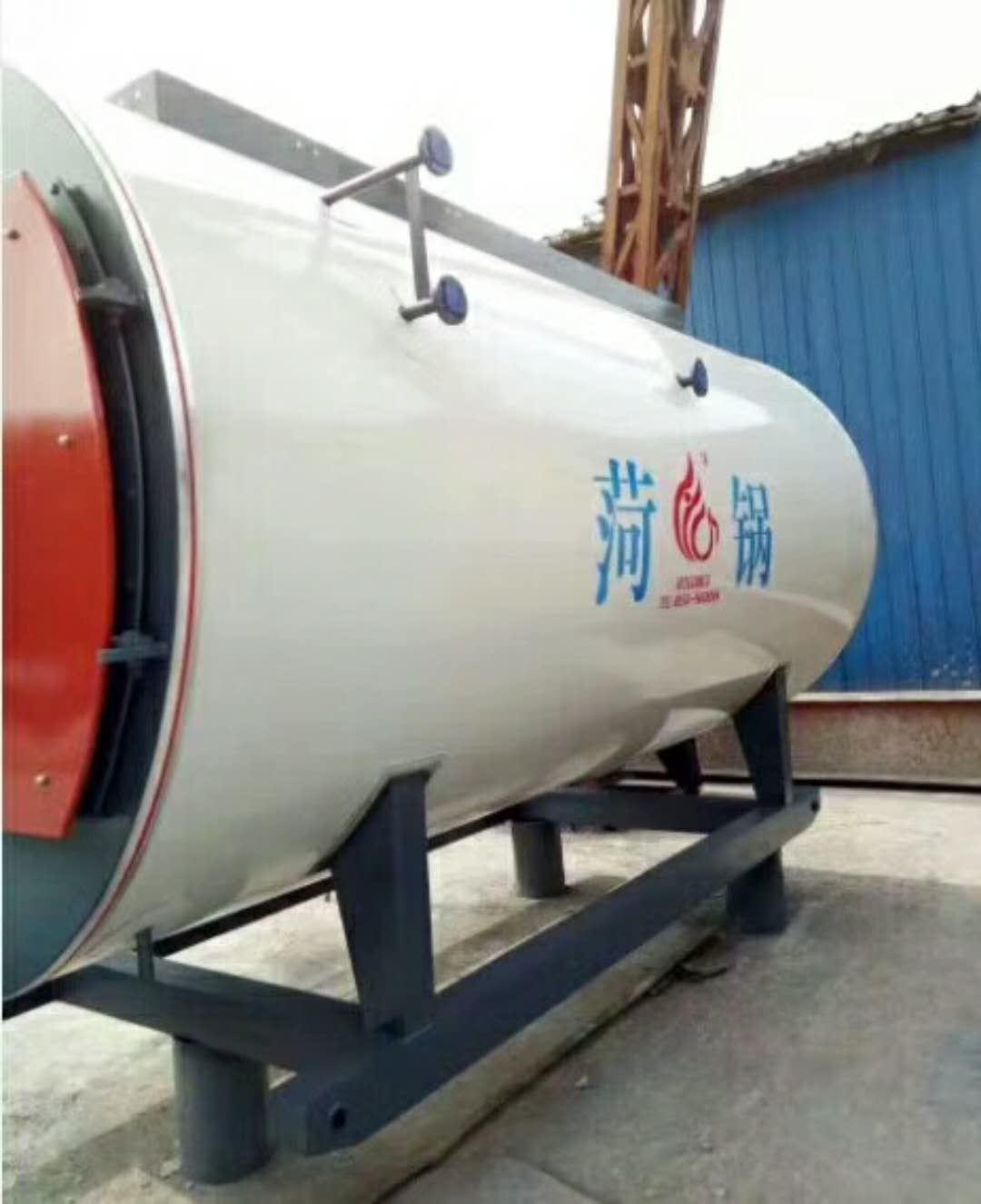
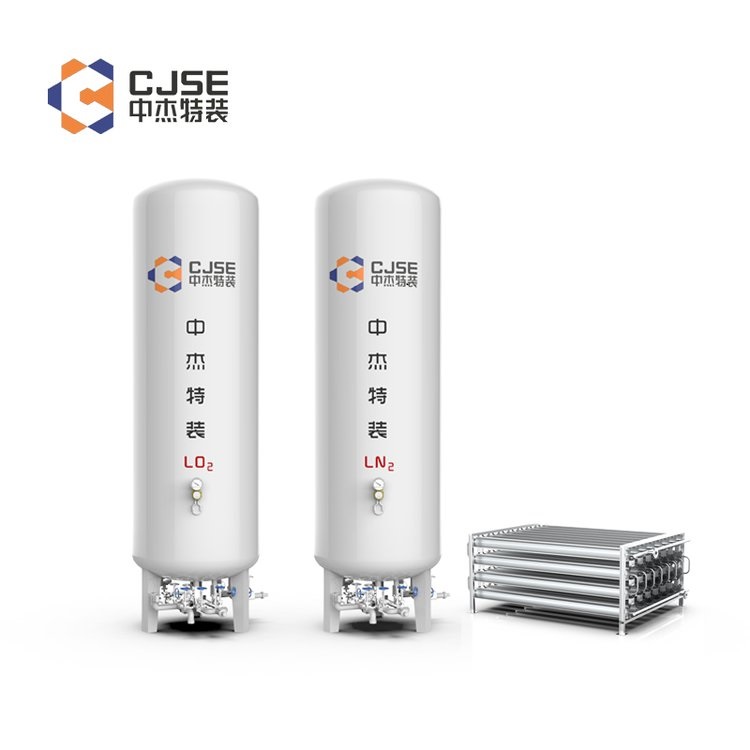


















Shandong Zhongjie Special Equipment (formerly Heze Boiler Factory Co., Ltd.) holds an A-grade boiler manufacturing license, an A2-grade pressure vessel manufacturing license, an A2-grade pressure vessel design license, a B-grade boiler installation license, and GB2/Class, GC2/Class pressure pipeline installation licenses, as well as equipment and machinery installation contracting qualifications. It is a member of the China Boiler and Water Treatment Association, the China Chemical Equipment Association, and the director unit of the Shandong Equipment Manufacturing Association. The company has also passed certifications for the ISO9001 Quality Management System, ISO14001 Environmental Management System, OHSAS18001 Occupational Health and Safety Management System, and the U.S. ASME/U2 certification.
Liquid oxygen storage tanks are widely used in various industries, mainly including the following aspects:
Industry: Liquid Oxygen Tanks are widely used in various fields for storing and supplying liquid oxygen as fuel and oxidizer. Liquid Oxygen Tanks play a crucial role in engine, propulsion systems, and oxygen supply systems.
Chemical Industry: Liquid oxygen tanks are used in chemical processes for storing and supplying liquid oxygen, employed in oxidation reactions, combustion reactions, and oxygen supply, etc. Chemical plants, refineries, and chemical product manufacturers may all utilize liquid oxygen tanks.
Industry: Liquid Oxygen Tanks are used in the field for storing and supplying liquid oxygen, utilized for oxygen therapy, respiratory support, and surgeries, etc. Liquid Oxygen Tanks are widely used in clinics, nursing facilities, and other institutions.
Experimental Research: Liquid oxygen tanks are used in scientific research and laboratories to provide liquid oxygen as experimental materials and fuel. Liquid oxygen tanks play a significant role in experimental research across various fields, including physics, chemistry, biology, and materials science.
Metalworking Industry: Liquid oxygen tanks are used in the metalworking and welding industries to supply high-purity oxygen for processes such as metal cutting, welding, and heat treatment.
Other Industries: Liquid Oxygen Tanks are also applied in various other industries such as the energy, environmental protection, and food industries, etc. They are used in energy production, environmental management, and food processing fields.
Note that the use of liquid oxygen tanks must strictly adhere to relevant safety regulations and operational guidelines to ensure safe operation and usage of the tanks.
Material control for low-temperature liquid storage tanks is a crucial aspect in ensuring the safety and reliability of the tanks. The following are some common material control measures:
Material Selection: Choose materials suitable for low-temperature environments, such as low-temperature alloy steel and stainless steel. These materials exhibit excellent low-temperature resistance and crack resistance, maintaining strength and toughness under low-temperature conditions.
Material Quality Control: Ensure that the selected materials meet relevant standards and specifications. Conduct chemical composition analysis, mechanical property tests, and impact tests on materials to ensure their performance meets design requirements.
Welding Material Selection: Choose welding materials suitable for low-temperature environments, such as low-temperature welding rods or welding wires. The welding materials should match the tank material, offering excellent welding properties and crack resistance.
Welding Process Control: Monitor welding process parameters such as current, voltage, and speed to ensure the quality and reliability of weld joints. Techniques like pulsed welding and laser welding, which have low heat input, can minimize the temperature gradient and residual stress in the heat-affected zone.
Corrosion Protection Measures: Treat the metal surfaces both internally and externally of the storage tank to extend its service life. Corrosion-resistant coatings and paints can be used to protect the metal structure of the tank from corrosion.
Material Performance Monitoring: Regular performance monitoring of the tank materials, such as mechanical property tests,
Standard specifications for liquid oxygen storage tanks may vary by region. Here are examples of some common standards:
US Standards: The American National Standards Institute (ANSI) and the American Petroleum Institute (API) have issued a series of standards for liquid oxygen storage tanks, such as ANSI/API Standard 2510 "Design and Construction of Liquid Oxygen Storage Tanks" and ANSI/API Standard 2510A "Supplementary to the Design and Construction of Liquid Oxygen Storage Tanks."
European Standards: The European Committee for Standardization (CEN) has issued a series of standards for liquid oxygen storage tanks, such as EN 13458 "Liquid Oxygen Storage Tanks. Design and Construction" and EN 14015 "Vertical Welded Steel Fixed Storage Tanks. Design and Construction."
Chinese Standards: The Standardization Administration of the People's Republic of China (SAC) has issued a series of standards for liquid oxygen storage tanks, such as GB/T 18442 "Design Code for Liquid Oxygen Storage Tanks" and GB/T 18443 "Construction and Acceptance Code for Liquid Oxygen Storage Tanks."
These standards typically cover requirements for the design, manufacturing, installation, operation, maintenance, and inspection of liquid oxygen storage tanks. They encompass provisions for the tank's structure, materials, safety valves, insulation, leak control, fire protection measures, and safety distances to ensure the safety and reliability of the storage tanks.
When designing, manufacturing, and using liquid oxygen storage tanks, it is essential to follow applicable standards and regulations, and to cooperate with local regulatory authorities and individuals to ensure compliance with relevant safety requirements and regulations.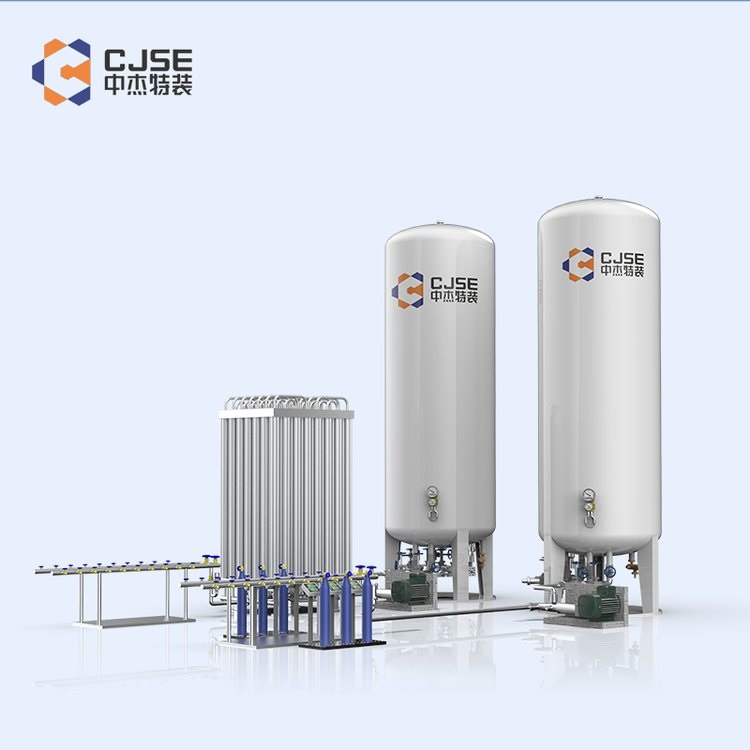
Tanks are specialized storage equipment that require regular inspections and maintenance to ensure safe operation. Here are common inspection methods for tanks:
Visual Inspection: Regularly inspect the exterior of the storage tank for any leaks, corrosion, deformation, cracks, and similar issues. Pay particular attention to the integrity of the tank's joints, welds, and valves.
Pressure Testing: Conduct pressure tests to inspect the sealing performance and pressure resistance of the tank. Use a pressure gauge or pressure sensor to test the tank's pressure, ensuring it can withstand the designed pressure.
Ultrasonic Testing: Ultrasonic testing is used to detect corrosion and cracks in storage tank walls. By scanning the tank with an ultrasonic probe, potential defects and issues are identified.
Magnetic Particle Inspection: Magnetic particle inspection can be used to detect cracks in storage tank walls and the quality of welds. This is done by applying magnetic particles to the tank surface and then using a magnetic particle inspection device to observe if there is any aggregation of the particles, which indicates the presence of cracks or weld issues.
Environmental Monitoring: Regularly monitor the environment around storage tanks, including checking gas concentrations and temperatures, to ensure the safety of the surrounding environment.
It is important to note that tank inspections should be conducted by certified inspection agencies or qualified personnel. The frequency and methods of inspection should be determined based on the tank's usage, size, and relevant regulatory requirements. Regular inspections and maintenance can help identify potential issues early on, ensuring the safe operation of the tank.
Our company attaches great importance to technological innovation and R&D design, boasting one municipal-level enterprise technology center in Heze City. We have established testing facilities for non-destructive testing, physical and chemical testing, welding testing, hydrostatic testing, and more. We are equipped with over 600 pieces of various equipment, including CNC machine tools, X-ray flaw detectors, digital ultrasonic flaw detectors, mechanical property testing machines, chemical analyzers, spectrometers, tensile testing machines, plasma welding machines, and more. The key products and technologies we have developed, such as thermal pressure vessel welding, biomass boiler emission reduction, and waste heat recovery, have successively been selected for multiple Shandong Provincial Department of Industry and Information Technology science and technology innovation projects, Shandong key projects, and Heze City innovation and excellence projects. We have cumulatively obtained 27 authorized utility models, 16 authorized inventions, participated in drafting 2 standards, 2 industry standards, and registered 15 trademarks. The technical team of our company, in collaboration with Professor Yajiang Li of Shandong University, has developed deep cryogenic container processing technology, utilizing the international plasma arc + wire-filled tungsten inert gas arc welding (PAW-GTAW) technology. The provincial-level scientific and technological achievement appraisal has determined that the technology level in the field of deep cryogenic container manufacturing has reached an international standard. Choose Zhongjie Special Equipment, let's create brilliance together!
WeChat Official Account

Scan to follow Official Account



















