


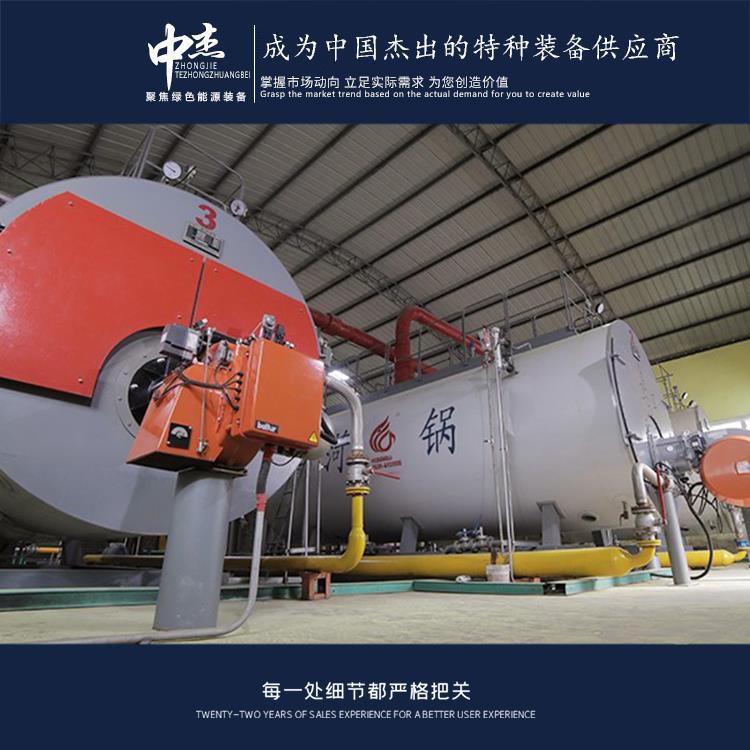

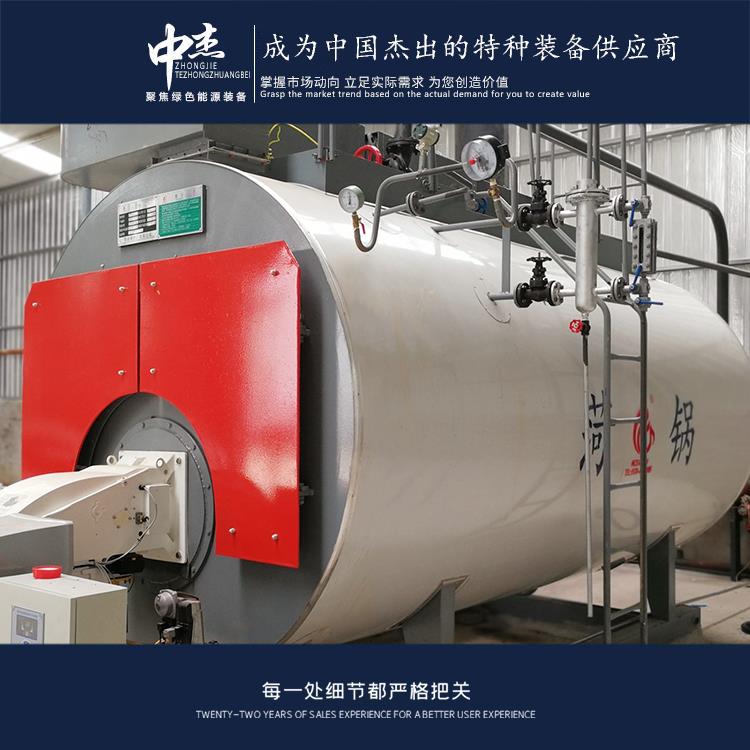
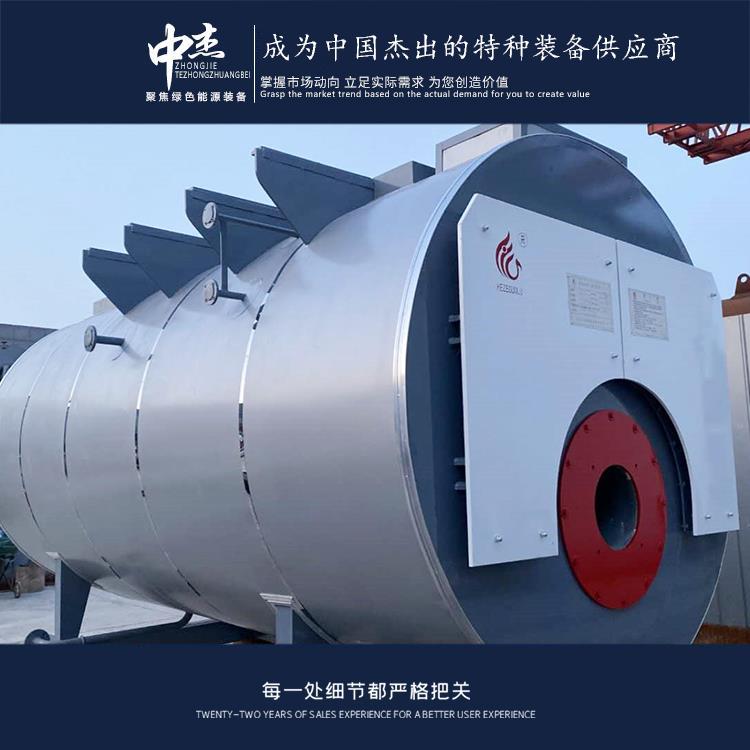


















Shandong Zhongjie Special Equipment's main products include: fuel (gas) boilers, organic heat carrier boilers, biomass boilers, waste heat recovery boilers, and other boiler products; vacuum insulation cryogenic pressure vessels such as LNG tanks, oxygen/nitrogen/argon tanks, and CO2 tanks; pressure vessel products such as denitrification engineering equipment, heat storage and energy storage equipment, and complete chemical equipment; central air conditioning and HVAC equipment such as ground (water) source heat pumps, air source units, water-cooled screw units, and air-cooled modular units. Planned products include large-scale energy centers, LNG transport vehicles, LNG tank containers, and other green energy equipment.
After the hot water boiler is shut down, here are some common maintenance measures:
1. Clean the boiler: After shutdown, the boiler should be cleaned first. Dust, dirt, and sediments inside the boiler can be washed with appropriate cleaning tools and detergents. Pay special attention to cleaning the combustion chamber, flue, and heat exchanger, among other critical areas.
2. Drain the water: Empty the water from the boiler to prevent the accumulation of scale and corrosive substances. Open the drain valve to drain the water until the interior of the boiler is completely empty.
3. Corrosion prevention: Before shutdown, apply corrosion prevention measures to prevent internal metal corrosion in the boiler. Use suitable corrosion inhibitors or coatings and apply them to the key areas inside the boiler.
4. Inspection and maintenance: During shutdown, regularly inspect the various components and connections of the boiler to ensure there are no loose, damaged, or leaking issues. If problems are found, repair or replace them promptly.
5. Keep dry: After shutdown, maintain the dryness inside the boiler. Open the ventilation and exhaust ports of the boiler to maintain air circulation, preventing moisture and mold growth.
6. Regular inspections: Regularly check the boiler's condition to ensure there are no abnormalities. Develop a corresponding inspection plan based on the boiler's usage and requirements, such as a comprehensive check every quarter or year.
7. Pre-startup preparation: Before restarting the boiler, perform the necessary preparatory work. This includes cleaning the boiler, checking the connections of equipment and pipelines, and inspecting fuel supply.
Steam boiler equipment water treatment refers to the process of treating water in steam boilers to ensure normal operation and extend the lifespan of the equipment. Below is basic knowledge about steam boiler equipment water treatment:
Water Quality Requirements: The water quality in steam boilers is of high requirement, usually necessitating the removal of impurities, dissolved oxygen, and hard substances. Impurities and hard substances can lead to scaling and corrosion on the boiler's inner walls, while dissolved oxygen can cause corrosion and bubble formation.
Removal of Impurities: Common methods for removing water impurities include sedimentation, filtration, and ion exchange. Sedimentation involves adding chemicals to make impurities settle, filtration removes impurities through filtering media, and ion exchange uses resin to adsorb and exchange ions to remove impurities from the water.
Hardness Adjustment: The hardness substances in water are mainly calcium and magnesium salts, which can cause scaling on the boiler's inner walls. Hardness can be adjusted by adding chemicals or using water softening equipment to prevent scaling issues.
Dissolved Oxygen Removal: Dissolved oxygen can cause corrosion and bubble formation. It can be removed by adding oxidizing agents or using deaeration equipment.
pH Control: The pH value of water in steam boilers affects equipment corrosion and scaling. It is usually necessary to control the water pH within an appropriate range, using buffers or regulators to adjust the pH.
Regular Testing and Maintenance: Regular water quality testing of steam boiler equipment is essential, including measuring hardness, dissolved oxygen, and pH levels. Appropriate water treatment measures and maintenance should be carried out based on the test results.
Steam boiler equipment water treatment is a crucial aspect for ensuring normal boiler operation and extending equipment lifespan. Rational water treatment measures can effectively prevent scaling, corrosion, and malfunctions on the boiler's inner walls.
Key benefits of installing expansion tanks in a thermal oil furnace include:
- Alleviating thermal expansion and contraction: During operation, temperature changes in the thermal oil furnace can cause thermal expansion and contraction of the thermal oil. The expansion tank provides space for the oil to expand, mitigating the impact of thermal expansion and contraction on equipment and piping, and preventing stress concentration and equipment deformation caused by it.
- Protecting equipment and piping: The expansion tank absorbs the expansion and contraction of the thermal oil, reducing impact and vibration on equipment and piping. This helps extend the lifespan of equipment and piping, and decrease the frequency of maintenance and replacements.
- Reducing leakage risk: The expansion tank provides a sealed space, minimizing the risk of thermal oil leakage. When the oil expands, excess can be accommodated through the expansion tank, preventing leaks and environmental pollution.
- Facilitating maintenance and repair: The presence of an expansion tank makes maintenance and repair of the thermal oil furnace system easier. When equipment or piping needs to be repaired or replaced, the flow and shutdown of the thermal oil can be controlled through the expansion tank, reducing downtime and the difficulty of maintenance.
-In summary, the expansion tank plays a role in alleviating thermal expansion and contraction, protecting equipment and piping, reducing leakage risk, and facilitating maintenance and repair in the thermal oil furnace system. It is an essential design element that contributes to the safety and reliability of the thermal oil furnace system.
In the burner of a thermal oil furnace, adjusting the air shutter under low flame conditions is crucial. Here are some common sense tips and precautions:
The role of the air shutter: The air shutter is a key component in the burner that controls the supply of combustion air. By adjusting the opening of the air shutter, you can control the flow of combustion air, thereby influencing the oxygen supply and combustion effect during the combustion process.
Adjustment under low flame conditions: Under low flame conditions, the burner needs to maintain a stable combustion to ensure combustion efficiency and heat output. In this case, it is necessary to adjust the opening of the air shutter appropriately to maintain an adequate supply of combustion air. Generally, the opening of the air shutter under low flame conditions is relatively small to maintain an appropriate oxygen supply, avoiding incomplete combustion or instability.
Ratio of combustion air to fuel: Under low flame conditions, it is necessary to ensure the appropriate ratio of combustion air to fuel. Excessive combustion air can lead to incomplete combustion and energy waste, while insufficient combustion air can cause instability in combustion and the production of harmful gases. By adjusting the opening of the air shutter, you can control the ratio of combustion air to fuel to achieve a stable combustion effect.
Burner tuning and optimization: During the installation and tuning of the burner in a thermal oil furnace, appropriate tuning and optimization are required. Through actual operation and monitoring, adjust the opening of the air shutter and other parameters to achieve the best combustion effect and energy efficiency performance. This requires...
Zhongjie Special Equipment upholds the great vision of "realizing employees' dreams, creating value for customers, and striving for the prosperity and strength of our motherland," and is dedicated to the development of the green energy equipment industry. We offer society products and services with high cost-performance!
WeChat Official Account

Scan to follow Official Account



















