


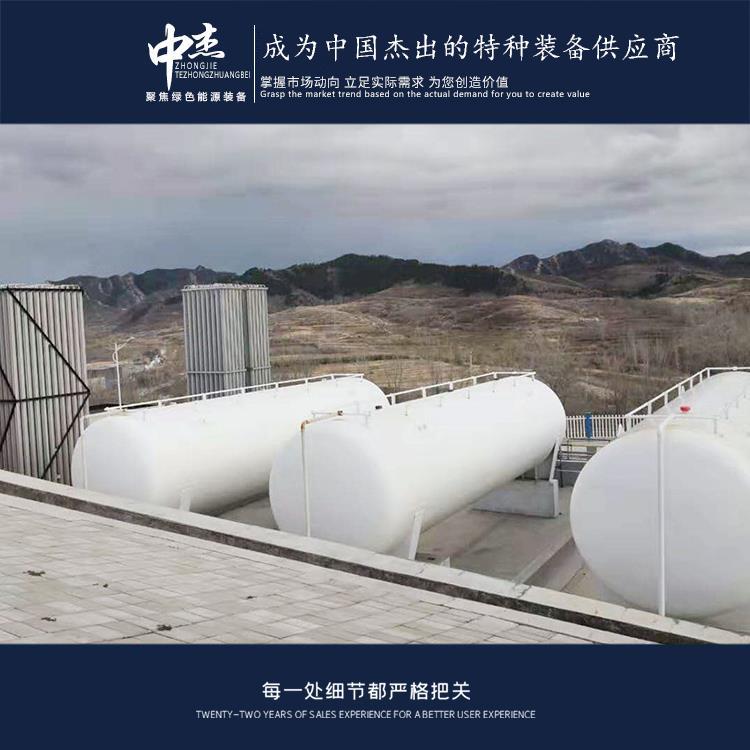

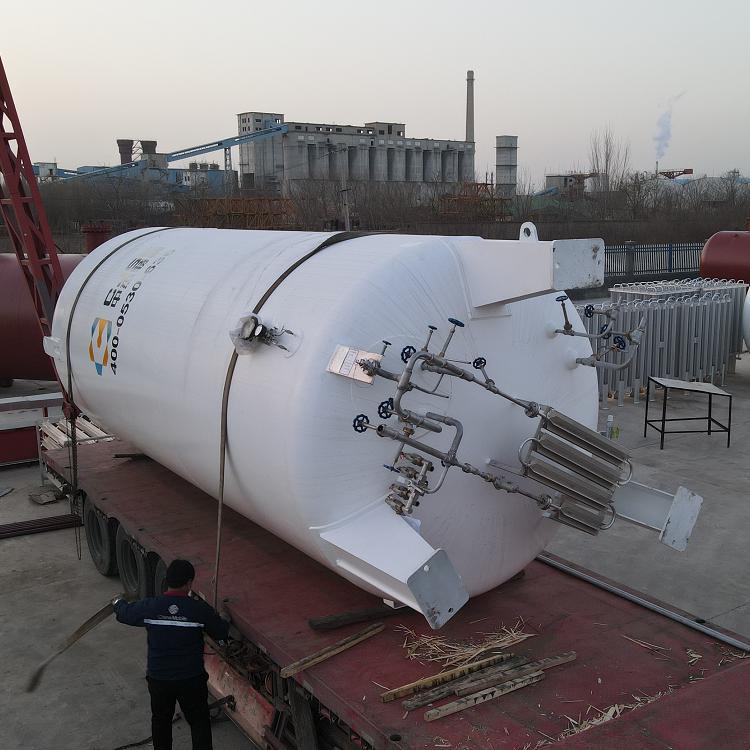
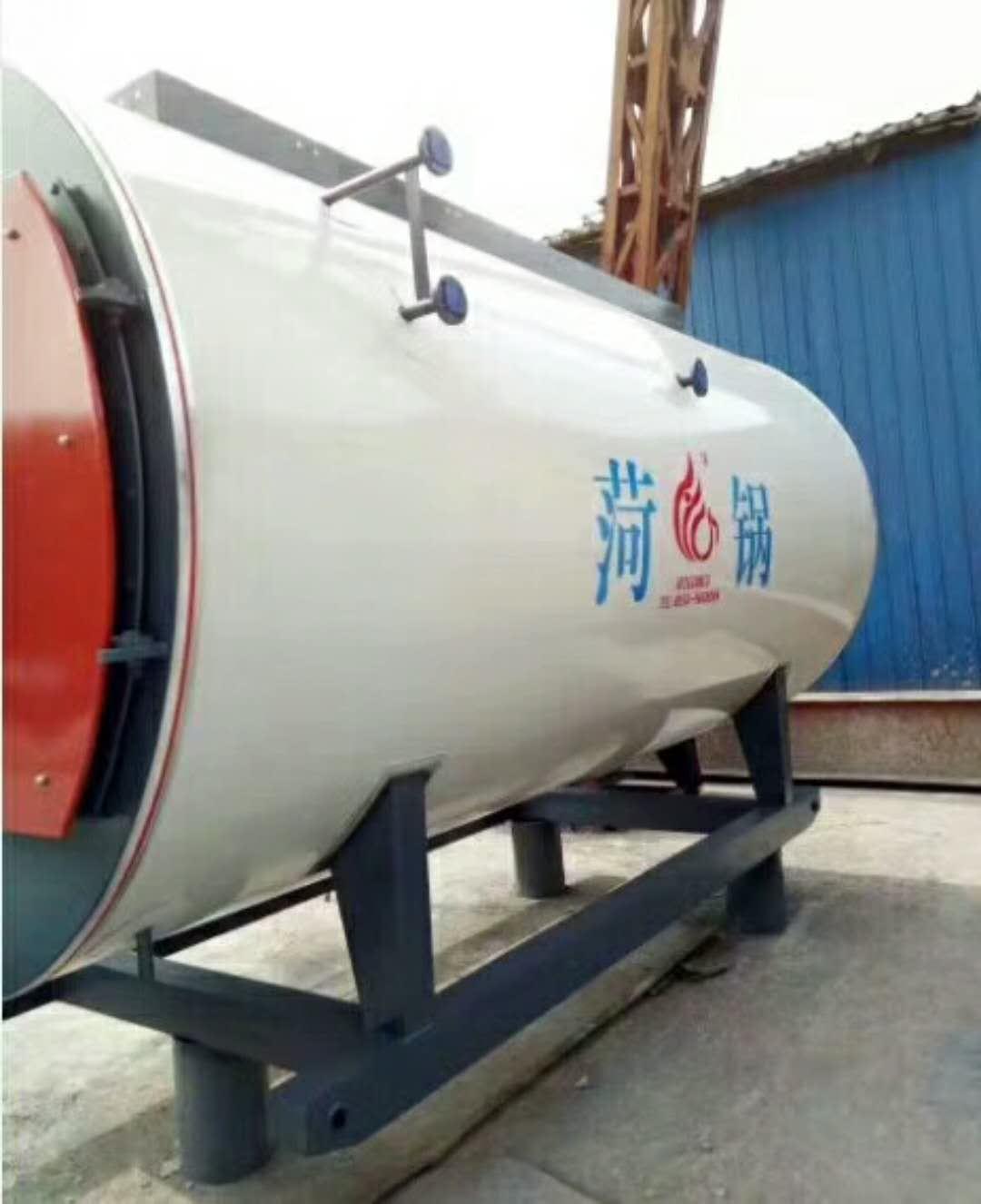


















Shandong Zhongjie Special Equipment's main products include: fuel (gas) boilers, organic heat carrier boilers, biomass boilers, waste heat boilers, and other boiler products; vacuum insulation cryogenic pressure vessels such as LNG tanks, oxygen/nitrogen/argon tanks, CO2 tanks; pressure vessel products such as denitrification engineering equipment, heat storage and energy storage equipment, complete chemical equipment sets; central air conditioning and HVAC equipment such as ground (water) source heat pumps, air source units, water-cooled screw units, and air-cooled modular units. Planned products include large-scale energy centers, LNG transport vehicles, LNG tank containers, and other green energy equipment.
Tanks are specialized storage equipment that require regular inspections and maintenance to ensure safe operation. Here are common inspection methods for tanks:
Appearance Inspection: Regularly inspect the tank's exterior for signs of leakage, corrosion, deformation, cracks, and other issues. Pay special attention to the integrity of the tank's joints, welds, and valves.
Pressure Test: Conduct pressure tests to assess the tank's sealing performance and pressure resistance. Pressure gauges or pressure sensors can be used for pressure testing the tank to ensure it can withstand the designed pressure.
Ultrasonic Testing: Ultrasonic testing can be used to detect corrosion and cracks in tank walls. By scanning the tank with an ultrasonic probe instrument, potential defects and issues are identified.
Magnetic Particle Inspection: This method can be used to detect cracks and weld quality in tank walls. By applying magnetic particles to the tank surface and then using a magnetic particle inspection device to observe for particle accumulation, it can be determined if there are any cracks or weld issues.
Environmental Monitoring: Regularly conduct environmental monitoring around the storage tanks, including the detection of gas concentrations and temperatures, to ensure the safety of the surrounding environment.
Note that tank inspections should be conducted by a certified inspection agency or qualified inspectors. The frequency and methods of inspection should be determined based on the tank's usage, size, and relevant regulatory requirements. Regular inspections and maintenance can help identify potential issues early on, ensuring the safe operation of the tank.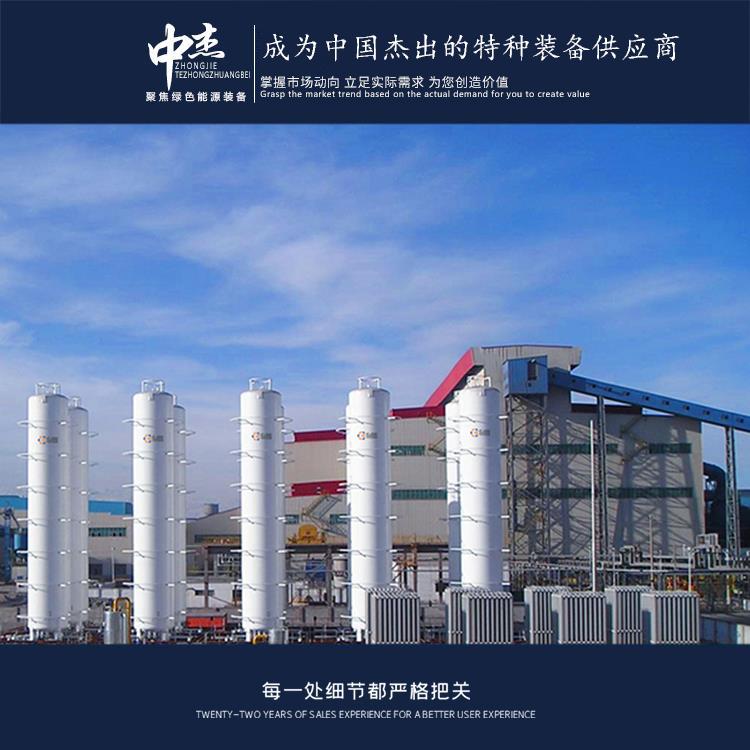
When storing liquid nitrogen in low-temperature storage tanks, be mindful of the following points:
Protective Gear: When handling low-temperature storage tanks, it is mandatory to wear appropriate protective gear, including gloves, protective clothing, and non-slip shoes. This equipment safeguards the skin from the low temperatures of liquid nitrogen and other hazards.
Avoid direct contact: Liquid nitrogen is extremely cold and can cause chilling. Therefore, avoid direct contact with liquid nitrogen, especially with the skin. Use tools or instruments for handling to prevent hand contact with liquid nitrogen.
Ventilation Requirements: In the operation area of low-temperature storage tanks, adequate ventilation must be ensured to expel gases produced by the evaporation of liquid nitrogen. Maintain air circulation to avoid excessive oxygen concentration, and reduce the risk of fire and explosion.
Prevent Leaks: Regularly inspect low-temperature storage tanks for leaks and equip with leak detection and alarm systems. In case of a leak, take immediate action to control and repair it. Avoid the hazards of liquid nitrogen leaks to personnel and the environment.
Fire Prevention Measures: Liquid nitrogen has a low boiling and freezing point, which can easily cause fires. Firewalls and fire-retardant coatings should be installed around low-temperature storage tanks to prevent fire occurrence and spread.
Electrostatic Protection: Electrostatic buildup in low-temperature storage tanks may cause sparks, increasing the risk of fire. Measures should be
The use of liquid oxygen tanks requires special attention to the following safety issues:
Training: Operators of liquid oxygen tanks must receive training on the properties of liquid oxygen, safety operating procedures, and emergency response measures. Only trained personnel are authorized to handle liquid oxygen tanks.
Safety Operating Procedures: Establish and adhere to the safety operating procedures for liquid oxygen tanks, including proper operational procedures, protective measures, and emergency response plans. Ensure operators follow the procedures to minimize accident risks.
Protection Measures: When using liquid oxygen tanks, it is mandatory to take necessary protective measures, such as wearing protective gloves and suits. Avoid direct contact with liquid oxygen to prevent frostbite.
Leak Control: Conduct regular inspections of liquid oxygen storage tanks for leaks and equip with leak detection and alarm systems. In case of a leak, immediate measures should be taken to control it and proceed with repairs.
Fire Prevention Measures: Liquid oxygen contains a high oxygen content, which is prone to cause fires. To prevent and contain fires, firewalls and fire-resistant coatings should be installed around liquid oxygen storage tanks.
Electrostatic Protection: Electrostatic buildup in liquid oxygen tanks can cause sparks, increasing the risk of fire. Measures such as using electroconductive materials and antistatic equipment should be taken to reduce the accumulation and discharge of static electricity.
Ventilation Requirements: Ensure adequate ventilation within the enclosed space of the liquid oxygen storage tank to expel vapors produced by the evaporation of liquid oxygen.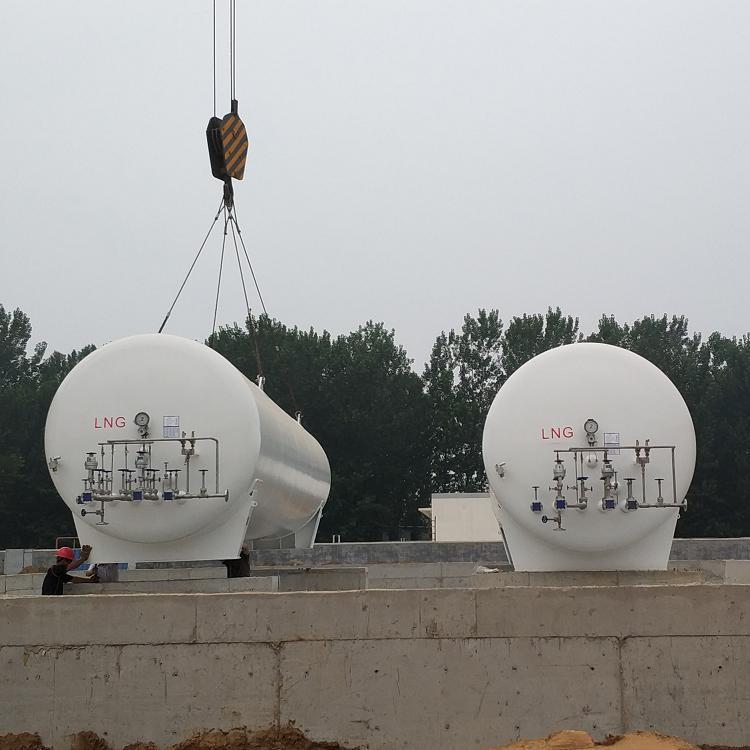
To ensure the quality of liquid oxygen storage tanks, the following measures can be taken:
选择可靠的供应商:选择有资质和经验的储罐制造商或供应商,确保其具备良好的声誉和可靠的质量管理体系。
Comply strictly with relevant standards and regulations: The design, manufacturing, and installation of liquid oxygen storage tanks should adhere to the applicable standards and regulations, such as standards, industry standards, or.
Quality Control and Inspection: Strict quality control and inspection are conducted throughout the manufacturing process, including raw material inspection, process monitoring, and finished product testing. Ensure that the materials, welding, and sealing of the storage tanks meet the requirements.
A comprehensive quality management system: Establish and implement a comprehensive quality management system, including quality control plans, quality inspection records, and quality training, to ensure that every stage meets quality requirements.
Routine Maintenance and Inspection: Regular maintenance and inspections of the liquid oxygen storage tank are conducted, including cleaning, coating protection, and corrosion prevention, to extend the tank's lifespan and maintain optimal operational condition.
Safety Operations and Management: Establish and implement safety operations and management systems, including proper use of tanks, operational procedures, safety training, etc., to ensure the safety and reliability of tanks during use.
Regular inspections and evaluations: Conduct regular inspections and evaluations of liquid oxygen tanks, including visual inspections, pressure tests, leak detection, and as required, non-destructive testing and material analysis, to ensure the quality and safety of the tanks.
By implementing these measures, the quality, reliability, and safety of the liquid oxygen storage tanks can be effectively ensured, meeting usage requirements and standards.
Our company places great emphasis on technological innovation and R&D design. We have one municipal-level enterprise technology center in Heze City, equipped with testing facilities for non-destructive testing, physical and chemical testing, welding testing, hydrostatic testing, etc. We have over 600 pieces of equipment, including CNC machine tools, X-ray flaw detectors, digital ultrasonic flaw detectors, mechanical property testing machines, chemical analyzers, spectrometers, tensile testing machines, plasma welding machines, and more. The key products and technologies we have developed, such as welding for temperature and pressure vessels, emissions reduction in biomass boilers, and waste heat utilization, have successively been selected for multiple Shandong Provincial Department of Industry and Information Technology science and technology projects, Shandong Provincial key projects, and Heze City innovative and excellent projects. We have cumulatively obtained 27 authorized utility models, 16 authorized inventions, participated in drafting 2 standards, 2 industry standards, and registered 15 trademarks. The technical team of our company, in collaboration with Professor Li Yajiang of Shandong University, has developed deep cryogenic container processing technology using the international plasma arc + wire filling argon arc welding (PAW-GTAW) technology. After the provincial-level scientific and technological achievement appraisal, the technology level has reached the international standard in the field of deep cryogenic container manufacturing. Choose Zhongjie Special Equipment, let's create brilliance together!
WeChat Official Account

Scan to follow Official Account



















