


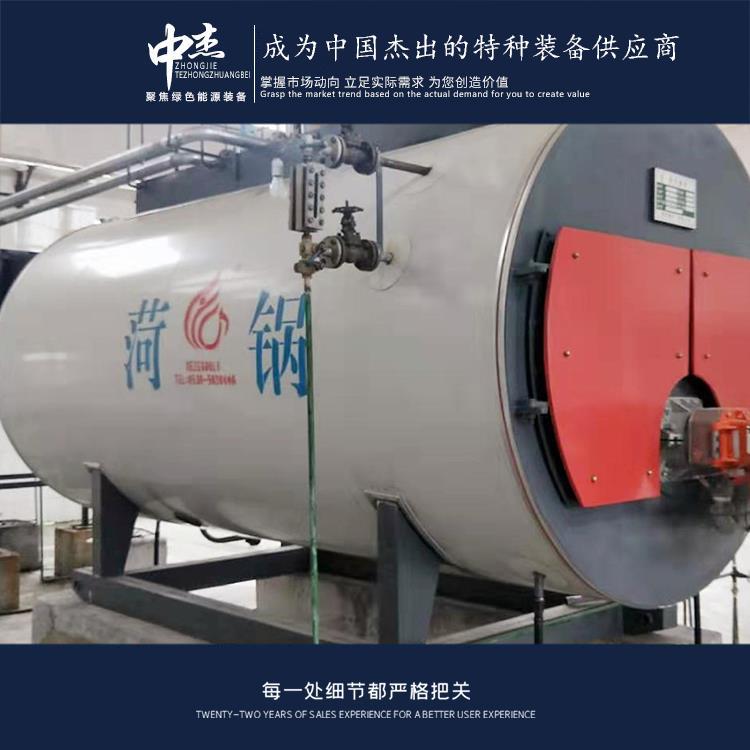

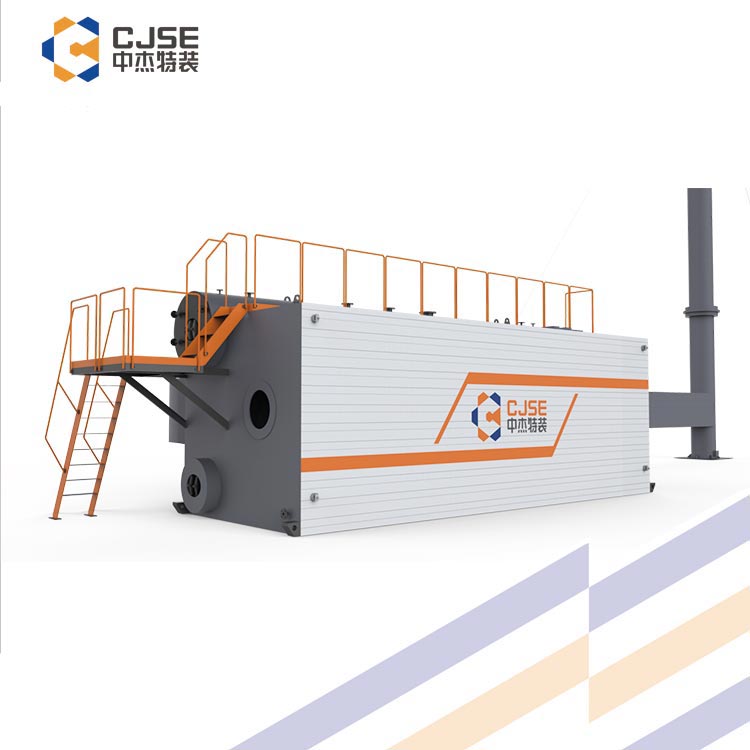
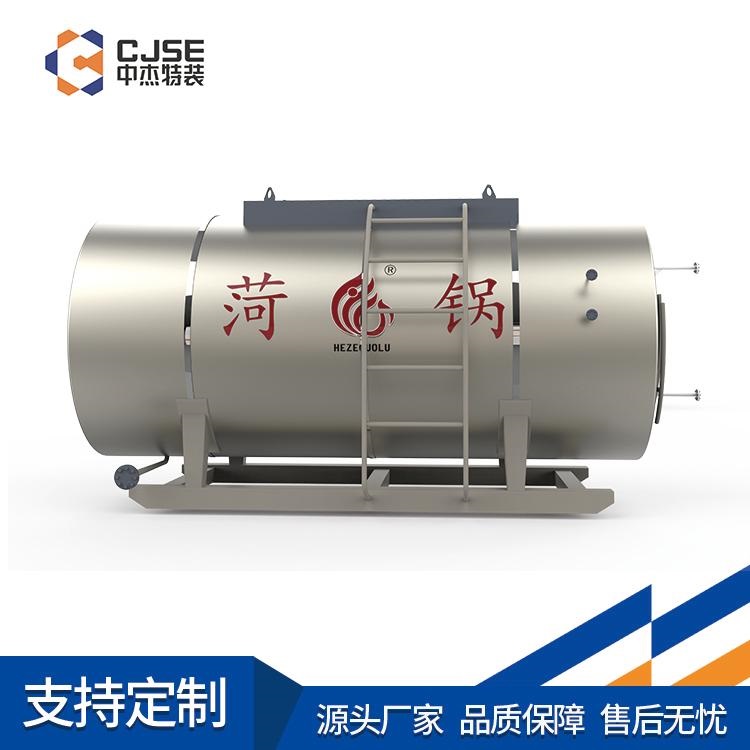


















Shandong Zhongjie Special Equipment (formerly Heze Boiler Factory Co., Ltd.) was established in 2001, located at No. 2218 Jinnan Road, Development Zone, Heze City, with a registered capital of 50 million yuan and total assets of 500 million yuan. The company has 7 business centers: boilers, deep-freeze containers, pressure vessels, central air conditioning, engineering installation, international trade, and Internet of Things. It has three factory sites on Jinnan Road, East Changjiang Road, and Bohai Road, covering a total of 200,000 square meters, with the main workshop spanning 83,000 square meters. It currently employs 710 people, including 247 engineers and technicians and 82 intermediate-level technicians. In December 2016, it was recognized as a "High-tech Enterprise" by the Science and Technology Department. In June 2021, it was identified as a "Specialized and New Enterprise in Shandong Province" by the Ministry of Industry and Information Technology. In June 2022, it was recognized as a "Gazelle Enterprise in Shandong Province" and in August 2022, it was identified as a "Specialized and New Small Giant Enterprise" by the Ministry of Industry and Information Technology.
A condensing steam boiler is an energy-saving boiler equipment with the following working principle and features:
Working Principle:
- Steam Generation: The condensing steam boiler produces high-temperature flue gas by burning gas, which then exchanges heat with the water pipes inside the boiler, heating the water into steam.
- Steam Condensation: After steam is generated, it enters the condenser where it exchanges heat with the condensing medium (usually cold water or recycled water), releasing heat from the steam and condensing it back into water.
- Flue Gas Reuse: The flue gas after condensation still contains a certain amount of heat, which can be recovered and reused by the flue gas reuse system to improve the boiler's thermal efficiency.
Features:
- Energy Saving: The condensing steam boiler utilizes the principle of steam condensation to fully utilize the heat in the steam, enhancing the thermal energy utilization efficiency and saving energy consumption.
- Low Emissions: Due to the recovery of most of the heat during the flue gas condensation process, the flue gas temperature is lower, resulting in relatively lower emissions of pollutants, minimizing environmental impact.
- Compact Structure: The condensing steam boiler typically features a compact design, occupying less space, making it suitable for places with limited space.
- Fast Startup: The condensing steam boiler has the characteristics of fast startup and shutdown, allowing for flexible adjustments and operation according to actual needs.
- Wide Application Range: The condensing steam boiler is suitable for heating and steam requirements in industrial production processes, such as power plants, chemical factories, textile mills, etc.
It is important to note that proper maintenance and care should be taken with the condensing steam boiler during use, including regular cleaning of the condenser and flue gas reuse system to ensure its normal operation and performance.
The inspection of heat-conducting oil boiler tube plates is crucial for ensuring the safe operation of the boiler and preventing potential issues. Below are the general steps for inspecting heat-conducting oil boiler tube plates:
- Visual Inspection: Conduct a visual examination to check for any obvious corrosion, cracks, deformation, or other anomalies on the surface of the tube plates. Pay special attention to checking for cracks or leaks at the welds and joints.
- Clean the Tube Plates: Clean the surface of the tube plates thoroughly to remove dirt and deposits for proper inspection.
- Ultrasonic Testing: Use an ultrasonic testing device to inspect the tube plates to detect any possible cracks or other defects. Ultrasonic testing helps determine the integrity and reliability of the tube plates.
- Pressure Test: Perform a pressure test to verify the sealing and pressure resistance of the tube plates. Gradually increase the pressure during the test, observe for any leakage, and ensure the tube plates can withstand the design pressure.
- Tube Plate Thickness Measurement: Use an ultrasonic thickness gauge to measure the thickness of the tube plates to confirm if the thickness meets the design requirements. Pay particular attention to the corrosion status to ensure it is within the safe range.
- Weld Inspection: Inspect the welds of the tube plates to ensure the quality of the welds meets relevant standards and specifications. Check the integrity, quality of the welds, and if the welding process meets requirements.
- Documentation and Reporting: Document and report the inspection results of the tube plates, including any issues found, corrective measures, and recommendations. These records and reports serve as references for future maintenance and management.
Note that the inspection of heat-conducting oil boiler tube plates should be carried out by qualified personnel and strictly adhered to relevant standards and specifications. If any issues or anomalies are detected, appropriate repair and maintenance measures should be taken promptly to ensure the safe operation of the boiler.
Steam boiler energy saving is an urgent mission, for the following reasons: Energy consumption: Steam boilers typically use fuel to produce steam, and the consumption of fuel directly affects energy consumption. With the increasingly scarce energy resources and rising energy prices, energy saving has become an important task. Environmental protection: The exhaust gases and dust produced by fuel combustion pollute the environment, including air pollution and greenhouse gas emissions. By reducing fuel consumption through energy saving, the impact on the environment and carbon emissions can be decreased. Economic benefits: Energy saving can lower energy consumption and operating costs, enhancing energy utilization efficiency. By implementing energy-saving measures, companies can reduce energy expenses and improve economic benefits. Sustainable development: Energy saving is a vital component of sustainable development. By reducing energy consumption, the lifespan of energy resources can be extended, providing more energy reserves for future development. Legal and regulatory requirements: Many regions have established laws, regulations, and policies on energy conservation and emission reduction, requiring companies to adopt energy-saving measures and reduce energy consumption and environmental pollution. Therefore, steam boiler energy saving is an urgent task. By implementing effective energy-saving measures, energy consumption can be reduced, environmental pollution can be decreased, economic benefits can be improved, and sustainable development can be achieved.
Chemical cleaning of industrial boilers is a common method that effectively removes dirt and sediments inside the boiler, enhancing heat exchange efficiency and extending the boiler's lifespan. Below are the general steps and methods for industrial boiler chemical cleaning:
Preparation: Turn off the boiler's power and gas supply, drain the water and steam inside the boiler, and ensure the boiler is in a safe condition. Prepare the necessary chemical cleaning agents and equipment.
Cleaning Agent Selection: Choose a suitable chemical cleaning agent based on the boiler's material and the nature of the dirt. Common cleaning agents include acidic cleaners, alkaline cleaners, and chelating agents.
Cleaning Agent Circulation: Dissolve the cleaning agent in an appropriate amount of water and circulate it into the boiler using a pump. Determine the circulation time and temperature based on the boiler's size and the extent of the dirt.
Cleaning Agent Action: During the circulation, the cleaning agent reacts chemically with the dirt inside the boiler, dissolving and decomposing it. Acidic cleaners can remove rust and scale, while alkaline cleaners can remove grease and organic matter.
Rinsing and Neutralizing: After the cleaning agent circulation is complete, rinse the boiler with clean water to flush out the cleaning agent and dissolved dirt. Use a neutralizing agent to neutralize any remaining acidic or alkaline substances, ensuring a neutral environment inside the boiler.
Inspection and Maintenance: After cleaning, inspect the boiler to ensure the cleaning effectiveness and normal operation. Perform the necessary maintenance and repair work as needed.
Points to Note During Industrial Boiler Chemical Cleaning:
- Strictly follow the instructions and safety operation procedures for chemical cleaning agents to ensure the safety of the operators.
- Choose the appropriate cleaning agent and method based on the boiler's material and the cleaning agent's properties.
- Control the concentration, temperature, and circulation time of the cleaning agent to avoid unnecessary damage to the boiler.
- Monitor the concentration and pH value of the cleaning agent in a timely manner during the cleaning process and adjust the cleaning conditions.
- After cleaning, flush the boiler to ensure all cleaning agents and dirt are completely removed.
- After cleaning, perform maintenance and repairs promptly to ensure the normal operation and long-term use of the boiler.
Our company attaches great importance to technological innovation and research and development, boasting 1 city-level enterprise technology center in Heze City. We have established testing facilities for non-destructive testing, physical and chemical testing, welding testing, hydrostatic testing, etc. Equipped with over 600 pieces of various equipment including CNC machine tools, X-ray flaw detectors, digital ultrasonic flaw detectors, mechanical property testing machines, chemical analyzers, spectrometers, tensile testing machines, plasma welding machines, and more. Our key products and technologies, such as thermal pressure vessel welding, biomass boiler emission reduction, and waste heat utilization, have successively been shortlisted for multiple Shandong Provincial Department of Industry and Information Technology science and technology projects, Shandong key projects, and Heze City innovative and excellent projects. We have cumulatively obtained 27 authorized utility models, 16 authorized inventions, participated in drafting 2 standards, 2 industry standards, and registered 15 trademarks. Our technical team, in collaboration with Professor Li Yajiang of Shandong University, has developed deep cryogenic vessel processing technology using the internationally recognized plasma arc + filler wire tungsten inert gas arc welding (PAW-GTAW) technique. The provincial scientific and technological achievement appraisal has determined that our technology level in deep cryogenic vessel manufacturing has reached international standards.
Choose ZJET's customized solutions, let's create brilliance together!
WeChat Official Account

Scan to follow Official Account



















