


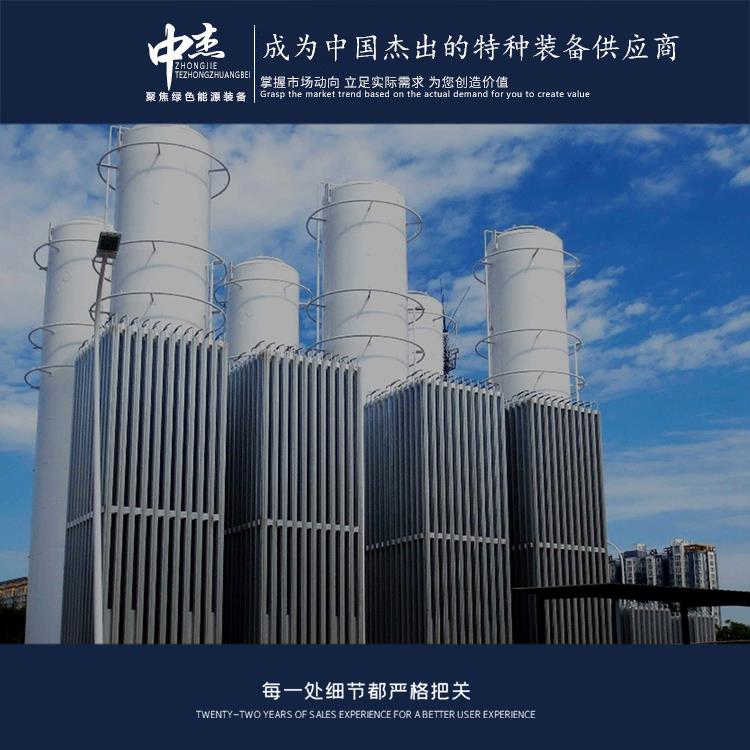

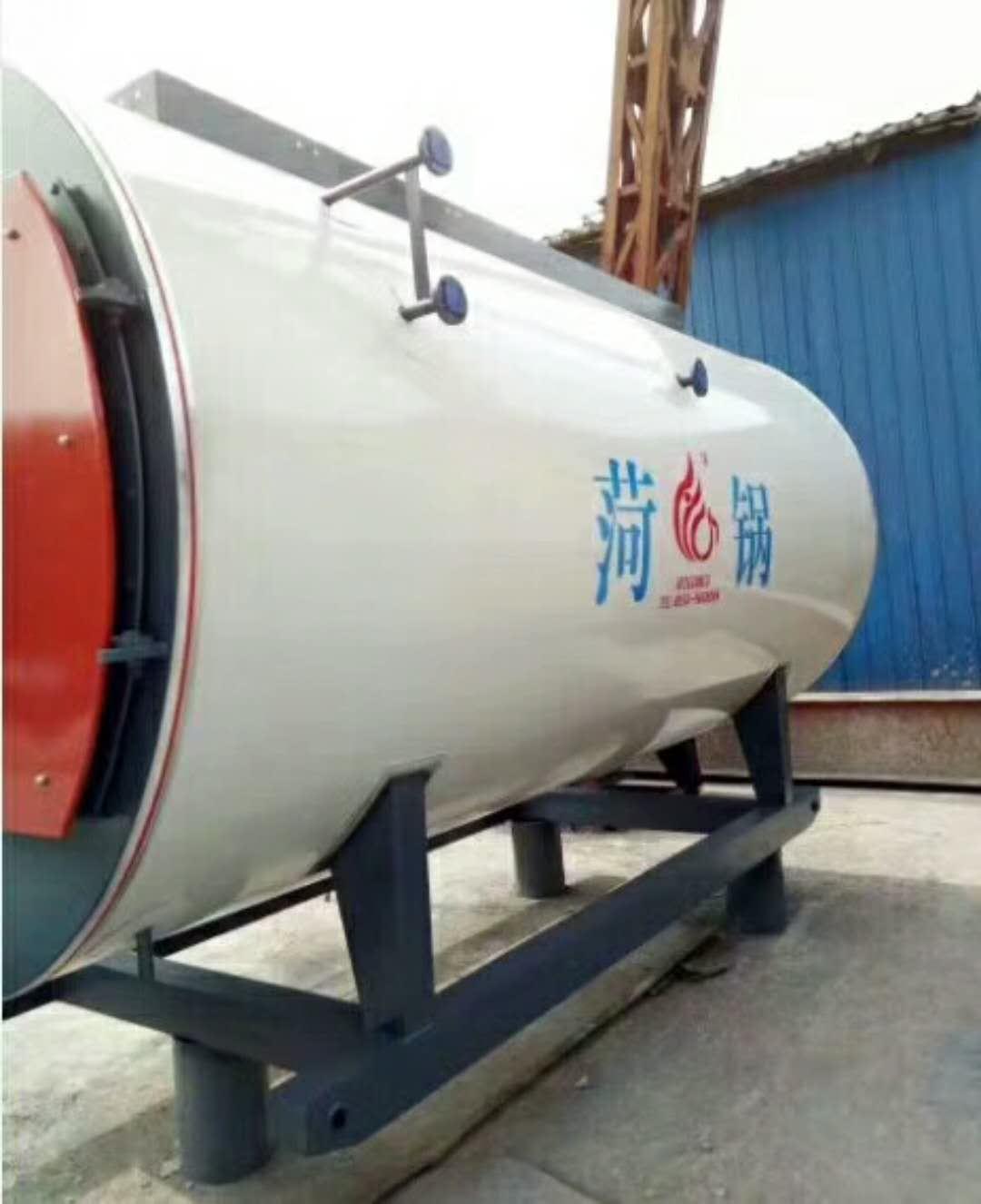
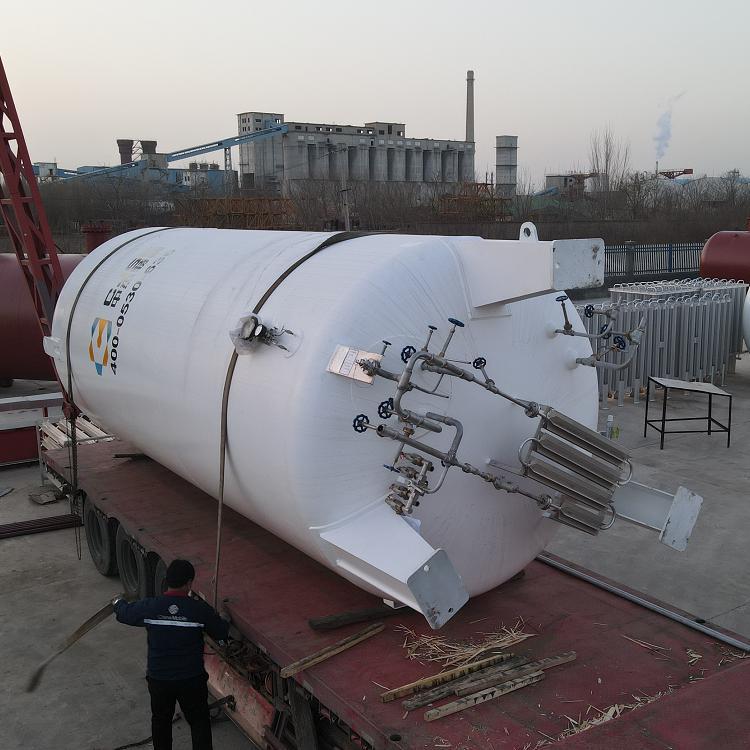


















Shandong Zhongjie Special Equipment (formerly Heze Boiler Factory Co., Ltd.) holds an A-grade boiler manufacturing license, A2-grade pressure vessel manufacturing license, A2-grade pressure vessel design license, B-grade boiler installation and GB2, GC2 pressure pipeline installation licenses, as well as a mechanical and electrical equipment installation contracting qualification. It is a member of the China Boiler and Water Treatment Association, the China Chemical Equipment Association, and the Council Member of the Shandong Equipment Manufacturing Association. The company has also passed certifications for the ISO9001 Quality Management System, ISO14001 Environmental Management System, OHSAS18001 Occupational Health and Safety Management System, and the U.S. ASME/U2 certification.
The safety distance for liquid oxygen storage tanks refers to the distance that must be maintained around the tank to ensure the safety of personnel and equipment. The specific requirements for safety distances may vary depending on different regions and application sites. Here are some common principles for safety distances:
Buildings and Equipment: Liquid oxygen tanks should be kept at a certain safety distance from buildings, equipment, and other storage tanks to prevent the spread of fires, explosions, and leaks. The specific safety distance requirements should be assessed and determined according to local regulations and standards.
Fire and Heat Sources: Liquid oxygen is highly oxidizing and can easily cause fires and explosions. Therefore, liquid oxygen tanks should be kept at a sufficient safety distance from fire and heat sources and flammable materials to prevent fires and explosions.
Ventilation and Exhaust: Good ventilation and exhaust should be maintained around liquid oxygen storage tanks to prevent the accumulation of vapor and the formation of explosive mixtures. The design and operation of the ventilation and exhaust system should comply with relevant safety standards and specifications.
Personnel and Traffic: Personnel and traffic around liquid oxygen storage tanks should be restricted and controlled to ensure personnel safety and the normal operation of the tank. Warning signs, safety fences, and restricted areas should be established to prevent unauthorized personnel from entering the tank area.
It is important to note that the safety distance for liquid oxygen storage tanks should be assessed and determined based on the specific application site and safety requirements. When designing, installing, and operating liquid oxygen storage tanks, relevant regulations, standards, and safety guidelines should be followed to ensure the safety and reliability of the tank.
Daily inspections and maintenance of liquid oxygen storage tanks are crucial for ensuring their safe operation. The following are general steps for the daily inspections and maintenance of liquid oxygen storage tanks:
Visual Inspection: Regularly inspect the tank's exterior, including the shell, welds, valves, and fasteners. Pay attention to any abnormalities such as cracks, corrosion, or deformation.
Leak Detection: Utilize appropriate leak detection equipment to inspect for leaks in tanks and connections. Leak detection can be conducted using methods such as gas detectors or liquid oxygen detection agents.
Pressure Testing: Regularly conduct pressure tests to inspect the tank's sealing and pressure resistance. Perform pressure tests in accordance with relevant standards and regulations, and record the test results.
Valve and Fitting Inspection: Verify that the tank's valves and fittings are functioning properly and check for any looseness or damage. Ensure the valves operate smoothly and reliably.
Insulation Layer Inspection: Check for any damage or detachment in the tank's insulation layer. Repair or replace any damaged insulation materials to ensure effective insulation.
Cleaning and Drainage: Regularly clean the interior of the tank to remove accumulated impurities and dirt. Regularly drain to prevent contaminants and sediments in liquid oxygen from damaging the tank.
Safety Equipment Inspection: Examine the safety equipment surrounding the storage tanks, such as fire isolation areas and alarm systems, to ensure they are functioning properly.
Record and Document Management: Document each inspection and maintenance outcome, including the inspection date, contents, identified issues, and corrective measures. Establish comprehensive management records and documents for tracking and managing the tank's operational status.
Note that inspections and maintenance of liquid oxygen tanks should be conducted by trained personnel, adhering to relevant regulations and standards. Ensure safety during maintenance and operation, and consult experts for accurate guidance.
The temperature difference between the interior and exterior of a low-temperature liquid storage tank depends on multiple factors, including the tank's design, insulation performance, the temperature of the liquid, and the ambient temperature outside. Generally, the internal temperature of a low-temperature liquid storage tank is much lower than the ambient temperature.
Low-temperature liquid storage tanks are commonly used for storing liquids like liquid nitrogen, liquid oxygen, and liquid argon. These liquids have very low boiling points, usually below -100 degrees Celsius. To maintain the低温 state of the liquids, the tanks must have excellent insulation properties to minimize heat conduction and evaporation loss.
Low-temperature liquid storage tanks typically offer a smaller temperature variance. Generally, the internal temperature of the tank can be maintained near the boiling point of the liquid, usually several tens of degrees lower than the ambient temperature. The specific temperature variance depends on the tank's design and insulation properties, as well as the characteristics of the liquid.
Note that the temperature differences in low-temperature liquid storage tanks may change over time. As time progresses, the insulating material's performance may be affected by wear or aging, leading to increased temperature differences. Therefore, regular inspection and maintenance of the tank's insulation are crucial to ensure its effective and stable insulating performance.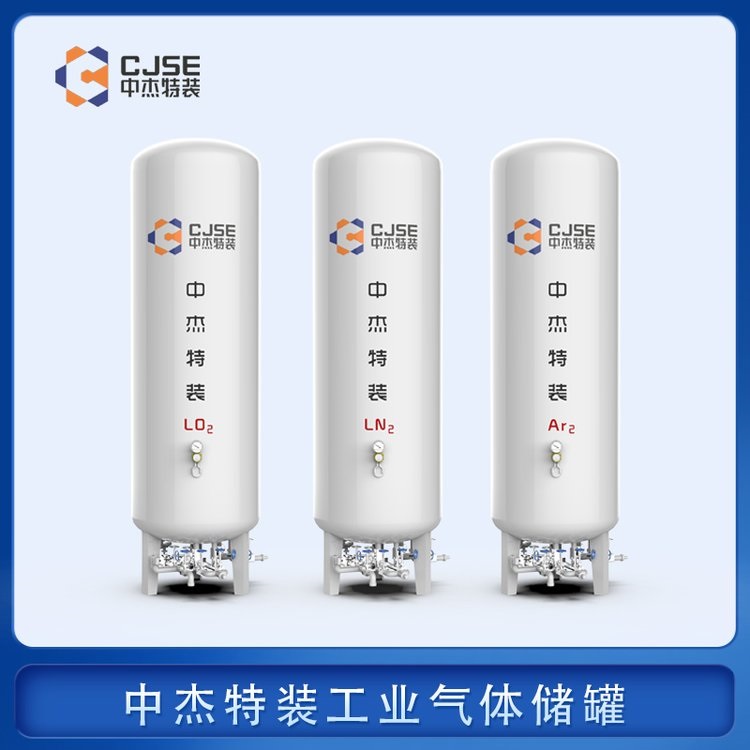
Liquid Oxygen Stations are facilities used for storing and supplying liquid oxygen, with liquid oxygen tanks being a crucial component of these stations. Liquid oxygen tanks possess several important functions and characteristics:
Liquid Oxygen Storage: Liquid oxygen tanks are primarily used for storing liquid oxygen, cooling gaseous oxygen below its critical temperature to convert it into a liquid state. The storage density of liquid oxygen is high, allowing for a large volume of oxygen to be stored in a relatively small space.
Maintain Low Temperature: Liquid oxygen tanks are typically designed with a double-layer structure, separated by a vacuum layer between the inner and outer layers to minimize heat conduction and maintain low temperatures. This aids in preserving the low-temperature state of liquid oxygen, preventing premature vaporization.
Safety Design: Liquid oxygen tanks must be designed and manufactured with safety in mind. They are typically made from high-strength materials such as stainless steel or aluminum alloy to withstand high pressure and low-temperature conditions. Additionally, liquid oxygen tanks are equipped with safety valves, pressure sensors, and temperature sensors to ensure that the internal pressure and temperature of the tank remain within safe limits.
Supply System Connection: Liquid oxygen tanks are typically connected to the supply system to transport liquid oxygen to the required locations. The supply system includes liquid oxygen pumps, pipelines, and valves, etc., which are used to extract liquid oxygen from the tank and deliver it to the user end.
Liquid oxygen tanks play a crucial role in storing and maintaining liquid oxygen in liquid oxygen stations. Their design and operation must strictly adhere to relevant safety regulations and procedures to ensure the safety and reliability of the storage and supply process.
Shandong Zhongjie Special Equipment, welcome customers to our factory for business talks.
WeChat Official Account

Scan to follow Official Account



















