


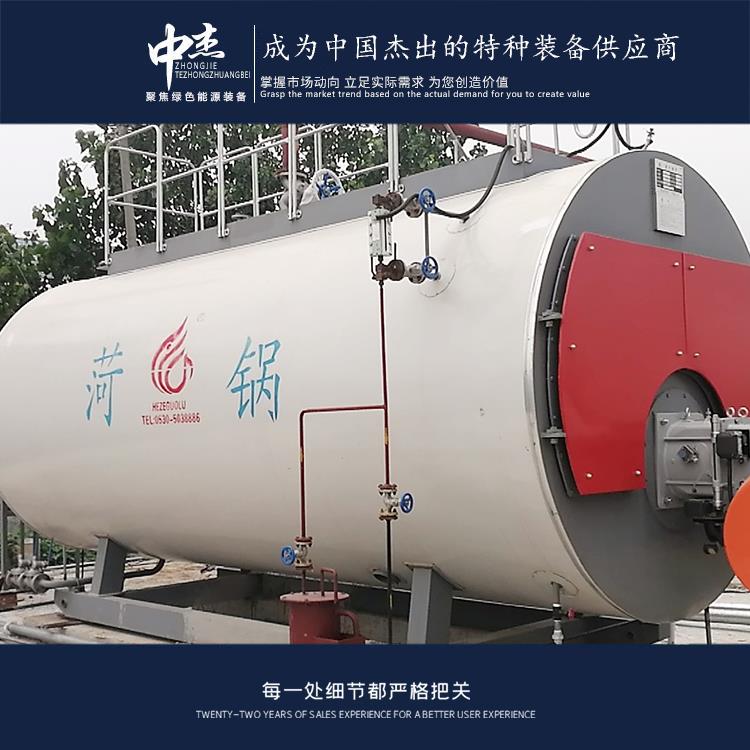

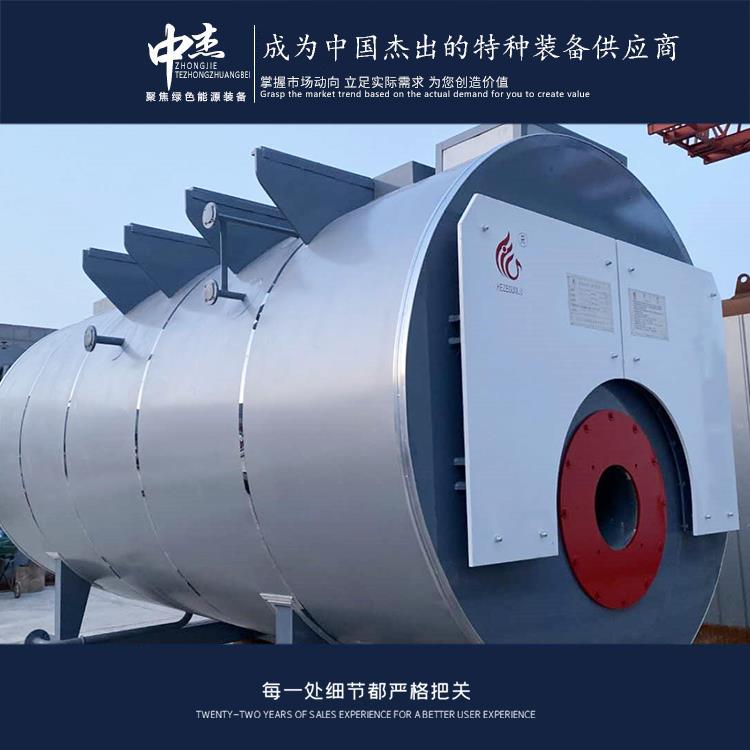
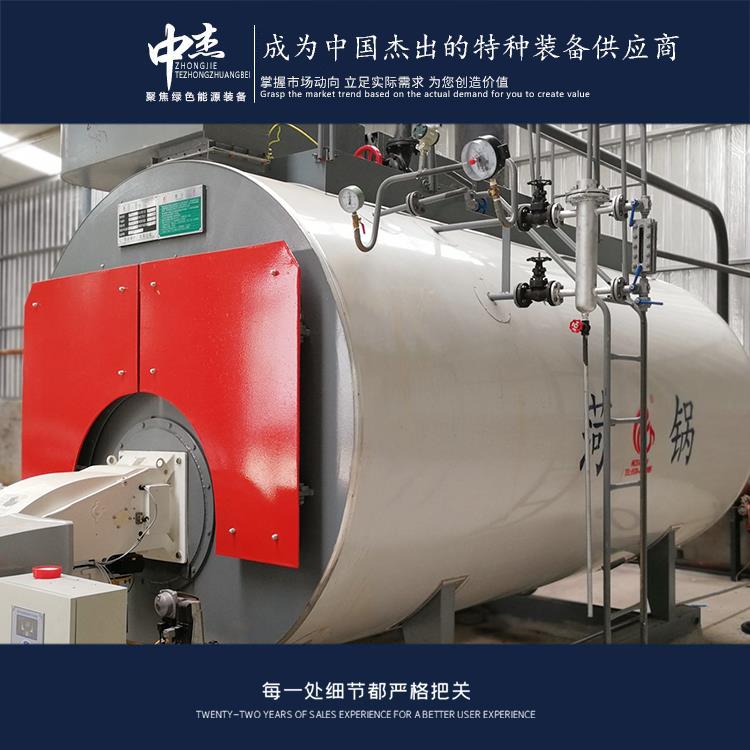


















Shandong Zhongjie Special Equipment (formerly Heze Boiler Factory Co., Ltd.) was established in 2001, located at No. 2218 Jinnan Road, Economic and Technological Development Zone, Heze City, with a registered capital of 50 million yuan and total assets of 500 million yuan. The company has 7 business centers: boilers, deep-freezing vessels, pressure vessels, central air conditioning, engineering installation, international trade, and Internet of Things. It has three factory sites on Jinnan Road, East Changjiang Road, and Bohai Road, covering a total area of 200,000 square meters, with the main workshop spanning 83,000 square meters. Currently, there are 710 employees, including 247 engineering and technical personnel and 82 middle-level technicians. In December 2016, it was recognized as a "High-Tech Enterprise" by the Science and Technology Department. In June 2021, it was identified as a "Specialized and New Enterprise in Shandong Province" by the Department of Industry and Information Technology. In June 2022, it was recognized as a "Gazelle Enterprise in Shandong Province" and in August 2022, as a "Specialized and New Small Giant Enterprise" by the Ministry of Industry and Information Technology.
Before starting the heating gas hot water boiler, the following proper procedures must be followed:
- Check the gas supply system: Ensure the gas supply system is operating normally, inspect gas pipelines, valves, and pressure regulators, and confirm there are no leaks or blockages in the gas supply.
- Inspect the water system: Check the water circulation system of the heating system, including pumps, valves, and pipes, to ensure the waterways are clear, with no leaks or blockages.
- Check the electrical system: Inspect the boiler's electrical system, including power connections, controllers, and sensors, to ensure the electrical equipment is functioning properly.
- Check the safety devices: Inspect the boiler's safety devices, including safety valves, pressure switches, and water level controllers, to ensure they are working correctly and ensure the safe operation of the boiler.
- Prepare for ignition: According to the boiler's operating instructions, prepare the tools and equipment needed for ignition, including igniters and ignition electricity.
- Open the gas valve: Slowly open the gas valve to ensure a steady gas supply and avoid gas surges.
- Ignition start-up: Follow the boiler's operating instructions for ignition start-up. Perform the appropriate operations according to the boiler model and control system to ensure smooth ignition.
- Monitor operational status: After start-up, closely monitor the boiler's operating status, including combustion, water level, and pressure, to ensure normal operation with no abnormalities.
- Adjust parameters: Adjust the boiler's parameters according to actual needs, including temperature, pressure, and water level, to meet the requirements of the heating system.
- Regular maintenance: After start-up, perform regular maintenance, including cleaning burners, checking water level and pressure, and replacing worn parts, to ensure normal operation and safety of the boiler.
- It is recommended to refer to the boiler's operating manual and manufacturer's guidance before starting the heating gas hot water boiler to ensure correct and safe operation. If necessary, a person may be requested to perform the operation and maintenance.
The inspection of heat-conducting oil boiler tube plates is to ensure the safe operation of the boiler and prevent potential issues. The following are general steps for inspecting heat-conducting oil boiler tube plates:
Visual Inspection: Conduct a visual inspection to check for any obvious corrosion, cracks, deformation, or other anomalies on the surface of the tube plate. Pay special attention to checking for cracks or leaks at the welds and joints.
Cleaning the Tube Plate: Clean the surface of the tube plate thoroughly to remove dirt and deposits, allowing for a proper inspection.
Ultrasound Testing: Use an ultrasound testing device to inspect the tube plate to detect any possible cracks or other defects. Ultrasound testing can help determine the integrity and reliability of the tube plate.
Pressure Test: Perform a pressure test to verify the sealing and pressure resistance of the tube plate. Gradually increase the pressure during the test, observe for any leakage, and ensure the tube plate can withstand the designed pressure.
Tube Plate Thickness Measurement: Use an ultrasonic thickness gauge to measure the thickness of the tube plate to determine if it meets the design requirements. Pay particular attention to the corrosion condition of the tube plate, ensuring it remains within a safe range.
Weld Inspection: Inspect the welds of the tube plate to ensure the quality of the welds meets relevant standards and specifications. Check the integrity of the welds, the quality of the weld, and whether the welding process meets requirements.
Documentation and Reporting: Record and report the inspection results of the tube plate, including any issues found, corrective measures, and recommendations. These records and reports can serve as references for future maintenance and management.
It is important to note that the inspection of heat-conducting oil boiler tube plates should be carried out by qualified personnel and conducted strictly in accordance with relevant standards and specifications. If any issues or anomalies are detected, appropriate repair and maintenance measures should be taken promptly to ensure the safe operation of the boiler.
Industrial boilers, during long-term operation, can develop scale and sedimentation, affecting heat exchange efficiency and the normal operation of the boiler. Here are some effective descaling methods:
1. Mechanical Cleaning: This method involves using cleaning equipment and tools to wash away scale and sedimentation inside the boiler with high-pressure water or mechanical brushes. It is suitable for lighter scale and sedimentation.
2. Chemical Cleaning: This method uses chemical cleaning agents to dissolve scale and sedimentation through chemical reactions. Select the appropriate cleaning agent based on the composition and nature of the scale, and follow the instructions for use. Chemical cleaning requires safe operation to avoid damage to equipment and the environment.
3. Acid Cleaning: Acid cleaning is a common descaling method used for difficult-to-dissolve scale and sedimentation. Common acid cleaning agents include... Choose the appropriate acid cleaning agent and concentration based on the specific situation. Acid cleaning requires safe operation to prevent harm to equipment and personnel.
4. Alkaline Cleaning: Alkaline cleaning is a descaling method for certain types of scale and is suitable for alkaline scale. Common alkaline cleaning agents include... Choose the appropriate alkaline cleaning agent and concentration based on the specific situation. Alkaline cleaning requires safe operation to prevent harm to equipment and personnel.
5. Physical Descaling: Physical descaling methods include ultrasonic cleaning and electro-descaling. Ultrasonic cleaning uses the vibration effect of ultrasound to shake the scale loose. Electro-descaling uses the principle of electrolysis to dissolve scale through the action of electricity. These physical descaling methods are suitable for special situations and specific types of scale.
When selecting a descaling method, consider the specific conditions of the boiler.
The management system for gas heat transfer oil furnace equipment incidents primarily includes the following aspects:
1. Equipment Safety Management System: Establish and improve the safety management system for gas heat transfer oil furnace equipment, clarify responsibilities and authorities, and ensure the safe operation of the equipment. This includes safe operation procedures, emergency response plans for accidents, equipment inspection and maintenance schedules, etc.
2. Equipment Maintenance Management System: Establish an equipment maintenance management system, clarify maintenance responsibilities and plans. This includes regular equipment inspections, maintenance, and repairs to ensure the normal and safe operation of the equipment.
3. Equipment Operation Management System: Establish an equipment operation management system, clarify operation procedures and requirements. This includes start-up, shutdown, adjustment, and monitoring processes to ensure the safety and operation of the equipment.
4. Equipment Accident Management System: Establish an equipment accident management system, clarify reporting, investigation, and handling procedures for accidents. This includes reporting requirements for equipment accidents, responsibility追究, cause analysis, and improvement measures to reduce accidents and minimize losses.
5. Equipment Training and Assessment System: Establish an equipment training and assessment system to ensure operators possess the necessary skills and knowledge. This includes equipment operation training, safety training, and technical training, as well as regular assessments and evaluations of operators.
6. Equipment Inventory and Record Management System: Establish an equipment inventory and record management system to record equipment operation, maintenance records, accident records, etc. This includes inventory management, filling and preserving maintenance records, and organizing and analyzing accident records for equipment management and issue tracing.
The above is some basic content of the management system for gas heat transfer oil furnace equipment incidents. Specific management systems should be formulated and improved based on actual conditions. At the same time, relevant laws, regulations, and standards must be adhered to to ensure the safety and environmental performance of the equipment.
Shandong Zhongjie Special Equipment, welcome customers to our factory for business discussions.
WeChat Official Account

Scan to follow Official Account



















