


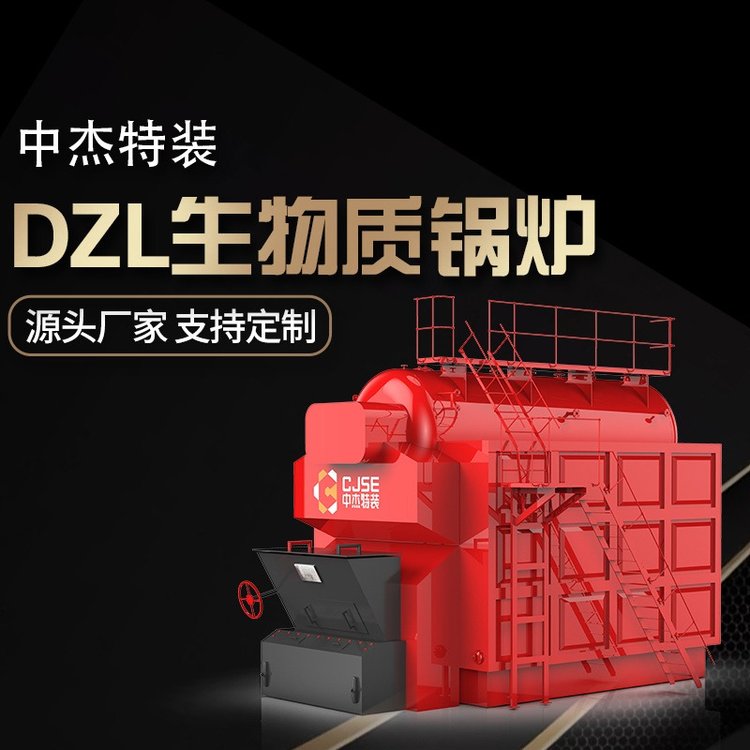



















Shandong Zhongjie Special Equipment's main products include: fuel (gas) boilers, organic heat carrier boilers, biomass boilers, waste heat boilers, and other boiler products; vacuum insulation deep-freeze pressure vessels such as LNG storage tanks, oxygen-nitrogen-argon storage tanks, and CO2 storage tanks; pressure vessel products such as denitrification engineering equipment, heat storage and energy storage equipment, and complete chemical equipment; central air conditioning and ventilation equipment such as ground (water) source heat pumps, air source units, water-cooled screw units, and air-cooled modules. Planned products include large-scale energy centers, LNG transport vehicles, LNG tank containers, and other green energy equipment.
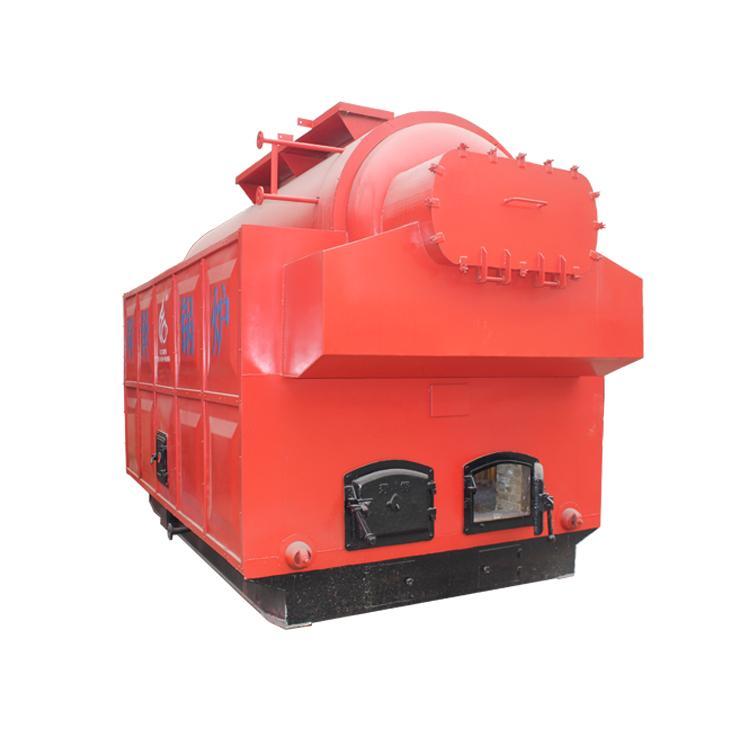
Chain biomass boiler, also known as chain grate biomass boiler, is a special type of biomass boiler. It utilizes a chain grate as the fuel conveying and combustion device.
The chain grate is composed of a series of interconnected chains, with evenly spaced grate plates distributed along them. Fuel is transported from one end of the furnace to the other through the movement of the chain grate, while simultaneously burning within the furnace.
The working principle of the chain biomass boiler is: the fuel is evenly distributed on the chain grate, and as the chain moves, the fuel gradually moves towards the outlet of the furnace chamber. Inside the furnace, the fuel is thoroughly mixed with air, releasing heat energy through combustion reactions. At the same time, the design of the grate plates and the movement of the chain ensure uniform and complete combustion of the fuel.
Chain biomass boiler features include:
Versatile: Chain grate burners are capable of accommodating various biomass fuels such as sawdust and straw, demonstrating strong fuel adaptability.
High combustion efficiency: The design of the chain grate ensures even and complete combustion of the fuel, enhancing combustion efficiency.
Operation Stable: The chain grate movement is stable, ensuring reliable fuel delivery and combustion process, resulting in high stability of the boiler operation.
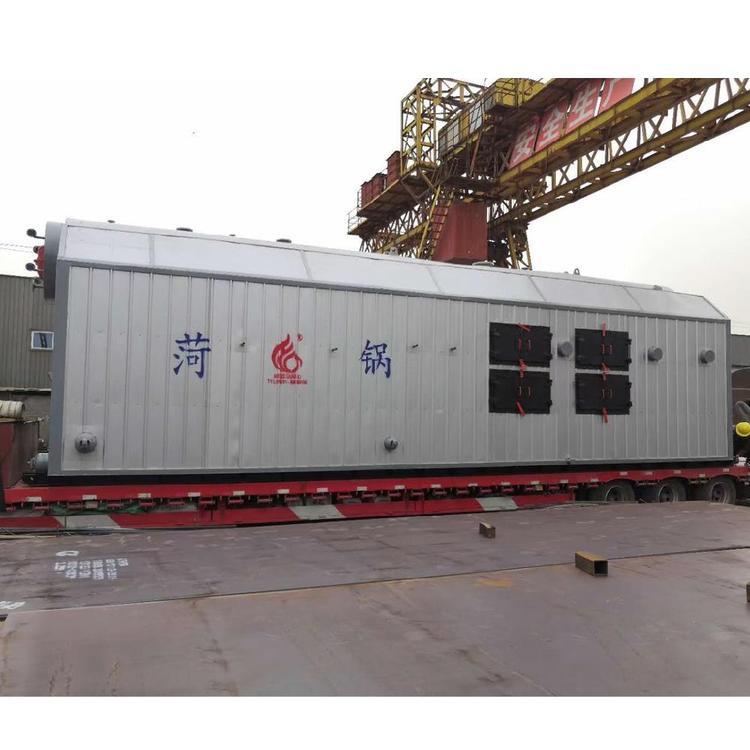
Suitable for Large Capacity Boilers: Chain biomass boilers are designed for large capacity boiler systems, meeting the requirements of the industrial and heating sectors.
Chain biomass boilers are widely used in the field of biomass energy utilization, efficiently utilizing biomass fuel to achieve sustainable energy use.
When installing biomass boilers, the following aspects should be taken into consideration:
Safety Distance: Biomass boilers should maintain adequate safety distances from other equipment, buildings, etc., to prevent fires and safety accidents.
Ventilation and Exhaust: Biomass boilers require an efficient ventilation and exhaust system to ensure that flue gases produced during the combustion process are promptly expelled, preventing indoor accumulation and potential health hazards.
Fuel Storage: Biomass boilers require appropriate fuel storage facilities, such as fuel silos or storage areas. The fuel storage area should be dry, well-ventilated, and fire prevention measures should be taken to prevent spontaneous combustion and fires.
Pipe Connections: The pipe connections of biomass boilers should be sturdy and reliable, ensuring the normal operation of fuel supply, flue gas discharge, and water circulation. Suitable sealing materials should be used at the pipe connection points to prevent leaks and energy loss.
Control System: The control system of the biomass boiler should be reliable and stable, capable of accurately controlling and adjusting parameters such as temperature, pressure, and fuel supply. The control system should be equipped with safety protection features, such as overheat protection and low water level protection.
Regular Maintenance: Biomass boilers require regular maintenance and care, including cleaning the combustion chamber, inspecting pipes and valves, and clearing the flue and dust removal equipment. Regular maintenance ensures the normal operation and combustion of the biomass boiler.
Compliance Requirements: When installing biomass boilers, it is necessary to adhere to relevant laws, regulations, and standards, such as safety production regulations and environmental protection requirements. Ensure that the installation of biomass boilers complies with specifications to guarantee safety and environmental protection.
Above are some points to note when installing biomass boilers to ensure safe and environmentally friendly operation. During the installation process, be
Biomass fuels refer to fuels made from biomass materials that can be used for energy production. Common types of biomass fuels include:
Timber and wood chips: Including logs, charcoal, and wood pellets, etc.
Agricultural straw: such as corn stalks, rice straw, etc.
Energy crops: such as sugarcane, corn, rapeseed, etc.
Animal Manure: Such as cow dung, chicken dung, etc.
Biogas produced from anaerobic fermentation of organic waste.
Bio-oil: such as vegetable oils, animal fats, etc.
Bioethanol: Ethanol fuel produced by fermentation of plants.
Biofuel: Fuel produced through esterification reactions from vegetable oils or animal fats.
These biomass fuels can be used for power generation, heating, and fuel substitution, offering advantages such as renewability and low carbon emissions.
The biomass boiler combustion technology refers to the process of burning biomass fuel to release heat energy. The following are common biomass boiler combustion technologies:
Fuel Burning Methods: Biomass boilers can utilize various burning methods, including direct combustion, gasification combustion, and liquefaction combustion, etc. Direct combustion involves burning biomass fuel directly in the furnace; gasification combustion converts biomass fuel into combustible gas at high temperatures before burning; liquefaction combustion involves converting biomass fuel into liquid fuel before burning.
Combustion Control: Biomass boilers require a combustion control system to regulate fuel supply, air supply, and the combustion process. By adjusting the ratio of fuel to air, control the combustion temperature and efficiency to achieve a stable combustion process.
Combustion Equipment: The combustion equipment of biomass boilers includes the furnace, grate, and combustion chamber, etc. The furnace is the main combustion area, the grate supports and burns the fuel, and the combustion chamber provides an appropriate environment for combustion.
Combustion Equipment: To enhance the combustion efficiency and environmental performance of biomass boilers, combustion equipment such as pre-heaters, dust removers, and desulfurization devices are often installed. Pre-heaters are used to increase the combustion temperature and thermal efficiency of the fuel, dust removers to remove particulate matter from flue gas, and desulfurization devices to eliminate sulfur from the flue gas.
Combustion Control and Monitoring: Biomass boilers require the installation of combustion and monitoring systems.
Our company attaches great importance to technological innovation and R&D design. We possess 1 municipal-level enterprise technology center in Heze City, equipped with testing facilities for non-destructive testing, physical and chemical testing, welding testing, hydrostatic testing, etc. We have over 600 types of equipment, including CNC machine tools, X-ray flaw detectors, digital ultrasonic flaw detectors, mechanical property testing machines, chemical analyzers, spectrometers, tensile testing machines, plasma welding machines, and more. The key products we have developed, such as temperature-pressure vessel welding, biomass boiler emission reduction, and waste heat recovery, have successively been selected for multiple Shandong Provincial Department of Industry and Information Technology scientific and technological innovation projects, Shandong Provincial key projects, and Heze City innovative and excellent projects. We have accumulated 27 authorized utility models, 16 authorized inventions, participated in drafting 2 standards, 2 industry standards, and registered 15 trademarks. The technical team of our company, in collaboration with Professor Yajiang Li of Shandong University, has developed deep cryogenic container processing technology, utilizing the international plasma arc + filler wire tungsten inert gas arc welding (PAW-GTAW) technology. The provincial-level scientific and technological achievement identification confirms that our technology level in deep cryogenic container manufacturing has reached international standards. Choose Zhongjie Special Equipment, and let's create brilliance together!
WeChat Official Account

Scan to follow Official Account



















