


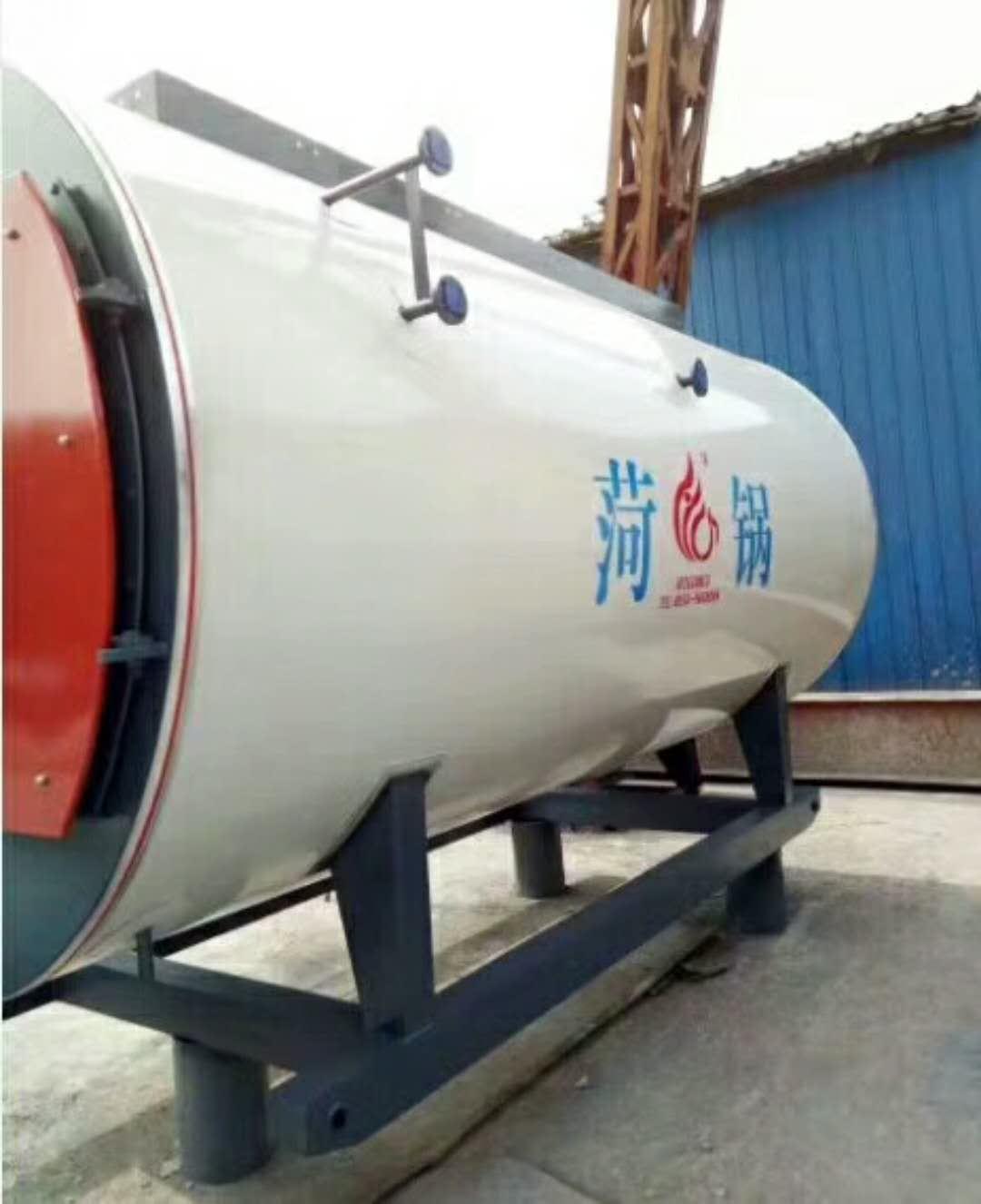

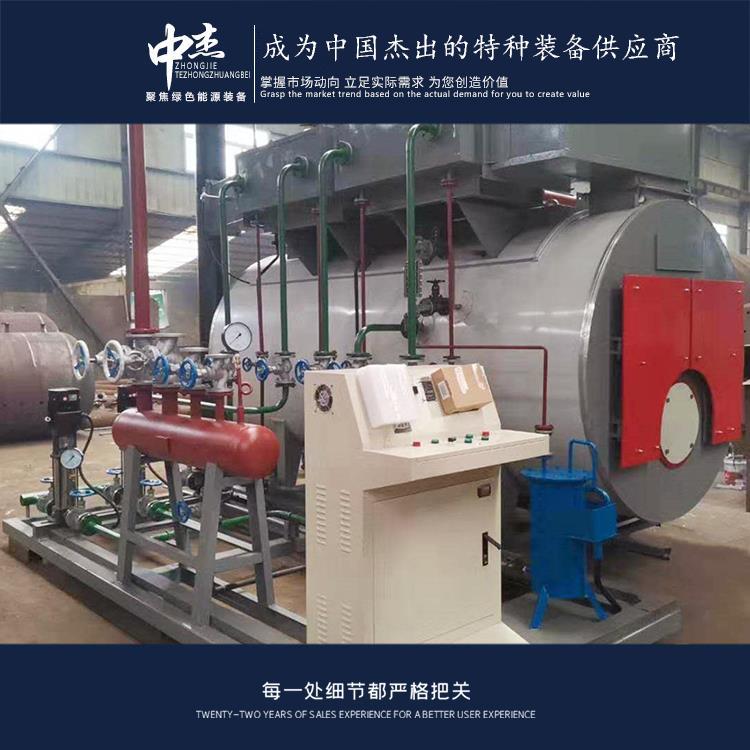
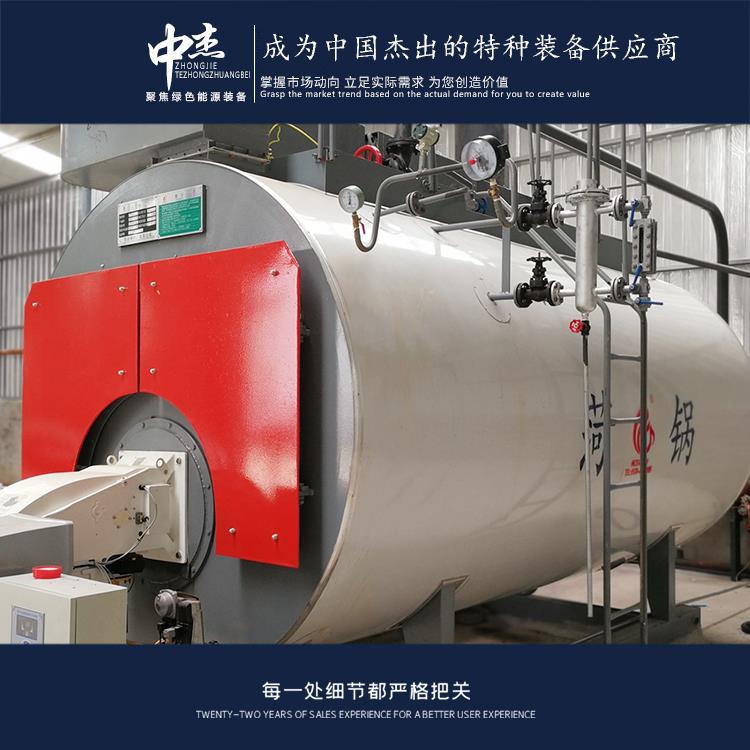


















Shandong Zhongjie Special Equipment (formerly Heze Boiler Factory Co., Ltd.) was established in 2001, located at No. 2218 Jinnan Road, Development Zone, Heze City, with a registered capital of 50 million yuan and total assets of 500 million yuan. The company has 7 business centers: boilers, deep-freezing vessels, pressure vessels, central air conditioning, engineering installation, international trade, and Internet of Things. It has three factory areas on Jinnan Road, East Changjiang Road, and Bohai Road, covering a total of 200,000 square meters, with the main workshop spanning 83,000 square meters. It currently employs 710 people, including 247 engineers and technicians, and 82 intermediate-level technical personnel. In December 2016, it was recognized as a "High-tech Enterprise" by the Science and Technology Department. In June 2021, it was identified as a "Specialized and New Enterprise in Shandong Province" by the Ministry of Industry and Information Technology. In June 2022, it was recognized as a "Gazelle Enterprise in Shandong Province" and in August 2022, it was identified as a "Specialized and New Small Giant Enterprise" by the Ministry of Industry and Information Technology.
Steam boiler equipment water treatment refers to the processing of water in steam boilers to ensure normal operation and extend the lifespan of the equipment. Below is some basic knowledge about steam boiler equipment water treatment:
Water Quality Requirements: The water quality in steam boilers is of high standard, usually requiring the removal of impurities, dissolved oxygen, and hardness substances. Impurities and hardness substances can lead to scaling and corrosion on the boiler inner walls, while dissolved oxygen can cause corrosion and the formation of bubbles.
Removal of Impurities: Common methods for removing water impurities include sedimentation, filtration, and ion exchange. Sedimentation involves adding chemicals to make impurities settle, filtration removes impurities through filtering media, and ion exchange uses resins to adsorb and exchange ions to remove impurities from the water.
Adjusting Hardness: The hardness substances in water are mainly calcium and magnesium salts, which can cause scaling on the boiler inner walls. Hardness can be adjusted by adding chemicals or using water softening equipment to prevent scaling issues.
Removing Dissolved Oxygen: Dissolved oxygen can cause corrosion and the formation of bubbles. It can be removed by adding oxidizing agents or using deaeration equipment.
Controlling pH Level: The pH level of water in steam boilers affects equipment corrosion and scaling. It is usually necessary to control the water pH within an appropriate range, using buffers or regulators to adjust the pH level.
Regular Testing and Maintenance: Regular water quality testing of steam boiler equipment, including measuring hardness, dissolved oxygen, and pH levels, should be conducted. Appropriate water treatment measures and maintenance should be taken based on the test results.
Steam boiler equipment water treatment is a crucial aspect for ensuring normal boiler operation and extending equipment lifespan. Rational water treatment measures can effectively prevent scaling, corrosion, and malfunctions on the boiler inner walls.
Clean and environmentally friendly gas boilers offer several advantages:
- Low emissions: The exhaust emissions from gas combustion are relatively low, with reduced amounts of pollutants such as nitrogen oxides and particulates. Compared to coal or oil-fired boilers, gas boilers have lower emission levels, causing less environmental pollution.
- High thermal efficiency: Gas combustion has a higher thermal efficiency, maximizing the energy from fuel and reducing energy waste. Compared to other traditional fuels like coal and oil, gas combustion is more efficient, providing more heat energy.
- Clean combustion: Gas combustion does not produce ash or soot, reducing the accumulation of carbon and dirt inside the boiler and in the flue. This minimizes cleaning and maintenance work for the boiler, extending its lifespan.
- Stable combustion: The combustion performance of gas is stable, with minimal flame fluctuations and explosion risks during operation. This makes gas boilers safer and more reliable.
- Fast start and stop: Gas boilers have quicker and more flexible start and stop processes compared to other fuels. This makes them suitable for scenarios requiring frequent start and stop, such as seasonal heating and hot water needs.
- Renewable energy integration: As a clean fuel, gas can be combined with renewable energy sources, such as solar hot water systems and biomass fuels. This integration can further enhance energy efficiency and environmental friendliness.
Common faults and solutions for gas boiler burners are as follows:
- No flame or unstable flame: Check the gas supply and ensure the gas valve is open. Clean the burner nozzle to ensure the passage is clear. Inspect the ignition electrode for cleanliness, carbon deposits, or dirt. Adjust the gas and air ratio to ensure a proper mixture.
- Incomplete combustion or black smoke: Check if the gas supply is sufficient and adjust the gas pressure. Clean the burner nozzle and combustion chamber to ensure the passage is clear. Adjust the gas and air ratio to ensure a proper mixture. Check for carbon deposits or dirt in the burner and clean or replace damaged parts.
- Difficulty or failure to ignite: Inspect the ignition electrode for cleanliness, carbon deposits, or dirt. Adjust the position and gap of the ignition electrode to ensure normal spark production. Check if the ignition transformer or controller is functioning properly and repair or replace damaged parts.
- Abnormal noise from the burner: Check if the gas supply is normal and ensure the gas valve is open. Inspect the burner and combustion chamber for loose parts and tighten or replace damaged parts. Clean the burner and combustion chamber to ensure no carbon deposits or dirt.
- If the above methods do not solve the problem, it is recommended to contact a gas boiler maintenance professional for inspection and maintenance. Additionally, to ensure safety, follow the relevant safety operation procedures when using a gas boiler.
The decrease in the consumption of thermal oil boilers can be attributed to several factors:
- Combustion Technology: Modern thermal oil boilers utilize advanced combustion techniques such as premixed combustion and combustion control, enabling complete fuel combustion and enhancing the utilization of thermal energy, thereby reducing energy consumption.
- Waste Heat Recovery: During flue gas emissions, thermal oil boilers often produce a large amount of excess heat. By employing waste heat recovery systems like flue gas waste heat boilers or flue gas heat exchangers, the excess heat from the flue gas can be recovered and utilized, improving energy efficiency and reducing consumption.
- Intelligent Control System: Contemporary thermal oil boilers are equipped with intelligent control systems that can monitor and adjust operational parameters in real-time, such as temperature, pressure, and flow rates. This ensures optimal boiler operation, avoiding unnecessary energy waste and损耗.
- Energy-Saving Retrofit and Optimization: For older thermal oil boilers, retrofitting and optimization for energy savings can be carried out. This may include installing energy-saving equipment such as variable-frequency drives or modified burners to enhance equipment efficiency. Additionally, optimizing the boiler system, such as improving pipe insulation and reducing leaks, can further minimize energy loss.
- Energy Management and Maintenance: Effective energy management and regular equipment maintenance are also crucial factors in reducing energy consumption. Rational energy management measures like energy monitoring, metering, and fostering energy-saving awareness can identify and resolve energy waste issues. Regular equipment maintenance and care ensure the proper functioning of the equipment and prevent unnecessary energy loss.
In summary, the reduction in consumption of thermal oil boilers can be achieved through the use of advanced combustion technology, waste heat recovery, intelligent control systems, energy-saving retrofits and optimizations, as well as effective energy management and maintenance.
Shandong Zhongjie Special Equipment, welcome customers to our factory for business discussions.
WeChat Official Account

Scan to follow Official Account



















