


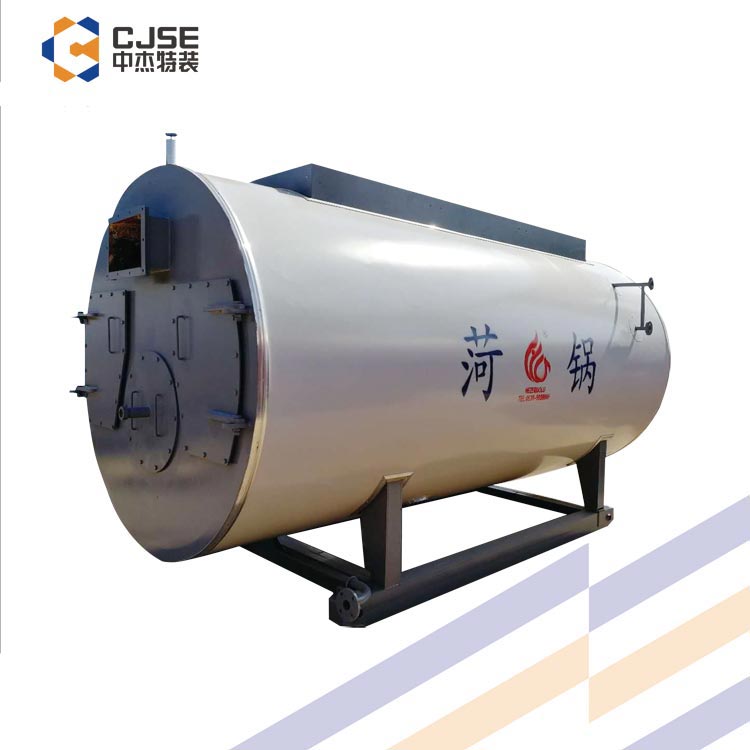

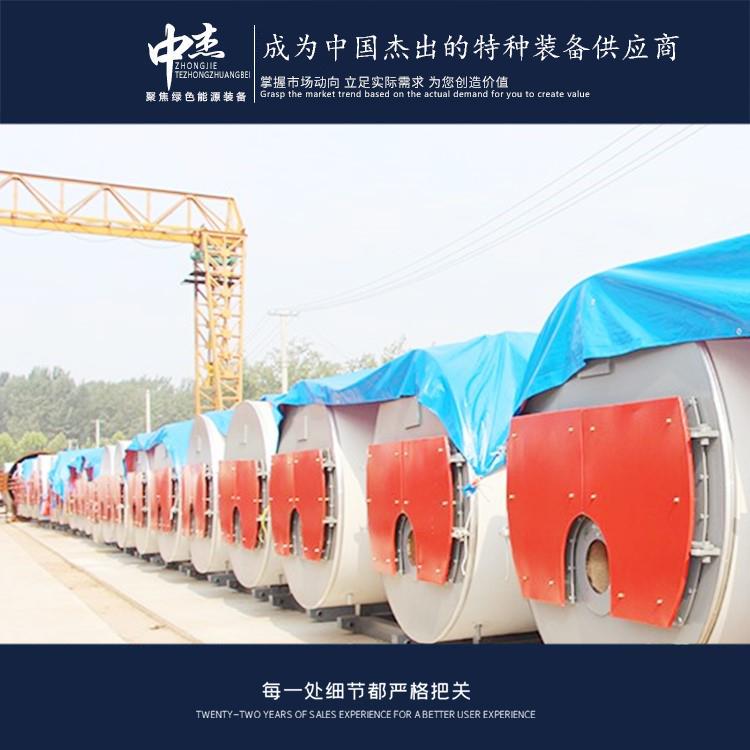
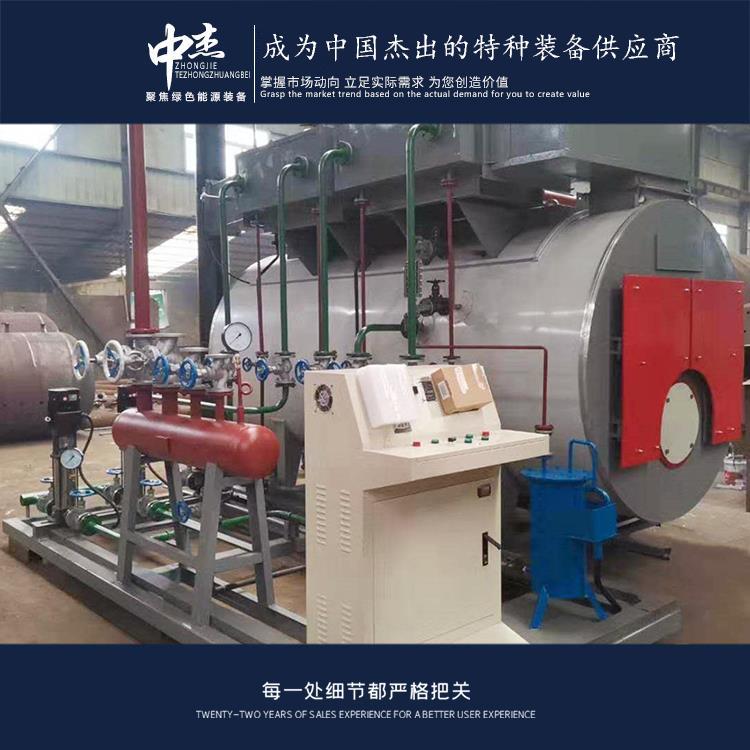


















Shandong Zhongjie Special Equipment (formerly Heze Boiler Factory Co., Ltd.) holds an A-grade boiler manufacturing license, an A2-grade pressure vessel manufacturing license, an A2-grade pressure vessel design license, B-grade boiler installation and GB2/Class, GC2/Class pressure pipeline installation licenses, and equipment and machinery installation contracting qualifications. It is a member of the China Boiler and Water Treatment Association, the China Chemical Equipment Association, and the council member of the Shandong Equipment Manufacturing Association. The company has also passed certifications for the ISO9001 Quality Management System, ISO14001 Environmental Management System, OHSAS18001 Occupational Health and Safety Management System, and the U.S. ASME/U2 certification.
When installing a gas boiler, the following points should be noted:
Safety: A gas boiler is a device that uses gas as fuel, so safety must be ensured during installation. Firstly, choose an appropriate installation location, far from flammable materials and combustible gases, ensuring good ventilation. Secondly, install according to relevant safety regulations, including the connection of gas pipelines and the installation of gas valves.
Piping Connections: Gas boilers require connection to gas pipelines to ensure a continuous gas supply. During the connection process, use appropriate pipes and fittings to ensure a secure connection and prevent gas leaks. Also, conduct leakage tests to ensure there are no leaks.
Exhaust Ducts: Gas boilers produce exhaust gases during combustion and require a suitable exhaust duct. The exhaust duct must be kept clear to prevent the accumulation of exhaust gases indoors, which could pose safety hazards and air pollution.
Electrical Connections: Gas boilers typically require electricity, so electrical connections must be made during installation. Ensure the electrical connections are correct and secure to avoid circuit short-circuits or other electrical issues.
Water System: Gas boilers usually need to be connected to the water system, including supply and drain pipes. During the connection process, ensure the water pipes are securely connected to prevent leaks or issues with water pressure.
Commissioning and Testing: After installation, the gas boiler should be commissioned and tested. This includes ignition tests, combustion efficiency tests, and temperature control tests to ensure the boiler operates normally and safely.
It is recommended to follow relevant installation specifications and requirements when installing a gas boiler. If you do not have the necessary technical knowledge, it is best to have a qualified installer perform the operation to ensure the installation process is safe and reliable.
A thermal oil furnace is a device that uses thermal oil as a heat medium, transferring heat energy produced by combustion or electric heating to the equipment or process requiring heating. The working principle of a thermal oil furnace involves heating the thermal oil to a certain temperature and then circulating it through a pump to the heated equipment or process, transferring the heat energy to the heated object. The thermal oil exchanges heat with the heated object in the heat exchanger, raising the object's temperature while cooling the oil, which then returns to the furnace for reheating. The heat transfer process in a thermal oil furnace primarily relies on the thermal conductivity of the oil. Thermal oil has high thermal conductivity, enabling rapid heat transfer to the heated object for effective heating. Additionally, it boasts high thermal stability, allowing stable operation at high temperatures without decomposition or oxidation. A thermal oil furnace typically consists of the furnace body, combustion system, flue gas system, heat exchanger, circulating pump, and control system. The furnace body is the main part, housing the thermal oil and combustion system. The combustion system is responsible for burning fuel to produce heat and heat the thermal oil. The flue gas system is used to exhaust the combustion by-products. The heat exchanger is the equipment where the thermal oil exchanges heat with the heated object. The circulating pump is tasked with circulating the thermal oil back to the furnace for reheating. The control system monitors and controls the operation of the thermal oil furnace to ensure safe and stable operation. Thermal oil furnaces offer high temperature control accuracy, fast heating speed, low energy consumption, and easy operation, and are widely used in industries such as chemicals, textiles, food processing, papermaking, and in some specialized heating processes.
Industrial boilers, during long-term operation, can accumulate scale and sediments, affecting heat exchange efficiency and the normal operation of the boiler. Here are some effective descaling methods:
1. Mechanical Cleaning: Utilizes cleaning equipment and tools to wash away scale and sediments inside the boiler using high-pressure water or mechanical brushes. This method is suitable for lighter scale and sediment buildup.
2. Chemical Cleaning: Uses chemical cleaning agents to dissolve scale and sediments through chemical reactions. Select the appropriate cleaning agent based on the composition and nature of the scale, and follow the instructions for use. Chemical cleaning requires safe operation to avoid damage to equipment and the environment.
3. Acid Cleaning: A common descaling method for difficult-to-dissolve scale and sediments. Commonly used acid cleaners include, etc., select the appropriate cleaner and concentration based on the specific situation. Acid cleaning requires safe operation to prevent harm to equipment and personnel.
4. Alkaline Cleaning: A descaling method for specific types of scale, suitable for alkaline scales. Commonly used alkaline cleaners include, etc., select the appropriate cleaner and concentration based on the specific situation. Alkaline cleaning requires safe operation to prevent harm to equipment and personnel.
5. Physical Descaling: Physical descaling methods include ultrasonic cleaning, electro-dissolution, etc. Ultrasonic cleaning uses the vibration effect of ultrasound to shake the scale into pieces. Electro-dissolution utilizes the principle of electrolysis to dissolve scale through the action of electricity. These physical descaling methods are suitable for special situations and specific types of scale.
When selecting a descaling method, consider the specific conditions of the boiler.
To extend the service life of steam boilers, the following measures can be taken:
- Regular Maintenance: Conduct regular maintenance on the boiler, including cleaning the burner, flue, and heat exchanger, inspecting and replacing worn parts, to ensure normal operation and efficiency.
- Water Quality Control: Maintain good water quality in the boiler to prevent scale and corrosion from damaging the boiler. Regularly test water quality and implement corresponding water treatment measures based on test results, such as descaling and replenishing missing chemicals.
- Burn Process Control: Reasonably control the combustion process to ensure the normal operation and efficiency of the burner. Regularly inspect the burner's condition, adjust combustion parameters, and avoid overheating or underheating issues.
- Regular Cleaning of Flues and Heat Exchangers: Regularly clean the flues and heat exchangers to remove accumulated dust and dirt, maintain heat exchange efficiency, and prevent overheating and energy loss.
- Regular Inspection of Safety Devices: Regularly inspect the boiler's safety devices, including safety valves, pressure switches, and water level controllers, to ensure they are functioning normally and to ensure safe boiler operation.
- Record Keeping and Monitoring: Record boiler operating parameters, maintenance records, and fault conditions, regularly monitor and analyze them, and address any issues promptly.
- Operator Training: Ensure operators have sufficient knowledge of boiler operation and maintenance, operate and maintain the boiler correctly, and avoid damage caused by operational errors or improper maintenance.
- Regular Overhauls: Based on the boiler's usage and the manufacturer's recommendations, conduct regular major overhauls and repairs, replace worn-out parts, and extend the boiler's service life.
- Please note that for safety and effectiveness, it is best to have these maintenance and repair tasks performed by qualified personnel.
Shandong Zhongjie Special Equipment, welcome customers to visit our factory for business talks.
WeChat Official Account

Scan to follow Official Account



















