


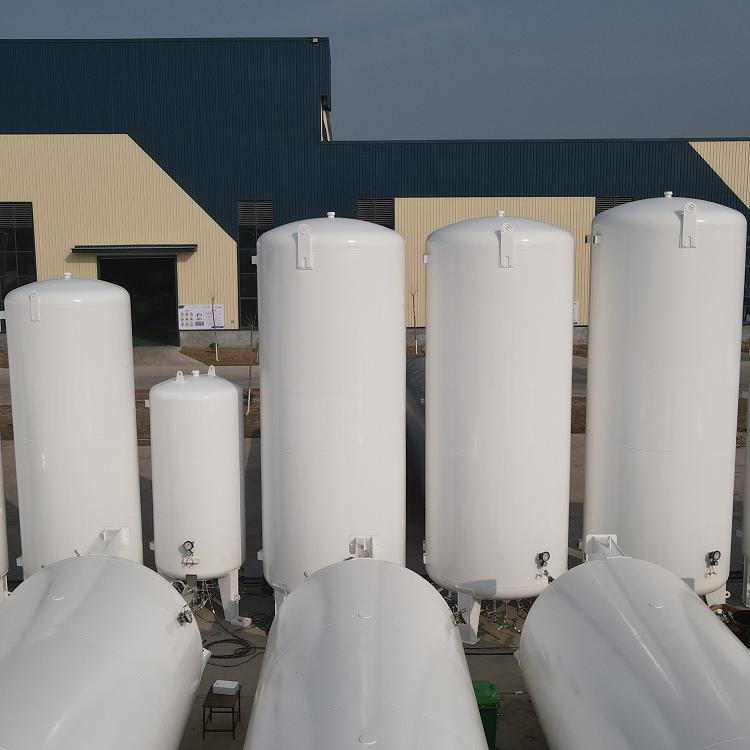

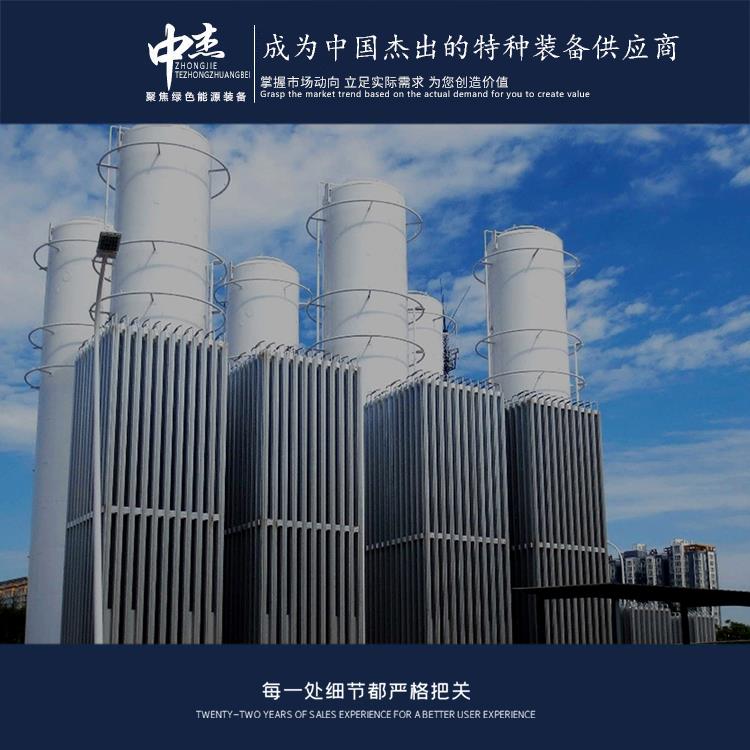
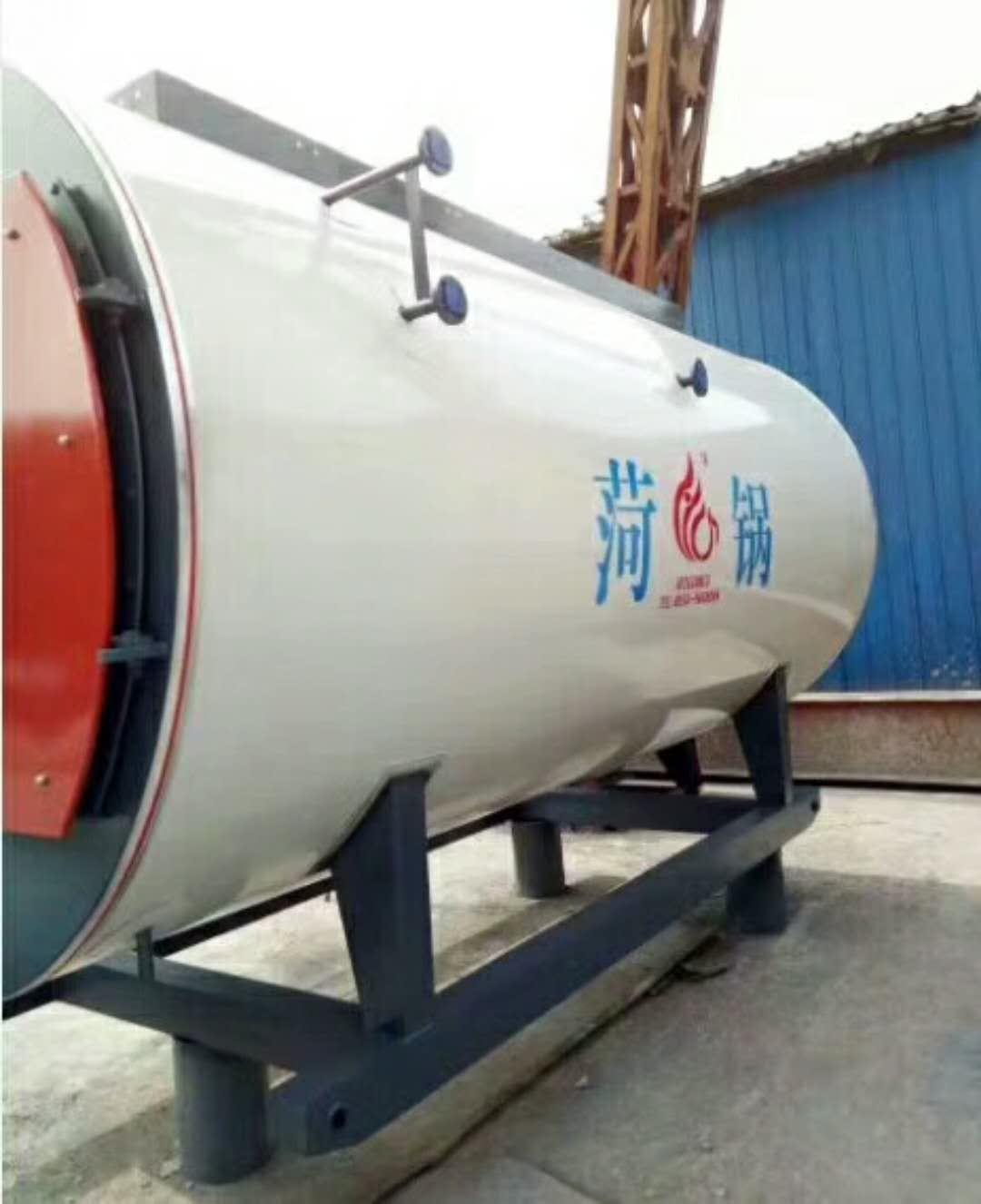


















Shandong Zhongjie Special Equipment (formerly Heze Boiler Factory Co., Ltd.) holds an A-grade boiler manufacturing license, an A2-grade pressure vessel manufacturing license, an A2-grade pressure vessel design license, a B-grade boiler installation license, and GB2/Class and GC2/Class pressure pipeline installation licenses, as well as an equipment and machinery installation contracting qualification. It is a member of the China Boiler and Water Treatment Association, the China Chemical Equipment Association, and the Council Member of the Shandong Equipment Manufacturing Association. The company has also passed certifications for the ISO9001 Quality Management System, ISO14001 Environmental Management System, OHSAS18001 Occupational Health and Safety Management System, and the American ASME/U2 certification.
To extend the service life of liquid argon storage tanks, the following measures can be taken:
Regular inspections and maintenance: Conduct regular visual inspections of the liquid argon tank, check valves and connections, and perform leak detection and pressure tests, etc. Identify and repair potential issues promptly to ensure the normal operation of the tank.
Maintain the insulation layer: The insulation is crucial for the thermal preservation of liquid argon tanks. Regularly inspect the integrity and insulating properties of the insulation, repair or replace damaged insulation materials to ensure the tank's insulating effectiveness.
Control liquid argon temperature: The temperature of liquid argon should be maintained within an appropriate range to prevent damage to the storage tank from either excessive or insufficient temperatures. Implement suitable cooling or heating measures to ensure the stability of the liquid argon temperature.
Corrosion Protection: The outer shell and internal structure of the liquid argon tank should be protected against corrosion and oxidation. Regularly inspect and maintain the protective coating to ensure its integrity.
Avoid excessive pressure and overfilling: Prevent the internal pressure of the tank from being too high or too low, as well as overfilling with liquid argon. Excessive pressure and overfilling can lead to structural破裂 or damage of the tank.
Regular cleaning and waste removal: Regularly clean the interior of the tank to remove accumulated impurities and dirt. Regularly remove waste to prevent contaminants and sediments in liquid argon from damaging the tank.
Safety Operations and Training: Ensure operators are knowledgeable and skilled in the safe operation of liquid argon tanks. Enhance safety training to boost operators' awareness and emergency response capabilities.
Establish comprehensive management records and documents, including tank usage, inspection, and maintenance records. Regularly review and update these records to ensure safe management and maintenance of the tanks.
These measures can help extend the service life of liquid argon storage tanks, but specific operations and management are required based on the type and application of the tank. When performing maintenance and operation, please adhere to relevant regulations and standards, and consult with experts to ensure safety and effectiveness.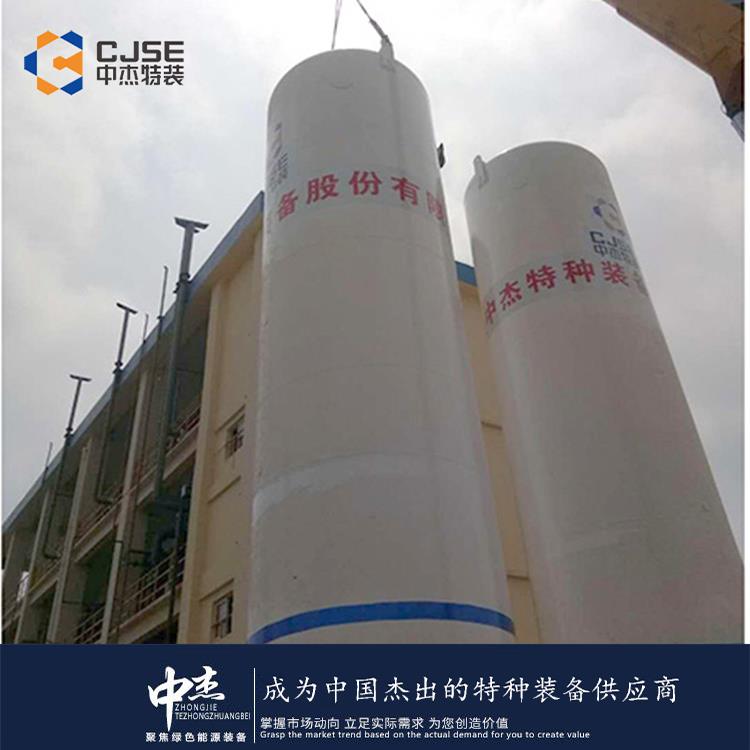
To maintain the stability of liquid argon storage tanks, the following details should be noted:
Basic Design: The foundation design of the tank must comply with relevant standards and specifications to ensure stability and load-bearing capacity. The foundation should be sufficiently robust and seismic-resistant to withstand external forces and natural disasters such as earthquakes.
Foundation Construction: During the foundation construction process, ensure the foundation is level and even, avoiding any tilting or uneven settlement. Additionally, the concrete pouring of the foundation must comply with construction specifications to guarantee the quality and strength of the concrete.
Installation Process: During the installation of the storage tank, appropriate lifting equipment and safety measures must be employed to ensure the vertical installation and stability of the tank. Avoid severe vibrations and impacts during installation to prevent damage or deformation to the tank.
Support Structure: The support structure of the tank should be designed rationally to ensure the stability and load-bearing capacity of the tank. It should be made of sturdy materials and use appropriate connection methods to withstand external forces and the pressure from the liquid inside the tank.
Safety Devices: Tanks should be equipped with safety devices such as pressure relief valves, level alarms, etc., to ensure timely measures can be taken in abnormal situations, safeguarding the tank's safety.
Regular inspections and maintenance: Conduct regular checks and maintenance on liquid argon tanks, including visual inspections, pressure tests, leak detection, and as needed, non-destructive testing and material analysis. Promptly identify and address any issues with the tanks to ensure their stability and safety.
Note that the installation of liquid argon tanks should be performed by experienced personnel and in accordance with relevant safety operating procedures and standards. During the installation process, operations should be strictly conducted as per the manufacturer's installation guidelines and requirements to ensure the stability and safety of the tank.
The filling of low-temperature liquid nitrogen tanks refers to the process of transferring liquid nitrogen from an external supply source into the storage tank. Below is an explanation of the filling process for low-temperature liquid nitrogen tanks:
Preparation: Prior to filling the liquid nitrogen tank, thorough preparation is required. This includes inspecting the tank's condition and safety, ensuring the interior is clean, free of impurities, and contaminants. Additionally, verify the quality of the liquid nitrogen from the supply source and the safety of the supply pipeline.
Connect supply source: Link the liquid nitrogen supply source to the supply opening of the storage tank. Ensure the connection is securely fastened to prevent leaks.
Control Liquid Level: During the bottling process, it is necessary to control the liquid nitrogen level to prevent overfilling or overflow. A liquid level gauge or a liquid level control system can be used to monitor and control the level.
Slow Injection: The injection of liquid nitrogen should be slow to prevent rapid vaporization and increased pressure. Appropriate valves and flow control devices can be used to regulate the injection rate.
Monitor Pressure: During the canning process, it is essential to monitor the pressure of the storage tank to ensure it remains within a safe range. Pressure gauges or pressure sensors, among other equipment, can be used for monitoring.
Canning completed: Stop injecting liquid nitrogen when the liquid level reaches the predetermined filling amount or the storage tank's capacity limit. Disconnect the connection to the supply source and ensure the tightness of the filling port.
Safe Operation: Throughout the bottling process, it is essential to adhere to relevant safety regulations and operating guidelines. Liquid nitrogen is highly flammable and cryogenic, so operators must wear appropriate personal protective equipment and ensure the operating environment is free of ignition sources.
When bottling liquid nitrogen, be mindful of its low-temperature properties and safety. Ensure safe operation and control during the bottling process to guarantee the safe operation of the storage tank and effective storage of the liquid nitrogen.
To prevent the dangers caused by static electricity in liquid oxygen storage tanks, the following measures can be taken:
Grounding: Ensure proper grounding of the liquid oxygen storage tank and related equipment. Grounding allows the release of static electricity to the ground, reducing the likelihood of static buildup. Metal components such as tanks and pipelines should be connected to a reliable grounding system.
Static dissipative materials: Utilize static dissipative materials to reduce the accumulation of static electricity. For instance, apply conductive coatings or materials to the insulating layers of liquid oxygen storage tanks and pipelines to discharge static electricity to the ground.
Static Dissipative Equipment: Utilize static dissipative equipment, such as static conductive pipes and hoses, to reduce the accumulation and release of static electricity. These devices help channel static to the ground, minimizing the occurrence of static sparks.
Static ground wire: Install static ground wires on liquid oxygen storage tanks and related equipment to discharge static electricity to the ground. These grounding wires should be connected to a reliable grounding system and be inspected and maintained regularly.
Electrostatic Discharger: Utilize an electrostatic discharger to neutralize static electricity. These devices neutralize static by releasing opposite charges, reducing static buildup and spark generation.
Electrostatic Safety Training: Conduct electrostatic safety training for personnel using liquid oxygen tanks to enhance their understanding and awareness of electrostatic hazards. The training content can include the principles of electrostatic formation, preventive measures, and emergency response procedures.
It is important to note that the static electricity prevention measures for liquid oxygen tanks should be designed and implemented by personnel, following relevant safety operation procedures and standards. During operation, operations should be strictly conducted according to the prescribed procedures to avoid the generation of static sparks, ensuring the safety of the tank.
Zhongjie Special Equipment upholds the great vision of "realizing employees' dreams, creating value for customers, and striving for the prosperity and strength of our motherland," and is dedicated to the development of the green energy equipment industry. We commit to society with high-quality, cost-effective products and services!
WeChat Official Account

Scan to follow Official Account



















