


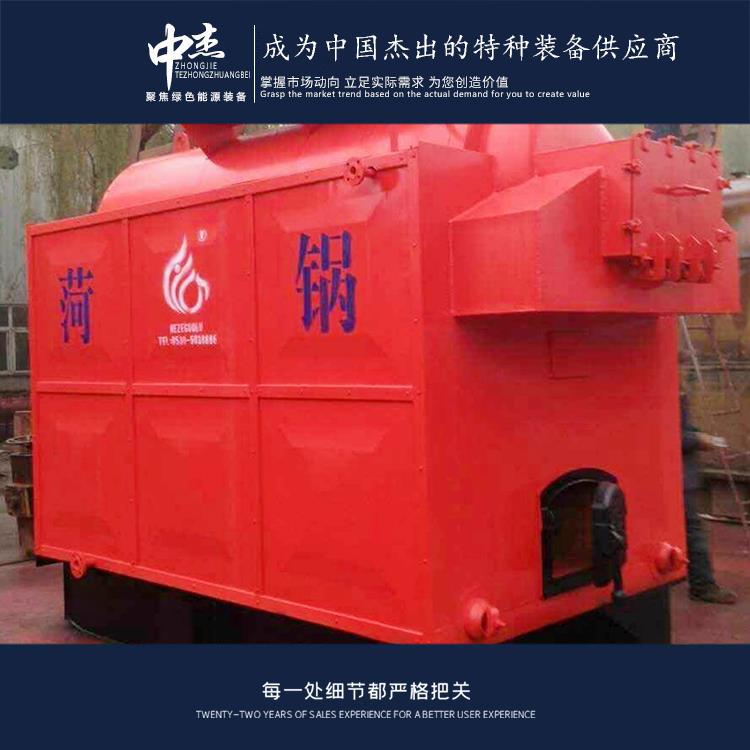

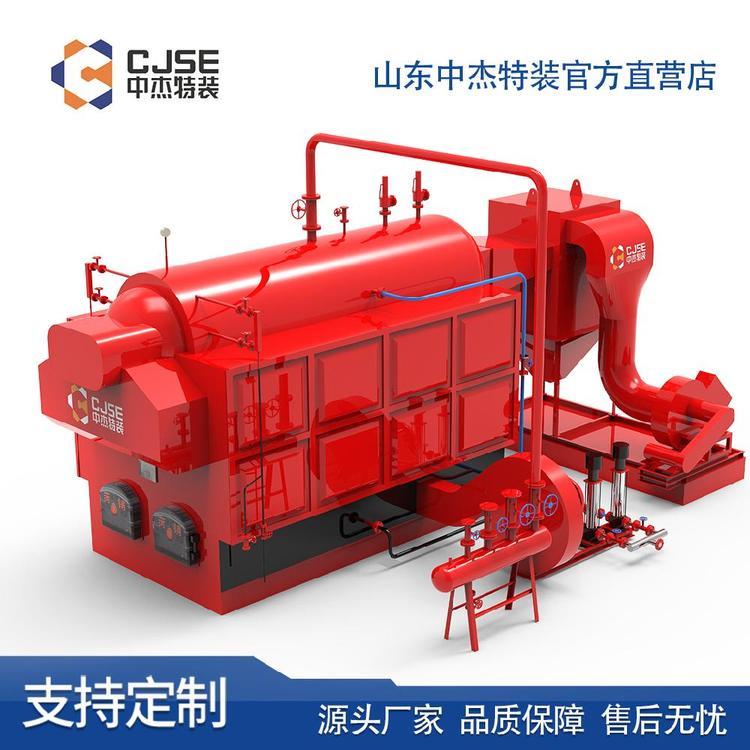
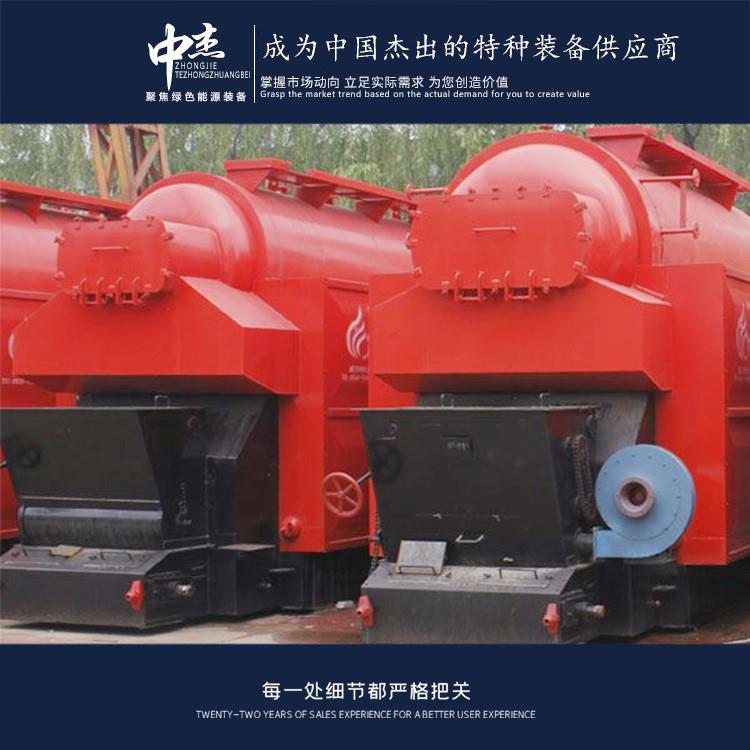


















Shandong Zhongjie Special Equipment's main products include: fuel (gas) boilers, organic heat carrier boilers, biomass boilers, waste heat recovery boilers, and other boiler products; vacuum insulation cryogenic pressure vessels such as LNG tanks, oxygen/nitrogen/argon tanks, and CO2 tanks; pressure vessel products like denitrification engineering equipment, heat storage and energy storage equipment, and complete chemical equipment sets; central air conditioning and HVAC equipment such as ground (water) source heat pumps, air source units, water-cooled screw units, and air-cooled modular units. Planned products include large-scale energy centers, LNG transport vehicles, LNG tank containers, and other green energy equipment.
The emission characteristics of biomass fuel boiler flue gases mainly include the following aspects:
Particulate Emissions: The combustion of biomass fuel boilers produces particulates, including visible dust and fine particles. The amount of particulate emissions is related to fuel characteristics, combustion temperature, and combustion equipment, among other factors. Generally, particulate emissions from biomass fuel boilers are lower than those from coal boilers, but still require treatment through dust removal equipment.
(SO2) Emission: The content of SO2 in biomass fuel is low, hence the SO2 emissions from biomass fuel boilers are typically low. However, in certain cases, such as using waste as fuel, SO2 emissions may increase. To control SO2 emissions, measures like combustion control and desulfurization devices can be employed.
Nitrogen Oxide (NOx) Emissions: The NOx emissions from biomass fuel boilers are related to fuel characteristics, combustion temperature, and combustion equipment factors. Biomass fuels contain a higher nitrogen content, which can generate a certain amount of NOx during combustion. To control NOx emissions, measures such as low NOx combustion technology, combustion control, and denitrification equipment can be adopted.
(CO) Emissions: Carbon monoxide emissions from biomass fuel boilers are typically low due to the relatively complete combustion process of biomass fuel. However, in cases of incomplete combustion or unstable burning, CO emissions may increase. To control CO emissions, it is necessary to ensure a sufficient and stable combustion process.
Volatile Organic Compounds (VOCs) Emissions: The VOCs emissions of biomass fuel boilers are related to the fuel characteristics and combustion conditions. Some biomass fuels contain volatile organic compounds.
Biomass boilers feature the following characteristics:
Fuel adaptable: Biomass boilers can utilize various biomass fuels such as sawdust, straw, etc., demonstrating strong fuel adaptability.
High combustion efficiency: The biomass boiler's combustion technology and equipment enable a combustion process that enhances efficiency.
Eco-friendly and Low Carbon: The carbon dioxide produced during biomass combustion can be absorbed by plants, creating a cycle that reduces the burden on the atmosphere. Additionally, emissions and pollutants during biomass combustion are relatively low, resulting in minimal environmental impact.
Heat Recovery Utilization: Biomass boilers transfer the thermal energy generated from combustion to water or other working fluids through heat exchangers, achieving heat recovery and utilization, and enhancing energy efficiency.
Versatility: Biomass boilers are not only suitable for heating but also for hot water supply and industrial heating in various applications.
The efficiency of biomass boilers is influenced by various factors, including fuel quality, the design and adjustment of combustion equipment, and the effectiveness of flue gas purification systems. Generally, the efficiency of biomass boilers can reach over 70%, with some models exceeding 80% efficiency. Improving efficiency can be achieved through optimizing the combustion process, enhancing the heat transfer efficiency of heat exchangers, and reducing flue gas emissions losses. Additionally, proper operation and maintenance play a crucial role in enhancing efficiency.
The pressure maintenance methods for biomass hot water boilers mainly include the following:
Natural Circulation Pressure Control: Natural circulation pressure control refers to the process of circulating hot water to the heating system through natural convection within the boiler. Under the natural circulation pressure control method, there is a significant difference in elevation between the supply and return water pipes of the boiler, which achieves natural circulation through the density difference of the hot water. This method is suitable for small-scale biomass hot water boilers, characterized by simplicity and economy.
Forced circulation constant pressure: This method involves using a circulation pump to force hot water to circulate through the heating system. Under forced circulation constant pressure, the boiler provides sufficient water pressure through the circulation pump to ensure smooth flow of hot water. This method is suitable for large-scale biomass hot water boilers, characterized by stability and reliability.
Micro-positive Pressure Constant Pressure: Micro-positive pressure constant pressure maintains a slight positive pressure in the boiler system to ensure stable circulation of hot water. Under the micro-positive pressure constant pressure method, the pressure in the boiler system is slightly higher than atmospheric pressure, driving the circulation of hot water through the pressure difference. This method is suitable for situations requiring higher heating temperatures and greater heating distances.
Above are the common methods of setting pressure for biomass hot water boilers. Depending on specific usage requirements and system design, the appropriate setting pressure method can be chosen to ensure the normal operation and heating effect of the hot water boiler.
A biomass boiler bag dust collector is a commonly used flue gas purification equipment, designed to remove particulate matter from the flue gas produced by the combustion of biomass boilers. Its operating principle is as follows:
Flue gas enters the deduster: The flue gas passes through the flue from the biomass boiler combustion chamber into the bag deduster.
Pre-treatment: Prior to entering the bag filter, flue gas may undergo pre-treatment, such as desulfurization and denitrification, to reduce corrosion and damage to the filter bags.
Filtering: After the flue gas enters the bag dust collector, it passes through the bag filtering area. Inside the bag dust collector, there are numerous filter bags. As the flue gas passes through the bags, particulates are captured by the bags, and the purified flue gas exits through the bags.
Particulate Matter Collection: Particulate matter accumulates on the filter bags over time, forming a layer of ash. The thickness of the ash layer gradually increases. As time goes on, the ash layer can affect the resistance of the flue gas passing through the filter bags, necessitating a cleaning operation.
Ash Cleaning: To maintain the normal operation of the bag dust collector, regular ash cleaning is required. Ash cleaning can be performed using various methods, such as mechanical impact or pulse jetting. The ash cleaning process causes the ash layer to fall off, with the particulates collected in the ash hopper.
Emission: After dedusting treatment, the purified flue gas meets the emission standards and can be released into the atmosphere through the chimney.
The working principle of the bag dust collector is based on the capture and separation of particles by the filter bags, maintaining the permeability and dust removal efficiency through continuous cleaning operations. The particle capture capability of the bag dust collector can effectively purify the flue gas produced by biomass boiler combustion, protecting the environment.
Chongjie Special Equipment upholds the great vision of "realizing employees' dreams, creating value for customers, and striving for the prosperity and strength of our motherland," and is dedicated to the development of the green energy equipment industry. We offer society high-value products and services!
WeChat Official Account

Scan to follow Official Account



















