


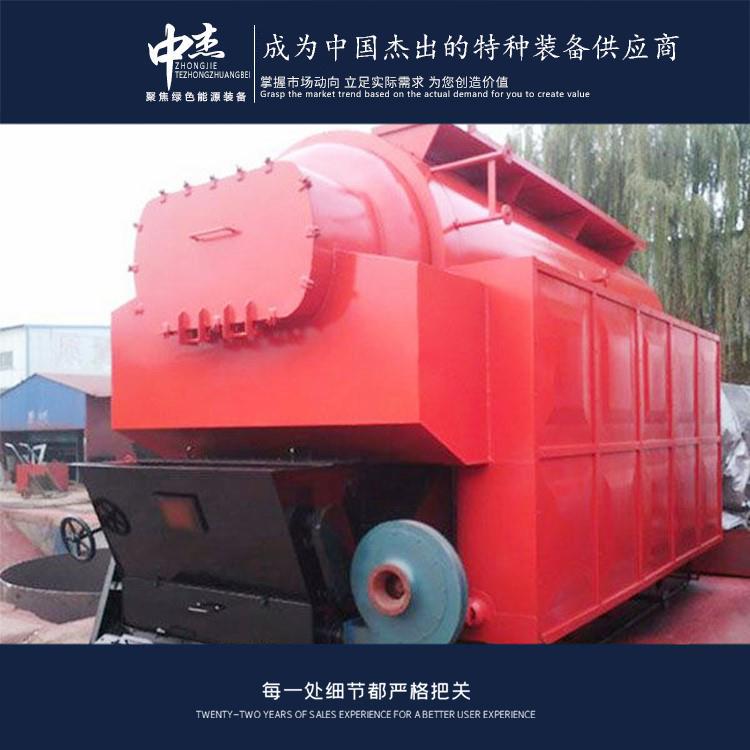

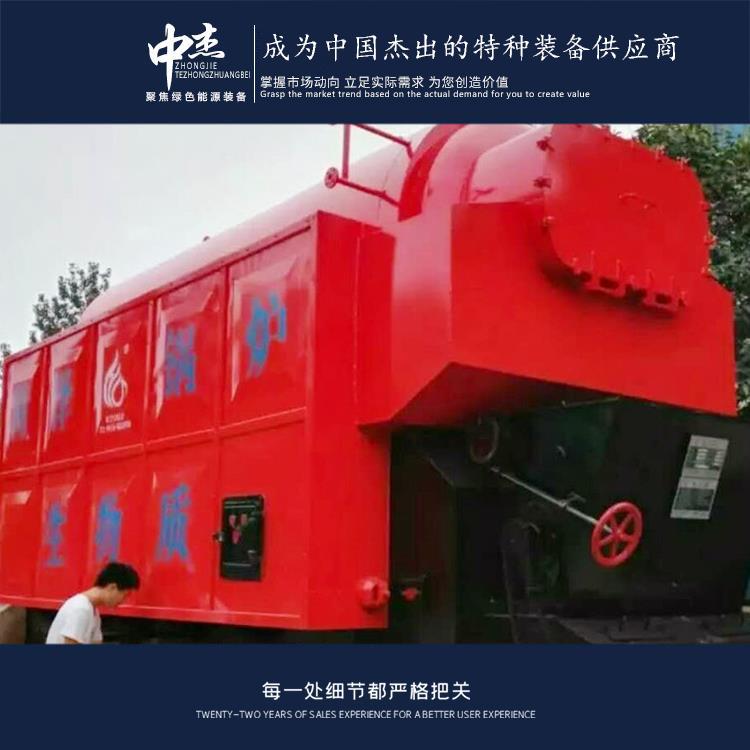
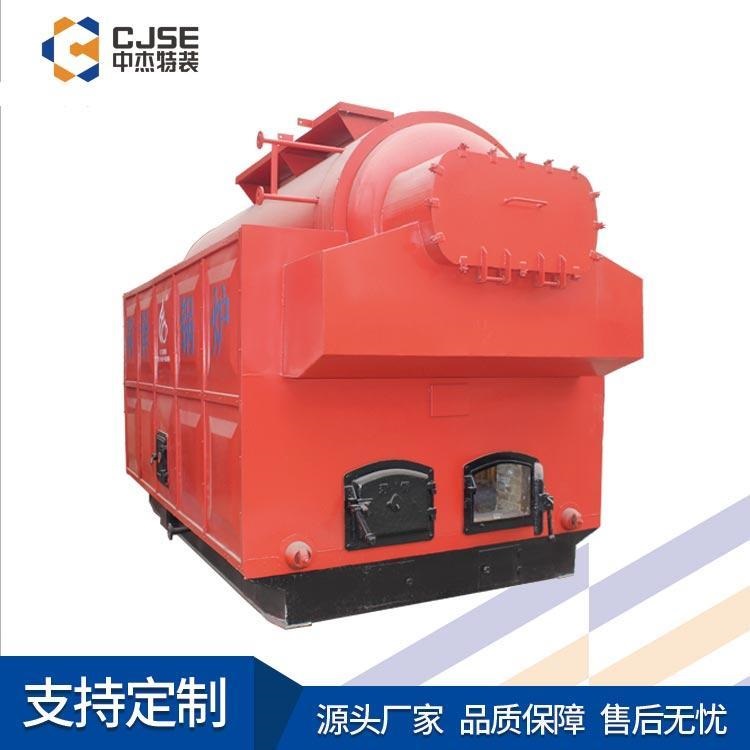


















Shandong Zhongjie Special Equipment specializes in: fuel (gas) boilers, organic heat carrier boilers, biomass boilers, waste heat recovery boilers, and other boiler products; vacuum insulated cryogenic pressure vessels such as LNG tanks, oxygen/nitrogen/argon tanks, CO2 tanks; pressure vessel products including denitrification engineering equipment, heat storage and energy storage equipment, and complete chemical equipment; central air conditioning and HVAC equipment such as ground (water) source heat pumps, air source units, water-cooled screw units, and air-cooled modular units. Planned products include large-scale energy centers, LNG transport vehicles, LNG tank containers, and other green energy equipment.
The reasons for energy-saving in biomass steam boilers mainly include the following:
Energy Costs: Energy-saving measures can reduce the energy consumption of biomass steam boilers, lower energy costs, and enhance economic benefits.
Environmental Protection: Energy conservation can reduce carbon dioxide emissions and other pollutants from biomass steam boilers, minimize environmental impact, and protect the ecological environment.
Sustainable Development: Energy conservation extends the lifespan of biomass resources, promotes sustainable development, and reduces reliance on natural resources.
To achieve energy saving in biomass steam boilers, the following measures can be taken:
Boiler Design Optimization: Enhance thermal energy utilization efficiency and minimize energy waste through optimized structural design and combustion system of the boiler.
Optimized Combustion Control: Utilizes advanced combustion control technology to regulate the combustion process, reducing fuel consumption and emissions.
Heat Recovery Utilization: Utilizes waste heat recovery technology to reclaim heat energy from flue gas in boilers, enhancing energy utilization efficiency.
Water Treatment Optimization: Employ suitable water treatment technology to prevent scale and corrosion issues, enhancing the boiler's thermal conductivity efficiency.
Regular Maintenance: Regular maintenance of biomass steam boilers ensures optimal equipment condition, reducing energy loss and the occurrence of malfunctions.
System Operation Optimization: By employing reasonable operation management and control strategies, optimize the operational parameters of biomass steam boilers to enhance system efficiency and stability.
Training and Awareness Enhancement: Strengthen employee training and awareness to enhance energy management and conservation awareness, promote the implementation and continuous improvement of energy-saving measures.
By integrating these measures, energy conservation in biomass steam boilers can be effectively achieved, reducing energy consumption and environmental impact while enhancing the economic and sustainable performance of the equipment.
To reduce the NOx emissions from biomass boilers, the following measures can be taken:
Combustion Control Optimization: By optimizing the combustion process, controlling the combustion temperature and oxygen supply, and reducing NOx emissions. Adjustments can be made to the burner's structure and parameters to make the combustion more thorough and even, minimizing the formation of local high-temperature zones.
Combustion Chamber Design Enhancement: Improved design of biomass boiler combustion chamber, increasing the mixing and residence time within the chamber to ensure more thorough mixing of fuel and air, thereby reducing NOx emissions.
SNCR Technology: Selective Non-Catalytic Reduction (SNCR) technology involves adding a reductant, such as urea, during the combustion process to react with NOx, converting it into nitrogen and water. This technique can effectively reduce NOx emissions, but requires system design and adjustment based on specific conditions.
SCR Technology: Selective Catalytic Reduction (SCR) technology is a NOx control method that involves adding a catalyst to flue gas, such as, to react with NOx and convert it into nitrogen and water. SCR technology can achieve high NOx removal efficiency, but it requires significant investment and operating costs.
Flue Gas Recirculation (FGR): FGR technology recycles a portion of flue gas back into the combustion process, lowering combustion temperatures and reducing NOx formation. This technique can control NOx levels by adjusting the recirculation ratio.
Regular maintenance and cleaning: Regular maintenance of biomass boilers
Biomass fuel boilers may encounter the following issues during operation:
Unstable fuel quality: The quality of biomass fuel is affected by factors such as raw material source, processing methods, and storage conditions, leading to unstable fuel quality. Unstable fuel quality may impact combustion efficiency and the stable operation of the boiler.
Ash disposal issue: Biomass fuel generates a large amount of ash during combustion, including waste, ash content, and unburnt materials. The handling and disposal of ash may lead to environmental pollution and increased costs.
High-Temperature Corrosion: Ash and elements like chlorine in biomass fuel can easily cause corrosion at high temperatures, damaging the metal components of boilers. Measures must be taken to protect and treat against high-temperature corrosion issues.
Low combustion efficiency: Biomass fuel has different combustion characteristics compared to traditional fossil fuels, potentially resulting in lower combustion efficiency. It is necessary to optimize the combustion system and control strategies to enhance combustion efficiency and reduce energy waste.
Gas emissions from combustion: The combustion of biomass fuel produces certain emissions, such as carbon dioxide, nitrogen oxides, and particulates. These emissions have an impact on the environment and air quality, necessitating appropriate control measures.
Transport and Storage Costs: The transportation and storage costs for biomass fuel are high, particularly for areas far from the source of supply. This may increase the operational costs for biomass fuel boilers.
In summary, biomass fuel boilers face issues such as inconsistent fuel quality, ash and slag disposal, and high temperatures.
When operating biomass boilers, the following safety precautions should be observed:
Familiarize with the Operation Manual: Before operating the biomass boiler, carefully read and familiarize yourself with the operation manual to understand the boiler's structure, working principle, operating steps, and safety precautions.
Regular inspections and maintenance: Conduct regular checks on all parts and equipment of the boiler to ensure proper operation and safety performance. Promptly clean ash and slag, inspect the tightness of pipes and valves, and maintain the boiler's cleanliness and unobstructed flow.
Regulate Fuel Supply: Control the rate and amount of fuel supply to avoid overly fast or slow delivery, ensuring complete combustion and reducing safety risks.
Control Combustion Temperature: Maintain an appropriate combustion temperature to avoid both low and high temperatures. Low temperatures are prone to carbon coking, while high temperatures may lead to incomplete combustion and safety hazards.
Regular cleaning and maintenance of the combustion chamber: Regularly clean the ash and carbon deposits within the combustion chamber to maintain the boiler's cleanliness and prevent issues like coking and blockages.
Safety valves and pressure gauges: Ensure the proper operation and accuracy of safety valves and pressure gauges, and promptly repair or replace any damaged valves or gauges.
Prevent overheating and overpressure: Monitor the boiler's temperature and pressure to avoid overheating and overpressure, and take timely measures to adjust and handle.
Prevent Gas Leaks: Regularly inspect the sealing of gas pipes and valves to ensure no gas leaks occur, avoiding risks of fires and explosions.
Pre-shutdown Procedures: Prior to shutdown, first turn off the fuel and air supplies, then wait for the boiler to cool down before conducting maintenance and cleaning tasks.
Training and Operating Procedures: Ensure operators have received relevant training, are familiar with operating procedures and emergency response measures, and can handle emergencies correctly.
Above are some safety precautions to be aware of when operating biomass boilers. To ensure the safe operation of the boiler, it is recommended to follow relevant operational procedures and safety standards, and to conduct regular inspections and maintenance.
Our company attaches great importance to technological innovation and R&D design. We have one municipal-level enterprise technology center in Heze City, equipped with testing facilities for non-destructive testing, physical and chemical testing, welding testing, hydrostatic testing, etc. We have over 600 types of equipment, including CNC machine tools, X-ray flaw detectors, digital ultrasonic flaw detectors, mechanical property testing machines, chemical analyzers, spectrometers, tensile testing machines, plasma welding machines, and more. The key products we have developed, such as temperature and pressure vessel welding, biomass boiler emission reduction, and waste heat utilization, have successively been selected for multiple Shandong Provincial Department of Industry and Information Technology scientific and technological innovation projects, Shandong Provincial key projects, and Heze City innovative and excellent projects. We have accumulated 27 authorized utility models, 16 authorized inventions, participated in drafting 2 standards, 2 industry standards, and registered 15 trademarks. Our technical team, in collaboration with Professor Yajiang Li from Shandong University, has developed deep cryogenic container processing technology using the international plasma arc + filler wire tungsten inert gas arc welding (PAW-GTAW) technology. This technology has been appraised as reaching international standards in the field of deep cryogenic container manufacturing at the provincial level. Choose Zhongjie Special Equipment, and let's create brilliance together!
WeChat Official Account

Scan to follow Official Account



















