


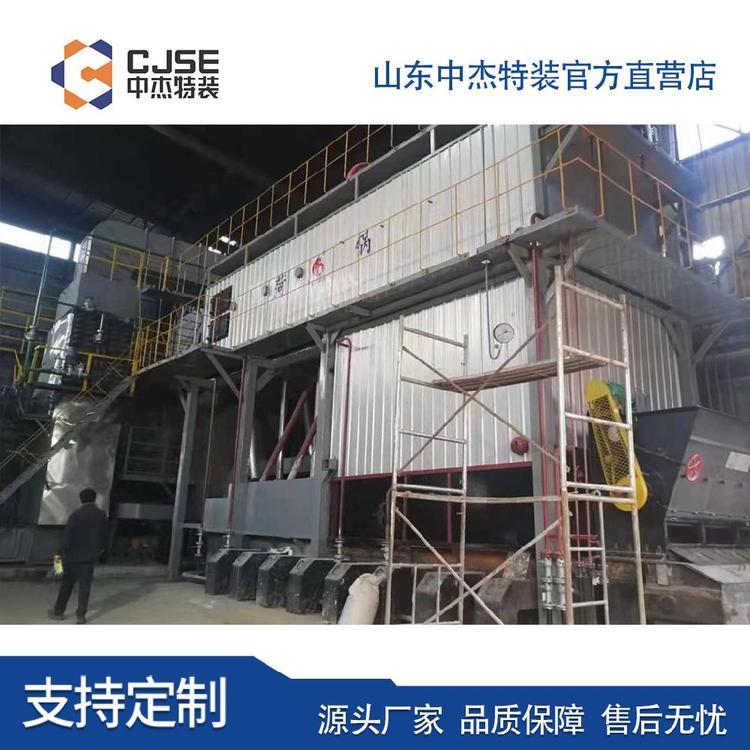

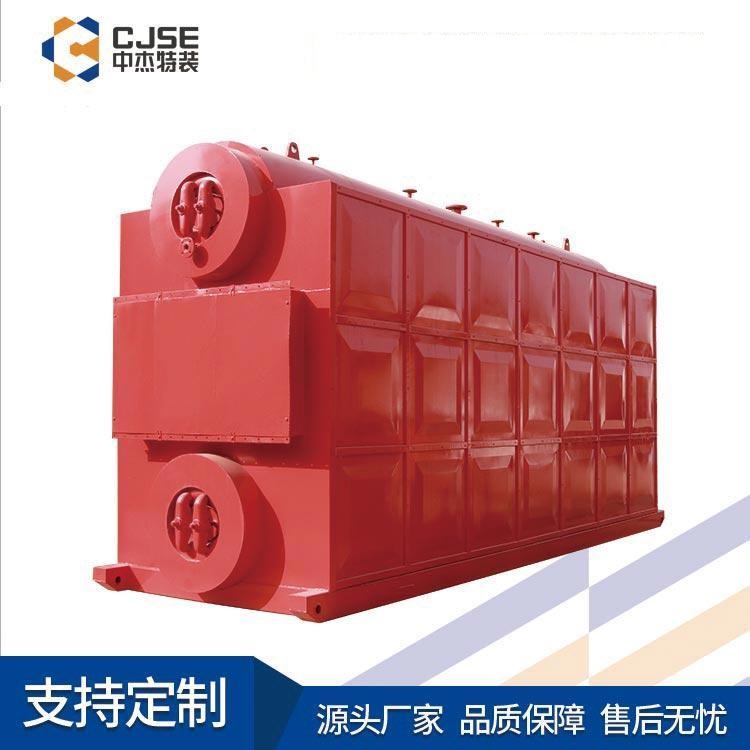
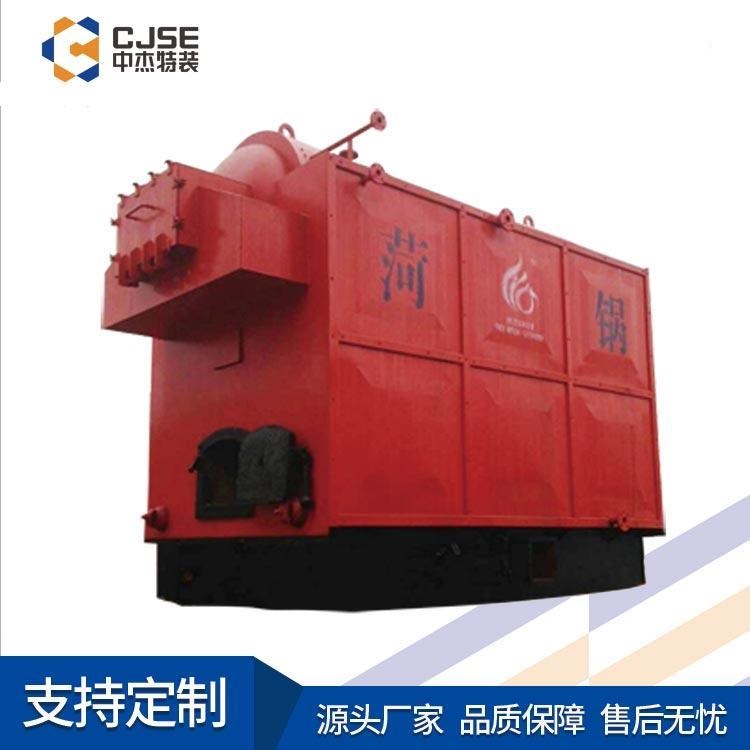


















Shandong Zhongjie Special Equipment (formerly Heze Boiler Factory Co., Ltd.) holds an A-grade boiler manufacturing license, an A2-grade pressure vessel manufacturing license, an A2-grade pressure vessel design license, a B-grade boiler installation license, and GB2/Class, GC2/Class pressure pipeline installation licenses, as well as a mechanical and electrical equipment installation contracting qualification. It is a member of the China Boiler and Water Treatment Association, the China Chemical Equipment Association, and the理事 unit of the Shandong Equipment Manufacturing Association. The company has also passed the ISO9001 Quality Management System, ISO14001 Environmental Management System, OHSAS18001 Occupational Health and Safety Management System certifications, and the American ASME/U2 certification.
The emission characteristics of biomass fuel boiler flue gases mainly include the following aspects:
Particulate Emissions: During the combustion process of biomass fuel boilers, particulates are produced, including visible dust and fine particles. The amount of particulate emissions is related to fuel characteristics, combustion temperature, and combustion equipment, among other factors. Generally, biomass fuel boilers have lower particulate emissions than coal boilers, but still require dust removal equipment for treatment.
(SO2) Emission: The content of SO2 in biomass fuel is low, hence the SO2 emissions from biomass fuel boilers are generally low. However, in some cases, such as when waste materials are used as fuel, the SO2 emissions may increase. To control SO2 emissions, measures such as combustion control and desulfurization devices can be adopted.
NOx emissions: The NOx emissions from biomass fuel boilers are related to factors such as fuel characteristics, combustion temperature, and combustion equipment. Biomass fuel contains a higher nitrogen content, which generates a certain amount of NOx during combustion. To control NOx emissions, measures such as low-NOx combustion technology, combustion control, and denitrification devices can be adopted.
(CO) Emissions: Carbon monoxide (CO) emissions from biomass fuel boilers are typically low due to the relatively complete combustion process of biomass fuel. However, in cases of incomplete combustion or unstable burning, CO emissions may increase. To control CO emissions, it is necessary to ensure a thorough and stable combustion process.
Volatile Organic Compounds (VOCs) Emissions: The VOCs emissions from biomass fuel boilers are related to the fuel characteristics and combustion conditions. Some biomass fuels contain volatile organic compounds.
The utilization of waste heat from biomass boilers is a crucial method for enhancing energy efficiency and reducing energy consumption and emissions. The following are some common applications and analyses of waste heat recovery technologies in biomass boilers:
Economic Air Preheater: The flue gas produced by biomass boiler combustion contains a large amount of heat energy. The economic air preheater can recover and utilize the excess heat in the flue gas to preheat the air entering the boiler, thereby improving combustion efficiency. Through waste heat recovery, fuel consumption can be reduced and flue gas emissions can be minimized.
Economizer: An economizer is a device used to recover waste heat from flue gas, by transferring the heat from the flue gas to the boiler feed water, thus increasing the water temperature and reducing fuel consumption. The application of an economizer can effectively lower the flue gas temperature of the boiler and improve its thermal efficiency.
Flue Gas Waste Heat Boiler: A flue gas waste heat boiler is a device that utilizes the waste heat from biomass boiler flue gas to produce steam or hot water. By converting the waste heat in the flue gas into usable thermal energy, it achieves the reuse of energy and improves energy utilization efficiency.
Direct Utilization of Flue Gas: The waste heat from biomass boiler flue gas can be directly used for heating or drying processes, reducing the demand for other energy sources. For instance, the flue gas can be transported through chimneys or pipes to the location that requires heating, directly utilizing the thermal energy of the flue gas.
Flue Gas Waste Heat Recovery System: The flue gas waste heat recovery system recovers and utilizes the excess heat from biomass boiler flue gas to supply other equipment or systems, such as air conditioning, heating, and hot water. This achieves comprehensive energy utilization and improves overall energy efficiency.
Biomass boilers possess the following characteristics:
Fuel adaptable: Biomass boilers can use a variety of biomass fuels, such as sawdust, straw, etc., demonstrating strong fuel adaptability.
High combustion efficiency: The biomass boiler's combustion technology and equipment enable a combustion process that enhances efficiency.
Eco-friendly and Low-carbon: The carbon dioxide produced during biomass combustion can be absorbed by plants, forming a cycle that reduces the burden on the atmosphere. Additionally, emissions and pollutants from biomass combustion are relatively low, causing minimal environmental impact.
Heat Recovery Utilization: Biomass boilers transfer the heat energy generated from combustion to water or other working substances through heat exchangers, achieving heat recovery and utilization, and improving energy efficiency.
Versatility: Biomass boilers are not only used for heating but also for hot water supply and industrial heating in various applications.
The efficiency of biomass boilers is influenced by various factors, including fuel quality, the design and adjustment of combustion equipment, and the effectiveness of flue gas purification systems. Generally, the efficiency of biomass boilers can reach over 70%, with some models achieving over 80% efficiency. Improving efficiency can be achieved through optimizing the combustion process, enhancing the heat transfer efficiency of heat exchangers, and reducing flue gas emissions. Additionally, proper operation and maintenance play a crucial role in enhancing efficiency.
Biomass boilers typically include the following main components:
Combustion chamber: The area used for burning biomass fuel, providing the space and oxygen required for combustion.
Grate: A metal grid located at the bottom of the combustion chamber, used to support fuel and facilitate the flow of gases and slag during the combustion process.
Combustion System: Includes the fuel supply system, air supply system, and ignition system, designed to control the supply of fuel and air to facilitate the combustion process.
Flue Gas Treatment System: Includes flue gas purification equipment, such as dust collectors, desulfurization and denitrification units, used to purify flue gases produced by combustion and reduce environmental pollution.
Boiler piping system: Includes water pipes, steam pipes, and flue gas pipes, etc., for the transmission of heat and flue gas.
Heat Exchanger: Used to transfer the thermal energy produced by combustion to the working medium, such as water or steam, to achieve energy conversion.
Control System: Includes automatic control equipment, sensors, and gauges for monitoring and controlling the boiler's operational status, ensuring safety and operation.
Equipment: Includes water supply system, waste discharge system, ash and slag treatment system, and fuel storage system, etc., designed to provide the necessary functions for boiler operation.
These units collectively form the basic structure of biomass boilers, facilitating the combustion of biomass fuel and the energy conversion process. Specific units and configurations may vary depending on the type, scale, and application requirements of the boiler.
Our company places great emphasis on technological innovation and research and development. We have one municipal-level enterprise technology center in Heze City, equipped with non-destructive testing, physical and chemical testing, welding testing, hydrostatic testing, and other testing facilities. We have over 600 types of equipment, including CNC machine tools, X-ray flaw detectors, digital ultrasonic flaw detectors, mechanical property testing machines, chemical analyzers, spectrometers, tensile testing machines, plasma welding machines, and more. The key products and technologies we have developed, such as thermal pressure vessel welding, biomass boiler emission reduction, and waste heat utilization, have successively been selected for multiple Shandong Provincial Department of Industry and Information Technology science and technology innovation projects, key provincial projects, and Heze City innovation and excellence projects. We have accumulated a total of 27 authorized utility models, 16 authorized inventions, participated in drafting 2 standards, 2 industry standards, and registered 15 trademarks. Our technical team, in collaboration with Professor Yajiang Li of Shandong University, has developed deep cryogenic container processing technology using the international plasma arc + wire filling argon arc welding (PAW-GTAW) technology. After being appraised as a provincial-level scientific and technological achievement, our technology level has reached an international standard in the field of deep cryogenic container manufacturing. Choose Zhongjie Special Equipment, let's create brilliance together!
WeChat Official Account

Scan to follow Official Account



















