


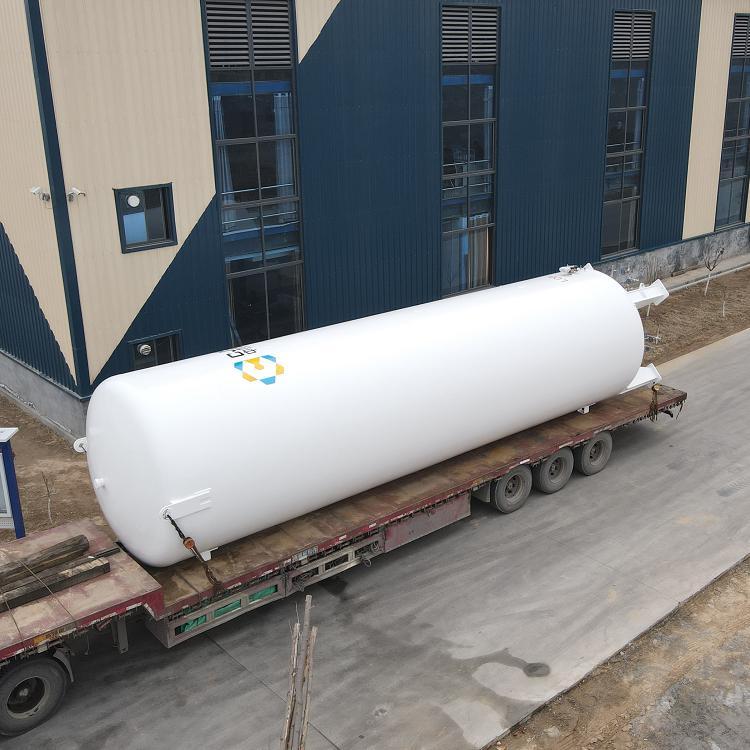

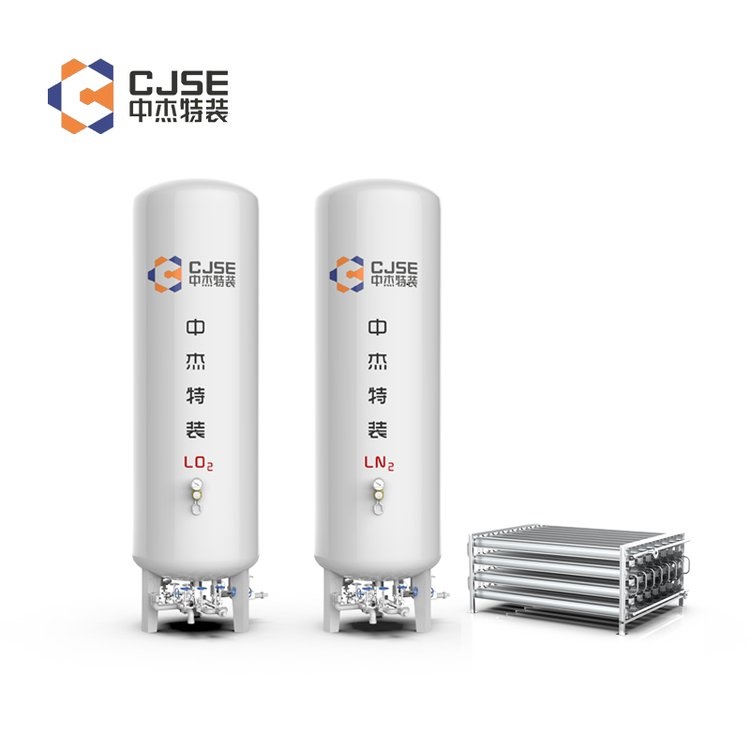
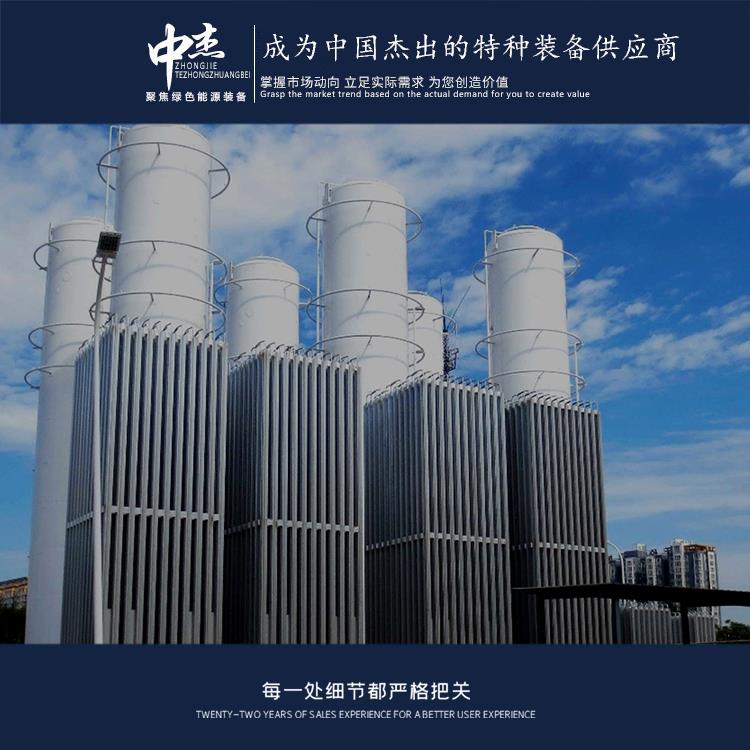


















Shandong Zhongjie Special Equipment (formerly Heze Boiler Factory Co., Ltd.) was established in 2001, located at No. 2218 Jinnan Road, Development Zone, Heze City, with a registered capital of 50 million yuan and total assets of 500 million yuan. The company has 7 business centers: boilers, deep-freeze containers, pressure vessels, central air conditioning, engineering installation, international trade, and Internet of Things. It has three factory areas on Jinnan Road, East Changjiang Road, and Bohai Road, covering a total of 200,000 square meters, with the main workshop area being 83,000 square meters. It currently employs 710 people, including 247 engineers and technicians and 82 intermediate-level technicians. In December 2016, it was recognized as a "High-Tech Enterprise" by the Science and Technology Department. In June 2021, it was identified as a "Specialized and New Enterprise in Shandong Province" by the Ministry of Industry and Information Technology. In June 2022, it was recognized as a "Gazelle Enterprise in Shandong Province" and in August 2022, it was identified as a "Specialized and New Small Giant Enterprise" by the Ministry of Industry and Information Technology.
When selecting insulating materials for low-temperature liquid storage tanks, consider the following factors:
Thermal Conductivity: The lower the thermal conductivity of an insulating material, the better its insulating performance. Therefore, materials with lower thermal conductivity should be chosen, such as polyethylene foam (EPS), polyester foam (PUR), and silicate fibers.
Density: The density of insulating materials also affects their thermal insulation performance. Generally, the higher the density, the better the insulation. However, excessively high density may increase the weight and cost of the tank. Therefore, a balance needs to be struck between insulation performance and tank structural requirements.
Corrosion Resistance: Due to the special working environment of low-temperature liquid storage tanks, the insulating material must have excellent corrosion resistance to withstand the erosion of low-temperature liquids. For instance, glass fiber and silicate fiber offer good corrosion resistance.
Reliability and durability: Insulation materials must have good reliability and durability, maintaining their insulating properties over the long term. Choose verified and tested materials to ensure their quality and performance.
Construction convenience: The ease of installation and maintenance of insulating materials is also a factor to consider. Choosing materials that are easy to install and maintain can enhance construction efficiency and reduce costs.
Environmental Friendliness: Consider selecting environmentally friendly insulation materials, such as recyclable ones, to minimize environmental impact.
Considering these factors, you can select appropriate insulation materials to provide excellent thermal insulation and durability, ensuring the safety and efficient operation of low-temperature liquid storage tanks. When choosing insulation materials, it's advisable to consult engineers or consulting agencies for more accurate advice and guidance.
Liquid nitrogen tanks are equipment used for storing liquid nitrogen and are widely applied in the following fields: Frozen Food and Refrigerated Logistics: Liquid nitrogen tanks are used in the frozen food and refrigerated logistics industry to freeze or refrigerate food and other perishable items, extending their shelf life and maintaining freshness. The low temperature of liquid nitrogen can quickly freeze food, prevent bacterial growth, and prevent food spoilage. Medical Research and Applications: Liquid nitrogen tanks are extensively used in the field for cryopreservation of biological samples, cells, tissues, and more. The low temperature of liquid nitrogen effectively preserves the integrity and activity of biological materials, used in medical research, biomedicine, and transplantation fields. Laboratory Research: In scientific research and laboratories, liquid nitrogen tanks are utilized to provide liquid nitrogen as a coolant and freezing medium. The low temperature of liquid nitrogen can be used for cooling laboratory equipment, material research, superconducting electronics, and low-temperature physics. Metal Processing and Welding: Liquid nitrogen tanks are used in metal processing and welding for cooling and controlling the temperature of metals. Liquid nitrogen can rapidly cool metals, improve their hardness and strength, and reduce deformation and stress. Gas Storage and Supply: Liquid nitrogen tanks are also used for storing and supplying nitrogen gas. Liquid nitrogen can be evaporated into gaseous nitrogen for applications such as gas shielding welding, gas fire suppression systems, gas analysis, and laboratory gas supply. In summary, liquid nitrogen tanks have a wide range of applications in frozen food, laboratory research, metal processing, and gas supply, providing storage and supply functions for liquid nitrogen at the application site.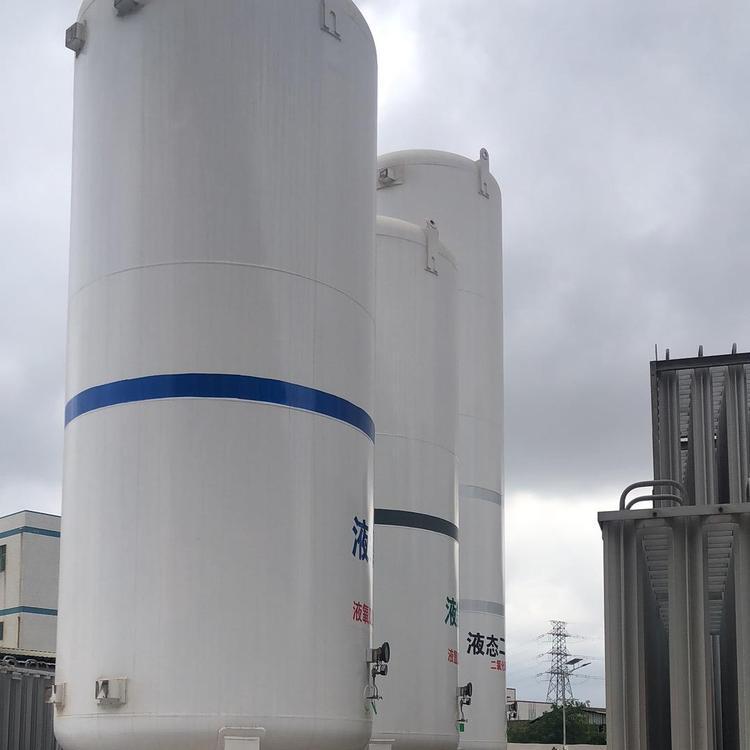
The filling of a low-temperature liquid nitrogen tank refers to the process of transferring liquid nitrogen from an external supply source into the tank. Below is an elaboration on the filling of low-temperature liquid nitrogen tanks:
Preparation: Prior to filling the liquid nitrogen tank, thorough preparation is required. This includes inspecting the tank's condition and safety, ensuring the interior is clean, free of impurities and contaminants. Additionally, verify the quality of the liquid nitrogen supply source and the safety of the supply pipelines.
Connect supply source: Link the liquid nitrogen supply source to the liquid outlet of the storage tank. Ensure the connection is secure and reliable to prevent leaks.
Control Liquid Level: During the bottling process, it is necessary to control the liquid nitrogen level to prevent overfilling or overflow. A liquid level gauge or a liquid level control system can be used to monitor and control the level.
Slow Injection: The injection of liquid nitrogen should be done slowly to prevent rapid vaporization and pressure increase. Appropriate valves and flow control devices can be used to regulate the injection rate.
Monitor Pressure: During the canning process, it is essential to monitor the pressure of the storage tank to ensure it remains within the safe range. Pressure gauges or pressure sensors and similar devices can be used for monitoring.
Canning Completion: Stop the injection of liquid nitrogen when the liquid level reaches the predetermined filling volume or the tank's capacity limit. Disconnect the connection to the supply source and ensure the sealing integrity of the filling port.
Safe Operation: Adhere to relevant safety regulations and operational guidelines throughout the bottling process. Liquid nitrogen is highly flammable at low temperatures, so operators must wear appropriate personal protective equipment and ensure the operating environment is free of any ignition sources.
When bottling liquid nitrogen, attention must be paid to its low-temperature properties and safety. Ensure safe operation and control throughout the bottling process to guarantee the safe operation of the storage tank and the effective storage of liquid nitrogen.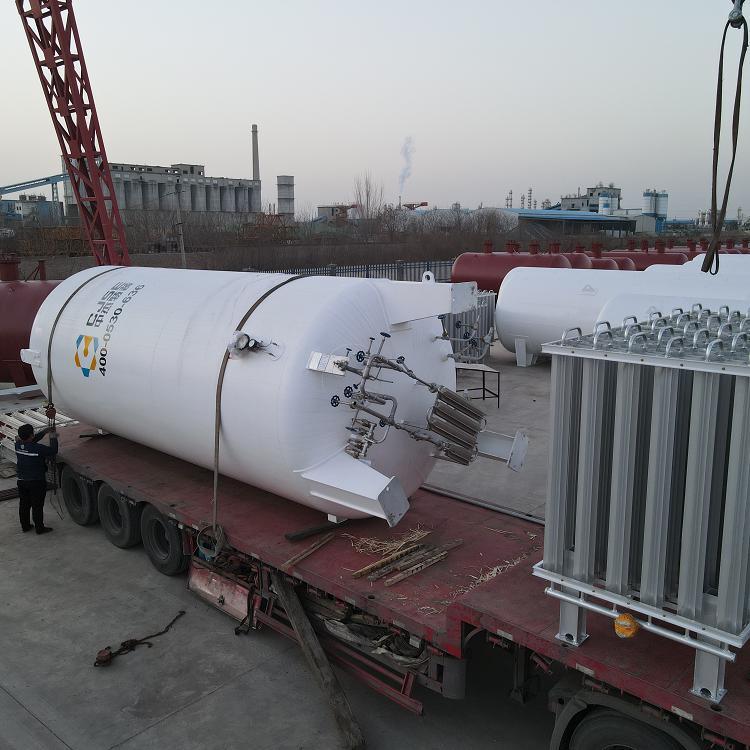
Before using the liquid oxygen tank, the following preparations must be made:
Safety Inspection: Ensure the tank and its surrounding environment are safe. Check for any damage, leaks, or other safety hazards on the tank. Make sure there are no flammable materials or other hazardous items in the vicinity of the tank.
Tank Preparation: Inspect the tank's exterior, including the shell, welds, valves, and fittings. Ensure there are no visible damages or corrosion. Check that the insulation layer is intact and undamaged.
Liquid Oxygen Filling: Utilize liquid oxygen transport equipment to fill liquid oxygen into the storage tank. Ensure that the flow rate and pressure of liquid oxygen are maintained within a safe range during the filling process.
Pressure Control: Storage tanks should be equipped with pressure control devices to ensure internal pressure remains within safe limits. Inspect and adjust the pressure control devices to ensure proper operation.
Valve Operation: Check that the valves and connections on the tank are operating correctly. Ensure the valves open and close smoothly and reliably. Adjust the opening and closing status of the valves as needed.
Safety Equipment: Inspect the safety equipment around the storage tanks, such as fire separation zones and alarm systems, to ensure they are functioning properly.
Operator Training: Ensure operators are proficient in the safe operation of liquid oxygen storage tanks.
Shandong Zhongjie Special Equipment, welcome customers to visit our factory for cooperation negotiations.
WeChat Official Account

Scan to follow Official Account



















