


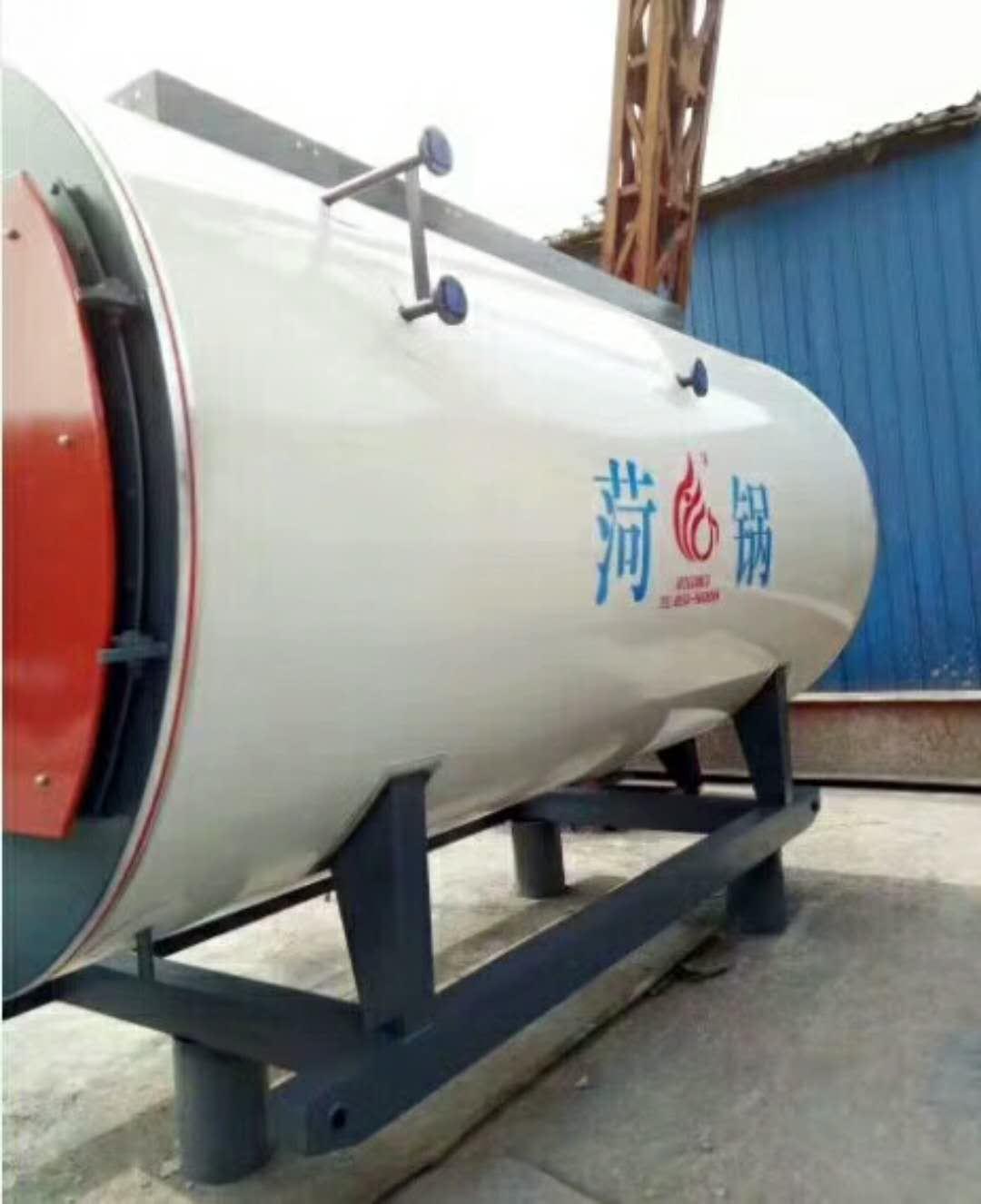

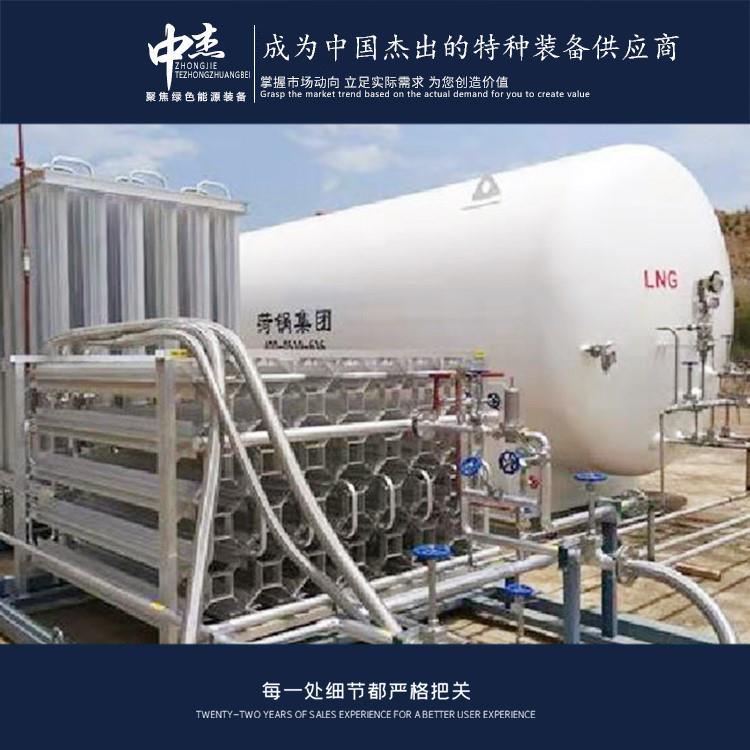
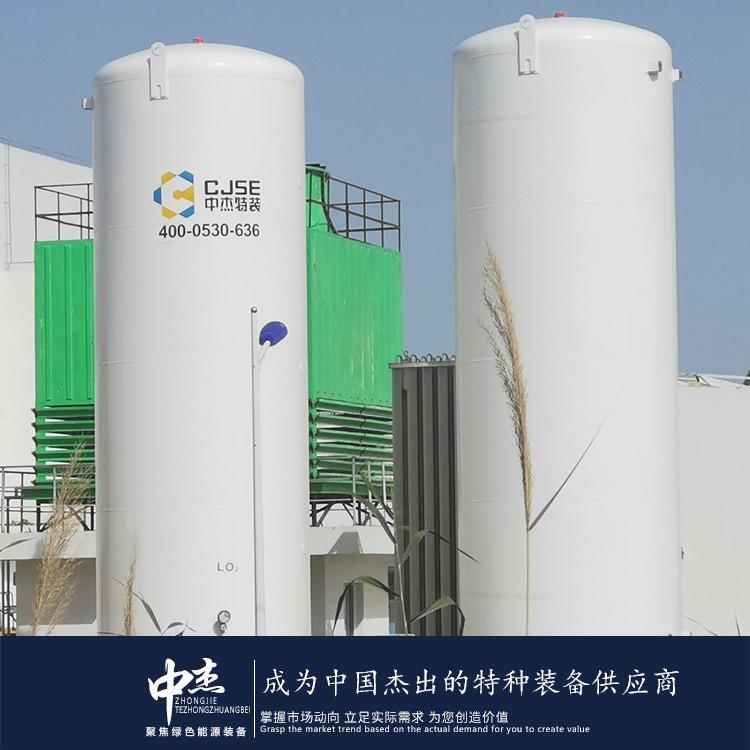


















Shandong Zhongjie Special Equipment (formerly Heze Boiler Factory Co., Ltd.) holds an A-grade boiler manufacturing license, A2-grade pressure vessel manufacturing license, A2-grade pressure vessel design license, B-grade boiler installation license, GB2 and GC2 class pressure pipeline installation licenses, and mechanical and electrical equipment installation contracting qualifications. It is a member of the China Boiler and Water Treatment Association, the China Chemical Equipment Association, and the council member of the Shandong Equipment Manufacturing Association. The company has also passed the ISO9001 Quality Management System, ISO14001 Environmental Management System, OHSAS18001 Occupational Health and Safety Management System certifications, and the American ASME/U2 certification.
The liquid level of carbon dioxide tanks varies depending on specific design and operational requirements. Generally, the liquid level in carbon dioxide storage tanks is typically maintained between 80% and 95%. There are several reasons for keeping the tank level within this range:
- Space Reserve: Maintaining a certain liquid level provides steam space inside the tank, preventing overpressure and the risk of tank explosion.
- Storage Capacity: Keeping a higher level maximizes the tank's capacity, allowing for more carbon dioxide storage.
- Stable Supply: Maintaining an appropriate level ensures a stable supply of carbon dioxide to meet operational needs.
However, specific level requirements may vary depending on different applications and industries. When using carbon dioxide tanks, it is essential to follow the manufacturer's recommendations and relevant regulations and standards to ensure the tank's level is controlled within a safe and appropriate range.
In recent years, the surge in the development of low-temperature liquid storage tanks can be attributed to the following factors: increasing energy demand: As the economy grows and the population expands, the demand for energy continues to rise. Low-temperature liquid storage tanks are primarily used for storing liquefied natural gas (LNG), liquefied oxygen (LOX), and liquefied nitrogen (LIN), among other low-temperature liquid energy sources, to meet the growing energy needs. Greenhouse gas emission reduction: These tanks can store and transport liquid carbon dioxide (CO2) for carbon capture and storage (CCS) technologies, reducing greenhouse gas emissions. With heightened awareness of environmental protection and climate change, the demand for low-temperature liquid storage tanks in the CCS field has also increased. Industrial development needs: The application of low-temperature liquid storage tanks in the industrial sector is also on the rise. For instance, in industries such as chemicals, pharmaceuticals, food and beverage, there is a need to store and transport low-temperature liquid raw materials or products, like liquid nitrogen, liquid oxygen, and liquid ethylene. As these industries develop, so does the demand for low-temperature liquid storage tanks. Technological advancement and innovation: In recent years, there have been continuous advancements and innovations in the design, manufacturing, and transportation of low-temperature liquid storage tanks. The application of new materials, optimization of tank structures, and improvements in safety control systems have made these tanks safer and more reliable, further propelling their peak development. In summary, factors such as increasing energy demand, greenhouse gas emission reduction, industrial development needs, and technological advancement and innovation have collectively driven the peak development of low-temperature liquid storage tanks in recent years. As related industries develop and technology progresses,
Carbon dioxide has several key applications in carbonated beverages:
1. Bestowing Bubble and Texture: Carbon dioxide is crucial for creating bubbles and effervescence in carbonated drinks. When dissolved in the beverage, it forms bicarbonate ions, resulting in the foamy and bubbly texture. This texture and taste provide a unique characteristic to carbonated drinks.
2. Adjusting Acidity and Alkalinity: Carbon dioxide reacts with water to produce carbonic acid, thereby regulating the pH level of carbonated drinks. By controlling the amount of dissolved carbon dioxide, the acidity of the beverage can be adjusted for an ideal taste and mouthfeel.
3. Offering Refreshment: The carbon dioxide bubbles in carbonated drinks provide a refreshing sensation. As the beverage is consumed, the bubbles on the tongue create a cooling effect, enhancing the drink's taste and mouthfeel.
4. Extending Shelf Life: Carbon dioxide plays a role in preserving carbonated drinks. Its acidic and inert nature can inhibit the growth of microorganisms, extending the shelf life of the beverage.
It is important to note that excessive consumption of carbonated drinks may have negative health effects, such as tooth erosion and osteoporosis. Therefore, moderate consumption is recommended.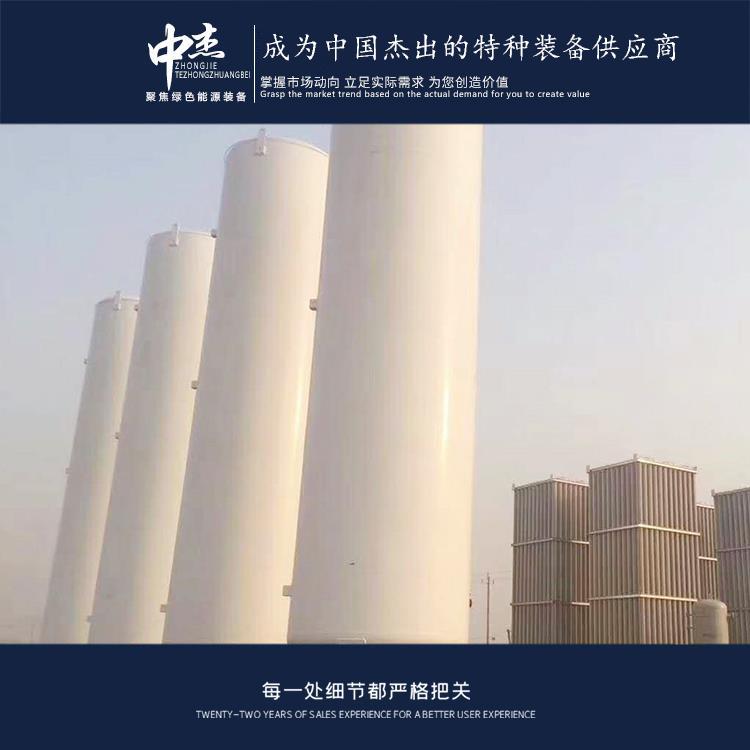
Common defects that may occur in CO2 storage tanks during use include deformation. The following are some causes that may lead to tank deformation: Overpressure: When the internal pressure of the tank exceeds its design pressure, deformation may occur. This could be due to operator error, system failure, or other reasons. Temperature Changes: CO2 storage tanks undergo thermal expansion and contraction with temperature variations. If the temperature changes are too extreme or too rapid, it may cause deformation of the tank. Internal Corrosion: If there are corrosion issues within the tank, the corrosion will damage the structural integrity of the tank, leading to deformation. External Damage: External impacts, compressions, or other physical damages can cause the tank to deform. Incorrect Installation or Use: Incorrect installation or use methods can lead to uneven stress on the tank, resulting in deformation. Tank deformation may reduce the structural integrity of the tank, and even pose risks of leakage or rupture. Therefore, it is important to regularly inspect and maintain the integrity of the tank, as well as to follow proper operational and installation procedures. If tank deformation is detected or suspected, use of the tank should be immediately ceased, and professional assistance should be sought for inspection and repair. Do not attempt to repair or continue using a defective tank to ensure operational safety.
Zhongjie Special Equipment adheres to the great vision of "realizing employees' dreams, creating customer value, and striving for the prosperity and strength of our motherland," wholeheartedly devoting itself to the development of green energy equipment. We offer the society products and services with high cost-performance!
WeChat Official Account

Scan to follow Official Account



















