


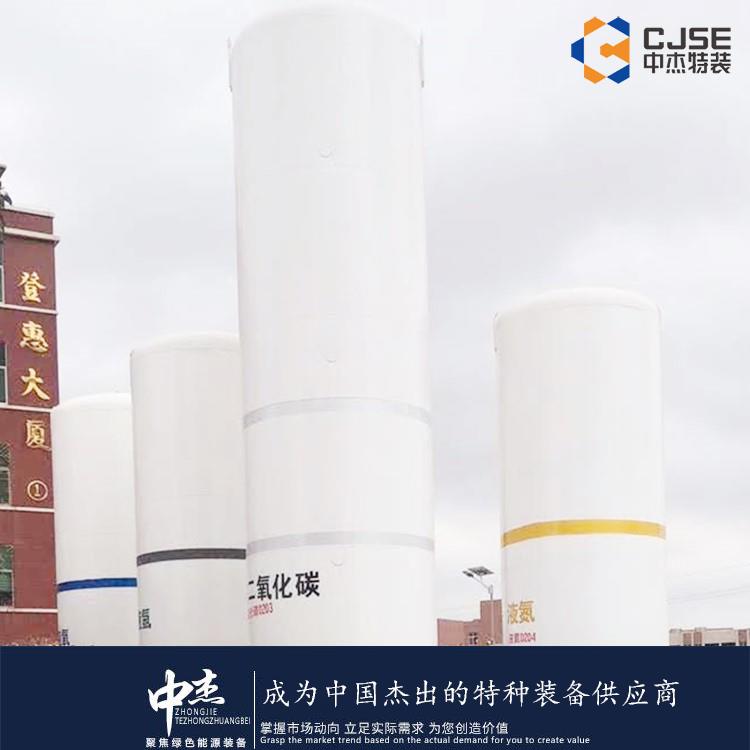

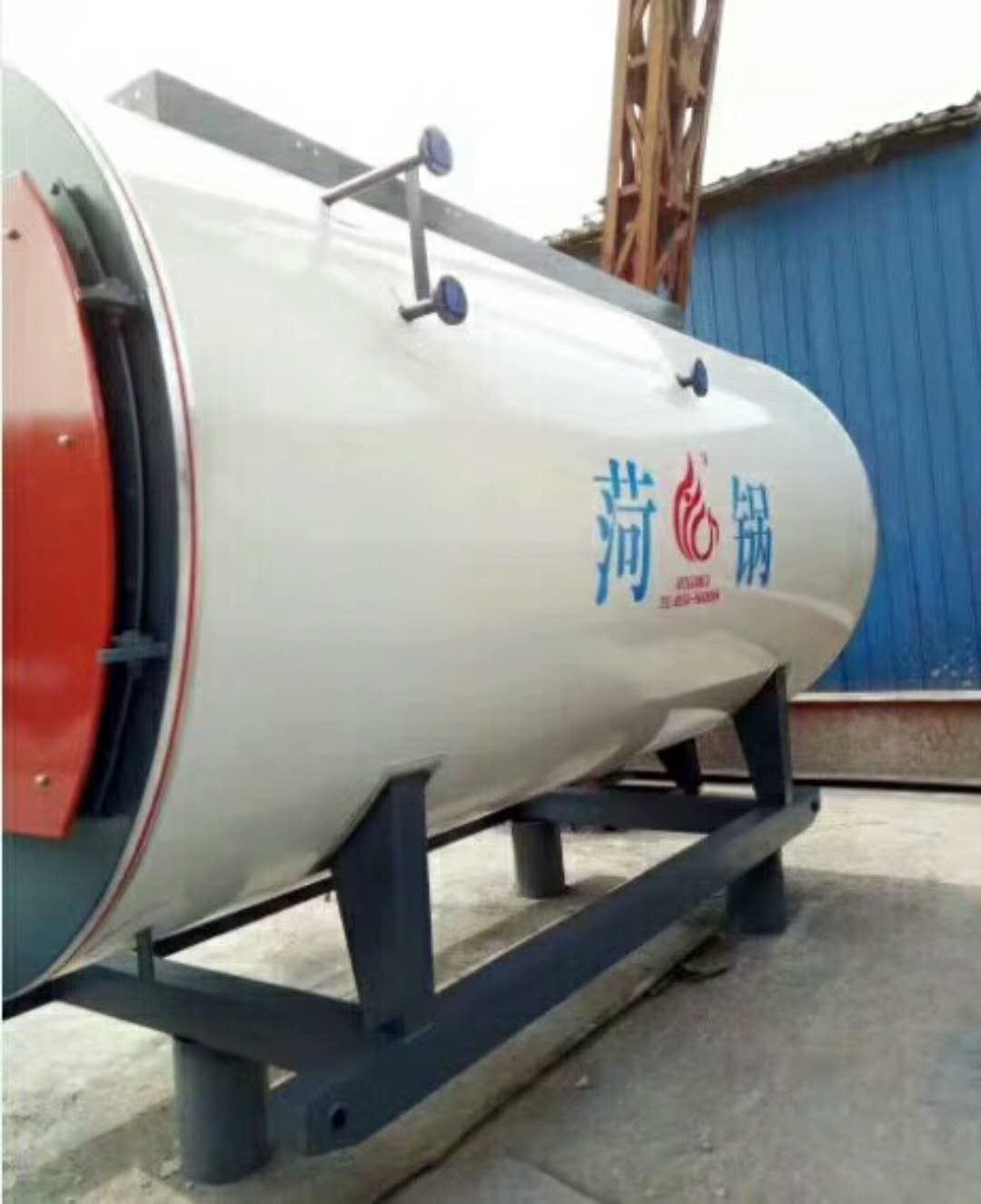
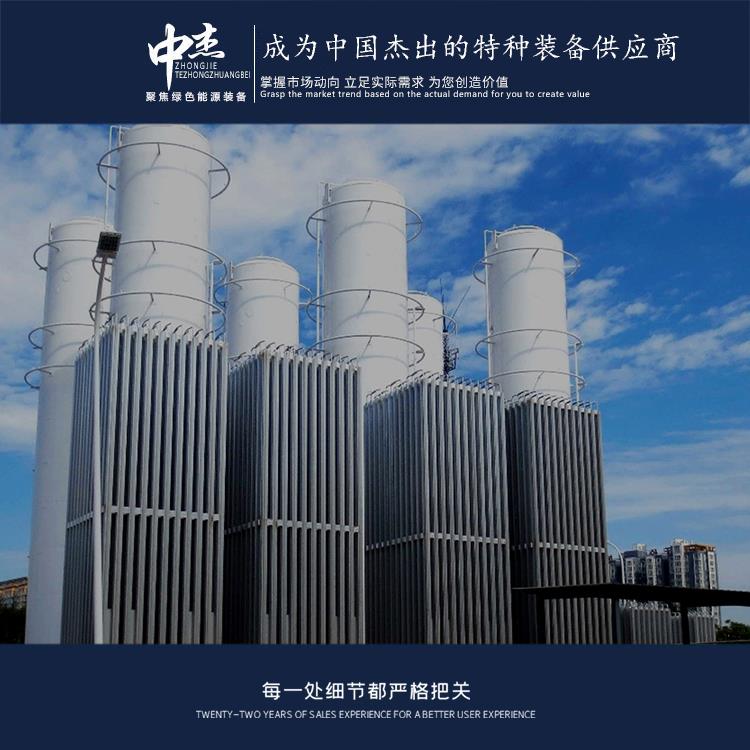


















Shandong Zhongjie Special Equipment (formerly Heze Boiler Factory Co., Ltd.) holds an A-grade boiler manufacturing license, an A2-grade pressure vessel manufacturing license, an A2-grade pressure vessel design license, a B-grade boiler installation license, and GB2/GB3-grade pressure pipeline installation licenses, as well as a qualification for electromechanical equipment installation contracting. It is a member of the China Boiler and Water Treatment Association, the China Chemical Equipment Association, and the director unit of the Shandong Equipment Manufacturing Association. The company has also passed certifications for ISO9001 Quality Management System, ISO14001 Environmental Management System, OHSAS18001 Occupational Health and Safety Management System, and the U.S. ASME/U2 certification.
The filling process for liquid nitrogen tanks typically includes the following steps:
Preparation: Ensure the storage tank and filling equipment are in good condition, free from damage or leaks. Check that the insulation layer of the tank is intact and undamaged.
Safety Inspection: Check the tank and its surrounding environment for safety. Ensure there are no flammable materials or other hazardous items in the vicinity of the tank.
Connect equipment: Link the filling equipment to the storage tank. Ensure the connection is securely fastened and leak-free.
Prepare Liquid Nitrogen: Provide liquid nitrogen supply, ensuring the quality and purity meet the required standards.
Open valves: Follow the operation instructions of the filling equipment to gradually open the corresponding valves, allowing liquid nitrogen to flow from the supply source into the storage tank.
Regulate Flow: Adjust the flow control valve of the filling equipment as needed to control the inflow rate of liquid nitrogen. Ensure the flow is moderate, avoiding too fast or too slow.
Monitor Liquid Level: Real-time monitoring of the liquid nitrogen level in the storage tank through a liquid level gauge or other level monitoring devices. Ensure the level is maintained within a safe range.
Cease Filling: Close the valve of the filling equipment when liquid nitrogen fills the tank or reaches the desired level, halting the addition of liquid nitrogen.
Disconnect: Disconnect the filling equipment from the storage tank and ensure there are no leaks at the connection point.
Safety Inspection: Recheck the tank and its surrounding environment for safety, ensuring there are no leaks or other safety hazards.
Please note that the process described is for general reference only, and the actual filling process may vary depending on the specific type of tank and filling equipment. When performing filling operations on liquid nitrogen tanks, please adhere to relevant operational specifications and safety requirements, and ensure that operators have received the necessary safety training and skills.
To maintain the stability of liquid argon tanks, the following details should be noted:
Basic Design: The foundation design of the storage tank must comply with relevant standards and regulations to ensure stability and load-bearing capacity. The foundation should possess sufficient strength and seismic resistance to withstand the impact of external forces and natural disasters such as earthquakes.
Foundation Construction: During the foundation construction process, ensure the foundation is level and even, avoiding any tilting or uneven settlement. Additionally, the concrete pouring of the foundation should comply with construction specifications, ensuring the quality and strength of the concrete.
Installation Process: During the storage tank installation, appropriate lifting equipment and safety measures must be employed to ensure the vertical installation and stability of the tank. Avoid excessive vibration and collision during the installation process to prevent damage or deformation to the tank.
Support Structure: The support structure of the tank should be designed reasonably to ensure the stability and load-bearing capacity of the tank. The structure should be made of sturdy materials and employ appropriate connection methods to withstand external forces and the pressure from the liquid inside the tank.
Safety Equipment: Tanks should be equipped with safety devices such as pressure relief valves and level alarms to ensure timely measures can be taken in abnormal situations, safeguarding the tank's safety.
Regular inspections and maintenance: Conduct regular checks and maintenance on liquid argon tanks, including visual inspections, pressure tests, and leak detection, as well as non-destructive testing and material analysis as required. Promptly identify and address tank issues to ensure stability and safety.
Note that the installation of liquid argon tanks should be performed by experienced personnel and in accordance with relevant safety operation procedures and standards. During installation, operations should be strictly conducted according to the manufacturer's installation guidelines and requirements to ensure the stability and safety of the tank.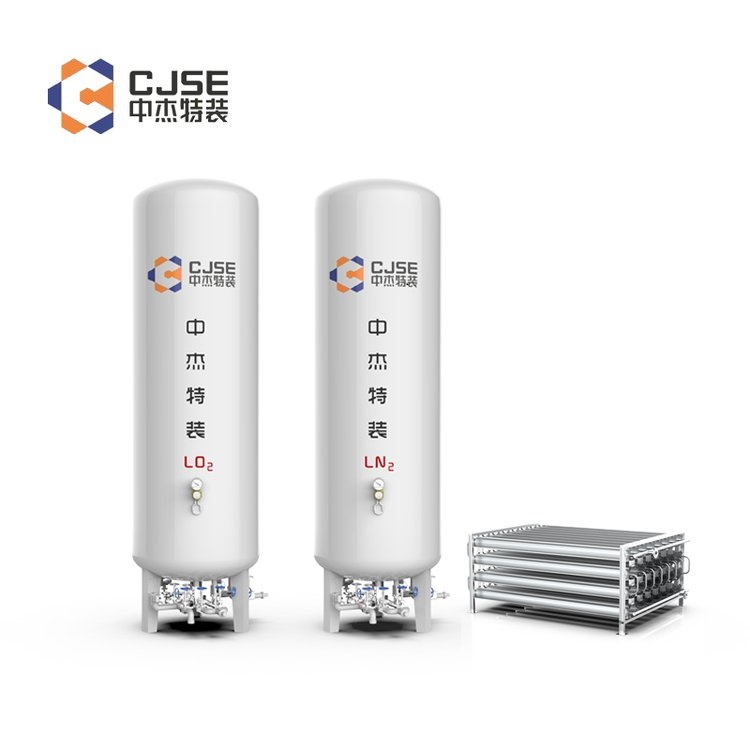
The testing and maintenance operations for liquid oxygen storage tanks encompass the following aspects:
Visual Inspection: Regularly inspect the liquid oxygen storage tank for any signs of corrosion, wear, or leakage on the tank surface to ensure the integrity of its appearance.
Pressure Testing: Regular pressure tests are conducted on liquid oxygen tanks to assess their pressure resistance. The tests should be carried out in accordance with relevant standards and regulations to ensure the tanks can withstand the designed working pressure.
Leak Detection: Regularly conduct leak detection on liquid oxygen tanks, including using leak detection equipment to inspect the tanks, to ensure that the tank's sealing performance is good and there are no leak issues.
Cleaning and Coating Protection: Regularly clean and apply protective coatings to liquid oxygen tanks to prevent corrosion and oxidation. Use appropriate cleaning agents during cleaning and avoid substances that react with liquid oxygen. Protective coatings can include anti-corrosion coatings or protective agents.
Regular Maintenance: Perform regular maintenance on liquid oxygen tanks, including inspections and replacements of seals, valves, safety devices, etc., to ensure proper operation and safety.
Safety Training and Operating Procedures: Conduct safety training for personnel using liquid oxygen tanks to ensure they are familiar with the safe operating procedures and precautions, preventing operational errors and accidents.
Record and Document Management: Establish test and maintenance records for liquid oxygen storage tanks, including test results, maintenance logs, and inspection records, for traceability and management purposes.
It is essential that the testing and maintenance of liquid oxygen tanks be conducted by trained personnel, adhering to relevant safety operation procedures and standards. Additionally, a corresponding testing and maintenance plan should be developed based on the specific conditions and usage requirements of the tank, and executed according to the plan.
Liquid nitrogen tanks are widely used in meat freezing. The following are several main applications of liquid nitrogen tanks in meat freezing:
Quick Freezing: Liquid nitrogen tanks can provide low temperatures to rapidly freeze meat to the required temperature. Due to the low-temperature properties of liquid nitrogen, the temperature of the meat can be quickly reduced in a short period, effectively preserving the quality and texture of the meat.
Cryogenic Storage: Liquid nitrogen tanks are suitable for long-term freezing storage of meat products. Placing meat in a liquid nitrogen tank maintains it at low temperatures, preventing the growth of bacteria and microorganisms, and extending the shelf life of the meat.
Chilled Transportation: Liquid nitrogen tanks can be used for the frozen transportation of meat products. Placing meat in a liquid nitrogen tank maintains its low temperature, ensuring the quality and freshness of the meat during transportation.
Chilled Processing: Liquid nitrogen tanks can be used for meat freezing. By exposing meat to liquid nitrogen, the surface can be quickly frozen, forming a frozen layer, thereby preserving the meat's moisture and nutritional content.
Chilled Processing: Liquid nitrogen tanks are suitable for meat freezing processing. Placing meat in liquid nitrogen makes it harder and more brittle, facilitating cutting, slicing, and processing.
Be mindful that when using liquid nitrogen tanks for meat freezing, it is essential to adhere to the relevant safety operating procedures and guidelines. Ensure that operators are equipped with the necessary safety awareness and operational skills to prevent accidents. Additionally, consult the food safety regulations and standards.
ZJ Special Equipment adheres to the great vision of "realizing employees' dreams, creating value for customers, and striving for the prosperity and strength of our motherland," wholeheartedly dedicated to the development of green energy equipment. We commit to society with high-quality products and services at competitive prices!
WeChat Official Account

Scan to follow Official Account



















