


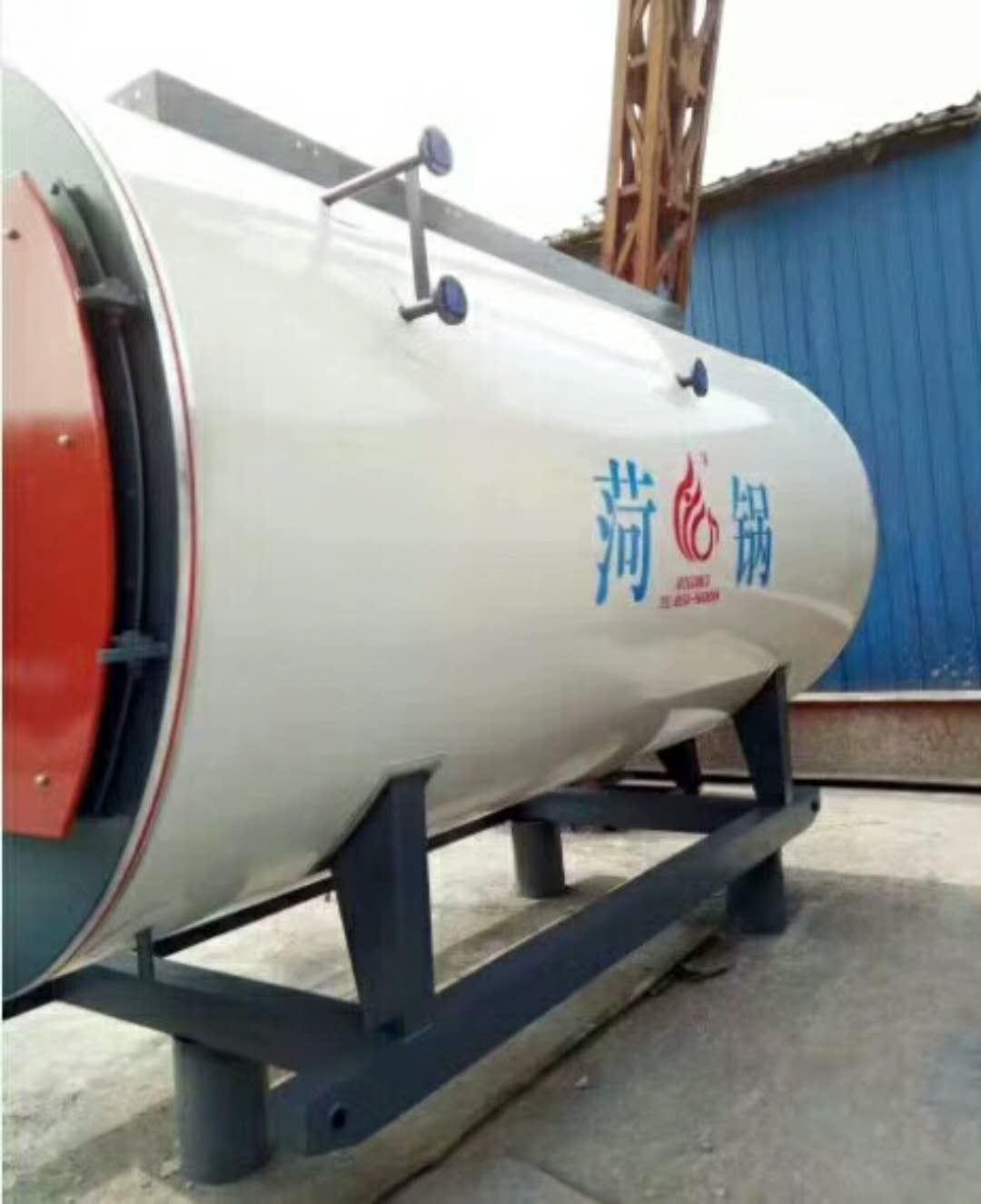

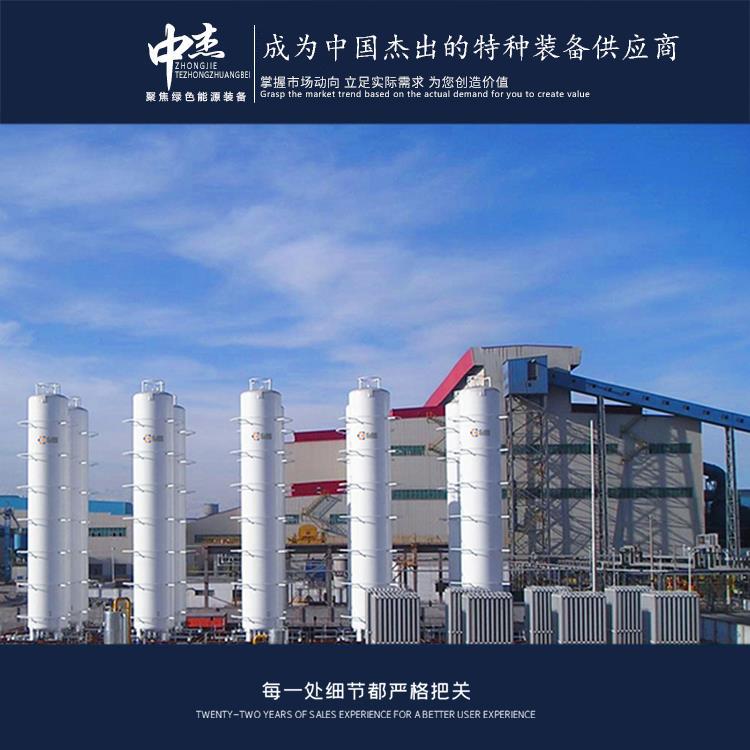
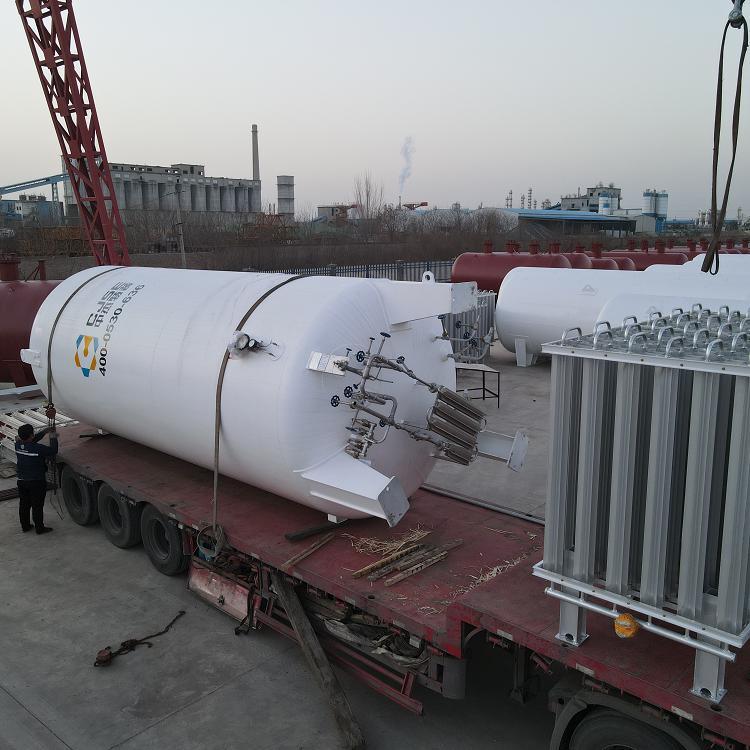


















Shandong Zhongjie Special Equipment's main products include: fuel (gas) boilers, organic heat carrier boilers, biomass boilers, waste heat recovery boilers, and other boiler products; vacuum insulation cryogenic pressure vessels such as LNG tanks, oxygen/nitrogen/argon tanks, and CO2 tanks; pressure vessel products like denitrification engineering equipment, heat storage and energy storage equipment, and complete chemical equipment sets; central air conditioning and HVAC equipment such as ground (water) source heat pumps, air source units, water-cooled screw units, and air-cooled modular units. Planned products include large-scale energy centers, LNG transport vehicles, LNG tank containers, and other green energy equipment.
Low-temperature liquid oxygen storage tanks typically require certain safety accessories to ensure safe operation and to address potential risks. The following are some common safety accessories for low-temperature liquid oxygen storage tanks:
Pressure Sensor: Used to monitor pressure changes within storage tanks. In the event of pressure exceeding the set range, it triggers alarms or automatically stops filling to prevent overpressure in the tank.
Safety Valve: Used to automatically release gas when the pressure inside the storage tank exceeds the set value, preventing overpressure. The safety valve should be selected and installed based on the design pressure and capacity of the storage tank.
Pressure Relief Device: Designed to release gas into a safe area when the pressure inside a storage tank becomes too high, thereby reducing the tank's pressure. The pressure relief device typically includes relief valves, relief pipes, and the like.
Level sensor: Used to monitor the level changes of liquid oxygen inside the storage tank, ensuring an adequate supply of liquid oxygen and preventing overfilling.
Temperature Sensor: Used to monitor temperature changes within storage tanks to ensure the temperature of liquid oxygen inside remains within a safe range.
Fire Detectors and Fire Suppression Systems: Used to monitor fire risks around storage tanks and initiate the fire suppression system as needed to prevent the spread of fire.
To ensure the quality of liquid oxygen storage tanks, the following measures can be taken:
选择可靠的供应商:选择有资质和经验的储罐制造商或供应商,确保其具备良好的声誉和可靠的质量管理体系。
Comply strictly with relevant standards and regulations: The design, manufacturing, and installation of liquid oxygen storage tanks should adhere to the relevant standards and regulations, such as standards, industry standards, or.
Quality Control and Inspection: Strict quality control and inspections are conducted throughout the manufacturing process, including material inspections, process monitoring, and finished product testing. Ensure that the materials, welding, and sealing of the storage tanks meet the required standards.
A comprehensive quality management system: Establish and implement a comprehensive quality management system, including quality control plans, quality inspection records, and quality training, to ensure that every aspect meets quality requirements.
Regular maintenance and inspections: Regularly maintain and inspect the liquid oxygen storage tank, including cleaning, coating protection, and corrosion prevention, to extend the tank's lifespan and ensure optimal working condition.
Safety Operation and Management: Establish and implement safety operation and management systems, including proper use of tanks, operational procedures, safety training, etc., to ensure the safety and reliability of tanks during use.
Regular inspections and assessments: Conduct regular checks and evaluations of the liquid oxygen storage tanks, including visual inspections, pressure tests, leak detection, and as needed, non-destructive testing and material analysis to ensure the quality and safety of the tanks.
Through the implementation of these measures, the quality of liquid oxygen tanks can be effectively ensured, enhancing their reliability and safety, meeting usage requirements and standards.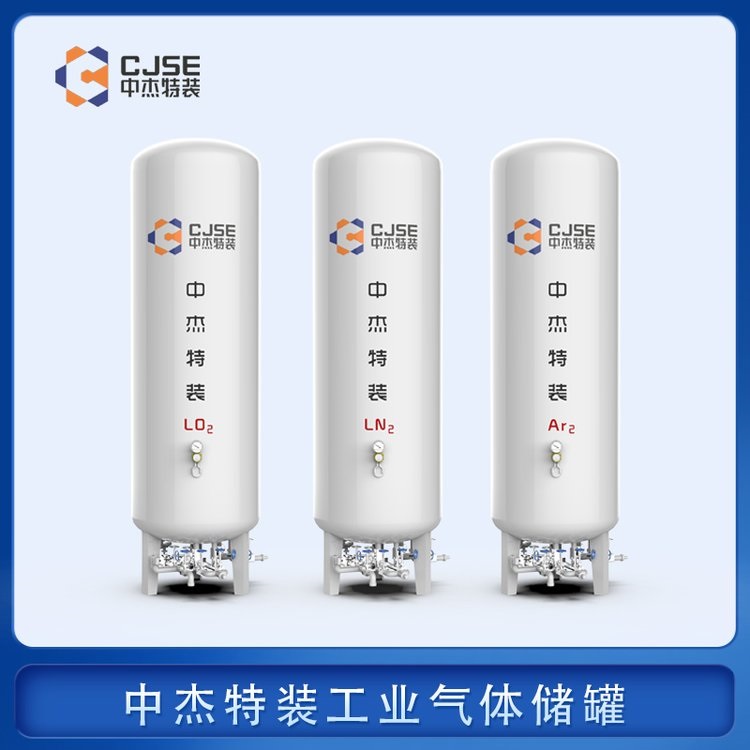
The reason for occasional venting of liquid oxygen tanks is primarily to maintain the safe pressure range within the tank and prevent excessive pressure buildup. The following are several scenarios where liquid oxygen tanks may vent occasionally:
Pressure Control: During the operation of the liquid oxygen tank, the pressure inside the tank changes due to the evaporation of liquid oxygen and temperature fluctuations. To maintain a safe pressure range within the tank, regular venting is required to control the tank pressure within the safe limits.
Prevent Overpressure Accumulation: During oxygen filling or usage, external factors or operational errors may cause the internal pressure of the liquid oxygen tank to exceed the safe limit. To prevent overpressure accumulation, timely venting is required to reduce the internal pressure of the tank.
Prevent Gas Accumulation: Liquid oxygen storage tanks may contain some gas impurities, such as air and water vapor. These gases can condense into liquids or solids at the low temperatures of liquid oxygen, blocking pipes or affecting the normal operation of the tank. Regular venting can expel these impurities, maintaining cleanliness and unobstructed flow within the tank.
It is crucial that the discharge operation of liquid oxygen be performed by trained personnel and strictly adhere to the relevant operational procedures and safety measures. During the discharge process, attention must be given to prevent any leakage of liquid oxygen and contact with it, ensuring the safety and reliability of the operation.
Operation procedures for liquid oxygen storage tanks should be established based on specific tank design and usage requirements. The following are some common contents of general operation procedures for liquid oxygen storage tanks:
- Operator Training: Ensure operators have received relevant training for liquid oxygen storage tanks, understanding the tank's structure, performance, operational procedures, and safety considerations.
- Safety Inspections: Conduct necessary safety checks before operating the liquid oxygen storage tank, including checking the tank's integrity, the sealing of valves and pipelines, and the condition of the insulation layer.
- Liquid Oxygen Supply: Ensure the liquid oxygen supply system is functioning properly, including inspecting the status of liquid oxygen supply pipelines, valves, and pressure gauges, and ensuring an adequate supply of liquid oxygen.
- Tank Pressure Control: Monitor the pressure of the liquid oxygen storage tank to ensure it remains within a safe range. If necessary, control the tank's pressure by adjusting pressure valves or pressure relief devices.
- Leak Control: Regularly inspect the sealing of the tank and pipelines to ensure there are no leaks. If a leak is detected, take immediate action to control the leak and notify relevant personnel.
- Fire Prevention Measures: Prohibit open flames and prevent sparks and high-temperature objects from contacting the storage tank. Establish fire prevention facilities and firefighting equipment, and conduct regular inspections and maintenance.
- Safety Distance: Maintain a certain safety distance around the liquid oxygen storage tank to prevent the spread of fires, explosions, and leaks.
- Maintenance and Repair: Regularly perform maintenance and repairs on the tank, including cleaning the tank, inspecting the insulation layer, valves, and pipeline conditions, to ensure normal operation.
- Waste Disposal: Properly dispose of waste generated by the liquid oxygen storage tank, including liquid oxygen residue, waste gases, and waste liquids, in accordance with relevant environmental protection regulations and standards.
Note that operation procedures for liquid oxygen storage tanks should be established based on specific tank design and usage requirements, and should comply with applicable regulations, standards, and safety guidelines. When operating liquid oxygen storage tanks, cooperation with local regulatory agencies and individuals should be ensured to guarantee the safety and reliability of the tank.
Our company places great emphasis on technological innovation and research and development, boasting one municipal-level enterprise technology center in Heze City. We have established testing facilities for non-destructive testing, physical and chemical testing, welding testing, hydrostatic testing, and more. Equipped with over 600 various instruments and equipment, including CNC machine tools, X-ray flaw detectors, digital ultrasonic flaw detectors, mechanical property testing machines, chemical analyzers, spectrometers, tensile testing machines, plasma welding machines, and others, our key products such as temperature-pressure vessels, biomass boiler emission reduction, and waste heat recovery have successively been included in multiple Shandong Provincial Department of Industry and Information Technology scientific and technological innovation projects, key provincial projects, and Heze City innovative and excellent projects. We have cumulatively obtained 27 authorized utility model patents, 16 authorized invention patents, participated in drafting 2 standards, 2 industry standards, and registered 15 trademarks. The technical team, in collaboration with Professor Yajiang Li from Shandong University, has developed deep cryogenic vessel processing technology using the internationally recognized plasma arc + wire feeding argon arc welding (PAW-GTAW) technique, which has been appraised as reaching international standards in the field of deep cryogenic vessel manufacturing at the provincial level. Choose ZJ Special Equipment, and let's create brilliance together!
WeChat Official Account

Scan to follow Official Account



















