



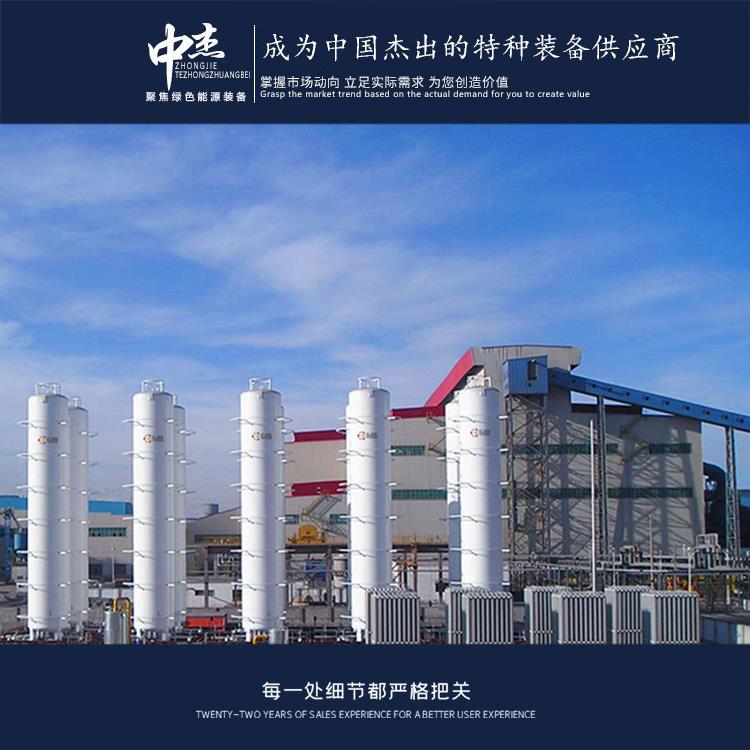


















Shandong Zhongjie Special Equipment (formerly Heze Boiler Factory Co., Ltd.) holds an A-grade boiler manufacturing license, A2-grade pressure vessel manufacturing license, A2-grade pressure vessel design license, B-grade boiler installation license, and GB2/Class, GC2/Class pressure pipeline installation license, as well as a qualification for the installation and contracting of electromechanical equipment. It is a member of the China Boiler and Water Treatment Association, the China Chemical Equipment Association, and a director unit of the Shandong Equipment Manufacturing Association. The company has also passed certifications for the ISO9001 Quality Management System, ISO14001 Environmental Management System, OHSAS18001 Occupational Health and Safety Management System, and the American ASME/U2 certification.
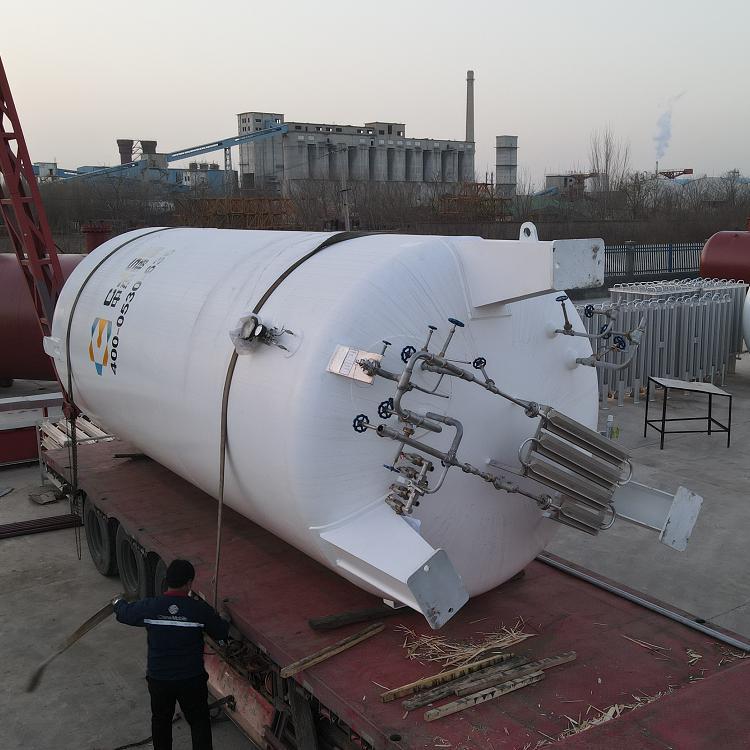
Liquid Argon Storage Tanks are used for storing and transporting liquid argon. Their application scope and characteristics are as follows:
Application Scope:
Industrial Applications: Liquid argon storage tanks are widely used in various industrial sectors, such as metal processing, electronic manufacturing, semiconductor production, and more.
Application: Liquid argon storage tanks are used in the field for cryogenic preservation of biological samples, cells, tissues, and vaccines.
Laboratory Applications: Liquid argon tanks are used in scientific research laboratories for low-temperature experiments, cryopreservation, and sample processing, etc.
Features:
Low-temperature Performance: As liquid argon has a boiling point of -185.7°C, the liquid argon storage tank must have excellent low-temperature insulation properties to maintain the low-temperature state of the liquid argon.
High-sealed integrity: Liquid argon storage tanks must have excellent sealing properties to prevent evaporation loss of liquid argon and the entry of external air.
Safety: Liquid argon is a flammable and explosive substance, hence liquid argon tanks must be equipped with safety valves, leak detectors, and other safety devices to ensure safe operation.
High Capacity: The capacity of liquid argon storage tanks ranges from a few liters to several thousand liters, allowing for selection of an appropriate capacity based on demand.
Cautionary Notes:
Protective Gear: When handling liquid argon storage tanks, it is mandatory to wear appropriate protective gear, including gloves, protective clothing, and non-slip shoes, to safeguard against the low temperatures of liquid argon and other hazards.
Ventilation Requirements: Please provide.
When selecting insulation materials for low-temperature liquid storage tanks, consider the following factors:
Thermal Conductivity: The lower the thermal conductivity of insulating materials, the better their insulation performance. Therefore, materials with lower thermal conductivity should be chosen, such as polyethylene foam (EPS), polyester foam (PUR), and silicate fibers.
Density: The density of thermal insulation materials also affects their insulating performance. Generally speaking, the higher the density, the better the insulating performance. However, excessively high density may increase the weight and cost of the storage tank. Therefore, a balance needs to be struck between the requirements for insulating performance and the storage tank structure.
Corrosion Resistance: Due to the unique working environment of low-temperature liquid storage tanks, the insulation material must have excellent corrosion resistance to withstand the erosion of low-temperature liquids. For instance, glass fiber and silicate fiber offer good corrosion resistance.
Reliability and durability: Insulation materials must have good reliability and durability, maintaining their insulating properties over the long term. Choose verified and tested materials to ensure their quality and performance.
Construction convenience: The ease of installation and maintenance of insulation materials is also a consideration. Choosing materials that are easy to install and maintain can enhance construction efficiency and reduce costs.
Environmental Friendliness: Consider selecting environmentally friendly insulation materials, such as recyclable ones, to minimize impact on the environment.
Considering these factors, select an appropriate insulating material to provide excellent thermal insulation and durability, ensuring the safety and efficient operation of low-temperature liquid storage tanks. When choosing insulating materials, it is recommended to consult engineers or consulting agencies for more accurate advice and guidance.
Low-temperature liquid storage tanks (such as liquid nitrogen, liquid oxygen, liquid argon, etc.) offer several advantages:
High-Density Storage: Low-temperature liquid storage tanks can convert gases into liquids, significantly increasing storage density. Compared to gas storage, liquid storage can hold more material in a relatively smaller space, enhancing storage efficiency.
Low-Temperature Retention: Low-temperature liquid storage tanks feature excellent insulation properties, effectively maintaining the低温 state of the liquid. The design and construction of the insulation layer reduce heat conduction and loss, preserving the liquid's低温 and minimizing evaporation and waste.
Supply: Low-temperature liquid storage tanks provide a stable and consistent liquid supply. Through internal pressure control and pipeline system design, precise liquid supply can be achieved, meeting industrial production and experimental requirements.
Safety: Low-temperature liquid storage tanks offer a high level of safety. Compared to gas storage, liquid storage reduces the risks of gas leakage and explosion. Tanks are usually equipped with safety devices, such as pressure relief valves and liquid level alarms, to ensure timely measures can be taken in abnormal situations, safeguarding the tank's safety.
Multi-functional Applications: Low-temperature liquid storage tanks are widely used in various fields, such as industrial production and scientific research. Low-temperature liquids like liquid nitrogen and liquid oxygen can be utilized for freezing, refrigeration, gas supply, and more, catering to diverse industrial needs.
In summary, low-temperature liquid storage tanks offer high-density storage, temperature retention, supply, safety, and versatile applications, providing reliable liquid storage and supply solutions across various fields.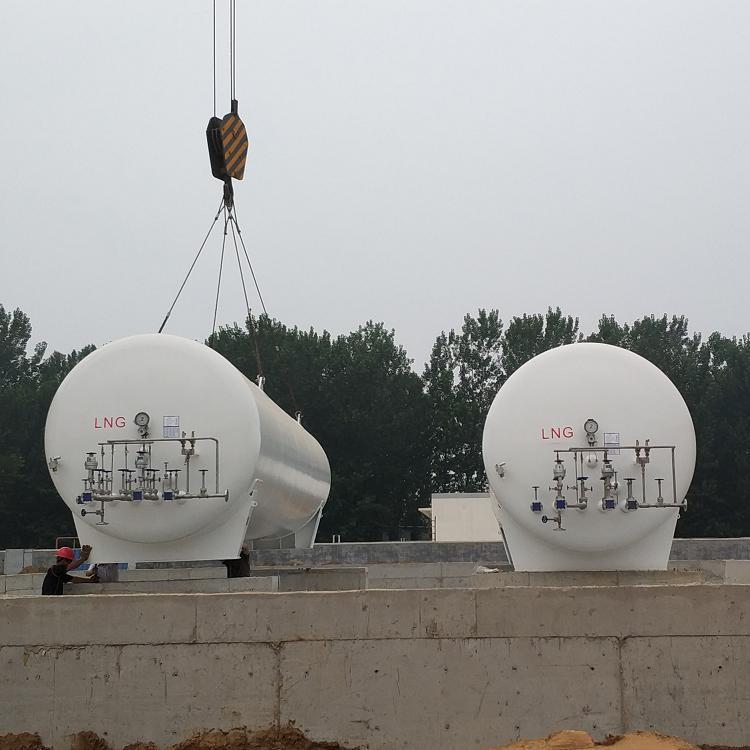
Material control for low-temperature liquid storage tanks is a crucial aspect in ensuring the safety and reliability of the tanks. The following are some common material control measures:
Material Selection: Choose materials suitable for low-temperature environments, such as low-temperature alloy steel, stainless steel, etc. These materials possess excellent low-temperature resistance and crack resistance, maintaining strength and toughness under low-temperature conditions.
Material Quality Control: Ensure the selected materials meet relevant standards and specifications. Conduct chemical composition analysis, mechanical property tests, and impact tests on the materials to ensure their performance meets design requirements.
Welding Material Selection: Choose welding materials suitable for low-temperature environments, such as low-temperature welding rods or welding wires. The welding materials should match the tank material and possess good welding properties and crack resistance.
Welding Process Control: Monitor welding process parameters such as current, voltage, and speed to ensure the quality and reliability of weld joints. Methods with low heat input, like pulse welding and laser welding, can reduce the temperature gradient and residual stress in the heat-affected zone.
Corrosion Protection Measures: Apply corrosion-resistant treatments to both the internal and external metal surfaces of the storage tank to extend its service life. Options include corrosion-resistant coatings and paints to safeguard the tank's metal structure from corrosion damage.
Material Performance Monitoring: Regularly conduct performance monitoring of the storage tank materials, such as mechanical property tests,
ZJ Special Equipment upholds the grand vision of "realizing employees' dreams, creating value for customers, and striving for the prosperity and strength of our motherland," focusing solely on the development of green energy equipment, and dedicating high-value products and services to society!
WeChat Official Account

Scan to follow Official Account



















