


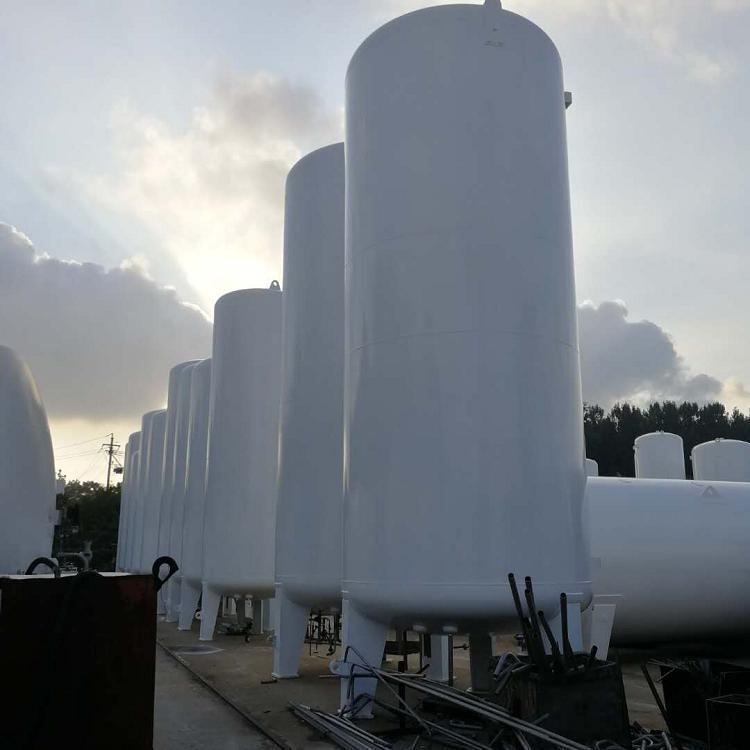

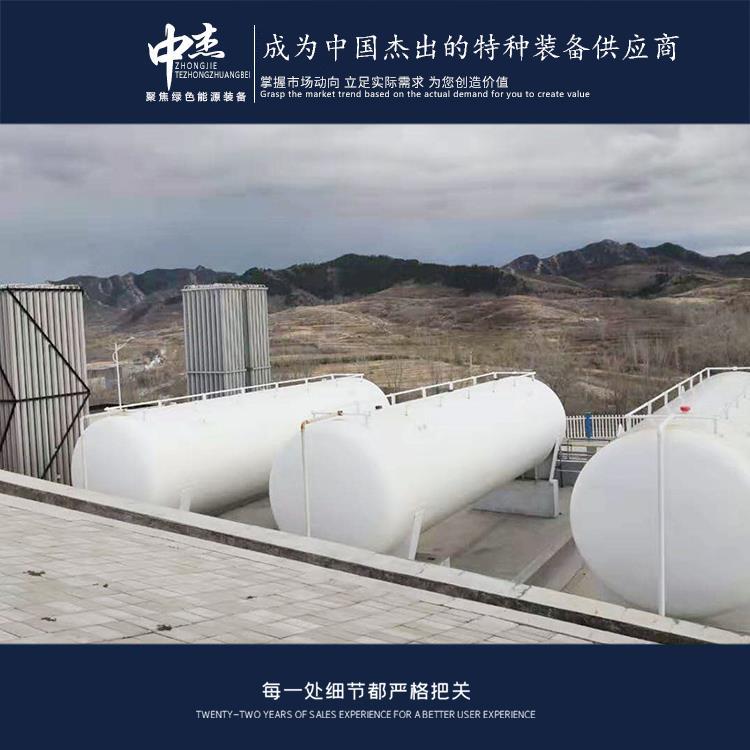
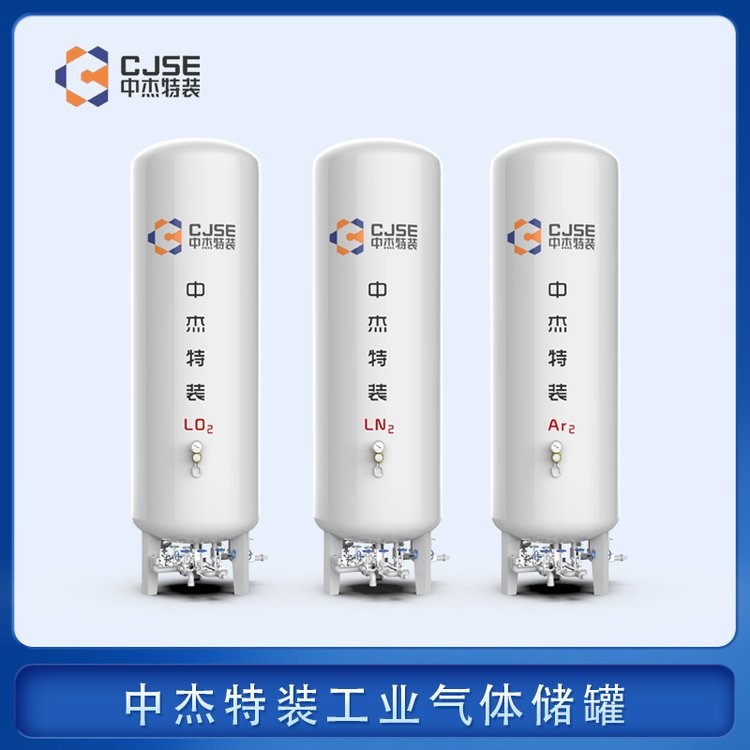


















Shandong Zhongjie Special Equipment Co., Ltd. specializes in the following products: fuel (gas) boilers, organic heat carrier boilers, biomass boilers, waste heat boilers, and other boiler products; vacuum insulation cryogenic pressure vessels such as LNG tanks, oxygen/nitrogen/argon tanks, CO2 tanks; pressure vessel products including denitrification engineering equipment, heat storage and energy storage equipment, complete chemical equipment sets; central air conditioning and HVAC equipment such as ground (water) source heat pumps, air source units, water-cooled screw units, and air-cooled modular units. Planned products include large-scale energy centers, LNG transport vehicles, LNG tank containers, and other green energy equipment.
Carbon dioxide storage tanks come with standard parameters that can vary based on design and application requirements. Here are some common standard parameters:
- Tank Capacity: The capacity of a carbon dioxide storage tank is typically expressed in kiloliters (L) or cubic meters (m), ranging from a few thousand to tens of thousands of liters.
- Working Pressure: The operating pressure of a carbon dioxide storage tank is usually around 20 to 25 MPa at normal temperatures, with the specific pressure determined by application needs and design standards.
- Design Temperature: The design temperature for a carbon dioxide storage tank is usually within the low-temperature range, generally between -40°C and -60°C, to accommodate the liquefaction and storage requirements of carbon dioxide.
- Material: Carbon dioxide storage tanks are usually made from high-strength steel or alloy materials to withstand high pressure and low-temperature environments.
- Insulation: The interior of the tank is equipped with insulation to reduce heat transfer and liquid evaporation. The insulation is typically a multi-layered structure, including thermal insulation materials and an outer protective layer.
- Safety Valves and Pressure Relief Devices: The tank is equipped with safety valves and pressure relief devices to control internal pressure and prevent overpressure and explosion.
- Level Monitoring and Control: The tank is fitted with level monitoring equipment to monitor the liquid level inside. Timely monitoring and control of the level ensure that the stored liquid volume remains within a safe range.
It's important to note that the specific standard parameters for carbon dioxide storage tanks may vary depending on design standards, application requirements, and manufacturers. When selecting and using carbon dioxide storage tanks, it's crucial to consider these factors.
Low Temperature Carbon Dioxide Storage Tank Knowledge
1. Structure of Low Temperature Carbon Dioxide Storage Tanks
Low temperature carbon dioxide storage tanks typically feature a double-layered cylindrical structure. The inner cylinder is made of 6MnDR alloy steel, while the outer cylinder is constructed from Q245R or Q345R pressure vessel steel plates. The piping is made of austenitic stainless steel, and the insulation space is filled with high-vacuum sintered sand or layered with insulation material. The storage tank is equipped with operation valves, which are strategically placed for ease of use. It also features a pressure gauge and a liquid level indicator for monitoring internal pressure and liquid level.
2. Key Features of Low Temperature Carbon Dioxide Storage Tanks
(1) The storage tank is fitted with a connection for filling tanker trucks, allowing liquid supply to vaporizers, tanker trucks, and pumps.
(2) Both the inner and outer cylinders are equipped with safety devices to ensure safe operation.
(3) The insulation material undergoes special treatment, giving the storage tank a longer vacuum lifespan. Additionally, a vacuum gauge is installed, allowing for the measurement of the insulation space's vacuum level as needed.
3. Transportation of Low Temperature Carbon Dioxide Storage Tanks
(1) During road transportation, the storage tank should be securely attached to the vehicle and travel at moderate speeds. Collision with other objects is strictly prohibited.
(2) Upon arrival, the unloading crew should work together with the equipment supervisor to develop a scientific and reasonable unloading plan.
4. Installation of Low Temperature Carbon Dioxide Storage Tanks
(1) After arrival at the installation site, the storage tank can be positioned when conditions are suitable. During installation, collisions and impacts should be avoided, and particular attention should be paid to the explosion-proof equipment on the outer cylinder and the vacuum valve, which must not be touched.
(2) A gas-tightness test is performed on the inner cylinder system using nitrogen to working pressure. After checking that valves, pipes, flanges, etc., are leak-free, the installation is complete.
(3) The installation dimensions are as per the supplied materials. When liquid loading and unloading is required, the vehicle's traffic routes should be considered.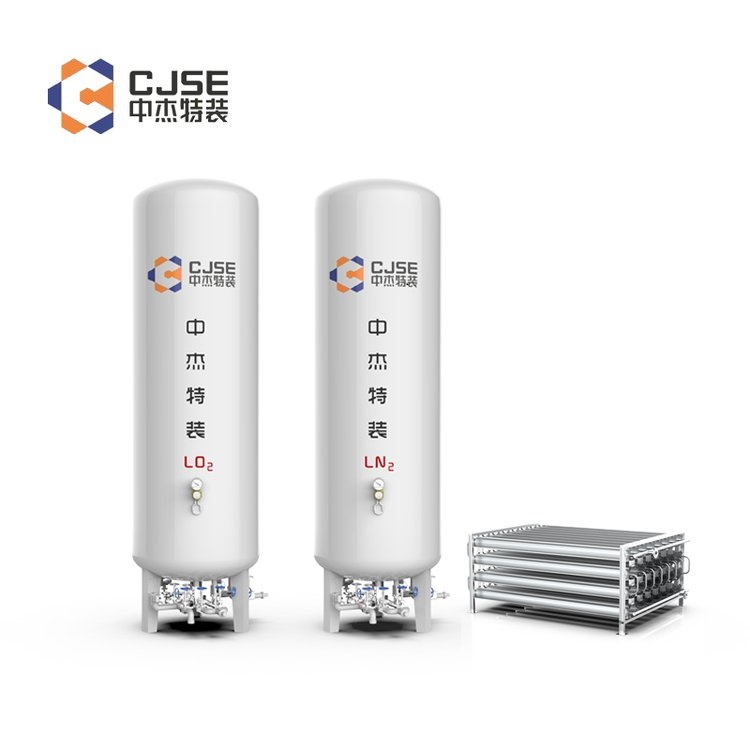
Prior to using the CO2 storage tank, the following preparations must be made:
- Inspect the tank: Check for any visible damage, corrosion, or oil leakage on the tank's exterior. Ensure the structural integrity and safety of the tank.
- Check valves and pipes: Verify that the tank's inlets and outlets, as well as pipe connections, are functioning normally with no leaks or loose fittings. Ensure valves operate smoothly and reliably.
- Inspect safety accessories: Check that safety accessories like safety valves, pressure sensors, and temperature sensors are functioning properly. Confirm that their set parameters meet requirements.
- Inspect the level measurement system: Verify the accuracy and reliability of the level measurement system. Calibrate the level sensors to ensure accurate level readings.
- Check the pressure relief device: Ensure the tank's pressure relief device (e.g., safety valve) is operating correctly. Confirm that the set pressure of the relief device meets requirements.
- Check the gas quality: Ensure the CO2 gas in the tank meets quality standards with no impurities or contaminants.
- Inspect fire protection equipment: Ensure that fire protection equipment around the tank is in good condition and check that fire extinguishers, sprinkler systems, etc., are functioning properly.
- Train operators: Operators should receive training on the characteristics, operational requirements, and safety measures of the CO2 storage tank. Training should include safe operation, leak handling, and emergency procedures.
- These preparations ensure the CO2 storage tank is in good condition before use and guarantees the safety and reliability of operations. When performing these preparations, follow relevant safety operating procedures and have them carried out by personnel.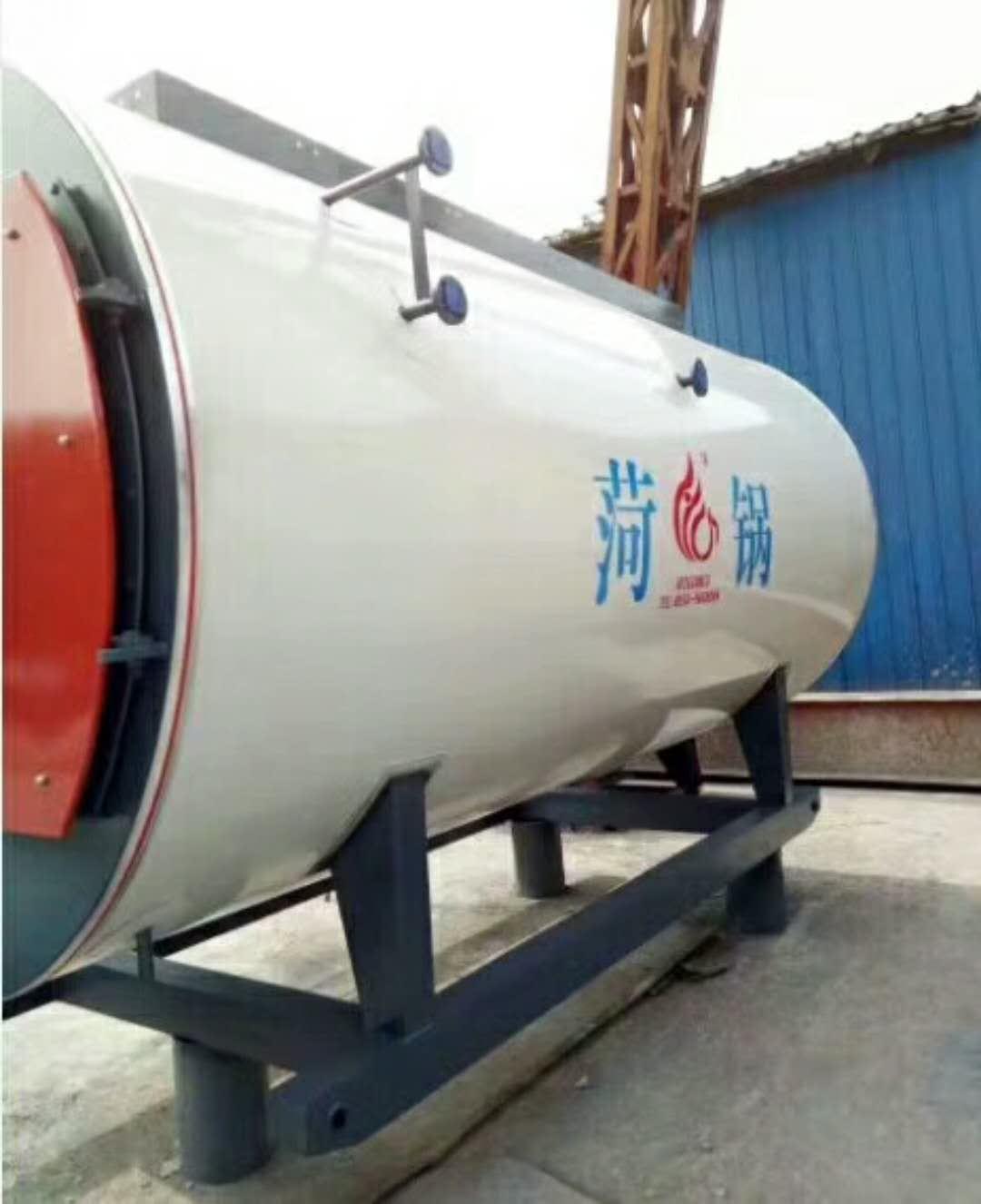
Carbon dioxide synthesis is a chemical reaction that utilizes carbon dioxide. This reaction has several applications:
- Fertilizer production: It is an essential raw material for manufacturing fertilizers, and carbon dioxide synthesis is a sustainable production method. By reacting with carbon dioxide, it can synthesize compounds used in making nitrogen fertilizers, such as urea. This method reduces dependence on fossil fuels used in traditional production methods, thereby lowering greenhouse gas emissions.
- Energy storage: Carbon dioxide synthesis can also serve as a form of energy storage. By reacting carbon dioxide and synthesizing compounds, energy can be stored in the form of chemical bonds. When energy is needed, the stored energy can be released by reversing the reaction to regenerate carbon dioxide and the compounds.
- Fuel cells: It can act as a clean fuel for fuel cells. By synthesizing carbon dioxide and using the resulting compounds in fuel cells, electrical power can be generated, with only water and nitrogen as byproducts, reducing environmental pollution.
- Chemical synthesis: It is a vital raw material for many chemical syntheses. Carbon dioxide synthesis can provide a sustainable supply for the chemical industry, used to synthesize other chemicals, such as etc.
The development of carbon dioxide synthesis technology aims to reduce dependence on fossil fuels used in traditional production methods, lower greenhouse gas emissions, and promote the development of sustainable energy and the chemical industry. However, this technology is still in continuous development and research, requiring further technological breakthroughs and practical validations to achieve large-scale application.
Zhong Jie Special Equipment upholds the grand vision of "realizing employees' dreams, creating value for customers, and striving for the prosperity and strength of our motherland," and is dedicated to the development of the green energy equipment industry. We contribute to society with products and services that offer high value for money!
WeChat Official Account

Scan to follow Official Account



















