


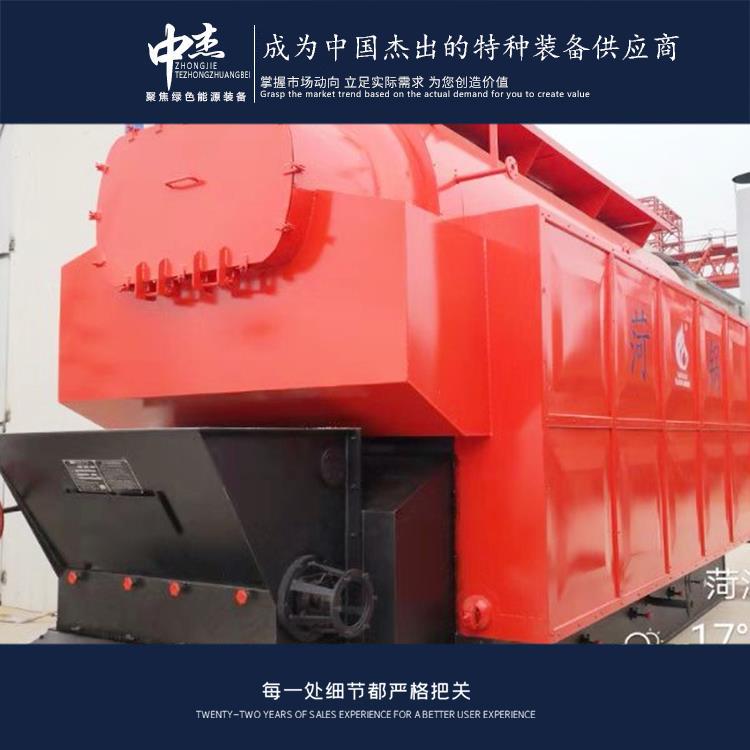

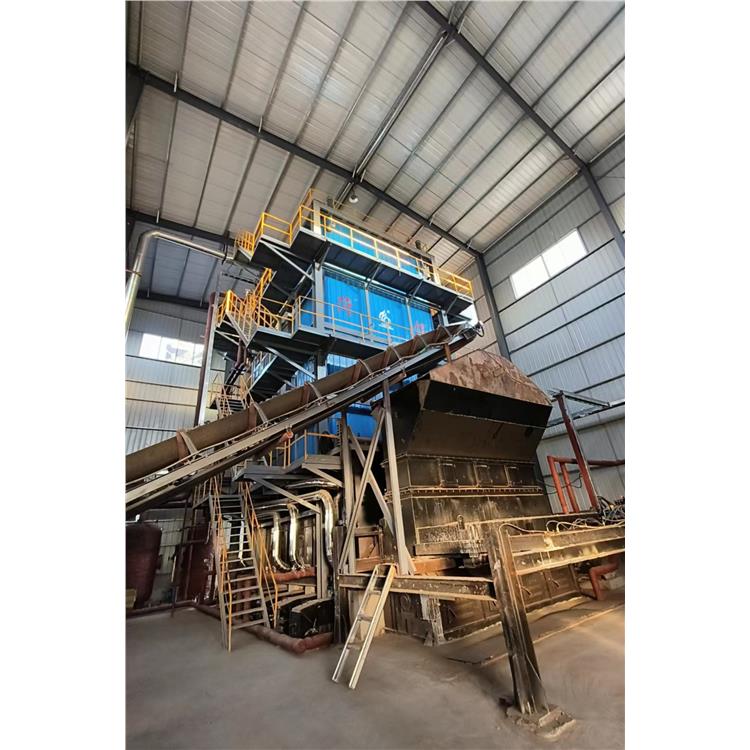
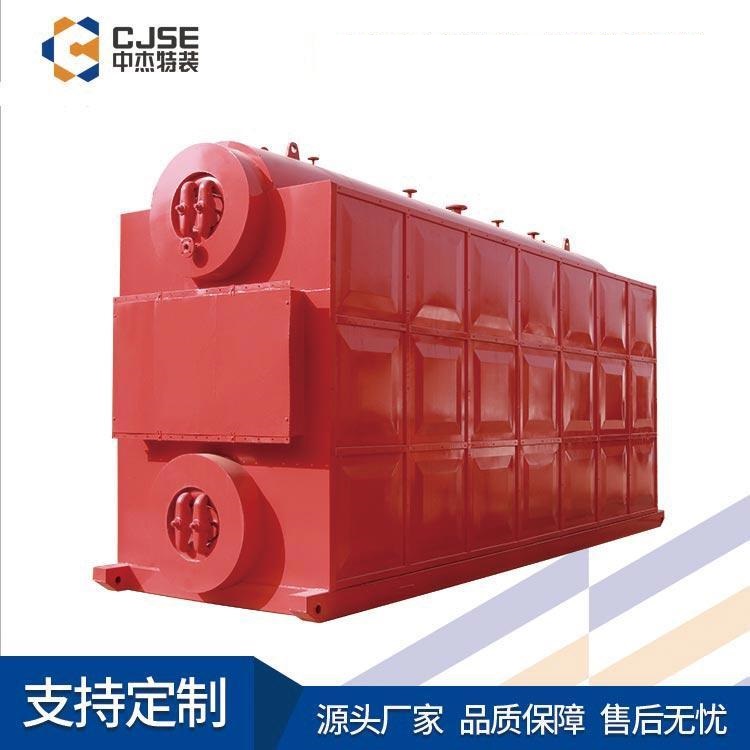


















Shandong Zhongjie Special Equipment (formerly Heze Boiler Factory Co., Ltd.) holds an A-grade boiler manufacturing license, A2-grade pressure vessel manufacturing license, A2-grade pressure vessel design license, B-grade boiler installation, and GB2/Class, GC2/Class pressure pipeline installation licenses, as well as equipment and machinery installation contracting qualifications. It is a member of the China Boiler and Water Treatment Association, the China Chemical Equipment Association, and the director unit of the Shandong Equipment Manufacturing Association. The company has also passed certifications for the ISO9001 Quality Management System, ISO14001 Environmental Management System, OHSAS18001 Occupational Health and Safety Management System, and the American ASME/U2 certification.
Before using biomass boilers, the following measures can be taken:
Safety Inspection: Conduct a safety check on biomass boilers to ensure the normal operation of all components and equipment. Inspect the condition of the boiler's burners, valves, sensors, etc., for any signs of leakage or damage.
Clean combustion chamber: Clean the combustion chamber of biomass boilers, removing ash and dirt generated during the combustion process. Use appropriate tools and cleaning agents to ensure the chamber remains clear and clean.
Inspect Fuel Supply System: Check the biomass boiler's fuel supply system to ensure the supply pipes are clear and unobstructed, and that the fuel storage containers are adequately filled with fuel. Also, inspect the fuel quality to ensure it meets requirements and is free of impurities or moisture.
Check Water Quality: Inspect the boiler's water supply to ensure it meets the required standards. Water quality tests can be conducted to measure hardness, pH levels, and other indicators. Implement appropriate water treatment measures based on the test results.
Ensure good ventilation: Biomass boilers produce flue gas during combustion, so it's crucial to have adequate ventilation around the boiler to exhaust smoke and heat. You can install ventilation equipment or ensure the room housing the boiler has sufficient ventilation openings.
Training and Operation Guidance: Provide training and operational guidance to personnel using biomass boilers to ensure they are knowledgeable about the boiler's operation, safety precautions, and emergency response procedures.
These measures help ensure the safety and proper operation of biomass boilers before use, reducing the occurrence of malfunctions and accidents. Additionally, regular maintenance and upkeep are crucial for the long-term stable operation of biomass boilers.
The use of biomass boilers holds significant importance for energy conservation and emission reduction:
Reducing Carbon Emissions: The fuel used in biomass boilers comes from organic matter such as plants, animals, and microorganisms, which, when burned, releases carbon dioxide that can be absorbed by plants, forming a cycle. Compared to traditional fossil fuels, biomass fuel emits less carbon, effectively reducing greenhouse gas emissions and playing a significant role in combating climate change.
Reduce Energy Consumption: Biomass boilers, equipped with combustion technology and a heat recovery system, can enhance energy utilization efficiency and minimize waste. By conserving energy, energy costs can be reduced and the benefits of energy use can be improved.
Decrease reliance on fossil fuels: Biomass, as a local renewable energy source, can reduce dependence on imported fossil fuels and enhance energy security. In areas with scarce resources, the use of biomass boilers can provide a reliable energy supply, reducing reliance on external energy sources.
Promote the development of agriculture and forestry: Fuel for biomass boilers primarily comes from agricultural straw, wood, and other by-products of agriculture and forestry, fostering the sustainable development of these sectors. By effectively utilizing agricultural and forestry waste, we can reduce resource waste and enhance the comprehensive benefits of the agricultural and forestry industries.
Promoting Environmental Protection: The combustion of biomass boilers produces relatively low emissions and ash, exerting less environmental impact. Moreover, using biomass boilers can reduce the exploitation and destruction of natural resources, thereby protecting the ecological environment.
In summary, utilizing biomass boilers is of great significance for energy conservation and emission reduction.
Biomass boiler pellet fuel is a common form of biomass fuel, also known as biomass pellets or wood pellets. It is a small granular fuel made by processing biomass raw materials (such as wood chips, straw, wheat straw, fruit shells, etc.) through processes like crushing, drying, and pressing.
Biomass boiler pellet fuel features the following characteristics:
High Energy Density: Biomass pellet fuel boasts a high energy density, allowing for more energy to be stored in a relatively smaller volume, making it convenient for transportation and storage.
Easy to Burn: Biomass pellet fuel is shaped regularly with uniform size, ensuring a stable combustion process, easy control of combustion parameters, and enhanced efficiency.
Low humidity and low ash content: Biomass pellet fuel is dried and processed, resulting in low humidity and relatively low ash content. This reduces water evaporation and ash production during combustion, enhancing combustion efficiency and reducing pollutant emissions.
Renewable and Eco-friendly: Biomass pellet fuel is a renewable energy source that can be recycled through the regeneration process. The carbon dioxide emitted during combustion can be absorbed by biomass, creating a cycle and minimizing environmental impact.
Wide combustion adaptability: Biomass pellet fuel is suitable for biomass boilers, featuring strong combustion adaptability. Different types and specifications of pellet fuel can be selected according to actual conditions to meet the needs of various boilers.
Biomass pellets fuel is widely used in biomass boilers. It is a clean, renewable energy source that plays a significant role in reducing carbon emissions and protecting the environment.
Possible reasons for incomplete combustion in biomass boilers may include the following aspects:
Poor fuel quality: Low-quality biomass fuel, such as excessive moisture content and uneven particle size, can affect the combustion process. Fuel with high moisture content will reduce the combustion temperature and result in incomplete combustion.
Insufficient air supply: Air is essential during the combustion process. If the air supply is insufficient, the fuel cannot react fully with oxygen, leading to incomplete combustion. Possible causes include a blocked air inlet, fan failure, etc.
Unstable combustion system: Instability in the combustion system may also lead to incomplete combustion. For instance, improper adjustment of the burner or an irrational design of the combustion chamber can both affect the stability of the combustion process.
Insufficient combustion temperature: Low combustion temperature can result in incomplete combustion. Possible causes include improper adjustment of the burner and unstable fuel supply.
Ash accumulation in combustion chamber: Ash buildup in the combustion chamber can affect the combustion process, impeding fuel and oxygen contact, leading to incomplete combustion.
Insufficient burn time: Insufficient burn time can also lead to incomplete combustion. If fuel doesn't stay long enough in the combustion chamber, it can't burn completely, resulting in unburned fuel residues.
Impractical Combustion Chamber Design: An impractical combustion chamber design, such as one that is too large or too small, hinders the thorough mixing of fuel and oxygen, leading to incomplete combustion.
Above are some possible reasons for incomplete combustion in biomass boilers, which require analysis and resolution based on specific situations. Regular maintenance, reasonable fuel selection, and optimization of the combustion system, etc.
Our company attaches great importance to technological innovation and R&D design. We have one municipal-level enterprise technology center in Heze City, equipped with testing facilities for non-destructive testing, physical and chemical testing, welding testing, hydrostatic testing, etc. We have over 600 types of equipment, including CNC machine tools, X-ray flaw detectors, digital ultrasonic flaw detectors, mechanical property testing machines, chemical analyzers, spectrometers, tensile testing machines, plasma welding machines, and more. The key products and technologies we have developed, such as temperature and pressure vessel welding, biomass boiler emission reduction, and waste heat utilization, have successively been selected for multiple Shandong Provincial Department of Industry and Information Technology science and technology innovation projects, Shandong Provincial key projects, and Heze City innovation and excellence projects. We have accumulated 27 authorized utility models, 16 authorized inventions, participated in drafting 2 standards, 2 industry standards, and registered 15 trademarks. Our technical team, in collaboration with Professor Yajiang Li from Shandong University, has developed deep cryogenic container processing technology using the internationally recognized plasma arc + filler wire tungsten inert gas arc welding (PAW-GTAW) technology. The provincial-level scientific and technological achievement identification has confirmed that our technology level in deep cryogenic container manufacturing has reached international standards. Choose Zhongjie Special Equipment, and let's create brilliance together!
WeChat Official Account

Scan to follow Official Account



















