


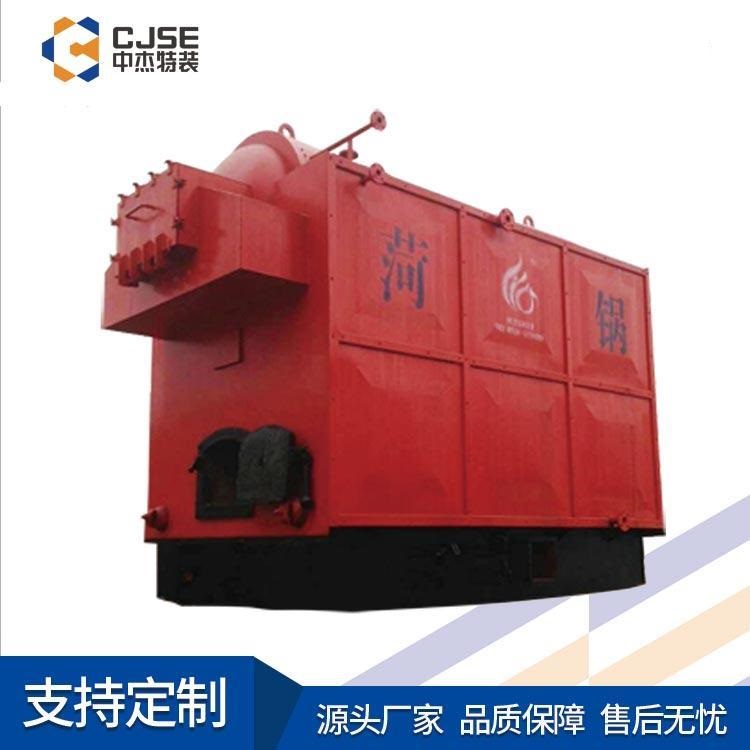

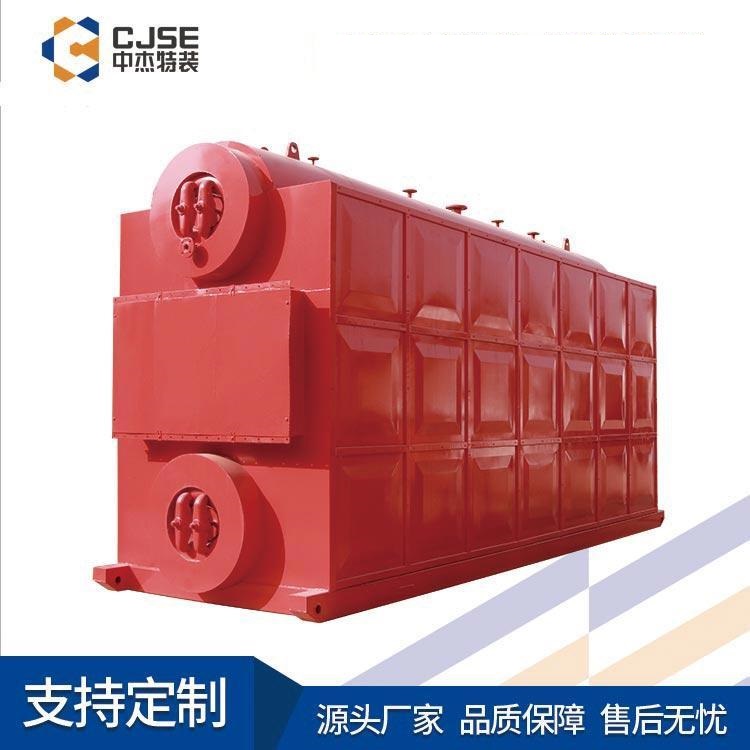
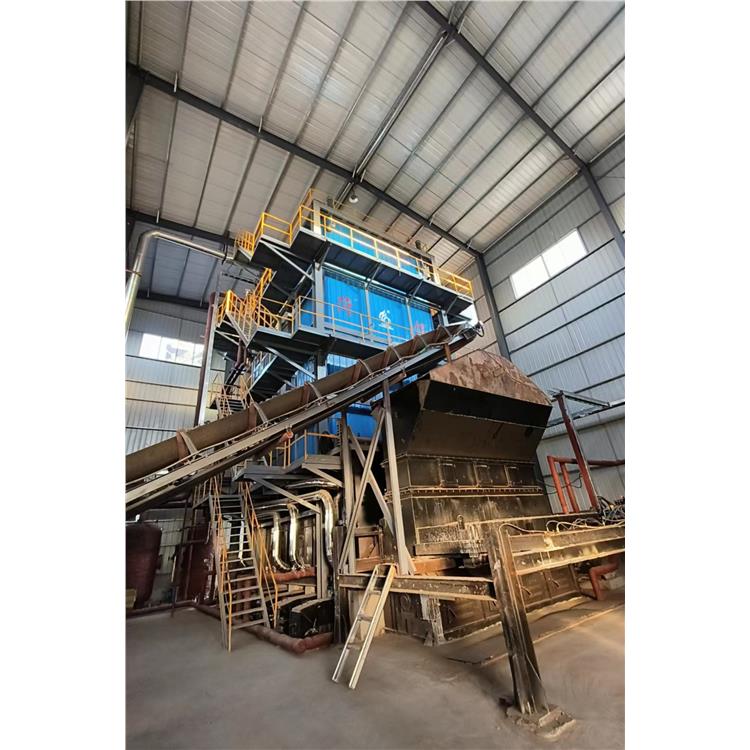


















Shandong Zhongjie Special Equipment Co., Ltd. specializes in the following products: fuel (gas) boilers, organic heat carrier boilers, biomass boilers, waste heat recovery boilers, and other boiler products; vacuum insulation cryogenic pressure vessels such as LNG storage tanks, oxygen/nitrogen/argon storage tanks, and CO2 storage tanks; pressure vessel products including denitrification engineering equipment, heat storage and energy storage equipment, and complete chemical equipment sets; central air conditioning and HVAC equipment such as ground (water) source heat pumps, air source units, water-cooled screw units, and air-cooled modular units. Planned products include large-scale energy centers, LNG transport vehicles, LNG tank containers, and other green energy equipment.
Biomass boilers possess certain characteristics that give them an edge in energy conservation and environmental protection:
Renewable Energy: The fuel used in biomass boilers is renewable, such as wood chips, straw, waste materials, etc. Compared to fossil fuels, the use of biomass fuel can reduce dependence on limited resources and lower energy consumption.
Low carbon emissions: The amount of carbon dioxide released during the combustion of biomass fuel is roughly equivalent to the amount absorbed during its growth, creating a closed carbon cycle. Compared to the combustion of fossil fuels, biomass boilers emit less carbon, contributing significantly to the reduction of greenhouse gas emissions.
Combustion: The biomass boiler utilizes advanced combustion and control technologies to ensure efficient combustion. By optimizing the combustion process, it enhances thermal energy utilization and minimizes energy waste.
Waste Utilization: Biomass boilers can use waste materials as fuel, such as crop straw and wood waste.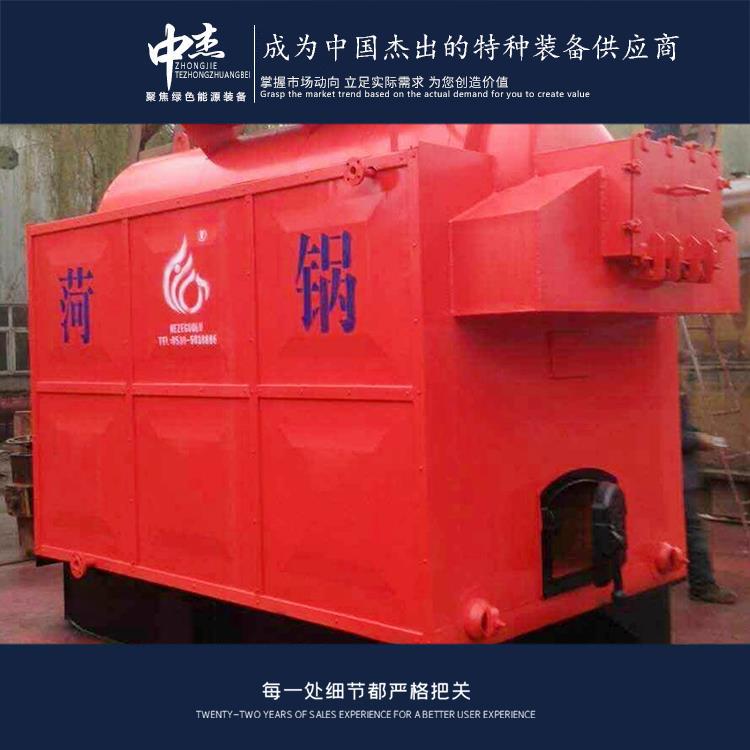
The biomass boiler body is typically composed of the following components, each serving a specific function:
Furnace Chamber: The furnace chamber is the area where biomass fuel is burned, serving as the space for combustion and heat exchange. The fuel within the furnace chamber releases heat energy during the combustion process, while flue gases exchange heat with water through the furnace chamber.
Flue: The flue is a passage for the flow of flue gas, guiding the exhaust gas from the furnace to the chimney for排放. The flue gas inside exchanges heat with the boiler water, transferring heat from the gas to the water to improve thermal efficiency.
Drum: The drum is the main part containing water and steam, where water is heated to transform into steam. The drum is equipped with a water level control device to regulate water level, ensuring the safe operation of the boiler.
Grate: A grate is a device used to support and burn biomass fuel, its function is to evenly distribute the fuel within the furnace chamber and provide an air supply to facilitate the combustion process.
Superheater: A superheater is a device that heats the saturated steam in a boiler to increase its temperature and pressure. It transfers heat from the flue gases to the steam through heat exchange between them.
Condenser: A condenser is a device used to condense steam into water, releasing the heat from the steam. By means of heat exchange with a cooling medium (such as cold water), the condenser converts the heat from the steam into thermal energy, thereby enhancing thermal efficiency.
Chimney: A chimney is a passage for discharging flue gases into the atmosphere, serving as an exhaust.
Possible reasons for the black smoke produced by biomass boiler combustion may include:
Incomplete Combustion: Inadequate oxygen supply or insufficient combustion temperature in biomass fuel can lead to incomplete combustion, resulting in a large amount of smoke and black smoke. This may be caused by poor combustion chamber ventilation, poor fuel quality, or incorrect setting of combustion parameters.
High moisture content: Excessive water content in biomass fuel leads to the evaporation of a large amount of steam during combustion, reducing the combustion temperature and affecting the combustion efficiency, resulting in the production of black smoke.
Fuel Quality Issue: Impurities, ash, or uneven moisture content in biomass fuel can affect the combustion process, leading to incomplete combustion and the production of black smoke.
Burning Equipment Issues: If there are malfunctions or wear in the biomass boiler's burning equipment, such as slagging in the combustion chamber or clogging of the burner, it will affect the combustion efficiency and lead to the production of black smoke.
To reduce the emission of black smoke, the following measures can be taken:
Ensure adequate oxygen supply: Adjust the ventilation system of the combustion equipment to ensure sufficient oxygen supply, enhance combustion efficiency, and reduce the production of black smoke.
Control combustion temperature: Adjust combustion parameters, such as combustion temperature and duration, to ensure complete fuel combustion and reduce the emission of black smoke.
Optimize fuel quality: Select the appropriate amount of biomass fuel, ensuring uniformity in dryness and quality, reducing moisture content and impurities, and enhancing combustion efficiency.
Regular Maintenance: Conduct regular maintenance on biomass boilers, cleaning the combustion chamber, burners, and other components to ensure smooth operation of the equipment and reduce the emission of black smoke.
Install Pollutant Control Equipment: As required, install flue gas purification equipment such as dust collectors and desulfurization devices to effectively remove particles generated during the combustion process.
The occurrence of oil atomization in thermal oil furnaces may be related to the following operations:
Excessive Oil Pump Pressure: If the oil pump pressure of the thermal oil furnace is set too high, exceeding the design requirements, it may lead to oil spitting. Excessive oil pump pressure increases the喷油 amount from the nozzle, surpassing the combustion needs within the furnace.
Excessive nozzle orifice size: An overly large nozzle orifice in a thermal oil furnace can lead to excessive oil injection, which in turn causes oil spitting. The nozzle orifice size should be reasonably selected based on the combustion requirements within the furnace and design specifications.
Excessive furnace temperature: Overheating in the thermal oil furnace, exceeding the design requirements, may lead to oil jetting. Excessive temperature reduces the viscosity of the thermal oil, increasing the risk of oil jetting.
Low oil level: A low oil level in the thermal oil furnace can cause the oil pump to intake air, leading to oil spitting. The oil level should be maintained within the normal range to prevent air intake by the oil pump.
Oil Pump Failure: Faults in the thermal oil furnace oil pump, such as pump blockage or oil leakage from the pump body, can lead to oil spray. Regularly inspect and maintain the oil pump to ensure its proper operation.
Oil Tube Clogging: Clogging in the thermal oil furnace oil tube, such as the accumulation of impurities or sediments inside, can lead to oil spitting. Regularly clean and maintain the oil tube to ensure smooth oil flow.
Improper Operation: Failure to follow the correct operating procedures, such as over-adjusting the oil pump pressure or arbitrarily changing the nozzle, during the operation of a heat transfer oil furnace can lead to oil spraying occurrences.
Shandong Zhongjie Special Equipment, welcome customers to visit our factory for business talks.
WeChat Official Account

Scan to follow Official Account



















