


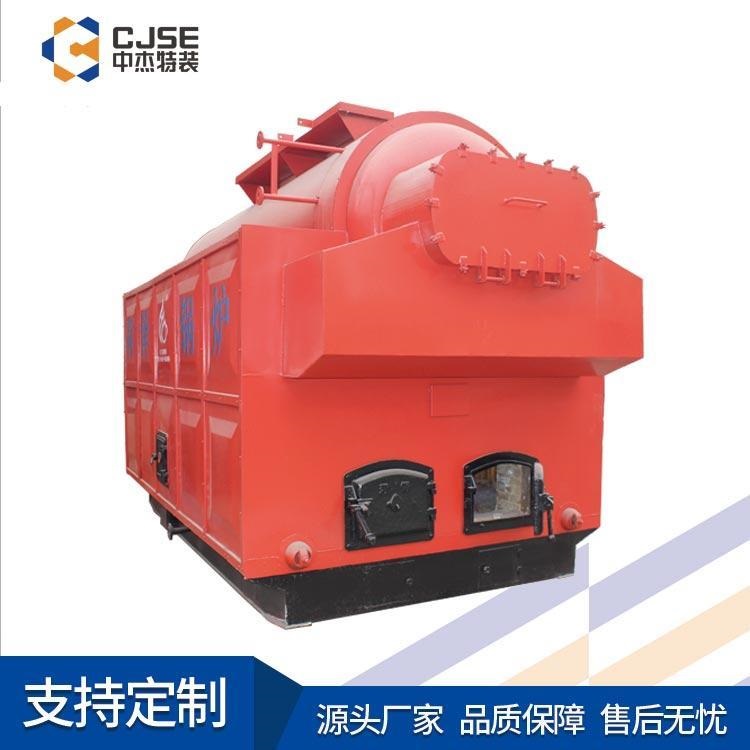

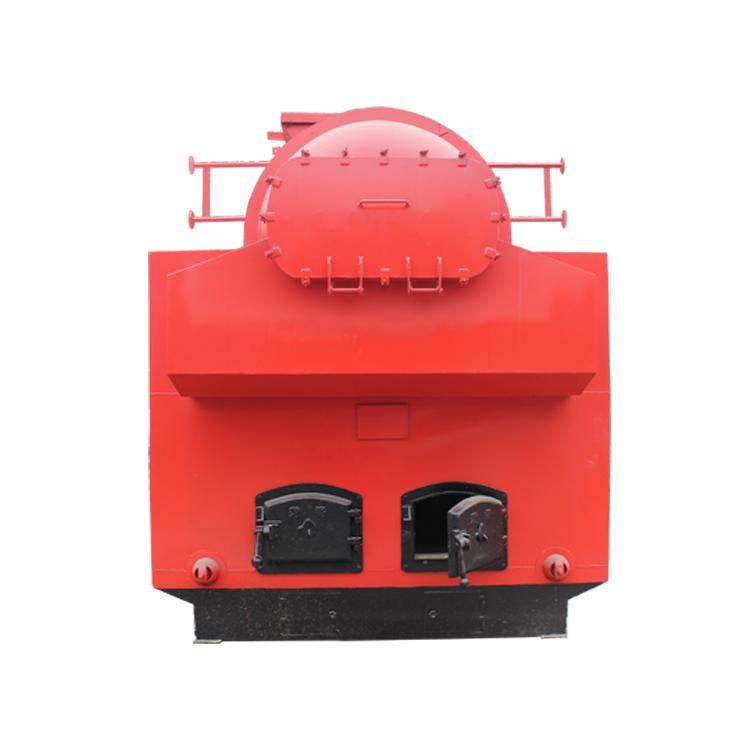
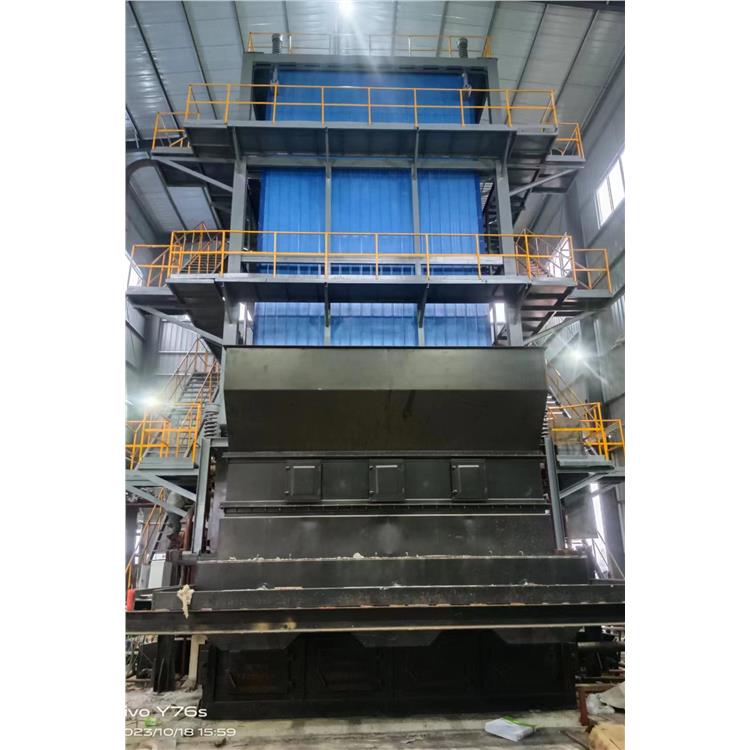


















Shandong Zhongjie Special Equipment's main products include: fuel (gas) boilers, organic heat carrier boilers, biomass boilers, waste heat recovery boilers, and other boiler products; vacuum insulation cryogenic pressure vessels such as LNG tanks, oxygen/nitrogen/argon tanks, and CO2 tanks; pressure vessel products such as denitrification engineering equipment, heat storage and energy storage equipment, and complete chemical equipment sets; central air conditioning and ventilation equipment such as ground (water) source heat pumps, air source units, water-cooled screw units, and air-cooled modular units. Planned products include large-scale energy centers, LNG transport vehicles, LNG tank containers, and other green energy equipment.
A biomass boiler safety valve is a device used to ensure the safety of the boiler system. Its primary function is to automatically open and release excessive pressure when the internal pressure of the boiler exceeds the set value, preventing the boiler from exploding or causing other safety incidents.
Biomass boiler safety valves typically consist of a valve body, cover, spring, valve core, and seals. When the internal pressure of the boiler exceeds the set value, the spring is subjected to pressure, pushing the valve core upwards to allow pressure to be discharged through the valve body. Once the pressure drops below the set value, the spring re-closes the valve core, preventing further pressure release.
The set pressure of a safety valve is typically determined by the design pressure of the boiler and usage requirements. It should be selected and installed according to relevant standards and specifications, and regularly inspected and maintained to ensure proper operation and reliability.
The presence of a biomass boiler safety valve effectively safeguards the boiler system's safety and prevents hazardous situations caused by excessive pressure. It is one of the crucial safety devices in the biomass boiler system.
There are several common types of biomass energy-saving steam boilers:
Biomass Chain Grate Boilers: The biomass chain grate boilers utilize a chain feeding system to deliver biomass fuel into the furnace for combustion. The chain feeding system allows for continuous feeding, making it suitable for larger-scale biomass steam boilers.
Biomass Circulating Fluidized Bed Boiler: The biomass circulating fluidized bed boiler utilizes the circulating fluidized bed combustion technology, blending biomass fuel with a fluidizing medium (such as sand) for combustion under high temperatures. This type of boiler boasts high combustion efficiency and strong adaptability to various fuels.
Biomass Pellet Boilers: Biomass pellet boilers are specifically designed for burning biomass pellet fuel. They feature high combustion efficiency and stability, making them suitable for small to medium-sized biomass steam boilers.
Biogasification Boilers: Biogasification boilers utilize gasification technology to convert biomass fuel into combustible gases, which are then burned to produce steam. These boilers offer advantages such as utilizing biomass energy and reducing pollution emissions.
Biomass Hot Air Furnace: A biomass hot air furnace is a device that uses biomass fuel to generate high-temperature hot air, which can be used for drying and heating processes in industrial production. It features energy saving and environmental protection.
These types of biomass energy-saving steam boilers possess their own characteristics and suitability in different application scenarios. They can be chosen according to actual needs.
Biomass boilers possess certain characteristics that make them advantageous in terms of energy conservation and environmental protection:
Renewable Energy: The fuel used in biomass boilers is renewable energy, such as wood chips, straw, waste materials, etc. Compared to fossil fuels, the use of biomass fuel can reduce dependence on limited resources and lower energy consumption.
Low carbon emissions: The amount of carbon dioxide released during the combustion of biomass fuel is roughly equivalent to the amount absorbed during its growth, forming a closed carbon cycle. Compared to the combustion of fossil fuels, biomass boilers emit less carbon, contributing significantly to the reduction of greenhouse gas emissions.
Combustion: The biomass boiler utilizes advanced combustion and control technologies to ensure efficient combustion. By optimizing the combustion process, it enhances thermal energy utilization and minimizes energy waste.
Waste Utilization: Biomass boilers can use waste materials as fuel, such as crop straw, wood waste, etc.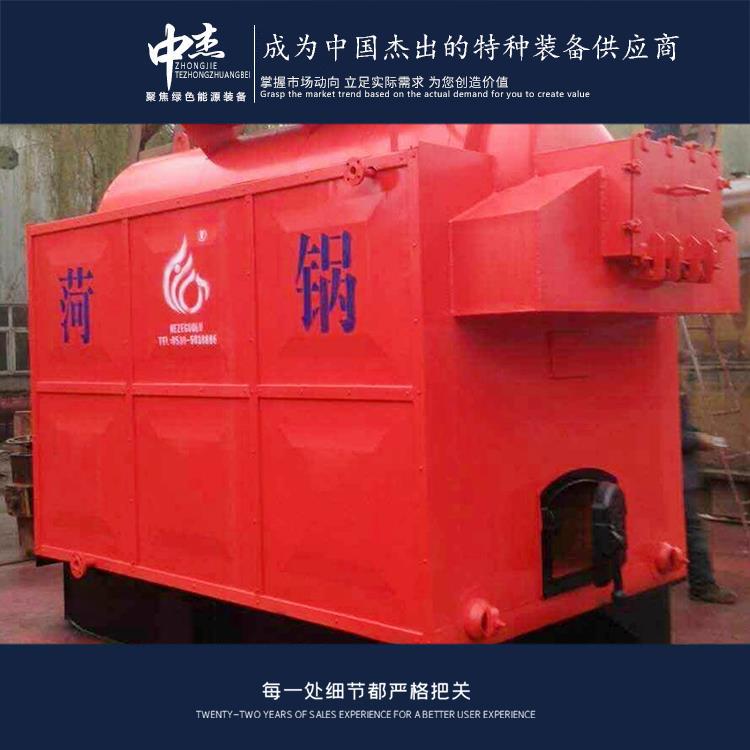
A hot water boiler is a device used for supplying hot water. With the increasing demand for energy and environmental awareness, hot water boilers have continuously evolved and improved in technology and application.
Below are the trends in the development of hot water boilers:
Energy-saving: The energy-saving of hot water boilers is an important direction for development. By improving the combustion technology of the boiler, the design of the heat exchanger, and the selection of materials, we can enhance the efficiency of energy utilization, reduce energy consumption and emissions.
Temperature Control Intelligence: With the advancement of intelligent technology, the temperature control system of hot water boilers has become increasingly intelligent. Through the adoption of control algorithms and sensor technology, it achieves temperature control and energy consumption management, enhancing system stability and comfort.
Multi-energy Supply: To reduce dependence on traditional energy sources, the trend in hot water boiler development is towards multi-energy supply. In addition to traditional fuels like gas and oil, an increasing number of hot water boilers are now utilizing renewable energy sources such as biomass, solar, and geothermal, achieving energy diversification and sustainable development.
Environmental Protection and Emission Reduction: Environmental protection and emission reduction is a crucial direction for the development of hot water boilers. By improving combustion technology, increasing flue gas purification equipment and control systems, pollutants emitted during the combustion process are reduced, thereby protecting the environment and human health.
Safety and Reliability: The safety and reliability of hot water boilers are crucial for development. By enhancing the structural design of the boiler, improving the safety valve and control system, we boost the safety performance of the boiler and prevent accidents from occurring.
Miniaturization and Modularity: With the acceleration of urbanization, there is a clear trend towards miniaturization and modularity in hot water boilers. Miniaturized hot water boilers can adapt to the needs of urban buildings, reducing land occupation and installation costs, and improving flexibility and scalability.
Overall, the trend in hot water boiler development is towards energy-saving, intelligence, multi-energy supply, environmental protection and emission reduction, safety and reliability, miniaturization, and modularization. These trends will drive continuous innovation and application of hot water boiler technology, providing more comfortable, reliable, and environmentally friendly hot water supply for people.
Shandong Zhongjie Special Equipment, welcome customers to our factory for business discussions.
WeChat Official Account

Scan to follow Official Account



















