


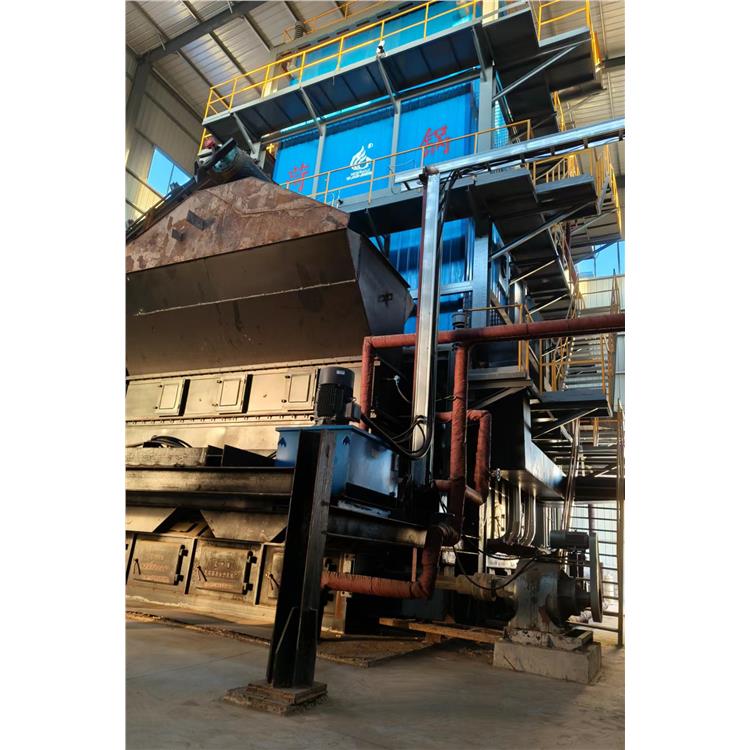


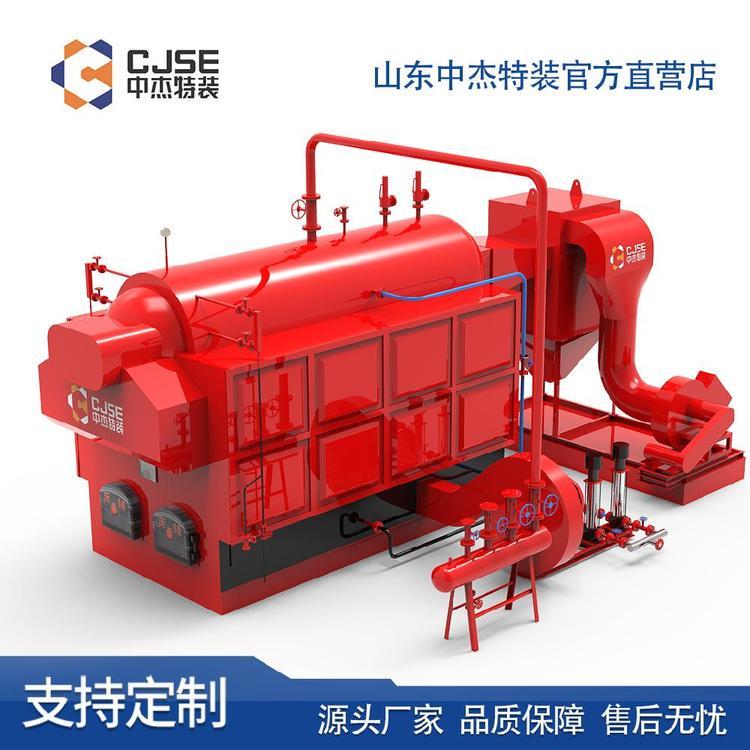


















Shandong Zhongjie Special Equipment's main products include: fuel (gas) boilers, organic heat carrier boilers, biomass boilers, waste heat boilers, and other boiler products; vacuum insulation cryogenic pressure vessels such as LNG storage tanks, oxygen/nitrogen/argon storage tanks, CO2 storage tanks; pressure vessel products like denitrification engineering equipment, heat storage and energy storage equipment, and complete chemical equipment; central air conditioning and ventilation equipment such as ground (water) source heat pumps, air source units, water-cooled screw units, and air-cooled modular units. Planned products include large-scale energy centers, LNG transport vehicles, LNG tank containers, and other green energy equipment.
Biomass boilers, as equipment that converts thermal energy using biomass fuel, offer the following advantages:
Renewable Energy: Biomass fuel is a renewable energy source that can be continuously replenished through planting and cultivation. Compared to fossil fuels, the use of biomass fuel has a smaller environmental impact, benefiting sustainable development.
Environmental Protection and Energy Efficiency: Biomass combustion produces relatively little exhaust gas and slag, with low emissions of pollutants. Biomass fuel inherently has low sulfur and low nitrogen content, and the slag after combustion can be reused as organic fertilizer or biomass fuel, reducing environmental pollution.
Diversity and Flexibility: Biomass fuel options are abundant, including wood chips, straw, etc. Different fuels can be selected based on actual conditions, enhancing their substitutability and flexibility.
Utilization: The biomass boiler employs advanced combustion technology and heat conversion equipment, maximizing the thermal energy of biomass fuel and enhancing thermal efficiency. Additionally, equipped with an economizer and flue gas recirculation system, further thermal efficiency is achieved.
Economicity: Biomass fuel is more stable and cheaper than fossil fuels. The investment and operating costs of biomass boilers are relatively low, offering good economic benefits.
Widely Applicable: Biomass boilers are suitable for various fields, including industrial production, heating, and power generation. They can meet the thermal energy demands in different scenarios.
In summary, biomass boilers offer advantages such as renewable energy, environmental protection, energy conservation, diversity and flexibility, utilization, economic efficiency, and wide application, making them a sustainable thermal energy conversion solution.
The hot water boiler features the following main characteristics:
Energy-saving: The combustion technology and heat exchanger design used in the hot water boiler enable high energy conversion and utilization, improving energy efficiency, reducing energy consumption, and operating costs.
Environmental Protection and Emission Reduction: The hot water boiler utilizes advanced combustion technology and flue gas purification equipment during the combustion process, effectively controlling and reducing pollutant emissions to protect the environment and human health.
Safety & Reliability: The hot water boiler is equipped with comprehensive safety protection devices and control systems, capable of real-time monitoring and controlling the boiler's operational status to ensure safe and reliable operation and prevent accidents.
Temperature Control Intelligence: The water boiler is equipped with a temperature control system and intelligent control devices, enabling temperature control and energy consumption management, enhancing system stability and comfort.
Multi-energy supply: Hot water boilers can accommodate various energy sources, including gas, oil, biomass, and solar energy, achieving energy diversity and sustainable development.
Flexible Installation: The hot water boiler features flexible installation methods and structural design, allowing for customization and installation according to various locations and requirements, catering to the needs of both architectural and industrial sites.
Stable: The heat exchangers and combustion system of the hot water boiler can quickly reach the set temperature and maintain a stable supply of hot water, meeting the user's demand for hot water.
Ease of Maintenance: The maintenance and upkeep of hot water boilers are relatively straightforward, featuring a clear equipment structure that is easy to clean and repair, thereby reducing downtime and maintenance costs.
These features make hot water boilers the ideal equipment for supplying hot water, widely used in residential areas, industrial factories, commercial buildings, and other locations, providing users with environmentally friendly, safe, and comfortable hot water supply.
As a renewable energy boiler, biomass boilers offer several advantages:
Environmental Protection and Energy Saving: Biomass boilers utilize biomass fuels such as wood chips, straw, and corn husks, which are renewable. Compared to traditional fossil fuels, these fuels have lower carbon emissions and are more environmentally friendly. The combustion process of biomass boilers produces relatively few emissions, causing minimal environmental impact. Additionally, by optimizing the combustion process and heat recovery, biomass boilers can achieve high energy utilization efficiency, conserving energy.
Diverse fuel options: Biomass boilers are suitable for various biomass fuels such as sawdust, straw, and chaff, displaying strong fuel adaptability. This allows biomass boilers to be widely used in different regions and industries. Additionally, the supply of biomass fuel is relatively stable and unaffected by factors like international oil price fluctuations.
Flexible operating modes: Biomass boilers can be adjusted to meet actual requirements.
A biomass boiler safety valve is a device designed to ensure the safety of the boiler system. Its primary function is to automatically open and release excessive pressure when the internal pressure of the boiler exceeds the set value, preventing the boiler from exploding or causing other safety incidents.
Biomass boiler safety valves typically consist of a valve body, cover, spring, valve core, and seals. When the internal pressure of the boiler exceeds the set value, the spring is subjected to pressure, pushing the valve core upwards to allow pressure to be released through the valve body. Once the pressure drops below the set value, the spring re-closes the valve core, preventing further pressure release.
The set pressure of a safety valve is typically determined based on the boiler's design pressure and usage requirements. It should be selected and installed in accordance with relevant standards and regulations, and regularly inspected and maintained to ensure proper operation and reliability.
The presence of a biomass boiler safety valve effectively protects the boiler system's safety and prevents hazardous situations caused by excessive pressure. It is one of the crucial safety devices in the biomass boiler system.
Zhong Jie Special Equipment upholds the grand vision of "Realizing employees' dreams, creating customer value, and striving for the prosperity and strength of our motherland," and is dedicated to the development of the green energy equipment industry. We offer society products and services with high performance and cost-effectiveness!
WeChat Official Account

Scan to follow Official Account



















