


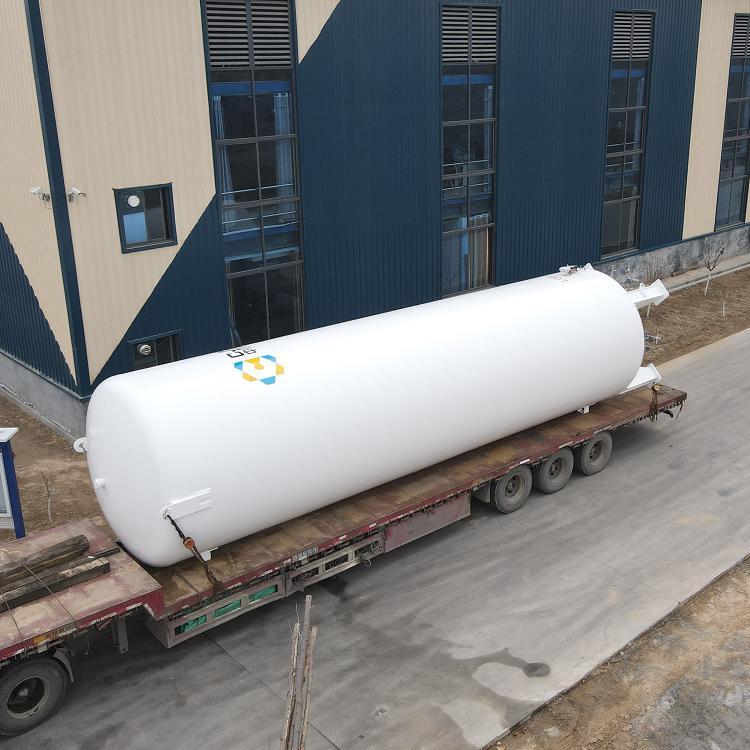

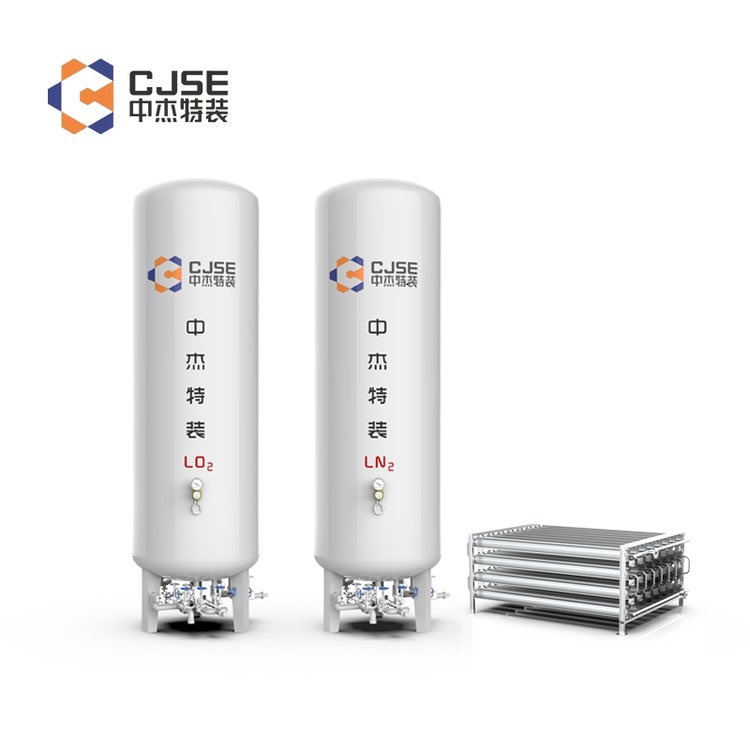
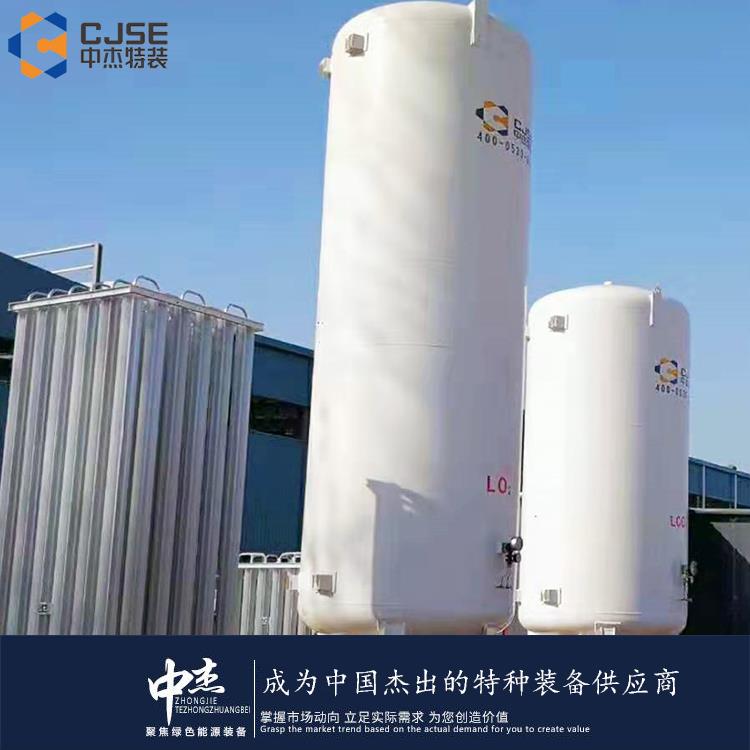


















Shandong Zhongjie Special Equipment Co., Ltd. (formerly Heze Boiler Factory Co., Ltd.) was established in 2001, located at No. 2218 Jinnan Road, Development Zone, Heze City, with a registered capital of 50 million yuan and total assets of 500 million yuan. The company has 7 business centers: boiler, deep-freezing vessel, pressure vessel, central air conditioning, engineering installation, international trade, and Internet of Things. It has three manufacturing sites on Jinnan Road, East Changjiang Road, and Bohai Road, covering a total area of 200,000 square meters, with the main workshop spanning 83,000 square meters. It currently employs 710 staff, including 247 engineers and technicians, and 82 intermediate-level technicians. In December 2016, it was recognized as a "High-tech Enterprise" by the Science and Technology Department. In June 2021, it was named a "Specialized and New Enterprise of Shandong Province" by the Ministry of Industry and Information Technology. In June 2022, it was identified as a "Gazelle Enterprise of Shandong Province," and in August 2022, it was recognized as a "Specialized and New Small Giant Enterprise" by the Ministry of Industry and Information Technology.
The internal structure of a carbon dioxide storage tank typically includes the following main components:
- Tank Shell: The tank shell is the primary container for storing carbon dioxide and is usually made of carbon steel or stainless steel. It possesses sufficient strength and密封性 (sealing property) to withstand internal pressure and loads.
- Lining Layer: To prevent direct contact between carbon dioxide and the tank shell, avoiding corrosion and contamination, the interior of the tank is usually coated with a lining layer. This lining is typically made of corrosion-resistant materials such as glass fiber reinforced plastic or polyester resin.
- Support Structure: To support the weight of the tank and maintain stability, the interior of the tank often features a support structure. This can be in the form of support legs, brackets, etc., designed to support the bottom and side walls of the tank.
- Internal Accessories: The tank is also equipped with some important accessories such as level gauges, pressure sensors, temperature sensors, and safety valves. These accessories are used to monitor and control the liquid level, pressure, and temperature inside the tank to ensure safe operation.
- Pressure Relief Device: To prevent excessive internal pressure, the tank is usually equipped with a pressure relief device such as a safety valve. When the internal pressure exceeds the set value, the pressure relief device will automatically open to release pressure, protecting the tank's safety.
- Inlet and Outlet Piping: The tank also has inlet and outlet piping for injecting and discharging carbon dioxide. These pipes are typically connected to external supply or consumption systems to facilitate the storage and use of carbon dioxide.
- The above describes the general internal structure of carbon dioxide storage tanks. Specific structural design and configurations may vary according to the tank's purpose and specifications. When using and maintaining the tank, one must...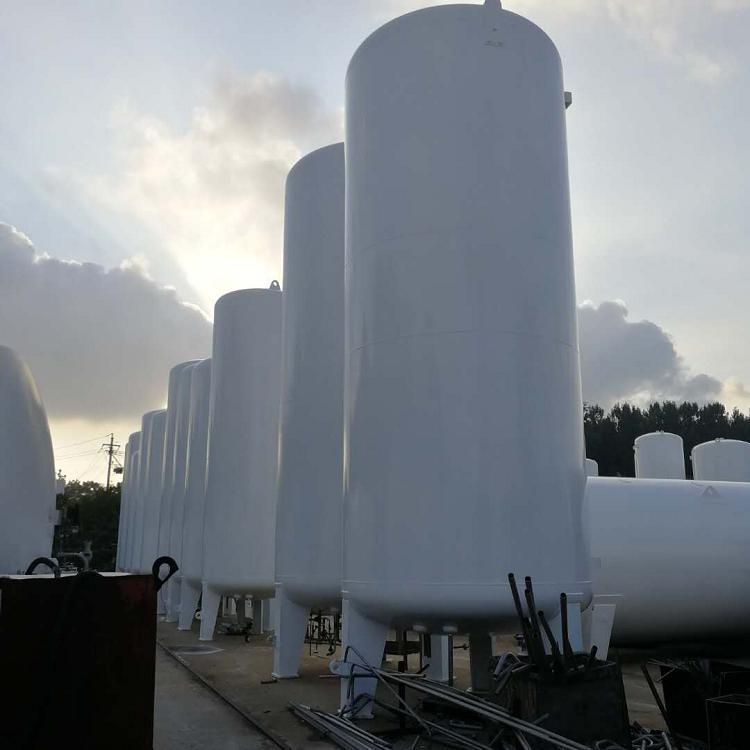
When planning CO2 storage tanks, the following requirements should be considered:
- Safety Distance: Tanks must maintain adequate distance from surrounding buildings, equipment, and personnel to prevent injury and loss in case of accidental incidents. Specific safety distance requirements should be defined according to local regulations and standards.
- Tank Capacity: Determine the tank capacity based on actual demand and usage. The choice of capacity should consider factors such as CO2 usage, storage duration, and supply requirements.
- Tank Layout: The layout should facilitate operation and maintenance while meeting safety and environmental protection requirements. Sufficient spacing between tanks is necessary for ease of operation and maintenance.
- Tank Material: Select appropriate materials for tank construction to ensure corrosion and pressure resistance. Common materials include carbon steel and stainless steel.
- Safety Equipment: Tanks should be equipped with necessary safety equipment, such as safety valves, pressure sensors, and temperature sensors, to ensure safe operation.
- Leak Prevention: Measures should be taken to prevent CO2 leaks, such as sealed valves and leak detection systems. Corresponding leak response measures and emergency plans should also be in place.
- Environmental Impact Assessment: An environmental impact assessment should be conducted when planning tanks to evaluate their impact on the surrounding environment and implement corresponding environmental protection measures.
- Regulations and Standards: Adhere to local regulations and standards, including building codes, safety regulations, and environmental protection requirements, when planning tanks.
It is important to note that planning CO2 storage tanks should be carried out by engineers or relevant agencies to ensure compliance with safety and environmental protection requirements. Consulting local authorities for advice and guidance is also necessary.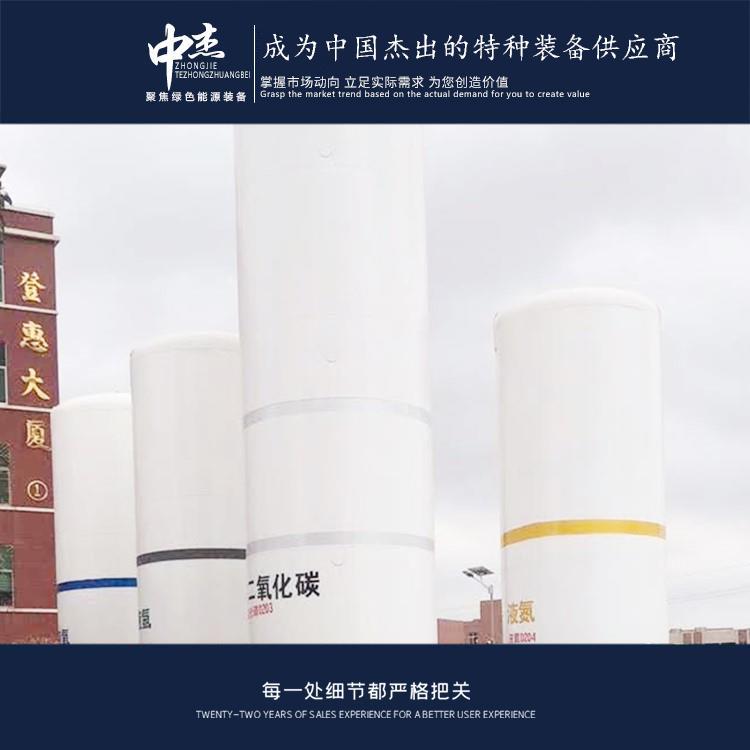
When using carbon dioxide cylinders, the following points should be noted:
- Safe Operation: When using carbon dioxide cylinders, it is mandatory to adhere to relevant safety operation procedures and standards. Operators should receive training to understand the cylinder's characteristics, operational requirements, and safety measures, and operate strictly according to the procedures.
- Cylinder Inspection: Regularly inspect the cylinder's appearance, seal integrity, valves, and pipeline connections to ensure the cylinder's integrity and safety. Any abnormalities or damages should be repaired or replaced promptly.
- Pressure Control: The cylinder's pressure should be controlled within a safe range. Regularly check and calibrate pressure sensors and safety valves to ensure the proper operation of the pressure control system.
- Temperature Control: Carbon dioxide cylinders typically need to be kept at low temperatures. Ensure the proper operation of cooling equipment, and regularly check and calibrate temperature sensors to maintain the appropriate storage temperature.
- Leak Prevention: Carbon dioxide is a gas that is prone to leakage, which can lead to safety risks and environmental pollution. Ensure the cylinder and pipeline seals are intact, and regularly inspect and replace seals, addressing any leaks promptly.
- Fire and Explosion Prevention: Avoid open flame operations near the cylinder to prevent fire sources from coming into contact with carbon dioxide. Maintain good ventilation around the cylinder to prevent the accumulation of carbon dioxide.
- Waste Disposal: Dispose of废弃 carbon dioxide cylinders or residuals in accordance with relevant regulations and standards. Adhere to environmental protection requirements to ensure safe disposal of waste and environmental protection.
- Regular Maintenance: Conduct regular maintenance and inspections of the cylinder, including cleaning and painting.
Leakage issues in CO2 storage tanks may be caused by the following reasons: Material Corrosion: CO2 has some corrosive properties, and prolonged exposure can lead to corrosion of the tank material. Corrosion can damage the tank's surface protective layer, causing it to lose its seal and resulting in leaks. Welding Defects: The welding joints of the tank may have defects, such as weld cracks or gas pockets, which can weaken the strength of the焊接 areas, leading to leaks. Design Defects: Inadequate design or defects in the tank may also cause leaks. For example, poorly designed interface connections or unreasonable structural designs can lead to leakage problems. Overpressure: If the internal pressure of the tank exceeds its capacity, it may deform or rupture, causing leaks. Temperature Fluctuations: During temperature changes, the thermal expansion and contraction effect in CO2 storage tanks can cause deformation or stress concentration, leading to leaks. Incorrect Operation: Improper operation and maintenance can also cause leaks. For instance, over-tightening valves or improper maintenance measures can reduce the tank's sealing performance. External Damage: External forces such as impacts, scratches, or corrosion can cause surface damage or corrosion to the tank, leading to leaks. To avoid leakage issues in CO2 storage tanks, it is essential to select appropriate materials, employ reasonable design and manufacturing processes, and conduct regular inspections and maintenance. Additionally, operators should receive training and adhere to operational procedures to ensure the safe operation of the tanks.
Shandong Zhongjie Special Equipment, welcome customers to our factory for business discussions.
WeChat Official Account

Scan to follow Official Account



















