


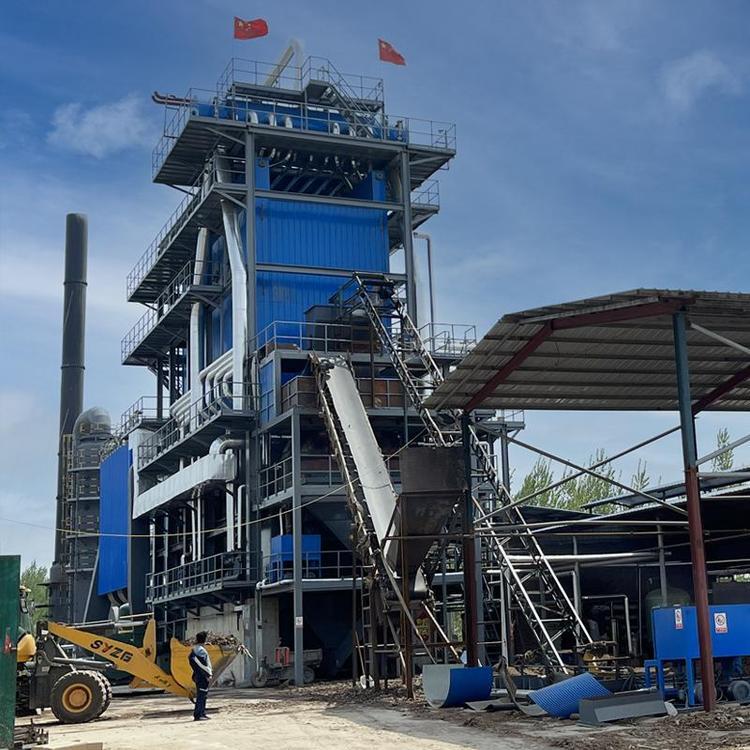

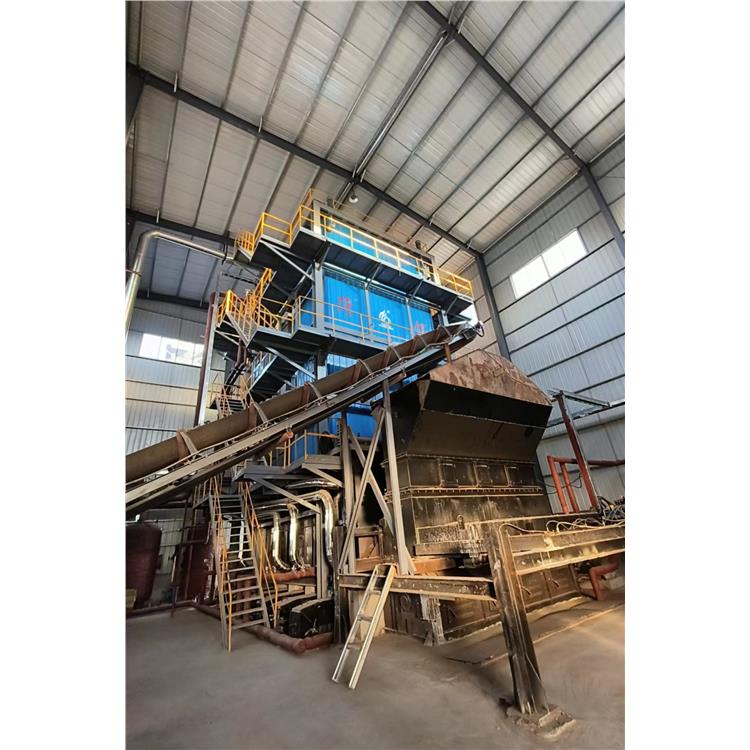
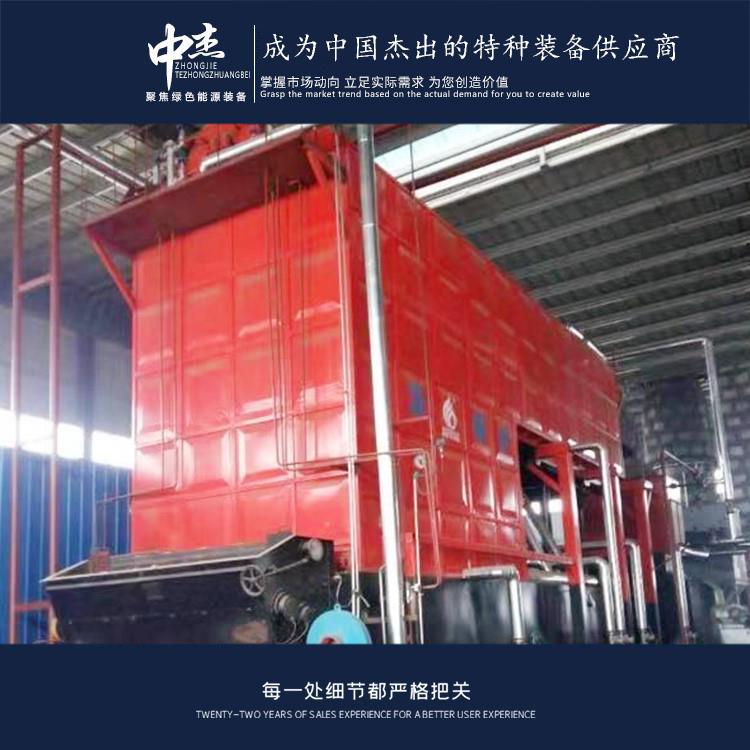


















Shandong Zhongjie Special Equipment's main products include: fuel (gas) boilers, organic heat carrier boilers, biomass boilers, waste heat boilers, and other boiler products; vacuum insulation cryogenic pressure vessels such as LNG tanks, oxygen/nitrogen/argon tanks, and CO2 tanks; pressure vessel products such as denitrification engineering equipment, heat storage and energy storage equipment, and complete chemical equipment sets; central air conditioning and ventilation equipment such as ground (water) source heat pumps, air source units, water-cooled screw units, and air-cooled modular units. Planned products include large-scale energy centers, LNG transport vehicles, LNG tank containers, and other green energy equipment.
Biomass boilers can be categorized according to different classification criteria. Here are some common methods of classification:
By combustion method classification:
Direct Combustion Boilers: Directly burn biomass fuel to generate heat.
Gasification Boiler: Converts biomass fuel into combustible gas, which is then burned.
Pyrolysis Boiler: Converts biomass fuel through pyrolysis to produce combustible gases and solid charcoal, which is then burned.
By fuel type:
Wood Biomass Boilers: Utilizing wood chips, sawdust, cassava residue, and other wooden fuels.
Crop biomass boiler: Utilizes crop residues such as straw, rice husk, and wheat straw as fuel.
Industrial waste biomass boiler: Utilizes industrial waste, such as sawdust and pulp sludge, as fuel.
Categorized by boiler type:
Water tube biomass boiler: The combustion chamber is equipped with water tubes for transferring heat energy.
Fire-tube biomass boiler: Heat is transferred through fire tubes arranged within the combustion chamber.
Hybrid biomass boiler: Combines the features of water-tube and fire-tube designs, featuring both water tubes and fire tubes.
By power scale classification:
Small biomass boilers: Typically range from 1-10MW in power, suitable for small buildings and rural heating needs.
Medium-sized biomass boiler: Power typically ranges from 10 to 50 MW, suitable for medium-sized industrial factories and large buildings.
Large Biomass Boilers: Power over 50MW, suitable for large industrial plants and centralized heating.
These categorization methods merely provide a general overview of biomass boilers; in reality, there are more specific subcategories and combinations. Different types of biomass boilers may vary in application scenarios and technical characteristics.
There are several methods for setting the pressure of biomass hot water boilers:
Regular Discharge: Regularly discharge excess water from the boiler to maintain normal working pressure. Discharging excess water helps prevent excessive internal pressure in the boiler, ensuring stable operation.
Timed Operation: Operate at regular intervals based on the boiler water level to maintain the normal working pressure. Be mindful of the control amount to avoid excessive operation that could lead to elevated boiler pressure.
Pressure Control System: The installed pressure control system continuously monitors the boiler's pressure through sensors and controllers, adjusting automatically to set points. In case the boiler pressure exceeds the set value, the control system automatically reduces fuel supply or releases excess moisture to maintain a stable working pressure for the boiler.
Pressure Regulator: Install a pressure regulator on the boiler's water intake pipe. By adjusting the valve opening, control the water intake to maintain a stable working pressure for the boiler. The pressure regulator can automatically adjust according to the set value, keeping the boiler pressure within the appropriate range.
Pressure Regulator: Install a pressure regulator in the boiler's combustion system to control the steam pressure by adjusting the combustion intensity of the burner. The pressure regulator can automatically adjust the burner's operating state based on the set value to maintain a stable working pressure for the boiler.
Above are common methods for setting the pressure of biomass hot water boilers. According to actual conditions and requirements, the appropriate pressure setting method can be chosen to maintain the stable working pressure of the boiler.
Possible reasons for incomplete combustion of fuel in biomass boilers may include the following aspects:
Inappropriate combustion conditions: In the combustion process, if the combustion temperature is too low, oxygen supply is insufficient, or combustion time is inadequate, incomplete combustion of the fuel may occur. This could be due to improper burner settings, an unreasonable ventilation system, or inaccurate adjustment of combustion parameters, among other reasons.
Fuel Quality Issue: The quality of fuel can also affect combustion efficiency. If the fuel contains excessive moisture, impurities, or ash, it can impact the calorific value and combustion properties during the combustion process, leading to incomplete combustion.
Improper combustion chamber design: The design of the combustion chamber significantly affects the combustion efficiency. An improperly structured combustion chamber, insufficient combustion space, or uneven airflow distribution within the chamber can all lead to incomplete fuel combustion.
Burner System Failure: A failure in the combustion system can also result in incomplete fuel combustion. For instance, issues such as clogged burner nozzles, problems with the ignition system, or abnormal operation of the combustion fan can all affect combustion efficiency.
Lack of maintenance and cleaning: Regular maintenance and cleaning of biomass boilers are crucial for maintaining combustion efficiency. Issues such as ash accumulation, slagging, or blockages inside the boiler can affect the normal combustion of fuel, leading to incomplete combustion.
To address the issue of incomplete fuel combustion, the following measures can be taken: Adjust combustion parameters to ensure appropriate combustion temperature, oxygen supply, and duration; select the correct amount of fuel and ensure its storage and handling meet requirements; perform regular maintenance and cleaning of the boiler to maintain the normal operation of the combustion system. Additionally, depending on the specific situation, it may be necessary to consult with boiler maintenance personnel or manufacturers for more detailed and accurate solutions.
Biomass boilers can generally be divided into two categories based on their applications:
Biomass Hot Water Boilers: Biomass hot water boilers are primarily used for heating and hot water supply. They transfer heat energy to water by burning biomass fuel, producing hot water. This type of boiler is widely used in heating and hot water systems in residential, office buildings, schools, hotels, and other locations.
Biomass Steam Boilers: Biomass steam boilers are primarily used for steam supply in industrial production processes. They generate high-pressure steam at high temperatures by burning biomass fuel, which is utilized to power machinery, heating, and processing in various industrial applications. This type of boiler is commonly found in industries such as pulp and paper, food processing, and chemicals.
These two types of biomass boilers differ in principle and design, catering to various application scenarios. Whether for hot water or steam boilers, they harness the thermal energy of biomass fuel to utilize renewable energy, featuring environmental protection and energy-saving characteristics.
Shandong Zhongjie Special Equipment, welcome customers to our factory for business discussions.
WeChat Official Account

Scan to follow Official Account



















