


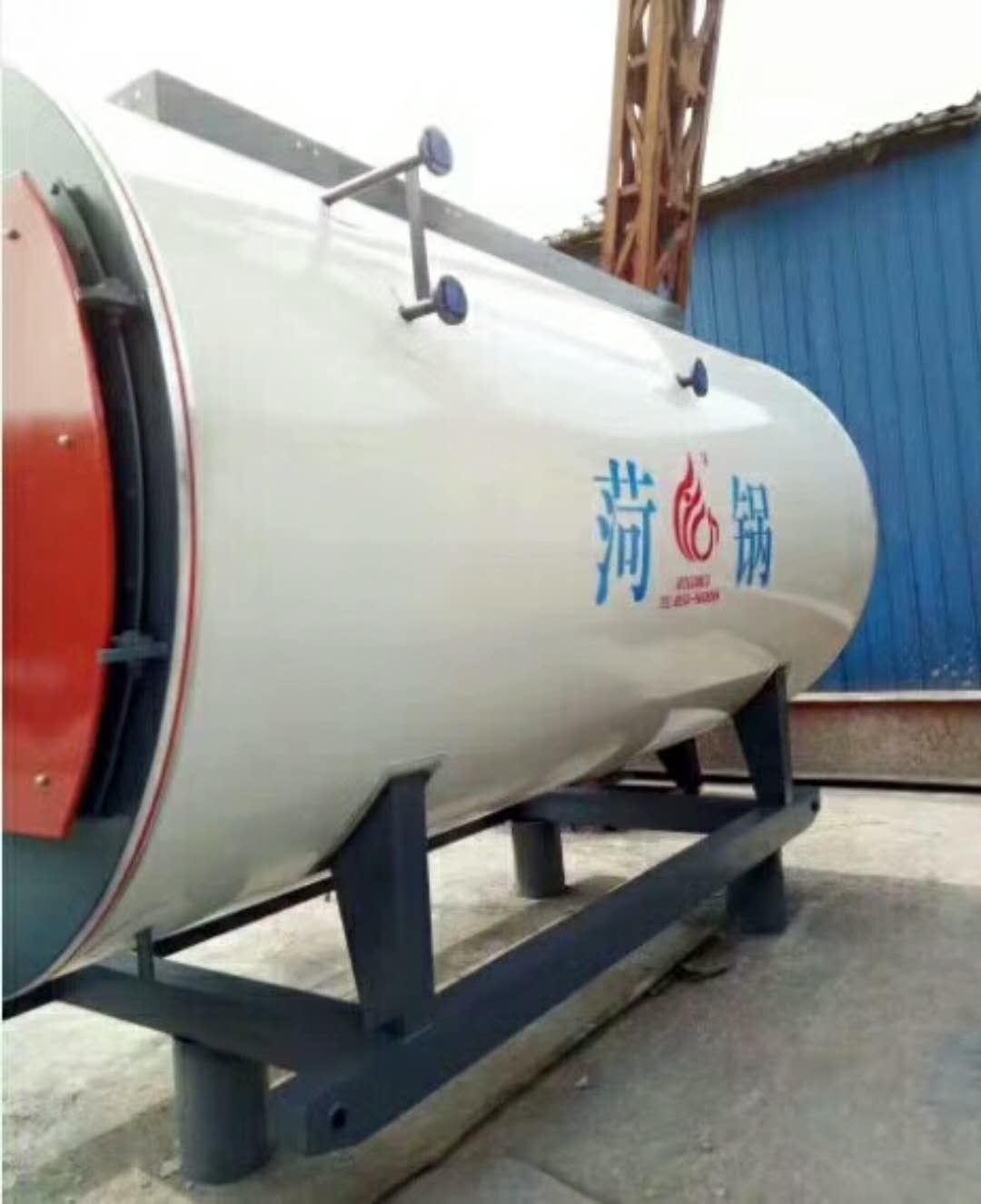

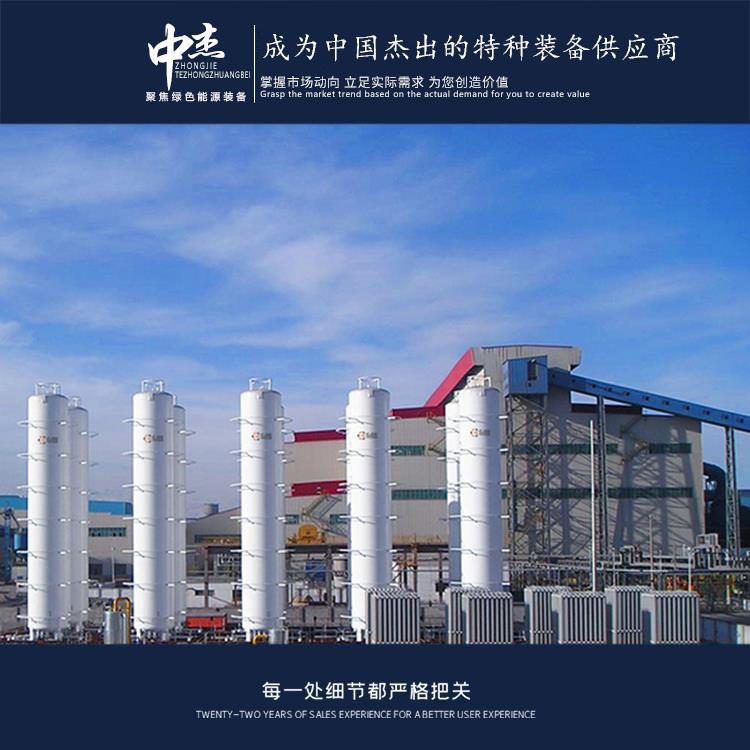


















Shandong Zhongjie Special Equipment (formerly Heze Boiler Factory Co., Ltd.) was established in 2001, located at No. 2218 Jinnan Road, Development Zone, Heze City. With a registered capital of 50 million yuan and total assets of 500 million yuan, the company has 7 business centers: boilers, deep-freeze containers, pressure vessels, central air conditioning, engineering installation, international trade, and Internet of Things. It has three factory sites on Jinnan Road, East Changjiang Road, and Bohai Road, covering a total of 200,000 square meters, with the main workshop spanning 83,000 square meters. The company currently employs 710 staff, including 247 engineers and technicians, and 82 intermediate-level technicians. In December 2016, it was recognized as a "High-tech Enterprise" by the Science and Technology Department. In June 2021, it was named a "Specialized and New Enterprise in Shandong Province" by the Department of Industry and Information Technology. In June 2022, it was identified as a "Gazelle Enterprise in Shandong Province" and in August 2022, it was recognized as a "Specialized and New Small Giant Enterprise" by the Ministry of Industry and Information Technology.
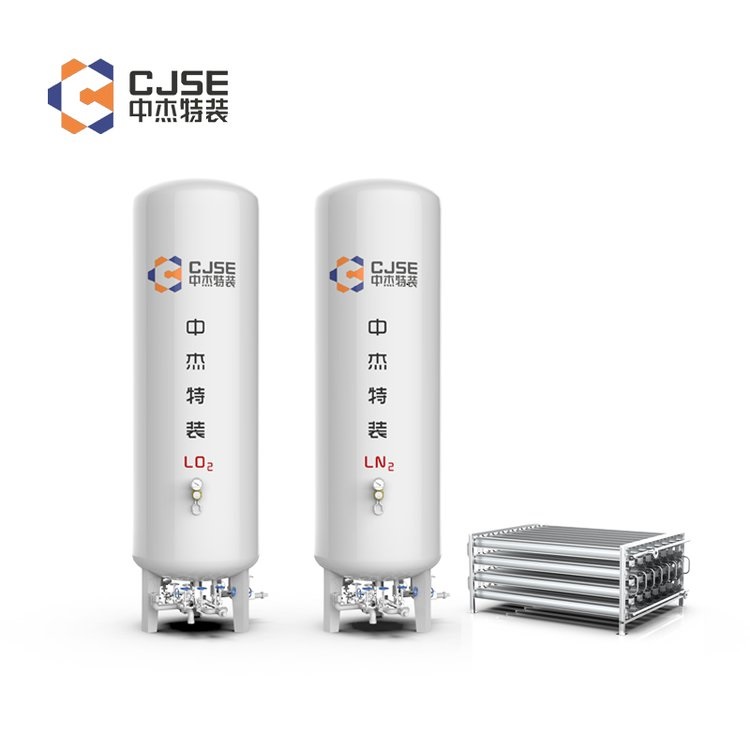
Zhongjie Special Equipment is a company engaged in the manufacturing of low-temperature liquid storage tanks. They offer design, manufacturing, and installation services for low-temperature liquid carbon dioxide storage tanks. Below is an introduction to the low-temperature liquid carbon dioxide storage tanks produced by Zhongjie Special Equipment:
Tank Type: The low-temperature liquid carbon dioxide storage tanks produced by Zhongjie Special Equipment are typically designed in vertical or horizontal configurations, chosen based on customer requirements and site conditions.
Material: The tanks are primarily made of low-temperature steel, offering excellent corrosion and low-temperature resistance.
Insulation: The tanks are internally insulated to minimize heat transfer and liquid evaporation. The insulation usually consists of a multi-layer structure, including thermal insulation materials and an external protective layer.
Safety Valve and Pressure Relief Devices: The tanks are equipped with safety valves and pressure relief devices to control internal tank pressure, preventing overpressure and explosions.
Level Indicator: The tanks are fitted with level indicators to monitor the liquid level within the tank, ensuring controlled and managed storage of the liquid volume.
Safety Measures: Zhongjie Special Equipment's low-temperature liquid carbon dioxide storage tanks comply with relevant safety regulations and standards, implementing various safety measures such as fire and explosion prevention, leak detection, and alarm systems.
Customized Design: Based on customer needs and application scenarios, Zhongjie Special Equipment can provide customized design and manufacturing services to meet the specific requirements of different customers.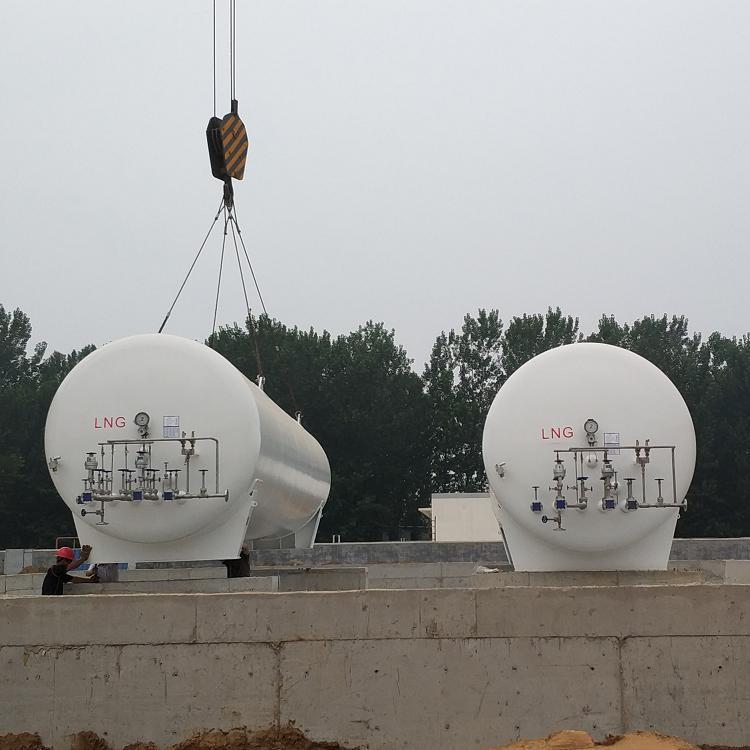
When using carbon dioxide tanks, pay attention to the following aspects:
- Safe Operation: Operators must undergo training to understand the characteristics, operation requirements, and safety measures of carbon dioxide tanks. Adhere to relevant safety operation procedures and standards to ensure safety during operations.
- Tank Inspection: Regularly inspect the tank's appearance, sealing, valves, and pipe connections before use. Promptly repair or replace any abnormalities or damages.
- Tank Placement: Position the tank in a well-ventilated, dry, and fire-free area. Avoid direct sunlight and high-temperature environments to prevent overheating.
- Leak Protection: Ensure that valves and pipe connections are properly sealed to prevent carbon dioxide leaks. Regularly inspect and replace seals, and promptly address any leaks.
- Pressure Control: The internal pressure of the tank should be within a safe range. Check the pressure gauge and safety valve before use to ensure proper operation. Avoid excessive or low pressure to prevent accidents.
- Fire Prevention Measures: Carbon dioxide is flammable, so fire prevention measures must be taken when using it. Smoking, open flames, or flammable items are prohibited near the tank.
- Emission of Waste Gases: Properly discharge waste gases generated during the use of carbon dioxide tanks to avoid CO2 buildup in enclosed spaces, which can lead to asphyxiation and safety risks.
- Emergency Response Plan: Develop and implement an emergency response plan, including procedures for handling leaks, evacuation, and first aid measures. Operators should be familiar with the plan and conduct regular drills.
Note that the use of carbon dioxide tanks should be carried out by trained personnel following relevant safety operation procedures and standards. Seek advice and guidance from experts.
Carbon dioxide tank level gauges are devices used for measuring and monitoring the liquid level of CO2 within the tank. Depending on different working principles and application requirements, common types of CO2 tank level gauges include the following:
- Buoy Level Gauges: Use a buoy to indicate the level, measuring the level through a mechanical device or an electrical signal sensor connected to the gauge.
- Pressure Level Gauges: Measure the level by utilizing the relationship between liquid pressure and level. The liquid's pressure change on the pressure sensor is used to calculate the level height.
- Ultrasonic Level Gauges: Measure the level using the propagation time of ultrasound. An ultrasonic transmitter emits waves, and when the beam encounters the liquid surface, part of the beam is reflected back. The level height is calculated by measuring the reflection time.
- Capillary Level Gauges: Use the capillary principle to measure the level. By inserting a thin tube into the liquid, the liquid rises within it. The level height is calculated based on the liquid's rise.
- Level Gauges: Measure the level by reflecting waves. A transmitter emits waves, and when the beam meets the liquid surface, part of the beam is reflected back. The level height is calculated by measuring the reflection time.
These level gauges can be selected for use in CO2 tanks based on specific requirements and tank design. When selecting and installing level gauges, consider factors such as the liquid properties, working environment, precision requirements, and ensure they are compatible with the tank's safe operation and monitoring system.
Dry ice is a frozen carbon dioxide that is converted directly from a gas to a solid under high pressure. It has several applications:
- Refrigeration of food and pharmaceuticals: Dry ice is widely used for the transportation and storage of food and pharmaceuticals. Due to its low temperature and rapid cooling speed, it can effectively maintain the freshness and quality of food and medicines.
- Special effects and stage performances: Dry ice is also extensively used in special effects and stage performances. When it comes into contact with environmental heat, it quickly turns into gas, producing a large amount of white smoke effect, creating a mysterious and dramatic atmosphere.
- Cleaning and disinfection: Dry ice can also be used for cleaning and disinfection. When it comes into contact with surfaces, due to the drop in temperature and the physical impact of the vaporization process, it can effectively remove dirt, bacteria, and viruses without leaving residues.
- Laboratories and scientific research: Dry ice is also applied in laboratories and scientific research. It can be used to freeze samples, create low-temperature experimental environments, and make cold traps and condensers, among others.
It is important to note that safety should be a priority when using dry ice, avoiding direct contact with skin and eyes, and not using it in confined spaces to prevent carbon dioxide buildup and oxygen deficiency.
Our company attaches great importance to technological innovation and R&D, boasting 1 city-level enterprise technology center in Heze City. We have established test facilities for non-destructive testing,理化testing, welding testing, hydrostatic testing, and more, equipped with over 600 various instruments and equipment such as CNC machines, X-ray flaw detectors, digital ultrasonic flaw detectors, mechanical property testing machines, chemical analyzers, spectrometers, tensile testing machines, and plasma welding machines. Our R&D on key products like temperature-pressure vessels, biomass boiler emissions reduction, and waste heat utilization has been successively selected for multiple Shandong Province Ministry of Industry and Information Technology technological innovation projects, key projects of Shandong Province, and Heze City innovation and excellence projects. We have cumulatively obtained 27 authorized utility models, 16 authorized inventions, participated in drafting 2 standards, 2 industry standards, and registered 15 trademarks. Our technical team, in collaboration with Professor Yajiang Li of Shandong University, has developed deep-chilled vessel processing technology using the international combination of plasma arc + filled wire argon arc welding (PAW-GTAW) technology. After provincial-level scientific and technological achievement evaluation, the technology level has reached international standards in the field of deep-chilled vessel manufacturing. Choose Zhongjie Special Equipment, and let's create brilliance together!
WeChat Official Account

Scan to follow Official Account



















