


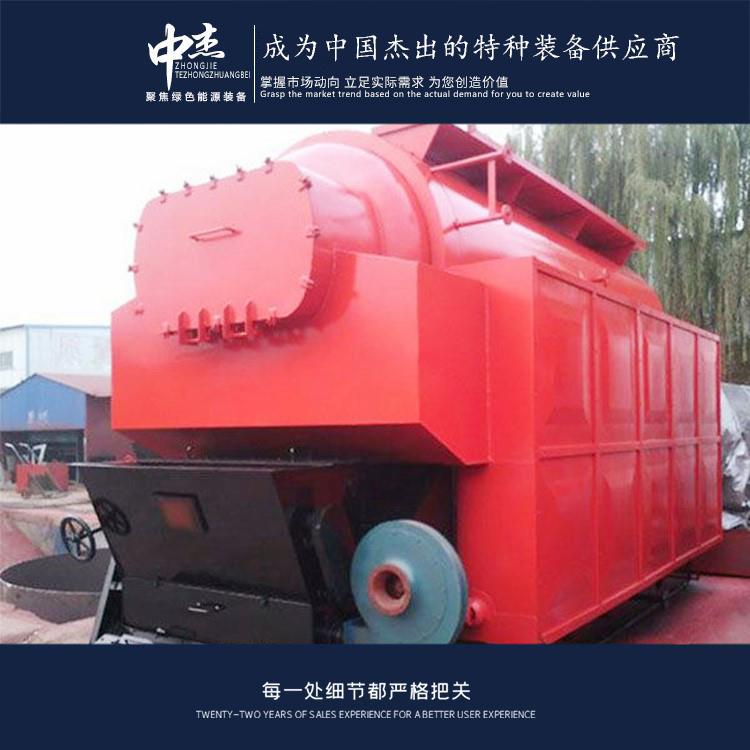

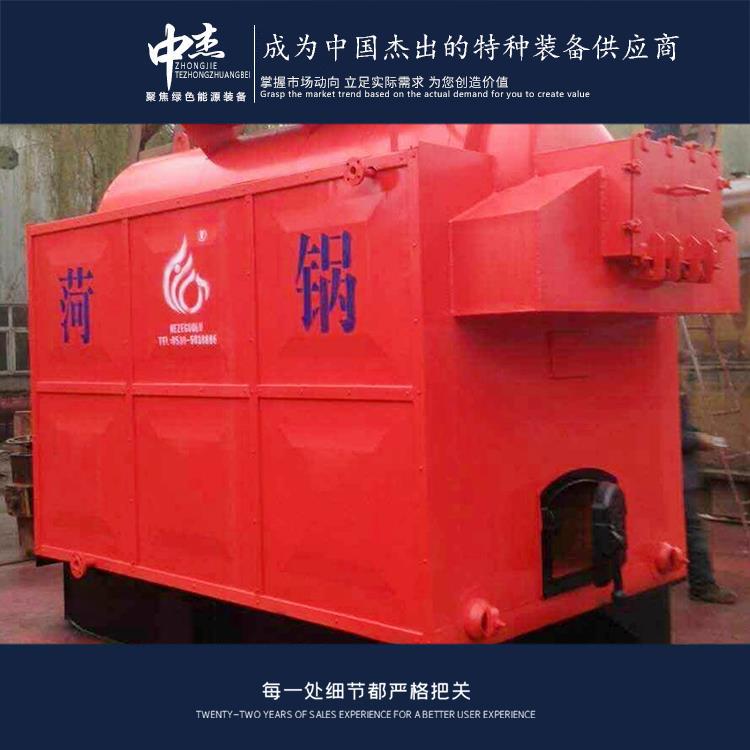
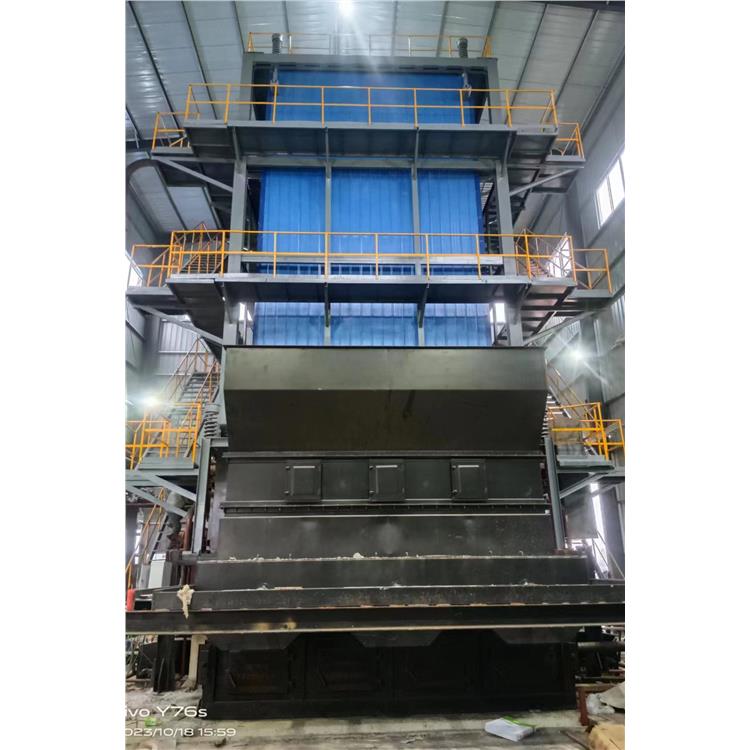


















Shandong Zhongjie Special Equipment specializes in products such as fuel (gas) boilers, organic heat carrier boilers, biomass boilers, waste heat recovery boilers, and other boiler products; vacuum insulation cryogenic pressure vessels including LNG tanks, oxygen/nitrogen/argon tanks, CO2 tanks; pressure vessel products such as denitrification engineering equipment, heat storage equipment, and complete chemical equipment; central air conditioning and ventilation equipment including ground (water) source heat pumps, air source units, water-cooled screw units, and air-cooled modular units. Planned products include large-scale energy centers, LNG transport vehicles, LNG tank containers, and other green energy equipment.
Biomass boilers can be broadly categorized into the following two types based on their application:
Biomass Hot Water Boiler: The biomass hot water boiler is primarily used for heating and hot water supply. It transfers thermal energy to water by burning biomass fuel, producing hot water. This type of boiler is widely used in heating and hot water systems in places like homes, office buildings, schools, and hotels.
Biomass Steam Boilers: Biomass steam boilers are primarily used for steam supply in industrial production processes. They generate high-pressure steam at high temperatures by burning biomass fuel, which is utilized to power machinery, heating, and processing in various industrial applications. This type of boiler is commonly found in industries such as pulp and paper, food processing, and chemicals.
These two types of biomass boilers differ in principle and design, catering to different application scenarios. Whether for hot water or steam boilers, they harness the thermal energy of biomass fuel to utilize renewable energy, featuring environmental protection and energy-saving properties.
When selecting an appropriate atmospheric pressure hot water boiler, consider the following factors:
Heating Area: First, it is necessary to determine the size of the area to be heated, which will decide the heat power of the required hot water boiler. Generally, the larger the heating area, the greater the required heat power.
Heat Load Calculation: Conduct a heat load calculation, taking into account the insulation performance of the heating area, indoor temperature requirements, and external climatic conditions to determine the required heat power. You may request a heat load calculation to ensure the selected hot water boiler meets the heating needs.
Fuel Type: Atmospheric pressure hot water boilers can use various fuels such as gas, coal, etc. Choose the appropriate fuel type based on local fuel supply and cost considerations.
Boiler Efficiency: Focus on the energy efficiency of hot water boilers and choose products with higher efficiency. High-efficiency hot water boilers can provide superior heating effects while reducing energy consumption and operational costs.
Boilers and Quality: Choose hot water boilers produced by reputable manufacturers to ensure reliable product quality and comprehensive after-sales service.
Safety & Environmental Protection: Focus on the safety and environmental performance of hot water boilers, choosing products with safety protection devices and low emissions.
Budget Consideration: Select a suitable hot water boiler based on budget constraints. Consider not only the purchase cost but also the subsequent operational and maintenance costs.
Considering these factors, a suitable atmospheric pressure hot water boiler can be selected to meet heating requirements and achieve good performance in terms of energy efficiency, safety, and environmental protection. It is recommended to consult experts or professionals during the selection process.
Reducing the emissions of nitrogen oxides (NOx) from biomass boilers can be achieved through the following measures:
Combustion Control Technology: Utilizes advanced combustion control techniques such as low nitrogen combustion technology. By optimizing the combustion process, controlling the combustion temperature and oxygen concentration, the formation of nitrogen oxides is reduced. Methods like staged combustion and optimized combustion chamber design can be employed to lower combustion temperatures and extend combustion times, further decreasing nitrogen oxide emissions.
SNCR Technology: Selective Non-Catalytic Reduction (SNCR) technology involves injecting a reductant, such as urea solution, into the combustion process to react with nitrogen oxides, converting them into nitrogen and water. This technique can reduce the formation and emission of nitrogen oxides during combustion.
SCR Technology: Selective Catalytic Reduction (SCR) technology is a nitrogen oxide control method. By injecting urea solution into flue gas and utilizing a catalyst, nitrogen oxides are converted into nitrogen and water. SCR technology achieves nitrogen oxide removal at lower temperatures, suitable for large biomass boilers.
Flue Gas Recirculation (FGR): The Flue Gas Recirculation (FGR) technology recycles a portion of flue gas back into the boiler combustion chamber, reducing combustion temperature and oxygen concentration, and minimizing the formation of nitrogen oxides. This technique can control nitrogen oxide emissions by adjusting the recirculation ratio.
Fuel selection and pretreatment: Choosing low nitrogen fuels, such as low nitrogen biomass fuel, can reduce the formation of nitrogen oxides. Additionally, for biomass fuels with high nitrogen content, pretreatment measures like drying and gasification can be taken to decrease the formation of nitrogen oxides during combustion.
Regular maintenance and cleaning: Regularly maintain and clean biomass boilers to ensure the cleanliness and proper operation of components like burners and heat exchangers. Cleaning the combustion chamber and heat exchangers can reduce the buildup of dirt, enhance heat transfer efficiency, and lower nitrogen oxide emissions.
By comprehensively adopting the aforementioned measures, it can effectively reduce the emissions of nitrogen oxides from biomass boilers, achieving both environmental protection and energy-saving goals. The specific measures to be selected should be based on the characteristics of the boiler, its operating conditions, and emission requirements.
Chain biomass boiler is a common type of biomass boiler, with its working principle and process as follows:
Fuel Supply: Biomass fuels (such as wood chips, straw, etc.) are transported to the combustion chamber of the chain boiler through the feeding system.
Combustion Process: Fuel is ignited within the combustion chamber while the chain boiler's chain system begins to operate. The fuel is gradually propelled forward by the chain's movement, simultaneously undergoing combustion within the chamber. During combustion, the fuel is thoroughly mixed with air, and the heat energy produced is transferred to the boiler's water or other working substances.
Flue Gas Emission: The flue gas produced by combustion is channeled through the flue system of the combustion chamber and discharged into the chimney. During the flue gas emission process, treatment can be carried out by flue gas purification equipment to reduce the emitted particulate matter and gas pollutants.
Heat Recovery: The heat generated from combustion is transferred to water or other working substances through a heat exchanger in the boiler, thereby heating them. After heat recovery, the hot water or steam can be used for heating, hot water supply, or other industrial processes.
Control System: Chain biomass chain boilers are typically equipped with an automatic control system for monitoring and adjusting parameters such as temperature, pressure, and fuel supply during the combustion process. The control system can automatically adjust according to actual needs to ensure the safe and efficient operation of the boiler.
Overall, the biomass chain grate boiler gradually pushes biomass fuel into the combustion chamber through a chain system for combustion. The heat energy is transferred to water or other working substances through a heat exchanger, achieving heat recovery and utilization. This boiler boasts high combustion efficiency and strong fuel adaptability, and is widely used in heating, industrial heating, and other fields.
Our company attaches great importance to technological innovation and R&D design, boasting 1 municipal-level enterprise technology center in Heze City. We have established testing facilities for non-destructive testing, physical and chemical testing, welding testing, hydrostatic testing, etc., and equipped over 600 types of instruments and equipment, including CNC machine tools, X-ray flaw detectors, digital ultrasonic flaw detectors, mechanical property testing machines, chemical analyzers, spectrometers, tensile testing machines, plasma welding machines, and more. The key products and technologies we have developed, such as welding of temperature and pressure vessels, emission reduction of biomass boilers, and waste heat utilization, have successively been shortlisted for multiple Shandong Provincial Department of Industry and Information Technology science and technology innovation projects, Shandong Provincial key projects, and Heze City innovation and excellence projects. We have accumulated a total of 27 authorized utility models, 16 authorized inventions, participated in drafting 2 standards, 2 industry standards, and registered 15 trademarks. The technical team of our company, in collaboration with Professor Yajiang Li of Shandong University, has jointly developed deep cryogenic container processing technology, utilizing the international plasma arc + wire filling tungsten inert gas arc welding (PAW-GTAW) technology. After the provincial-level scientific and technological achievement evaluation, the technical level has reached an international standard in the field of deep cryogenic container manufacturing. Choose Zhongjie Special Equipment, and let's create brilliance together!
WeChat Official Account

Scan to follow Official Account



















