


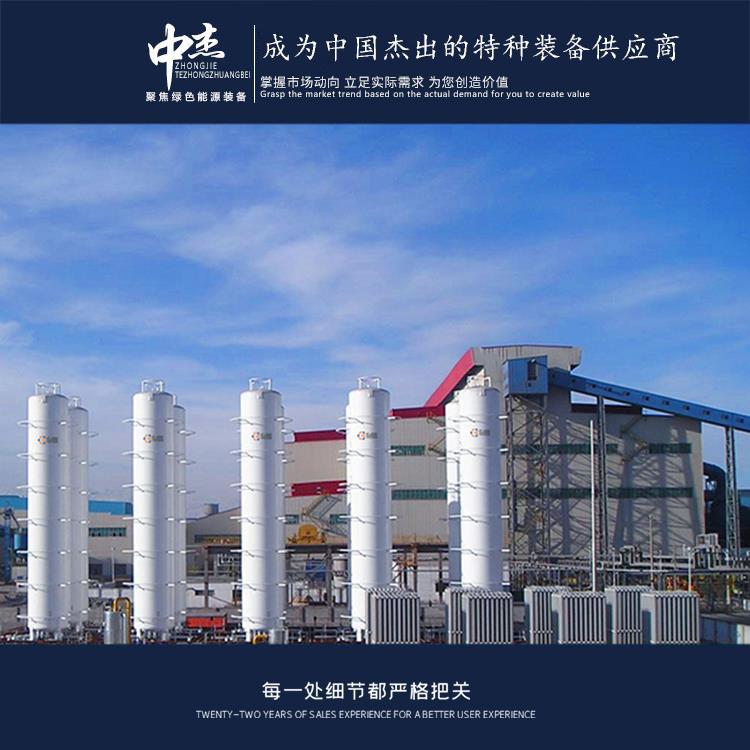

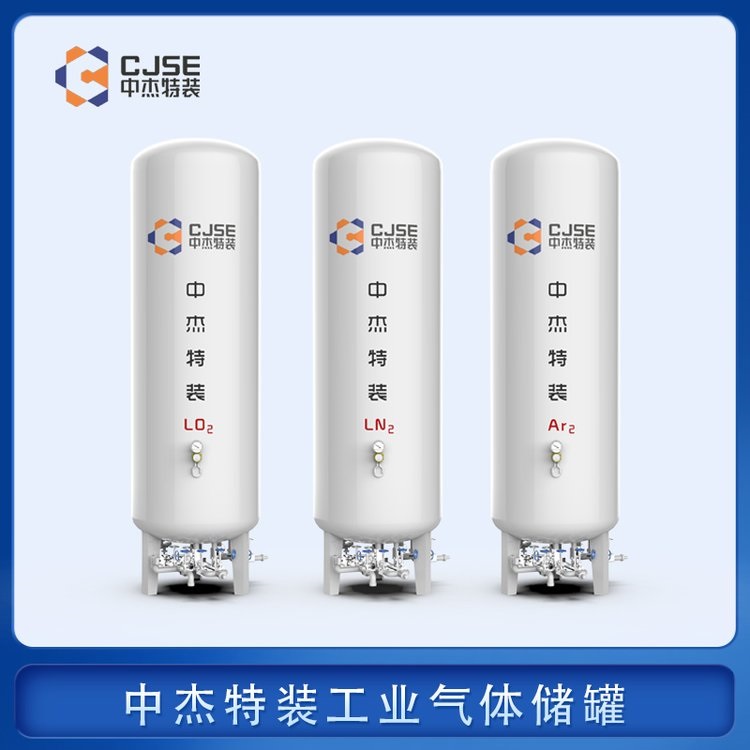


















Shandong Zhongjie Special Equipment's main products include: fuel (gas) boilers, organic heat carrier boilers, biomass boilers, waste heat boilers, and other boiler products; vacuum insulation cryogenic pressure vessels such as LNG tanks, oxygen/nitrogen/argon tanks, and CO2 tanks; pressure vessel products such as denitrification engineering equipment, heat storage and energy storage equipment, and complete chemical equipment sets; central air conditioning and HVAC equipment such as ground (water) source heat pumps, air source units, water-cooled screw units, and air-cooled modular units. Planned products include large-scale energy centers, LNG transport vehicles, LNG tank containers, and other green energy equipment.
To extend the service life of liquid argon storage tanks, the following measures can be taken:
Regular inspections and maintenance: Conduct regular visual inspections of the liquid argon tank, check valves and connections, and perform leak detection and pressure testing, etc. Detect and repair potential issues promptly to ensure the normal operation of the tank.
Maintain Insulation Layer: The insulation layer is crucial for the thermal insulation of liquid argon tanks. Regularly inspect the integrity and insulation performance of the insulation layer, repair or replace damaged insulation materials to ensure the tank's insulation effectiveness.
Regulate liquid argon temperature: The temperature of liquid argon should be maintained within an appropriate range to prevent damage to the storage tank from excessive or insufficient temperatures. Employ suitable cooling or heating measures to ensure stable temperature control of the liquid argon.
Corrosion Protection: The shell and internal structure of the liquid argon tank should be protected against corrosion and oxidation. Regularly inspect and maintain the protective coating to ensure it remains intact.
Avoid excessive pressure and overfilling: Prevent the internal pressure of the tank from being too high or too low, as well as overfilling with liquid argon. Excessive pressure and overfilling can lead to structural cracking or damage to the tank.
Regular cleaning and waste removal: Regularly clean the interior of the tank to remove accumulated impurities and dirt. Regularly remove waste to prevent contaminants and sediments in liquid argon from damaging the tank.
Safety Operations and Training: Ensure operators are knowledgeable and skilled in the safe operation of liquid argon tanks. Enhance safety training to boost operators' awareness and emergency response capabilities.
Establish comprehensive management records and documents, including tank usage, inspection logs, and maintenance records. Regularly review and update these records to ensure safe management and maintenance of the tanks.
These measures can help extend the service life of liquid argon storage tanks, but specific operations and management are required based on the type and application of the tank. When performing maintenance and operation, please adhere to relevant regulations and standards, and consult with experts to ensure safety and effectiveness.
The stable pressure design of a 15 cubic meter liquid argon storage tank should take into account the following aspects:
Tank Pressure: Determine the design pressure of the tank to meet the storage and supply requirements for liquid argon. Establish an appropriate design pressure range based on the characteristics and usage conditions of liquid argon.
Pressure Regulation System: Select an appropriate pressure regulation system to maintain stable pressure within the storage tank. The pressure regulation system typically includes components such as pressure regulators, pressure sensors, and control valves, which are used for monitoring and adjusting the pressure inside the tank.
Pressure Sensor: Install a pressure sensor to monitor the pressure changes within the storage tank in real-time. The sensor transmits pressure signals to the pressure regulation system to promptly adjust the control valve's opening, maintaining the stable pressure inside the tank.
Control Valves: Select an appropriate control valve for regulating gas flow and pressure within the storage tank. The control valve should have excellent regulating performance and stability to ensure the pressure within the tank remains within the set range.
Safety Valve: Install a safety valve to automatically release gas when the pressure inside the storage tank exceeds the set value, preventing overpressure. The safety valve should be selected and installed based on the design pressure and capacity of the storage tank.
Voltage Stabilization System Control: Configure an appropriate control system to monitor and manage the operation of the voltage stabilization system. The control system enables automatic adjustment and alarm functions to ensure stable and safe pressure within the storage tank.
It is important to note that the design of the pressure-stabilizing system should be tailored to the specific engineering requirements and operating conditions of the liquid argon storage tank, adhering to relevant local regulations, standards, and specifications. When designing and installing the pressure-stabilizing system, it is recommended to consult with experienced engineers or relevant institutions to ensure the reliability and safety of the system.
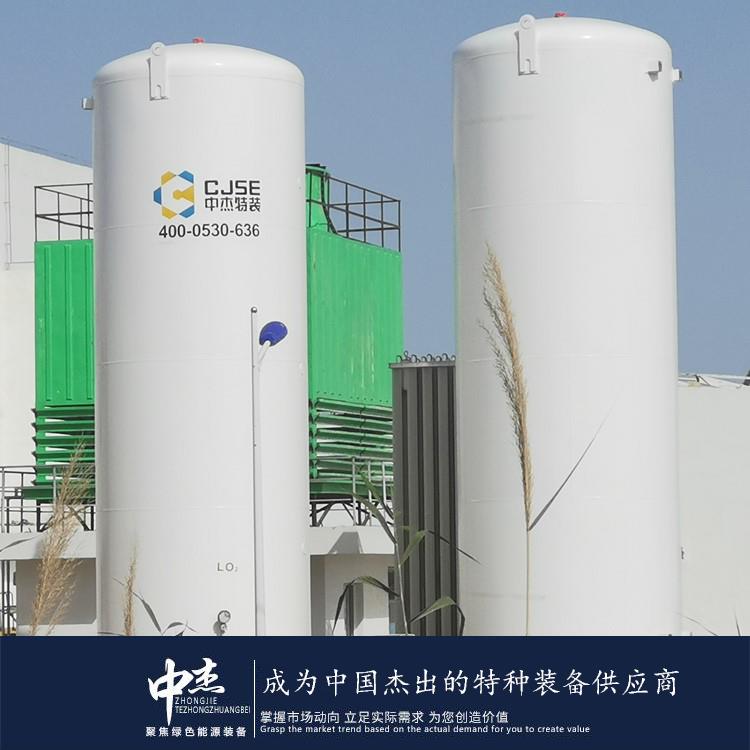
A 50 cubic meter liquid oxygen tank refers to a storage tank with a capacity of 50 cubic meters. Liquid oxygen tanks are commonly used for storing and supplying liquid oxygen, for applications such as research, experiments, and more.
Key features and configurations of a 50 cubic meter liquid oxygen storage tank may include the following aspects:
Volume: The capacity of a 50 cubic meter liquid oxygen tank is 50 cubic meters, allowing for the storage of a large quantity of liquid oxygen.
Structure: Liquid oxygen tanks are typically designed with double or multi-layer construction, filled with insulating material in between to minimize heat transfer and evaporation of the liquid oxygen. The tank material is usually stainless steel or aluminum alloy, offering excellent corrosion and low-temperature resistance.
Insulation Layer: The insulation layer of liquid oxygen storage tanks is typically made of multi-layered insulating materials, such as polyethylene foam, glass fiber, and vacuum layers, to reduce heat transfer and the evaporation of liquid oxygen.
Temperature Control System: Liquid oxygen storage tanks are typically equipped with a temperature control system to regulate the tank's temperature, maintaining the低温 state of the liquid oxygen.
Safety Equipment: Liquid oxygen tanks are typically equipped with safety devices such as pressure sensors, temperature sensors, and safety valves to ensure safe operation of the tank.
It's important to note that the use of liquid oxygen tanks must strictly adhere to relevant safety regulations and operating guidelines to ensure safe operation and usage. Liquid oxygen is highly flammable, so fire prevention measures must be taken when using liquid oxygen tanks, and it must be ensured that there are no ignition sources nearby.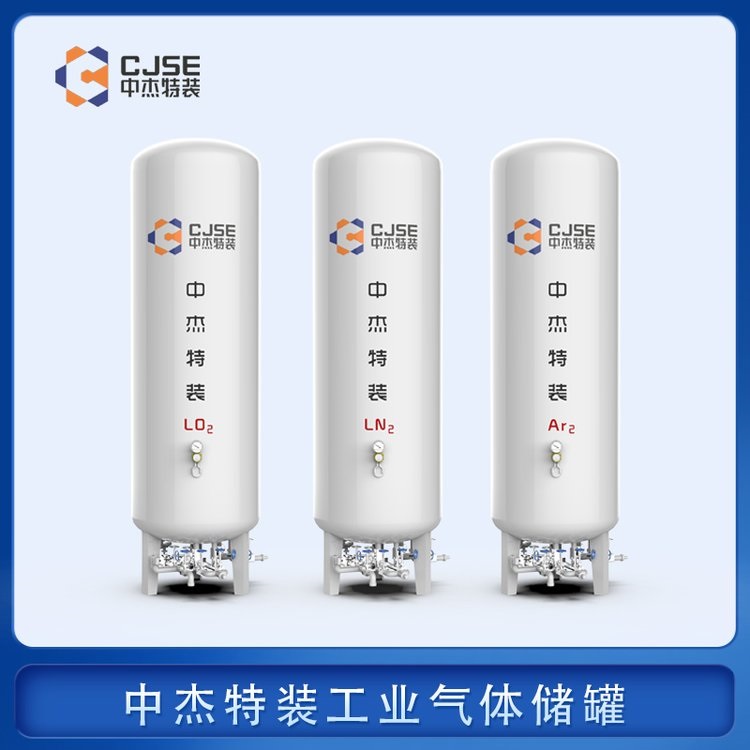
Low-temperature liquid storage tanks feature the following characteristics and advantages:
Features:
Low-Temperature Storage: Low-temperature liquid storage tanks can store low-temperature liquids (such as liquid nitrogen, liquid oxygen, etc.) at low temperatures, maintaining their liquid state. Liquid storage significantly increases storage density and saves space.
Insulation: The low-temperature liquid storage tank is equipped with special insulation materials and structural design, effectively reducing heat conduction and loss to maintain a stable temperature for the low-temperature liquid. This helps to minimize energy loss and evaporation of the liquid.
Safety: The low-temperature liquid storage tank boasts excellent safety features. The tank is made of special materials and designed with a structure that can withstand low temperatures and high pressures. Additionally, the tank is equipped with safety devices, such as pressure relief valves and level alarms, to ensure safe operation and use.
Utilization Advantages:
High Purity Supply: Low-temperature liquid storage tanks can provide high-purity liquid substances. Through refrigeration and purification processes, high-purity liquid gases can be obtained to meet the requirements of applications in industries and scientific research fields.
Long-term Storage: Low-temperature liquid storage tanks can store low-temperature liquids for extended periods, extending their service life. By controlling the temperature inside the tank and the performance of the insulation layer, the evaporation and oxidation of the liquid can be slowed down, maintaining its stability and purity.
Wide Range of Applications: Low-temperature liquid storage tanks are extensively used in various fields such as industrial, scientific research, etc. They can be used for storing liquid oxygen, providing oxygen supply; in the industrial sector, for storing liquefied natural gas (LNG) and liquid nitrogen, etc., as process gases; in scientific research, for storing low-temperature experimental samples.
Environmental Protection and Energy Saving: Low-temperature liquid storage tanks enable effective storage and utilization of low-temperature liquids, reducing energy waste and environmental pollution. Storage of liquid substances
Zhejiang Zhongjie Special Equipment adheres to the great vision of "realizing employees' dreams, creating value for customers, and striving for the prosperity and strength of our motherland," devoting itself to the development of green energy equipment industry with products and services that offer high cost-performance, dedicated to contributing to society!
WeChat Official Account

Scan to follow Official Account



















