


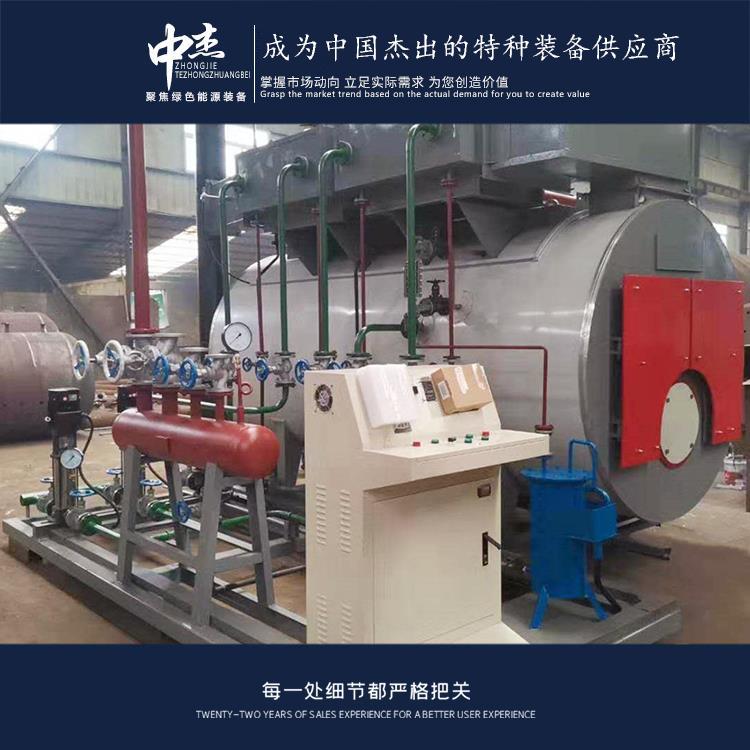

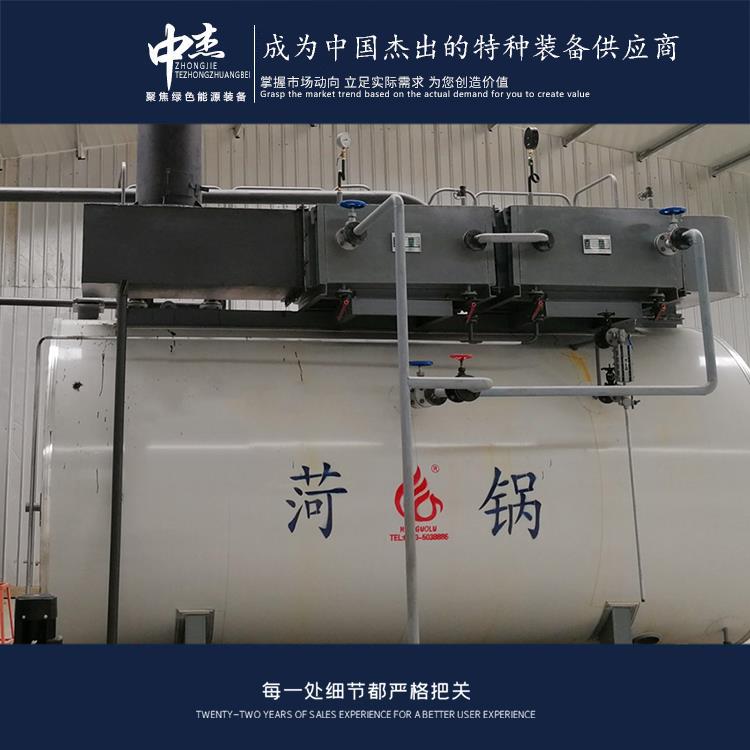
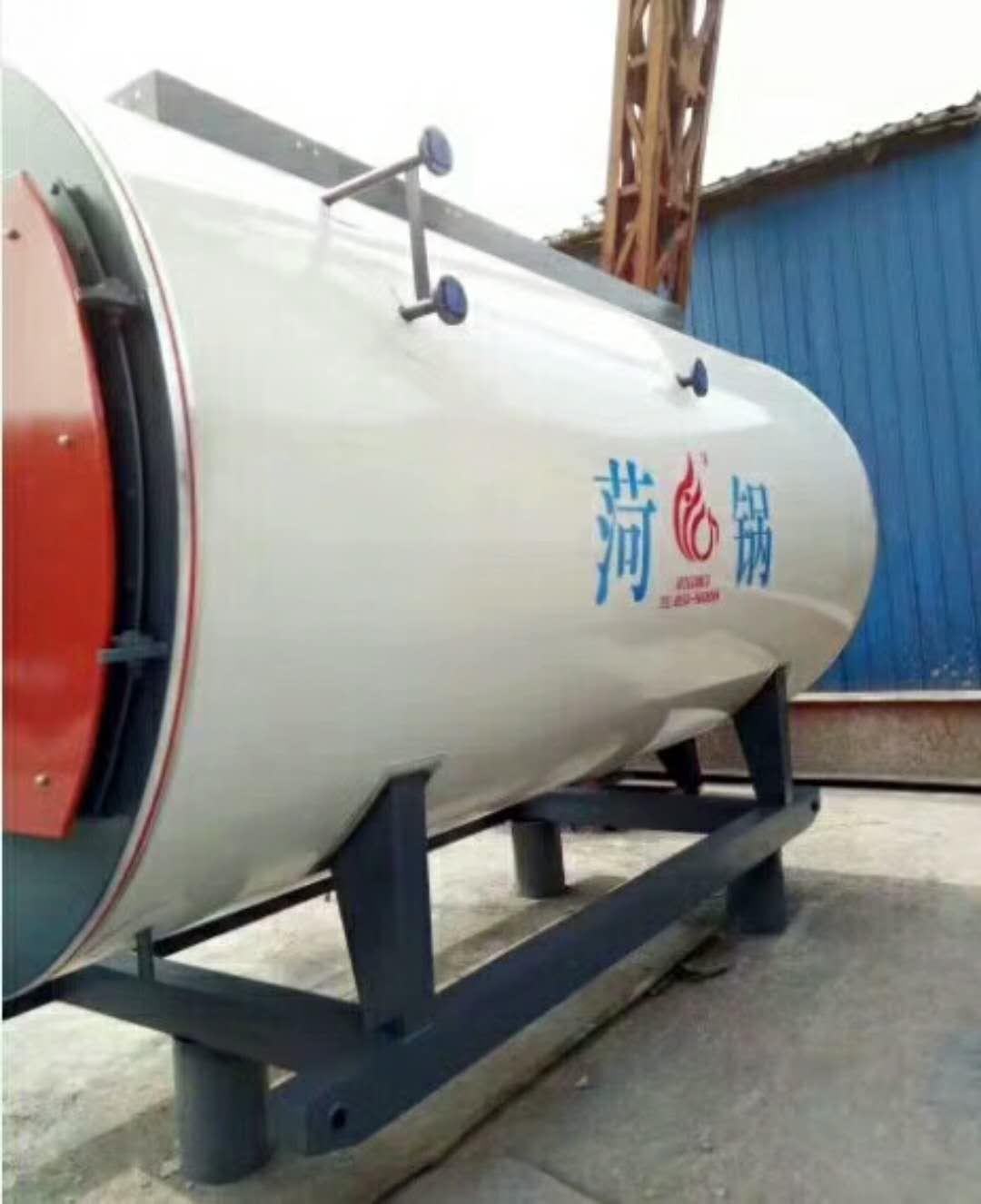


















Shandong Zhongjie Special Equipment Co., Ltd. (formerly Heze Boiler Factory Co., Ltd.) was established in 2001, located at No. 2218 Jinnan Road, Development Zone, Heze City. With a registered capital of 50 million yuan and total assets of 500 million yuan, the company operates seven business centers: boilers, deep-freeze containers, pressure vessels, central air conditioning, engineering installation, international trade, and Internet of Things. It has three factory sites on Jinnan Road, East Changjiang Road, and Bohai Road, covering a total of 200,000 square meters. The main workshop spans 83,000 square meters. It currently employs 710 staff, including 247 engineers and technicians, and 82 intermediate-level technicians. In December 2016, it was recognized as a "High-tech Enterprise" by the Science and Technology Department. In June 2021, it was named a "Specialized and New Enterprise in Shandong Province" by the Ministry of Industry and Information Technology. In June 2022, it was identified as a "Gazelle Enterprise in Shandong Province," and in August 2022, it was recognized as a "Specialized and New Small Giant Enterprise" by the Ministry of Industry and Information Technology.
The purpose of oxygen removal in industrial boiler feed water is to reduce oxygen corrosion and bubble formation within the boiler, ensuring the safety and proper operation of the boiler and piping systems. The main methods of oxygen removal include:
1. Mechanical Oxygen Removal: Removing oxygen from water using physical methods. Common mechanical oxygen removal equipment includes deaerators and degassers. Deaerators eliminate oxygen by atomizing water into a film, taking advantage of the difference in gas solubility. Degassers remove oxygen by atomizing water into fine droplets, also utilizing the difference in gas solubility.
2. Thermal Oxygen Removal: Removing oxygen from water by heating the water body, taking advantage of the property that oxygen solubility decreases with temperature. Common thermal oxygen removal equipment includes deaerator pots and deaerators. Deaerator pots release oxygen from water by heating it to saturation temperature. Deaerators heat the water to lower its oxygen solubility, thereby removing oxygen.
3. Chemical Oxygen Removal: Removing oxygen from water by adding chemicals that react with the oxygen, eliminating it from the water. Common chemical oxygen removal agents include salts and reducers. Chemical oxygen removal is often used in high-pressure boiler systems and can effectively remove oxygen from water.
The choice and method of oxygen removal depend on the specific boiler system and water quality. In practical applications, a combination of oxygen removal methods is often used to achieve the desired effect. The selection and operation of oxygen removal equipment should be assessed and adjusted based on actual conditions to ensure the safety and proper operation of the boiler system.
During the operation of a thermal oil furnace, several important points should be noted:
- Temperature Control: During the operation of the thermal oil furnace, close attention and control of the thermal oil's temperature are required. Ensure the temperature remains within a safe range to avoid decomposition of the oil at high temperatures or condensation and scaling at low temperatures. Regularly inspect and calibrate temperature sensors to ensure the accuracy of temperature measurement.
- Pressure Control: During the operation of the thermal oil furnace, maintaining an appropriate working pressure is essential. Excessive pressure can lead to equipment damage or leaks, while insufficient pressure can result in reduced heat transfer efficiency. Regularly inspect and maintain pressure gauges and safety valves to ensure the accuracy and safety of pressure control.
- Oil Quality and Cleanliness: The quality and cleanliness of the thermal oil are crucial for the normal operation of the furnace. Regularly inspect and replace thermal oil to ensure it meets quality and performance requirements. Regularly clean and maintain heat exchangers, burners, and flues to prevent the accumulation of dust and debris, which can affect heat transfer efficiency.
- Regular Maintenance and Inspection: Regular maintenance and inspections of the thermal oil furnace are necessary to ensure its proper operation and extend its service life. Regularly inspect and clean burners, flues, and heat exchangers; check and replace seals and valves; inspect and calibrate safety devices to ensure the safety and reliability of the equipment.
- Safe Operation: Strict adherence to operational procedures and safety protocols is required during the operation of the thermal oil furnace. Operators must possess relevant skills and knowledge.
Industrial boiler thermal deoxygenation is a commonly used deoxygenation method, characterized by:
- Deoxygenation: Thermal deoxygenation involves heating the boiler feedwater to release dissolved oxygen from the water through heat. As the water temperature increases during the thermal deoxygenation process, the solubility of oxygen decreases, effectively removing oxygen from the water.
- No Chemicals Required: Unlike other deoxygenation methods, thermal deoxygenation does not require chemical agents, thereby avoiding environmental pollution and equipment corrosion caused by chemicals. It also reduces operational costs and complexity.
- Automatic Control: Thermal deoxygenation can be achieved through an automatic control system that adjusts the feedwater temperature and flow based on the boiler's operating status and water quality, ensuring optimal deoxygenation.
- Wide Application Range: Thermal deoxygenation is suitable for various types of industrial boilers, including coal-fired, gas-fired, and oil-fired boilers. Whether for small or large boilers, thermal deoxygenation can be used for deoxygenation treatment.
- Enhancing Boiler Efficiency: Removing dissolved oxygen from the water can reduce corrosion and oxidation reactions within the boiler, extending its service life. Additionally, reducing oxygen presence can improve the boiler's thermal efficiency and reduce energy consumption.
- Note: While thermal deoxygenation effectively removes oxygen from the water, it may not address other water quality issues like hardness and alkalinity, which may require alternative water treatment methods. Therefore, in practical applications, it's essential to consider water quality characteristics and boiler requirements to choose the appropriate deoxygenation method.
The key to maintaining a hot water boiler is regular maintenance and inspection. Here are some common maintenance steps and precautions:
* Clean the burner and flue: Regularly clean the burner and flue to remove accumulated soot and dirt, maintaining combustion and heat exchange efficiency. Use cleaning tools and equipment as per the operating manual.
* Check water level and pressure: Regularly inspect the water level and pressure of the hot water boiler to ensure safe operation. Top up water and adjust pressure to avoid issues caused by low or high water levels.
* Check water quality: Regularly test water quality for hardness, alkalinity, and oxygen content, among other indicators. Take appropriate water treatment measures based on test results, such as descaling and supplementing missing chemicals, to prevent scale and corrosion damage to the boiler.
* Inspect safety devices: Regularly check the safety devices of the hot water boiler, including safety valves, pressure switches, and water level controllers, to ensure proper operation and safe boiler operation.
* Check the electrical system: Regularly inspect the electrical system of the boiler, including power connections, controllers, and sensors, to ensure the normal operation of electrical equipment and avoid electrical faults.
* Regularly drain: Regularly drain waste water and impurities from the boiler to avoid their impact on the boiler. Develop a reasonable drainage plan based on the boiler's usage and water quality.
* Keep records and monitor: Record boiler operating parameters, maintenance records, and fault situations, and regularly monitor and analyze them to identify and address issues promptly.
* Train operators: Ensure operators are adequately trained.
Shandong Zhongjie Special Equipment, welcome customers to our factory for business discussions.
WeChat Official Account

Scan to follow Official Account



















