


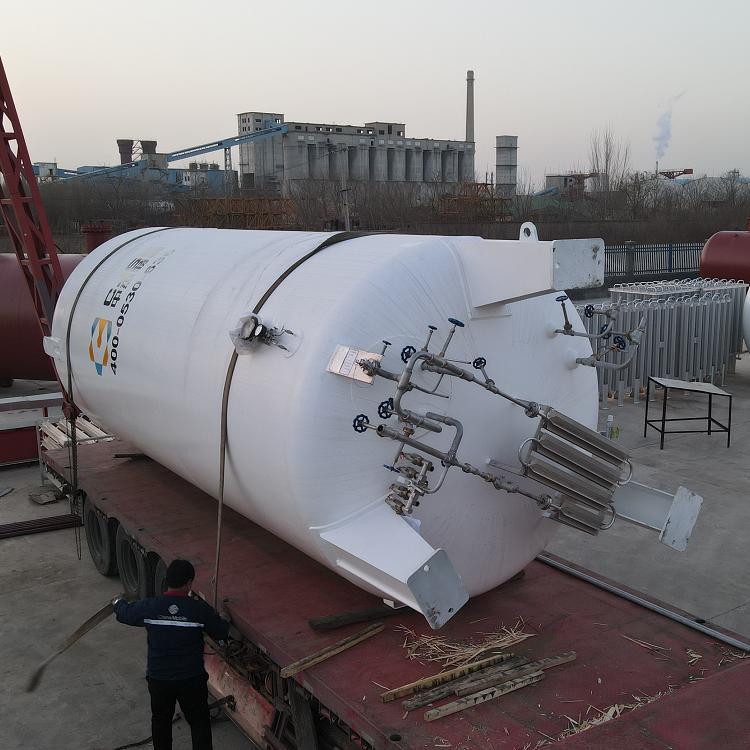

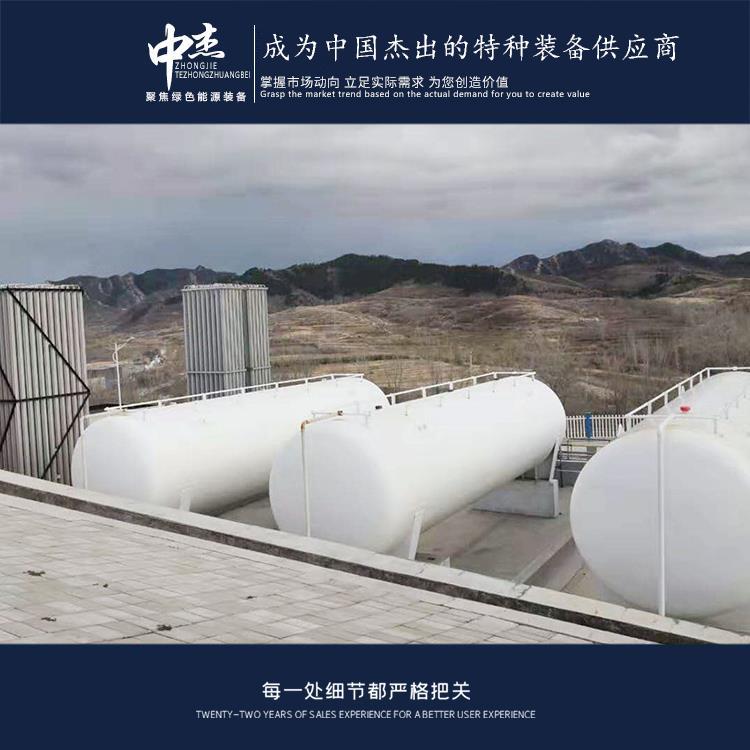
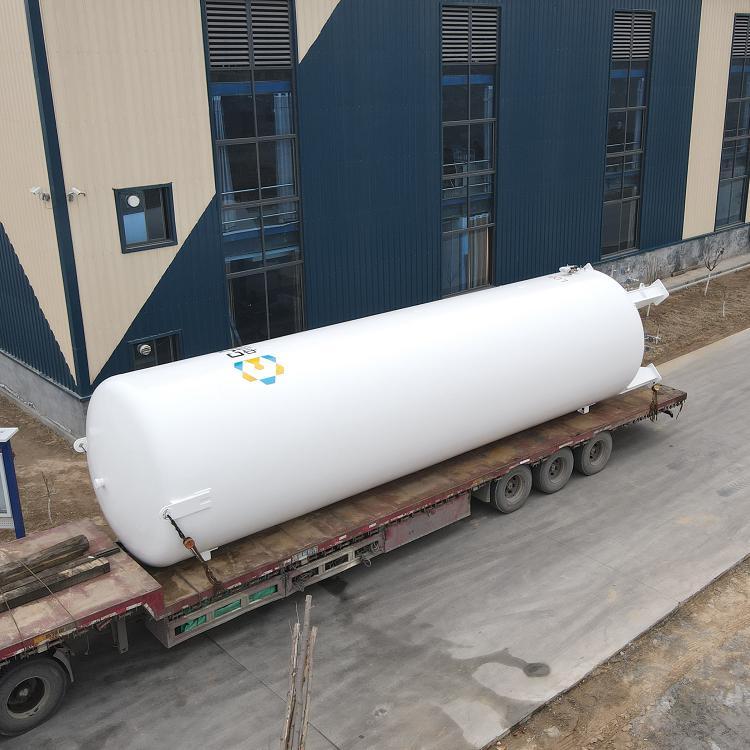


















Shandong Zhongjie Special Equipment (formerly Heze Boiler Factory Co., Ltd.) holds an A-grade boiler manufacturing license, an A2-grade pressure vessel manufacturing license, an A2-grade pressure vessel design license, B-grade boiler installation, and GB2/Class, GC2/Class pressure pipeline installation licenses, as well as equipment and machinery installation contracting qualifications. It is a member of the China Boiler and Water Treatment Association, the China Chemical Equipment Association, and a council member of the Shandong Equipment Manufacturing Association. The company has also passed the ISO9001 Quality Management System, ISO14001 Environmental Management System, OHSAS18001 Occupational Health and Safety Management System certifications, and the American ASME/U2 certification.
When using CO2 storage tanks, pay attention to the following aspects:
Safety Operation: Adhere to relevant safety operating procedures and standards, ensuring operators have the necessary safety knowledge and skills. When using the tank, be mindful of safety risks such as leaks, explosions, and fires.
Tank Pressure Control: Monitor and control the tank's pressure to ensure it stays within a safe range. Avoid exceeding the tank's rated pressure to prevent rupture or leakage.
Level Monitoring: Regularly monitor the liquid level inside the tank to ensure an adequate supply of CO2. Avoid overfilling or underfilling to maintain an appropriate level.
Static Control Measures: Implement static control measures to prevent static buildup and discharge. Use static control equipment and tools to ensure safety during operations.
Tank Maintenance: Regularly inspect and maintain the tank, including its appearance, valves, and connections. Ensure the tank remains intact to prevent leaks and damage.
Waste Gas Treatment: Handle waste gases produced by CO2 storage tanks to avoid environmental pollution. Adopt appropriate waste gas treatment measures, such as collection and processing.
Storage Records: Document the tank's usage, including filling dates, quantities, and inspection records. Regularly conduct tank inspections and maintenance, and retain relevant records.
Training and Awareness: Train operators to enhance their awareness and ability to safely operate CO2 storage tanks. Conduct regular safety training and drills to respond to emergencies.
Note: The above are common precautions, and specific considerations may vary depending on tank type and application. When using CO2 storage tanks, operate according to relevant specifications and standards, and consult with experts to ensure safety and effectiveness.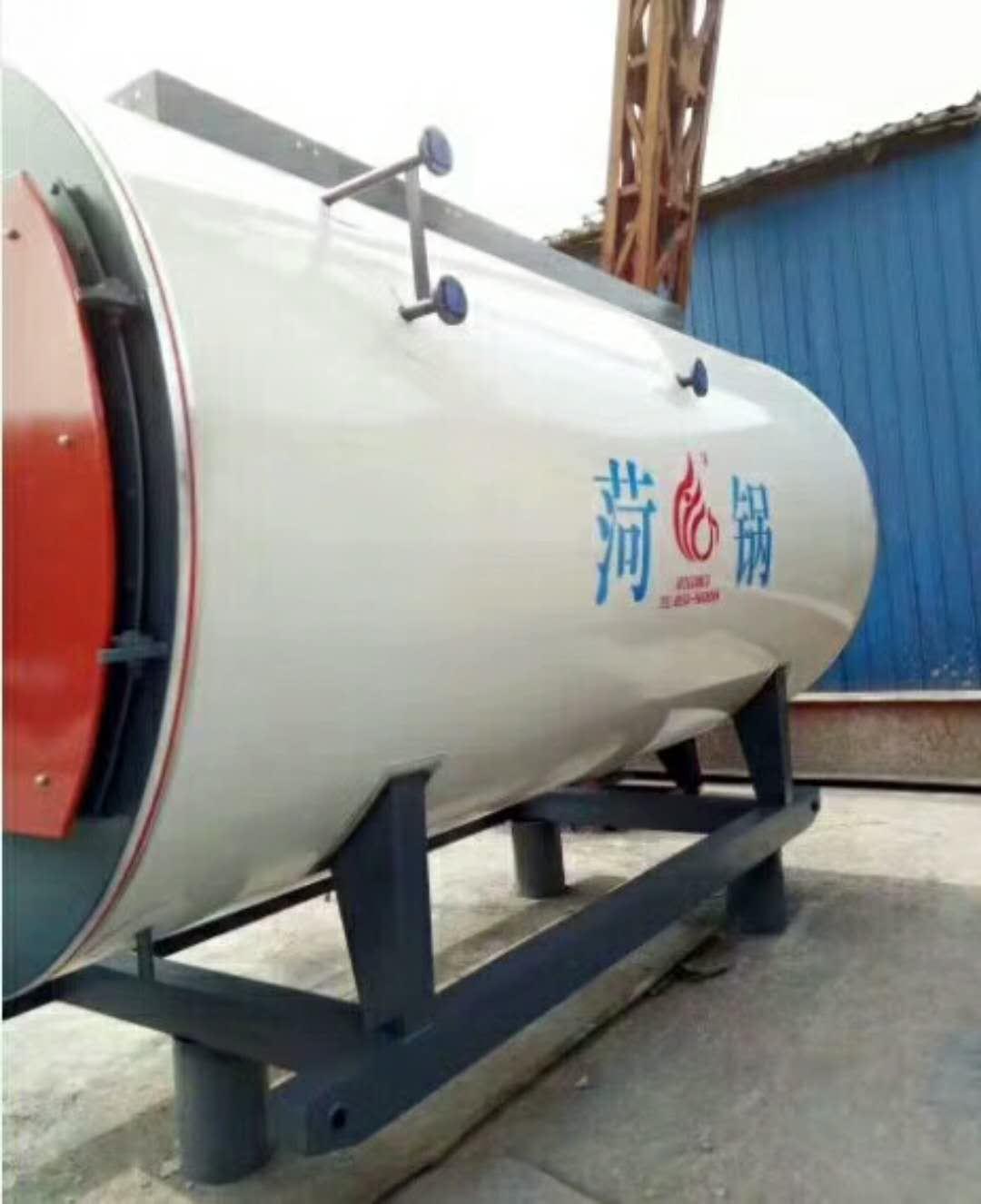
Carbon dioxide storage tanks possess the following characteristics:
- High-pressure Vessel: Carbon dioxide storage tanks are typically designed as high-pressure vessels, capable of withstanding high pressure. This is because carbon dioxide requires high pressure at room temperature to maintain a liquid state.
- High Oxidizing: Carbon dioxide has a high oxidizing nature, which supports combustion. Therefore, when using and storing carbon dioxide, precautions must be taken to prevent contact to avoid fire and explosion risks.
- Low-Temperature Storage: Carbon dioxide is in a gaseous state at room temperature but can be compressed into a liquid at lower temperatures. Hence, carbon dioxide storage tanks usually need to have good insulation properties to maintain the低温 state of the stored liquid carbon dioxide.
- High Density: Liquid carbon dioxide has a high density, allowing for the storage of large amounts of carbon dioxide in a relatively small volume. This makes carbon dioxide storage tanks useful in scenarios requiring substantial carbon dioxide supply.
- Safety Valves and Pressure Control: To ensure the internal pressure of the tank remains within safe limits, carbon dioxide storage tanks are usually equipped with safety valves and pressure control devices. These devices monitor and control the tank's internal pressure to prevent excessive pressure from causing the tank to burst.
- Corrosiveness: Carbon dioxide has some degree of corrosiveness, especially in high humidity environments. Therefore, the materials and corrosion prevention measures of the tank need to consider the corrosiveness of carbon dioxide to ensure the tank's durability and safety.
These characteristics make carbon dioxide storage tanks widely applicable in many industries, such as the food and beverage industry, fire suppression, gas industry, etc. When using carbon dioxide storage tanks, it is necessary to follow relevant safety operating procedures and standards to ensure operational safety.
Proper installation of a CO2 storage tank requires the following steps:
Site Preparation: Choose a suitable location for installation, ensuring the area is level, stable, and meets safety distance requirements. Clear the site of any obstructions and fire hazards.
Foundation Construction: Construct a foundation based on the tank's size and weight. The foundation must be sufficiently strong and stable to support the tank's weight and pressure.
Tank Installation: Place the tank on the foundation, ensuring there is appropriate padding and securing devices between the tank and foundation. Connect and secure the tank according to its design specifications.
Piping Connection: Connect the tank to the piping system as needed. Ensure the connections are sealed properly to prevent leaks.
Safety Equipment Installation: Install necessary safety equipment for the tank, such as safety valves, pressure sensors, and temperature sensors. Ensure these devices are correctly installed and connected.
System Testing: Conduct system testing after installation, including pressure and leak tests, to ensure the proper operation and safety of the tank and piping system.
Labeling and Warning Signs: Set up necessary labels and warning signs on the tank and piping system, including tank capacity and pressure information, to remind operators to maintain safety.
Tank Maintenance: Perform regular maintenance and upkeep on the tank after installation, including cleaning, lubrication, and inspections, to ensure smooth operation and extend the tank's lifespan.
Installation of CO2 storage tanks should be carried out by qualified installers, following relevant safety operation procedures and standards. Seek advice and guidance from knowledgeable consultants.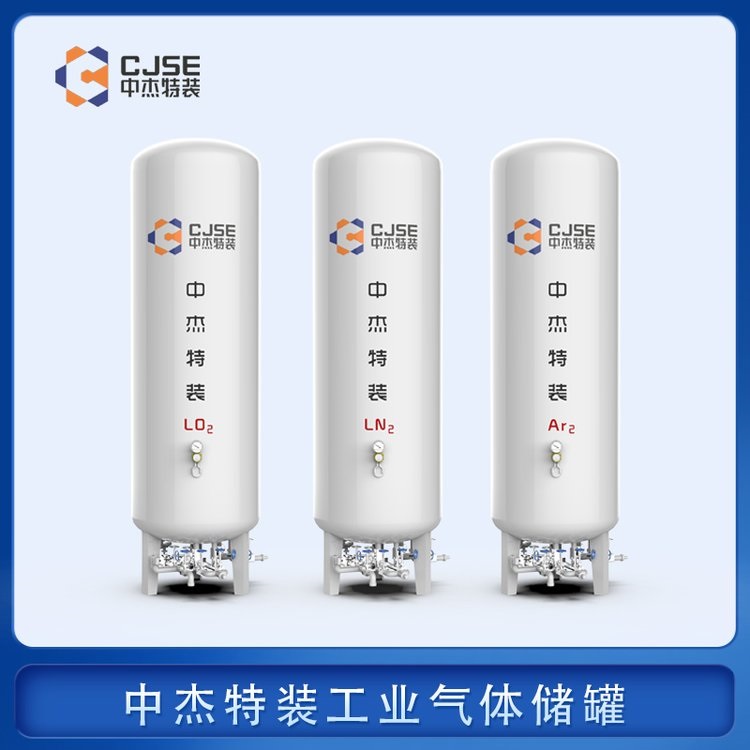
Leakage defects in CO2 storage tanks may be caused by the following reasons: Material Corrosion: CO2 has some corrosive properties, and long-term contact can lead to corrosion of the tank material. Corrosion can damage the surface protective layer of the tank, causing it to lose its sealing property and resulting in leaks. Welding Defects: There may be welding defects at the tank's welded joints, such as crack in welds and pores. These defects can reduce the strength of the welding area, leading to leaks. Design Defects: Inadequate design or defects in the tank's design may also cause leaks. For example, improperly designed interfaces, unreasonable structural design, etc., can lead to leakage issues in the tank. Overpressure: If the internal pressure of the tank exceeds its bearing capacity, it may cause deformation or破裂 of the tank, leading to leaks. Temperature Fluctuations: During temperature changes, due to thermal expansion and contraction effects, CO2 storage tanks may deform or develop stress concentration, leading to leaks. Incorrect Operation: Incorrect operation and maintenance may also cause leaks in the tank. For example, over-tightening valves, improper maintenance measures, etc., can lead to a decrease in the tank's sealing performance. External Damage: External forces such as impacts, scratches, or corrosion on the tank may cause surface damage or corrosion, leading to leaks. To avoid leakage issues in CO2 storage tanks, choose quality materials, reasonable design, and manufacturing processes, and conduct regular inspections and maintenance. At the same time, operators should receive training and follow operational procedures to ensure safe operation of the tank.
Shandong Zhongjie Special Equipment, welcome customers to our factory for business discussions.
WeChat Official Account

Scan to follow Official Account



















