





















Shandong Zhongjie Special Equipment's main products include: fuel (gas) boilers, organic heat carrier boilers, biomass boilers, waste heat boilers, and other boiler products; vacuum insulation deep-freeze pressure vessels such as LNG tanks, oxygen/nitrogen/argon tanks, and CO2 tanks; pressure vessel products such as denitrification engineering equipment, heat storage and energy storage equipment, and complete chemical equipment; central air conditioning and ventilation equipment such as ground (water) source heat pumps, air source units, water-cooled screw units, and air-cooled modular units. Planned products include large-scale energy centers, LNG transport vehicles, LNG tank containers, and other green energy equipment.
To prevent fouling issues in biomass boilers, the following measures can be taken:
Choose the right fuel: Opt for biomass fuel with good quality and moderate humidity, avoiding fuel that is overly wet or contains excessive impurities, as this helps reduce the risk of carbon buildup.
Control fuel supply rate: Regulate the rate of fuel supply to prevent it from being too fast or too slow, ensuring thorough combustion and reducing the likelihood of coking.
Maintain appropriate combustion temperature: Keep the combustion temperature at an appropriate level to avoid both too low and too high temperatures. Too low temperatures can lead to carbon buildup, while too high temperatures may cause incomplete combustion.
Control Air Supply: Properly regulate the air supply volume to ensure complete fuel combustion, avoiding excessive air entering the combustion chamber to reduce the risk of coking.
Regular cleaning and maintenance: Regularly clean and remove ash and carbon deposits from the combustion chamber to maintain the boiler's cleanliness and prevent coking issues.
Install fouling monitoring devices: Install fouling monitoring devices to monitor the fouling condition inside the combustion chamber in real-time, and take timely measures to address it to prevent further progression of fouling issues.
Above are some common measures to prevent biomass boiler slagging. Specific preventive measures should be adjusted and optimized according to the specific conditions and operational requirements of the boiler.
There are several common types of biomass energy-saving steam boilers:
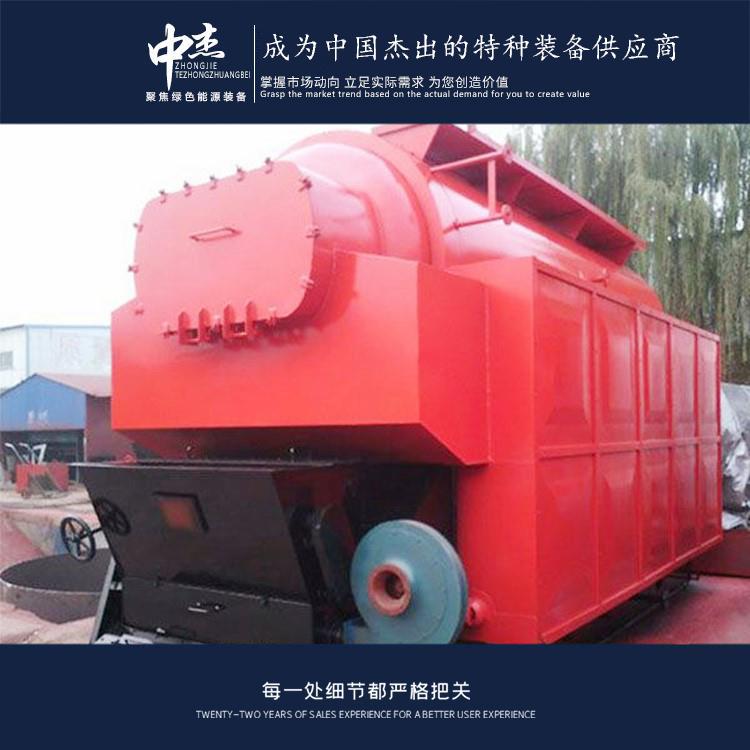
Biomass Chain Grate Boiler: The biomass chain grate boiler utilizes a chain feeding system to deliver biomass fuel into the furnace for combustion. The chain feeding system ensures continuous feeding, making it suitable for large-scale biomass steam boilers.
Biomass Circulating Fluidized Bed Boilers: These boilers utilize circulating fluidized bed combustion technology, blending biomass fuel with a bed material (such as sand) to burn at high temperatures. They offer high combustion efficiency and strong fuel adaptability.
Biomass Pellet Boilers: Biomass pellet boilers are specifically designed for burning biomass pellet fuel. They feature high combustion efficiency and stability, making them suitable for small to medium-sized biomass steam boilers.
Biogasification Boilers: Biogasification boilers utilize gasification technology to convert biomass fuel into combustible gases, which are then burned to produce steam. These boilers offer benefits such as utilizing biomass energy and reducing pollution emissions.
Biomass Hot Air Furnace: A biomass hot air furnace is a device that uses biomass fuel to generate high-temperature hot air, suitable for drying and heating processes in industrial production. It features energy-saving and environmental protection.
These types of biomass energy-saving steam boilers have their own characteristics and applicability in different application scenarios, and the appropriate type can be selected according to actual needs.
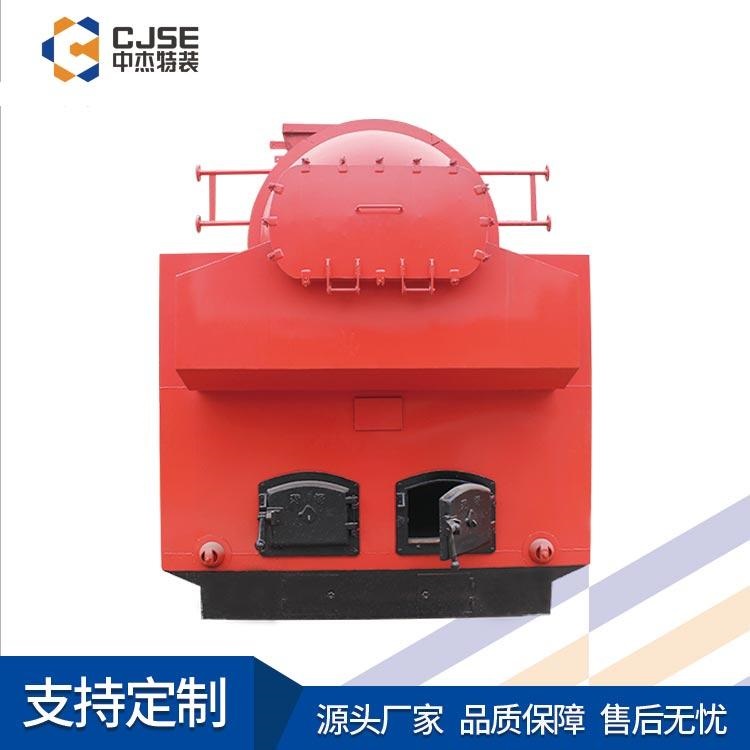
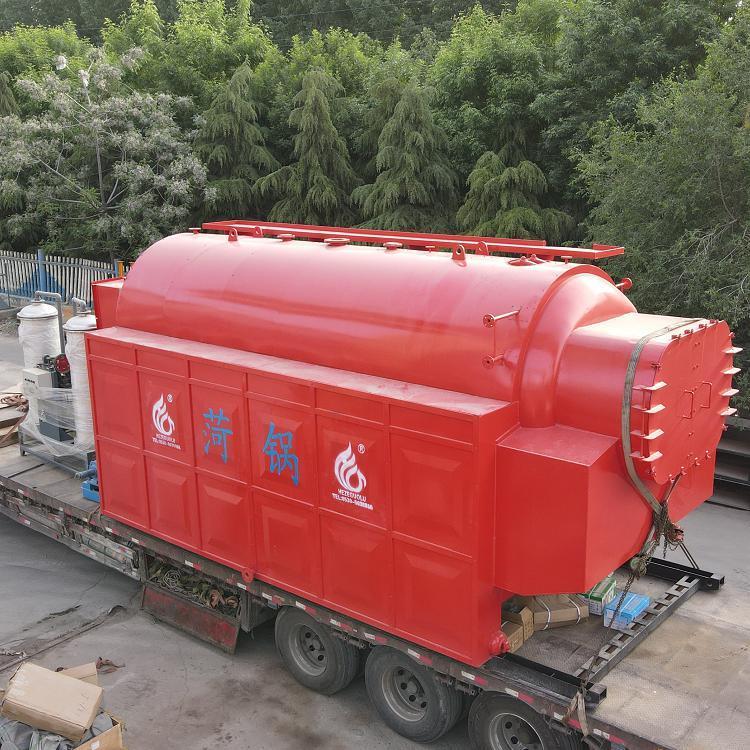
The DZH steam boiler is a manually-fired solid fuel boiler with the following technical features:
Burning Method: The DZH steam boiler utilizes a manual combustion method, where the operator manually feeds fuel and adjusts the combustion process. This method is relatively simple and flexible, suitable for small to medium-sized applications.
Multiple Fuel Adaptability: The DZH steam boiler boasts strong fuel adaptability, capable of burning solid fuels such as wood chips and straw. This feature allows the DZH steam boiler to be widely used in various regions and under different fuel resource conditions.
Furnace Structure: The DZH steam boiler features a double-chamber furnace structure, with a partition between the combustion chambers. This design enhances the temperature and combustion efficiency of the chambers, thereby improving overall thermal efficiency.
Flue Gas Channel: The DZH steam boiler features a spiral flue pipe design in its flue gas channel, which increases the contact area between flue gas and water, enhancing heat exchange efficiency. Additionally, a flue gas reversal chamber is incorporated within the flue gas channel, causing the flue gas to circulate multiple times within the furnace, thereby increasing the residence time of the flue gas and improving combustion efficiency.
Safety Protection: The DZH steam boiler is equipped with various safety devices such as pressure controllers, water level controllers, and overheat protectors to ensure safe operation.
Compact Structure: The DZH steam boiler features a compact structure with minimal floor space, making it suitable for installation in limited areas.
In summary, the DZH steam boiler boasts strong fuel adaptability, flexible operation, and high thermal efficiency, making it suitable for small to medium-sized solid fuel steam demand applications.
Biomass boilers possess the following characteristics:
Fuel versatile: Biomass boilers can utilize various biomass fuels, such as wood chips, straw, etc., demonstrating strong adaptability to different fuel types.
High combustion efficiency: The biomass boiler employs advanced combustion technology and equipment, enabling a combustion process that enhances efficiency.
Eco-friendly and Low-Carbon: The carbon dioxide produced during biomass combustion can be absorbed by plants, creating a cycle that reduces the atmospheric burden. Moreover, emissions and pollutants from biomass combustion are relatively low, resulting in minimal environmental impact.
Heat Recovery Utilization: Biomass boilers transfer the heat energy generated by combustion to water or other working substances through heat exchangers, achieving heat recovery and utilization, and improving energy efficiency.
Versatility: Biomass boilers are not only used for heating but also for hot water supply and industrial heating in various applications.
Biomass boiler efficiency is influenced by various factors, including fuel quality, the design and adjustment of combustion equipment, and the effectiveness of flue gas purification systems. Generally, biomass boiler efficiency can reach over 70%, with some models achieving over 80%. Efficiency improvements can be achieved through optimizing the combustion process, enhancing the heat exchange efficiency of heat exchangers, and reducing flue gas emissions losses. Additionally, proper operation and maintenance play a crucial role in enhancing efficiency.
Shandong Zhongjie Special Equipment, welcome customers to visit our factory for business talks.
WeChat Official Account

Scan to follow Official Account



















