





















Shandong Zhongjie Special Equipment (formerly Heze Boiler Factory Co., Ltd.) was established in 2001, located at No. 2218 Jinnan Road, Economic and Technological Development Zone, Heze City. With a registered capital of 50 million yuan and total assets of 500 million yuan, the company has seven business centers: boilers, deep-freeze containers, pressure vessels, central air conditioning, engineering installation, international trade, and Internet of Things. It operates three factory sites at Jinnan Road, East Changjiang Road, and Bohai Road, covering a total area of 200,000 square meters, with the main workshop spanning 83,000 square meters. The company currently employs 710 people, including 247 engineers and technicians, and 82 intermediate-level technical personnel. In December 2016, it was recognized as a "High-tech Enterprise" by the Science and Technology Department. In June 2021, it was named a "Specialized and New Enterprise in Shandong Province" by the Ministry of Industry and Information Technology. In June 2022, it was identified as a "Deer Enterprise in Shandong Province" and in August 2022, as a "Specialized and New Small Giant Enterprise" by the Ministry of Industry and Information Technology.
Developing biomass boiler heating is an effective measure to combat air pollution. Here are some relevant suggestions:
Replace high-pollution energy sources: Replace traditional coal boilers with biomass boilers to reduce emissions of air pollutants from coal combustion. The combustion of biomass fuel produces relatively fewer pollutants, resulting in less pollution to the atmosphere.
Enhance combustion efficiency: By optimizing the combustion process of biomass boilers, we enhance combustion efficiency, reduce fuel waste, and minimize pollutant emissions. Adjust combustion parameters, such as combustion temperature and duration, to achieve a more complete combustion.
Regulate Pollutant Emissions: Utilize pollutant control technologies such as flue gas desulfurization, denitrification, and particulate matter capture to reduce emissions. Install flue gas purification equipment to effectively remove pollutants like nitrogen oxides and particulates generated during the combustion process.
Enhanced Monitoring and Management: Establish and improve a monitoring system to oversee and evaluate the operation of biomass boilers and their pollutant emissions. Strengthen management of biomass boilers to ensure regular maintenance and equipment care.
Biomass fuel boilers feature the following product characteristics:
Fuel Diversity: Biomass boiler can accommodate various biomass fuels such as sawdust, straw, rice husk, etc. This diversity makes biomass boiler more flexible and sustainable in energy utilization.
Eco-friendly Low Emission: Biomass fuel boilers burn biomass fuel, resulting in relatively low emissions during combustion, such as particulates and nitrogen oxides. Consequently, biomass fuel boilers have lower carbon emissions and environmental pollution.
Energy-saving: Biomass fuel boilers utilize advanced combustion technology and heat recovery techniques, enabling optimal combustion and energy utilization. High combustion efficiency and thermal efficiency ensure maximum energy extraction from biomass fuel.
Automated Control: The biomass fuel boiler is equipped with an automated control system that can accurately control and adjust parameters such as temperature, pressure, and fuel supply. The control system features safety protection functions to ensure the safe operation of the boiler.
High reliability and stability: The materials and processes used in biomass fuel boilers offer excellent durability and stability. Rigorous quality control and testing ensure the boiler's high reliability and long-term stable operation.
Flexible Application: Biomass fuel boilers are widely applicable in industrial, commercial, and residential sectors, such as heating, heating systems, and steam generators. They offer flexible installation methods and capacity options to meet diverse customer needs.
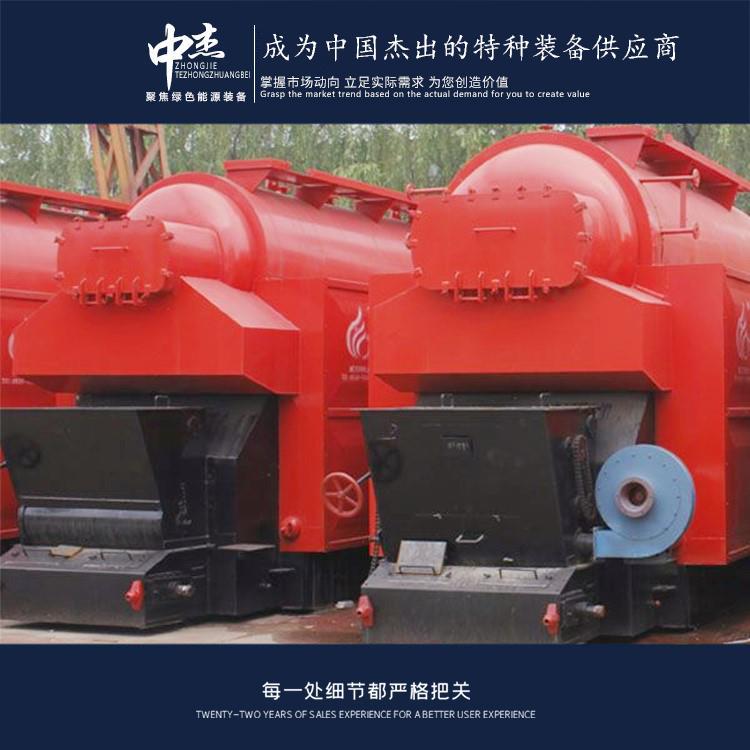
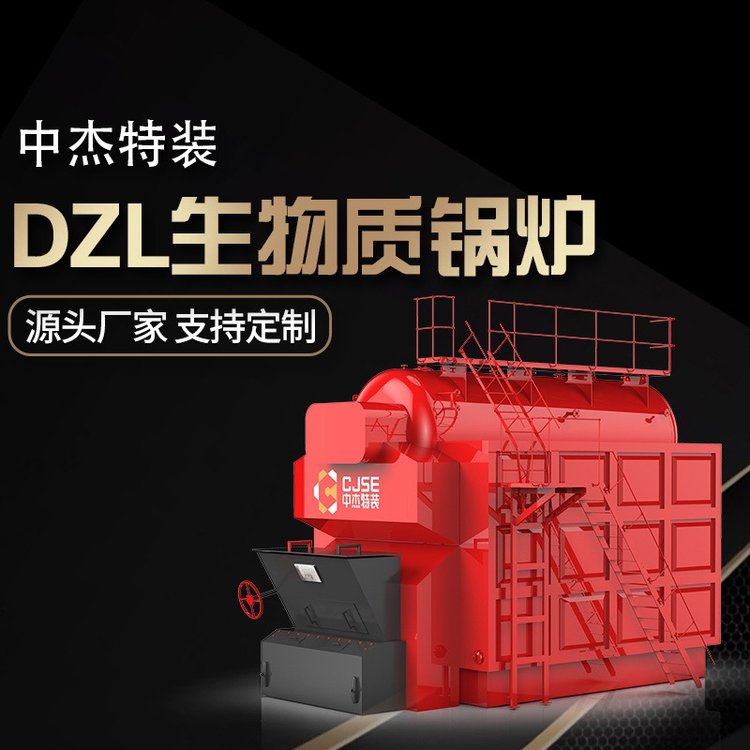
The SZL biomass chain grate steam boiler is a specific type of biomass boiler that utilizes chain grate technology to burn biomass fuel and produce steam. Below are some features and characteristics of the SZL biomass chain grate steam boiler:
Briquette Design: The SZL biomass chain grate steam boiler utilizes a chain grate design, where fuel is progressively pushed through the grate layers for a continuous combustion process. The chain grate offers ample combustion space and extended burning time, enabling thorough combustion of biomass fuel.
Multi-fuel Adaptability: The SZL biomass chain grate steam boiler is suitable for various biomass fuels such as wood chips, straw, rice husks, etc. It boasts strong fuel adaptability and can choose the appropriate fuel for combustion based on actual conditions.
Heat Exchanger: The heat exchanger equipped with the SZL biomass chain steam boiler optimally utilizes the heat energy in flue gas to enhance thermal efficiency. The design and material selection of the heat exchanger are optimized for effective heat conduction and exchange.
The control system: The SZL biomass chain-type steam boiler is equipped with a control system that can accurately control and adjust parameters such as temperature, pressure, and fuel supply. The control system is equipped with safety protection features, including overheat protection and low water level protection, ensuring the safe operation of the boiler.
Environmental-friendly Low Emission: SZL Biomass Chain Grate Steam Boiler utilizes
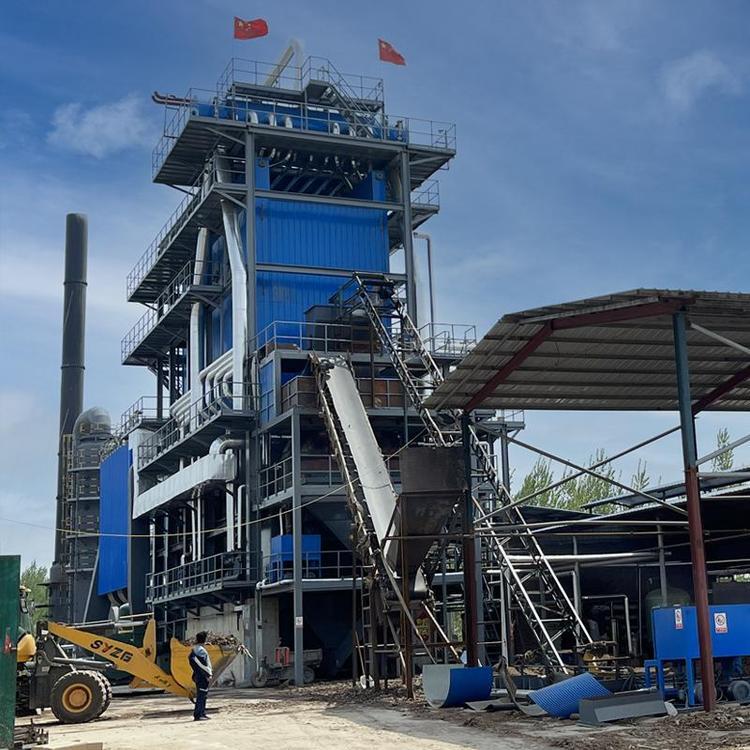
When planning and arranging the bag dust collector for biomass boiler, the following aspects should be considered:
Baghouse Filter Location: The baghouse filter should be situated near the biomass boiler flue gas outlet to effectively capture particulates in the flue gas. Additionally, the location of the baghouse filter should be convenient for operation and maintenance, ensuring ease in cleaning and replacing the filter bags.
Arrangement of flue gas进出口: The inlet and outlet of the bag dust collector should be connected to the flue gas管道 of the biomass boiler to ensure smooth entry and exit of the flue gas from the collector. The arrangement should consider the uniformity of flue gas flow and minimize resistance to enhance the dust removal efficiency and operational efficiency of the system.
Baghouse dust collector dimensions and capacity: Determine the dimensions and capacity of the baghouse based on the biomass boiler's flue gas flow rate and particulate load. Ensure the baghouse meets the flue gas treatment requirements and achieves the expected dust removal effect.
Bag arrangement and selection: Bags are the core components of bag dust collectors. Appropriate bag materials and specifications should be chosen based on the characteristics of flue gas and particulate matter. The arrangement of bags should be reasonable to ensure that flue gas can pass through the bags evenly, capturing particles to the maximum extent.
Dust removal system arrangement: Bag dust collectors require regular cleaning to maintain the cleanliness of the filter bags and dust removal efficiency. The arrangement of the dust removal system should be user-friendly and easy to maintain, ensuring the effectiveness and efficiency of the cleaning process.
Arrangement of emission pipes: After treatment by the bag dust collector, the flue gas must be discharged into the atmosphere. The arrangement of the emission pipes should ensure the safety and compliance of the flue gas discharge.
When planning and arranging biomass boiler bag dust collectors, it is recommended to collaborate with environmental engineers or equipment suppliers, design and construct based on specific conditions, to ensure the operation and environmental protection effect of the dust removal system.
Our company attaches great importance to technological innovation and R&D design. We have one municipal-level enterprise technology center in Heze City, equipped with testing facilities for non-destructive testing, physical and chemical testing, welding testing, hydrostatic testing, etc. We have over 600 various instruments and equipment, including CNC machine tools, X-ray flaw detectors, digital ultrasonic flaw detectors, mechanical property testing machines, chemical analyzers, spectrometers, tensile testing machines, plasma welding machines, and more. The key products and technologies we have developed, such as temperature and pressure vessel welding, biomass boiler emission reduction, and waste heat utilization, have successively been shortlisted for multiple Shandong Provincial Department of Industry and Information Technology science and technology innovation projects, Shandong Provincial key projects, and Heze City innovation and excellence projects. We have accumulated a total of 27 authorized utility models, 16 authorized inventions, participated in drafting 2 standards, 2 industry standards, and registered 15 trademarks. The technical team of our company, in collaboration with Professor Yajiang Li of Shandong University, has developed deep cryogenic container processing technology using the international plasma arc + filler wire tungsten inert gas arc welding (PAW-GTAW) technology. The provincial-level scientific and technological achievement identification has confirmed that the technology level in the field of deep cryogenic container manufacturing has reached an international standard. Choose Zhongjie Special Equipment, and let's create brilliance together!
WeChat Official Account

Scan to follow Official Account



















