


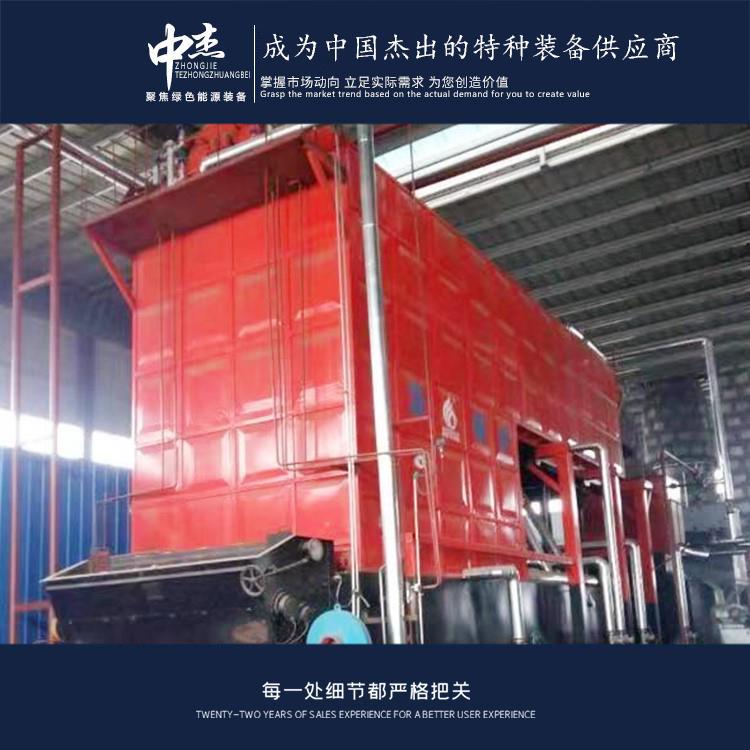

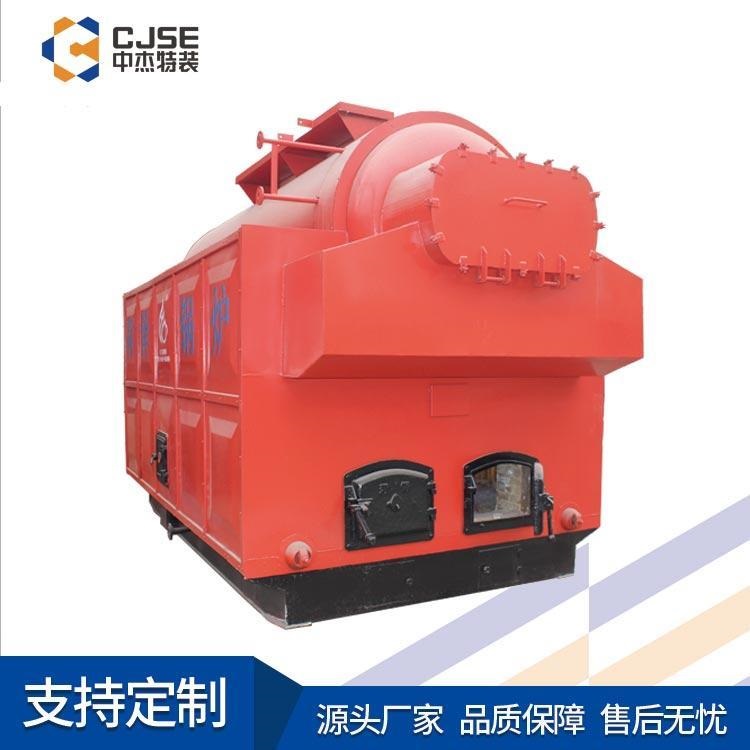
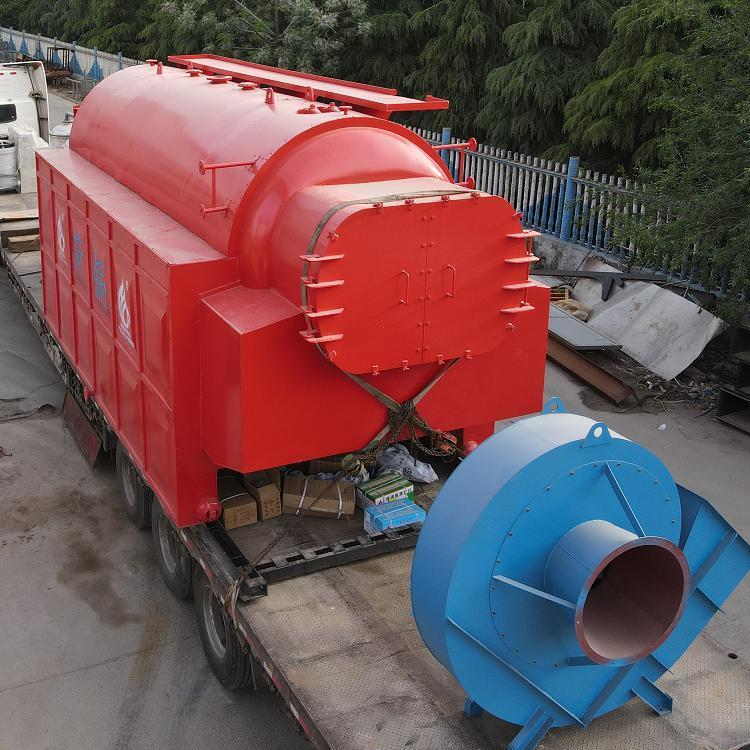


















Shandong Zhongjie Special Equipment's main products include: fuel (gas) boilers, organic heat carrier boilers, biomass boilers, waste heat recovery boilers, and other boiler products; vacuum insulation cryogenic pressure vessels such as LNG tanks, oxygen/nitrogen/argon tanks, and CO2 tanks; pressure vessel products such as denitrification engineering equipment, heat storage and energy storage equipment, and complete chemical equipment sets; central air conditioning and ventilation equipment like ground (water) source heat pumps, air source units, water-cooled screw units, and air-cooled modular units. Planned products include large-scale thermal energy centers, LNG transport vehicles, and LNG tank containers, among other green energy equipment.
Dust removal technology for coal-fired boilers is designed to reduce particulate emissions during the combustion process, protecting the environment and improving air quality. The following are several common dust removal technologies for coal-fired boilers:
Mechanical Dust Collectors: Mechanical dust collectors are a common type of dust removal equipment, which separates particulate matter from flue gas through physical principles. Common mechanical dust collectors include gravity dust collectors, inertial dust collectors, bag dust collectors, and so on. The working principle of mechanical dust collectors is to use the inertia, gravity, or filtering effect of particulate matter to separate it from the flue gas.
Electrostatic Precipitator: An electrostatic precipitator utilizes the force of an electric field to charge particles in flue gas, then collects the charged particles by the action of the electric field. There are two types of electrostatic precipitators: dry and wet. Dry electrostatic precipitators are suitable for high-temperature flue gas, while wet electrostatic precipitators are suitable for flue gas with high humidity.
Wet Dust Collectors: Wet dust collectors humidify particles in flue gas using spray water or other liquids, then separate the humidified particles from the flue gas through gravity or inertia. Suitable for handling flue gas with high humidity and sticky particles.
Electrostatic Precipitator: An electrostatic precipitator utilizes the force of an electric field to charge particles in flue gas, then collects the charged particles through the action of the electric field. Suitable for the treatment of high-temperature flue gas and fine particles.
Integrated dedusting technology: This integrated dedusting technology combines the two processes of desulfurization and dedusting, achieving integrated treatment by sharing equipment and jointly processing flue gas. The technology reduces the footprint of equipment, lowers investment and operational costs.
Above are common coal-fired boiler dust removal technologies. Different dust removal technologies are suitable for different flue gas and particulate matter characteristics. In practical applications, a suitable combination of dust removal technologies can be selected based on specific circumstances to achieve the goal of reducing particulate matter emissions.
During operation, biomass thermal oil heaters are prone to scaling due to the high temperature of the thermal oil and long-term use. To prevent scaling, manufacturers typically take the following measures:
Select the appropriate thermal oil: Manufacturers choose thermal oils with good thermal stability and antioxidant properties to minimize the formation of scale. The selection of thermal oil should be reasonably matched based on actual operating conditions and requirements.
Regulate oil temperature and flow rate: Manufacturers will control the temperature and flow rate of the heat transfer oil according to its characteristics and operational requirements. Excessive temperature and rapid flow can easily lead to the formation of scale, thus requiring proper adjustment.
Regular Cleaning and Maintenance: Manufacturers recommend users to regularly clean and maintain biomass thermal oil heaters to remove scale buildup. During the cleaning process, appropriate cleaning agents and equipment can be used to remove the scale, restoring the normal operation of the heater.
Install filters and descaling devices: Manufacturers may install filters and descaling devices in biomass thermal oil boilers to filter out impurities and scale from the thermal oil. These devices effectively prevent scale formation and extend the service life of the thermal oil boiler.
Regular Monitoring and Analysis: Manufacturers may recommend that users regularly monitor and analyze the properties and quality of the thermal oil, to promptly identify any anomalies and take appropriate actions.
The emission characteristics of biomass fuel boiler flue gases mainly include the following aspects:
Particulate Emissions: During the combustion process of biomass fuel boilers, particulates are produced, including visible dust and fine particles. The amount of particulate emissions is related to fuel characteristics, combustion temperature, and combustion equipment, among other factors. Generally, the particulate emissions from biomass fuel boilers are lower than those from coal boilers, but they still require treatment through dust removal equipment.
(SO2) Emissions: The content of SO2 in biomass fuel is low, so the SO2 emissions from biomass fuel boilers are generally low. However, in some cases, such as using waste as fuel, the SO2 emissions may increase. Measures such as combustion control and desulfurization devices can be adopted to control SO2 emissions.
NOx emissions: The NOx emissions of biomass fuel boilers are related to fuel characteristics, combustion temperature, and combustion equipment factors. Biomass fuel has a higher nitrogen content, which generates a certain amount of NOx during combustion. To control NOx emissions, measures such as low-NOx combustion technology, combustion control, and denitrification devices can be adopted.
Carbon Monoxide (CO) Emissions: The CO emissions from biomass fuel boilers are typically low due to the relatively complete combustion process of biomass fuel. However, in cases of incomplete combustion or unstable burning, the CO emissions may increase. To control CO emissions, it is essential to ensure a full and stable combustion process.
Volatile Organic Compounds (VOCs) Emissions: The VOCs emissions from biomass fuel boilers are related to the fuel characteristics and combustion conditions. Some biomass fuels contain volatile organic compounds.
When selecting an appropriate atmospheric pressure hot water boiler, consider the following factors:
Heating Area: First, it is necessary to determine the size of the area to be heated, which will decide the heat power of the required hot water boiler. Generally speaking, the larger the heating area, the greater the required heat power.
Heat Load Calculation: Conduct a heat load calculation, taking into account the insulation performance of the heating area, indoor temperature requirements, and external climatic conditions, to determine the required heat power. You may request a heat load calculation to ensure the selected hot water boiler meets the heating needs.
Fuel Type: Atmospheric pressure hot water boilers can use various fuels, such as gas, oil, etc. Choose the appropriate fuel type based on local fuel supply and cost considerations.
Boiler Efficiency: Focus on the energy efficiency of hot water boilers and choose products with higher efficiency. High-efficiency hot water boilers can provide superior heating performance while reducing energy consumption and operational costs.
Boilers and Quality: Choose hot water boilers produced by reputable manufacturers to ensure reliable product quality and comprehensive after-sales service.
Safety and Environmental Protection: Focus on the safety and environmental performance of hot water boilers, choosing products with safety protection devices and low emissions.
Budget Considerations: Choose a suitable hot water boiler based on budget constraints. In addition to purchase costs, consider the subsequent operation and maintenance costs.
Considering the above factors, a suitable atmospheric pressure hot water boiler can be chosen to meet heating needs, while also achieving good performance in terms of energy efficiency, safety, and environmental protection. It is recommended to consult experts or hot water boiler professionals during the selection process.
Our company attaches great importance to technological innovation and R&D design, boasting one municipal-level enterprise technology center in Heze City. We have established testing facilities for non-destructive testing, physical and chemical testing, welding testing, hydrostatic testing, etc., and are equipped with over 600 various instruments and equipment such as CNC machine tools, X-ray flaw detectors, digital ultrasonic flaw detectors, mechanical property testing machines, chemical analyzers, spectrometers, tensile testing machines, and plasma welding machines. Our key products and technologies, including temperature and pressure vessel welding, biomass boiler emissions reduction, and waste heat utilization, have successively been selected for multiple Shandong Provincial Department of Industry and Information Technology scientific and technological innovation projects, Shandong Provincial key projects, and Heze City innovation and excellence projects. We have cumulatively obtained 27 authorized utility model patents, 16 authorized invention patents, participated in drafting 2 standards, 2 industry standards, and registered 15 trademarks. Our technical team, in collaboration with Professor Li Yajiang of Shandong University, has developed deep cryogenic container processing technology using the international plasma arc + filler wire tungsten inert gas arc combination welding (PAW-GTAW) technique. This technology has been appraised as reaching international standards in the field of deep cryogenic container manufacturing at the provincial level. Choose Zhongjie Special Equipment, and let's create brilliance together!
WeChat Official Account

Scan to follow Official Account



















