


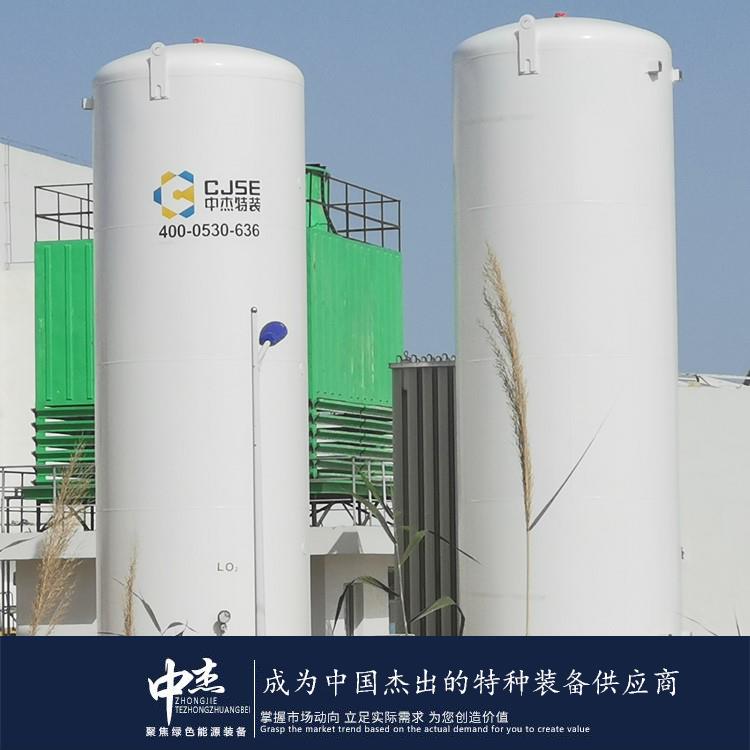

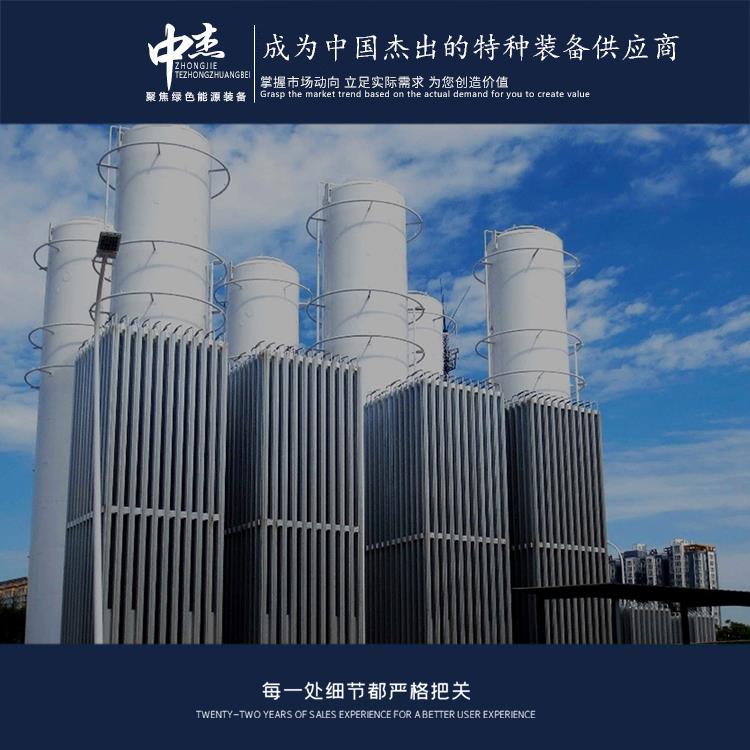
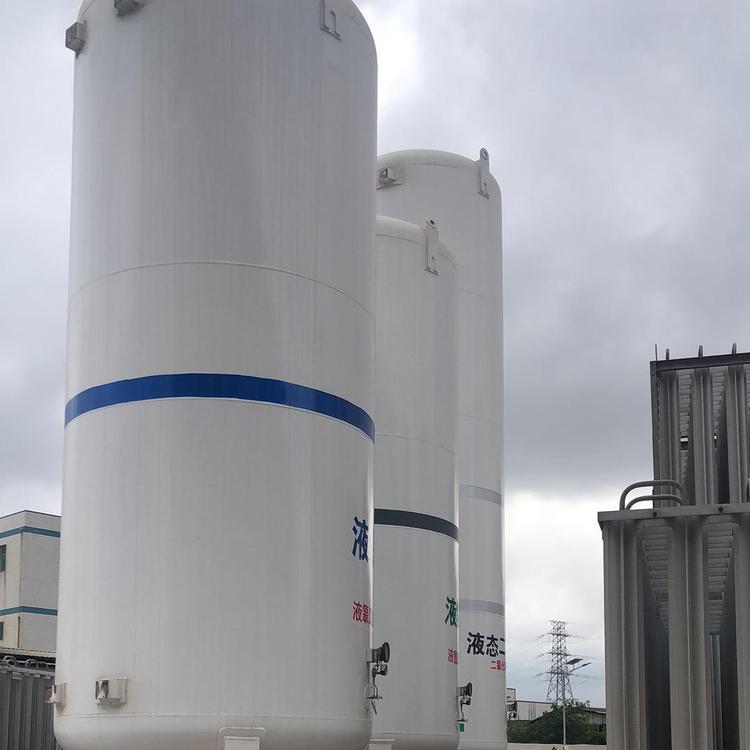


















Shandong Zhongjie Special Equipment's main products include: fuel (gas) boilers, organic heat carrier boilers, biomass boilers, waste heat recovery boilers, and other boiler products; vacuum insulation cryogenic pressure vessels such as LNG tanks, oxygen/nitrogen/argon tanks, and CO2 tanks; pressure vessel products such as denitrification engineering equipment, heat storage and energy storage equipment, and complete chemical equipment; central air conditioning and ventilation equipment such as ground (water) source heat pumps, air source units, water-cooled screw units, and air-cooled modular units. Planned products include large-scale energy centers, LNG transport vehicles, LNG tank containers, and other green energy equipment.
When using CO2 storage tanks, pay attention to the following aspects:
- Safe Operation: Operators must be trained to understand the characteristics, operational requirements, and safety measures of CO2 storage tanks. Adhere to relevant safety operation procedures and standards to ensure operational safety.
- Tank Inspection: Regularly inspect the tank's appearance, sealing, valves, and pipeline connections before use. Address any abnormalities or damage promptly by repairing or replacing the tank.
- Tank Placement: Position the tank in a well-ventilated, dry, and fire-free area. Avoid direct sunlight and high temperatures to prevent overheating.
- Leak Protection: Ensure that valves and pipeline connections are sealed properly to prevent CO2 leaks. Regularly check and replace seals, and promptly address any leaks.
- Pressure Control: Maintain internal tank pressure within a safe range. Check the pressure gauge and safety valve before use to ensure proper functioning. Avoid excessive or low pressure to prevent accidents.
- Fire Prevention: CO2 is flammable, so fire prevention measures must be taken. Smoking, open flames, or flammable materials are prohibited near the tank.
- Exhaust Emission: Properly discharge exhaust gases when using CO2 storage tanks to avoid CO2 accumulation in enclosed spaces, which can lead to asphyxiation and safety risks.
- Emergency Response Plan: Develop and implement an emergency response plan, including procedures for leak incidents, evacuation, and first aid measures. Operators should be familiar with the plan and conduct regular drills.
Note that CO2 storage tank usage should be performed by trained personnel following relevant safety operation procedures and standards. Seek advice and guidance from experts.
Carbon dioxide storage tanks feature the following characteristics:
- High-pressure Storage: Carbon dioxide storage tanks are typically used for high-pressure storage and can withstand significant pressure. The CO2 inside the tank exists in a gaseous or liquid state, with pressure usually ranging from tens to hundreds of MPa.
- High-Density Storage: When stored in a liquid state, CO2 has a higher storage density. Compared to gaseous storage, liquid storage can hold more CO2 in a relatively smaller tank, enhancing storage efficiency.
- Corrosiveness: Carbon dioxide has some corrosive properties, which can erode certain materials. Therefore, carbon dioxide storage tanks are usually made from corrosion-resistant materials such as stainless steel or alloy steel to ensure durability and safety.
- Temperature Sensitivity: CO2 is in a gaseous state at room temperature but can convert to a liquid at lower temperatures. Hence, carbon dioxide storage tanks typically need to have good insulation properties to maintain a低温 state inside the tank.
- Safety Protection: Storage tanks are equipped with safety valves and pressure relief devices to control internal pressure and temperature, ensuring safety during storage. Additionally, they must have excellent sealing performance to prevent leaks.
- Wide Application: Carbon dioxide storage tanks are widely used in various industries such as food and beverage, pharmaceutical, and chemical industries. They can be used for freezing food, refrigeration equipment, and gas supply, meeting diverse industry needs.
In summary, carbon dioxide storage tanks possess high-pressure storage, high-density storage, corrosiveness, temperature sensitivity, safety protection, and wide application. These features make them essential equipment for storing and using CO2 in many industries.
Carbon dioxide tanks are classified as pressure vessels. Pressure vessels are sealed containers capable of withstanding internal pressure, used for storing and transporting gases, liquids, or mixtures. Carbon dioxide tanks are pressure vessels specifically designed for storing and transporting carbon dioxide, featuring unique designs and structures to ensure safe storage and use. Depending on design and application, carbon dioxide tanks can be vertical or horizontal, with varying capacities and pressure ratings. When using carbon dioxide tanks, it is necessary to comply with relevant regulations and standards to ensure safe operation and use.
Carbon dioxide tanks are widely used across various industries. Below are some common sectors with examples of how carbon dioxide tanks are utilized:
Beverage and Food Industry: Carbon dioxide is used as a carbonating agent for beverages and food, in the production of sodas, beers, soft drinks, etc. Tanks are used for storing and supplying carbon dioxide to meet production line requirements.
Industry: Carbon dioxide has multiple applications in the industry, such as anesthesia, respiration, tissue freezing, etc. Tanks are used for storing and supplying medical-grade carbon dioxide to meet facility needs.
Fire Extinguishing: Carbon dioxide is extensively used in fire suppression systems, particularly for electrical and sensitive equipment. Tanks are used for storing and supplying carbon dioxide for fire extinguishing purposes.
Gas Industry: Carbon dioxide is also a significant product in the gas industry, used in the production of chemicals, metal processing, welding, gas shielding, etc. Tanks are used for storing and supplying industrial-grade carbon dioxide.
Greenhouse Agriculture: Carbon dioxide can be used to promote plant growth in greenhouses, providing additional carbon dioxide concentration. Tanks are used to supply the carbon dioxide needed in greenhouses.
Automotive Industry: Carbon dioxide is used for tire inflation and airbag systems in vehicles. Tanks are used for storing and supplying carbon dioxide to meet automotive manufacturing and repair needs.
These are just a few examples of common industries. In reality, carbon dioxide tanks are also widely used in many other sectors, such as chemicals and frozen food. Specific applications may vary based on industry requirements and scenarios.
Shandong Zhongjie Special Equipment, welcome customers to our factory for business discussions.
WeChat Official Account

Scan to follow Official Account



















