


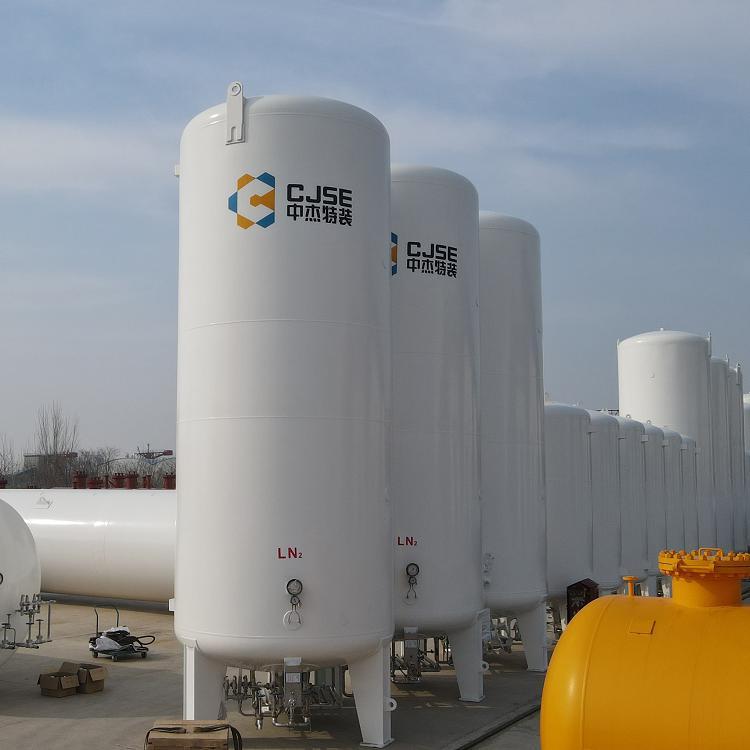

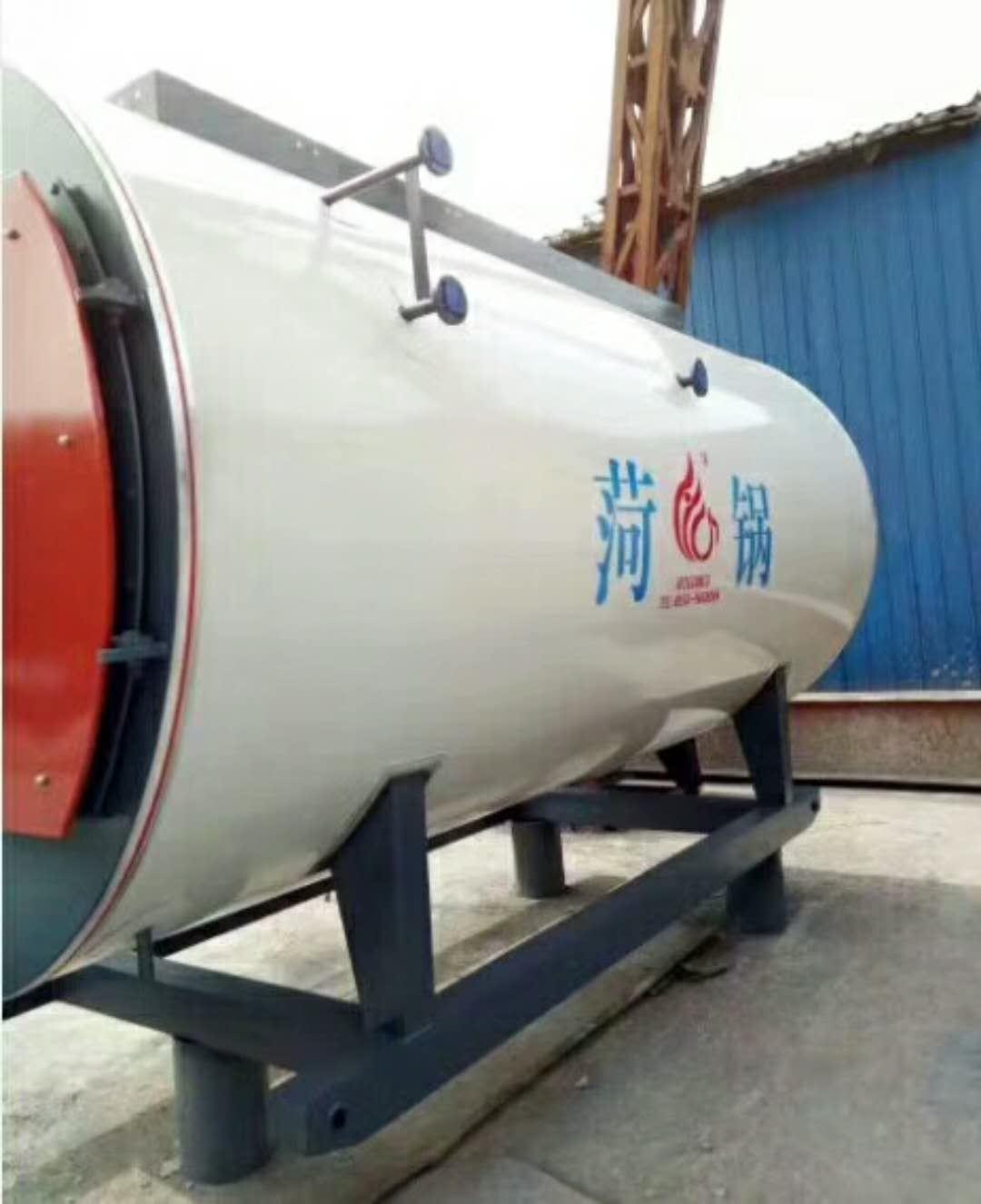
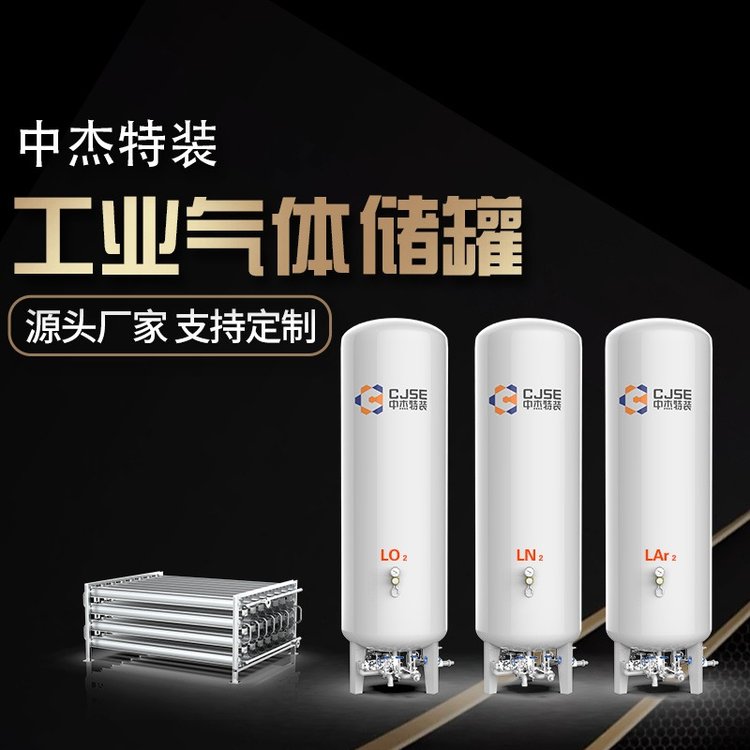


















Shandong Zhongjie Special Equipment Co., Ltd. specializes in: fuel (gas) boilers, organic heat carrier boilers, biomass boilers, waste heat recovery boilers, and other boiler products; vacuum insulation cryogenic pressure vessels such as LNG storage tanks, oxygen-nitrogen-argon storage tanks, CO2 storage tanks, etc.; pressure vessel products including denitrification engineering equipment, heat storage and energy storage equipment, and complete chemical equipment sets; central air conditioning and ventilation equipment such as ground (water) source heat pumps, air source units, water-cooled screw units, and air-cooled modular units. Planned products include large-scale energy centers, LNG transport vehicles, LNG tank containers, and other green energy equipment.
Carbon dioxide storage tanks are categorized into various types and structures based on their design and application:
- Vertical Tanks: Commonly used carbon dioxide storage tanks, these are cylindrical in shape and placed vertically. They typically have larger capacities and are used for large-scale storage and supply.
- Horizontal Tanks: Another common type, these tanks are rectangular or cylindrical in shape and placed horizontally. They are usually used for smaller-scale storage and supply, suitable for limited spaces.
- Spherical Tanks: A specialized type of carbon dioxide storage tank with a spherical shape. They offer high strength and pressure containment, suitable for high-pressure storage and transportation.
- Vertical Tanks: Smaller capacity carbon dioxide storage tanks, cylindrical in shape and placed vertically. They are commonly used for small-scale storage and supply, such as for commercial and residential use.
- Underground Tanks: A unique structure where the carbon dioxide storage tank is buried underground. These tanks save space, reduce visual impact, and offer enhanced safety and environmental protection.
These tanks are typically made of pressure-resistant materials (like carbon steel or stainless steel) and have certain insulation properties, along with accessories such as safety valves, pressure gauges, and level indicators. The interior often features baffles or partitions to separate different liquids or gases. Additionally, the tanks are equipped with safety systems, including pressure maintenance systems, leak detection systems, and fire detection systems.
Technical specifications for carbon dioxide storage tanks can be formulated based on different application fields and/or regional standards. Below are some common technical specifications and standards for reference:
ASME Standards: The American Society of Mechanical Engineers (ASME) has issued a series of standards for pressure vessels, including specifications for carbon dioxide storage tanks, such as ASME BPVC Section VIII Division 1 and ASME BPVC Section VIII Division 2.
ISO Standards: The International Organization for Standardization (ISO) has published some standards related to pressure vessels, such as ISO 9809-1 and ISO 9809-2, covering design, manufacturing, and inspection requirements for steel gas cylinders.
GB Standards: The China National Bureau of Standards has issued a series of standards related to pressure vessels, such as GB 150 "Pressure Vessels" and GB 5099 "Steel Gas Cylinders," including design, manufacturing, and inspection requirements for carbon dioxide storage tanks.
DOT Standards: The United States Department of Transportation (DOT) has issued some standards related to pressure vessels and cylinders, such as DOT-3AA and DOT-4BA, covering design, manufacturing, and transportation requirements for liquefied gas storage tanks.
EN Standards: The European Committee for Standardization (CEN) has published some standards related to pressure vessels, such as EN 13445 and EN 14382, covering design, manufacturing, and inspection requirements for liquefied gas storage tanks.
Additionally, other industry standards and specifications may apply to carbon dioxide storage tanks based on specific application needs, such as standards related to the food and beverage industry, and industry-specific standards.
When using carbon dioxide storage tanks, it is essential to select applicable technical specifications according to specific application requirements and local regulations, ensuring that the design, manufacturing, and use of the tanks comply with the corresponding standards and specifications.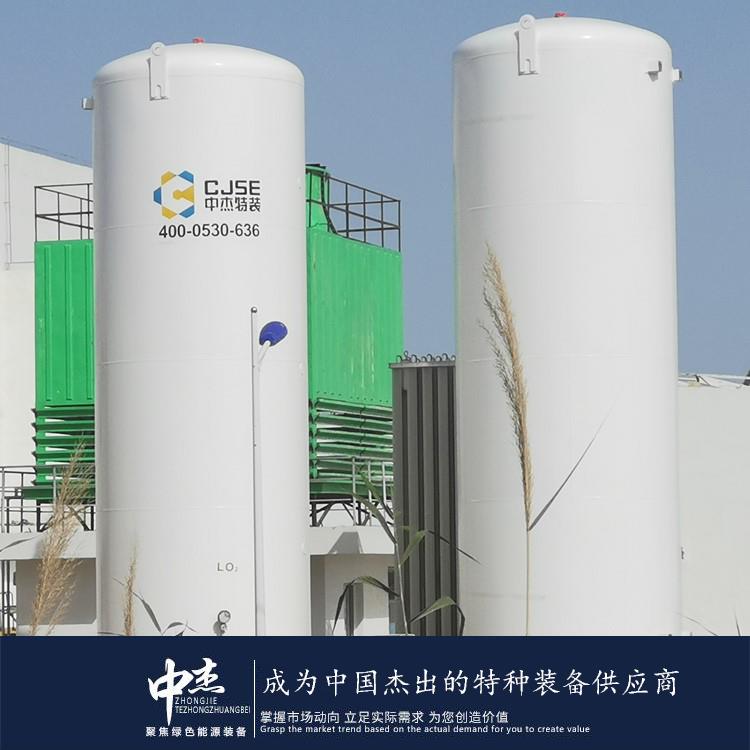
The internal structure of a carbon dioxide storage tank typically includes the following main components:
- Tank Shell: The tank shell is the primary container for storing carbon dioxide, usually made of carbon steel or stainless steel. It is designed with sufficient strength and sealing to withstand internal pressure and loads.
- Lining: To prevent direct contact between carbon dioxide and the tank shell, which could cause corrosion and contamination, the inside of the tank is usually coated with a lining. This lining is typically made from corrosion-resistant materials like glass fiber reinforced plastic or polyester resin.
- Support Structure: To support the weight of the tank and maintain stability, internal support structures are commonly installed. These can be support legs or frames, designed to bear the tank's bottom and side walls.
- Internal Accessories: The tank is also equipped with important accessories such as level gauges, pressure sensors, temperature sensors, and safety valves. These are used to monitor and control the liquid level, pressure, and temperature within the tank to ensure safe operation.
- Pressure Relief Device: To prevent excessive internal pressure, the tank is usually fitted with pressure relief devices like safety valves. These devices automatically open when the internal pressure exceeds a set value, releasing pressure to safeguard the tank.
- Inlet and Outlet Pipes: The tank also features inlet and outlet pipes for injecting and discharging carbon dioxide. These pipes are typically connected to external supply or consumption systems to facilitate the storage and use of carbon dioxide.
- The above describes the general internal structure of carbon dioxide storage tanks. Specific structural design and configuration may vary depending on the tank's application and specifications. Proper use and maintenance of the tank are necessary.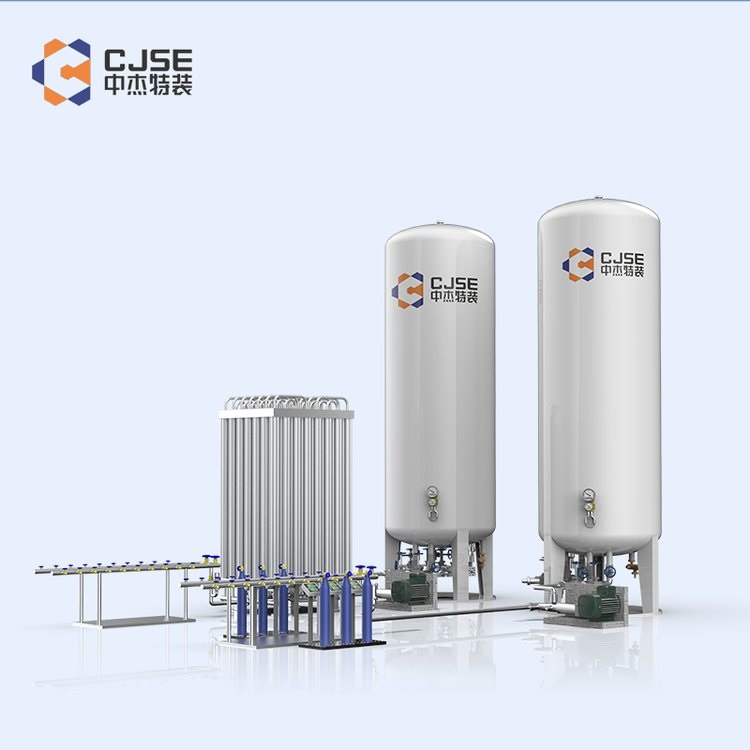
Carbon dioxide synthesis is a chemical reaction that utilizes carbon dioxide to create compounds. This process has several applications:
- Fertilizer production: It is an essential raw material for manufacturing fertilizers, and carbon dioxide synthesis represents a sustainable production method. By reacting with carbon dioxide, it can synthesize compounds used in the production of nitrogen fertilizers, such as urea. This approach reduces reliance on fossil fuels used in traditional production methods and decreases greenhouse gas emissions.
- Energy storage: Carbon dioxide synthesis can also serve as a form of energy storage. By reacting carbon dioxide and creating compounds, energy can be stored in the form of chemical bonds. When energy is needed, the reverse reaction can break down the compounds into carbon dioxide and, releasing the stored energy.
- Fuel cells: It can act as a clean fuel for fuel cells. By synthesizing carbon dioxide and using the resulting compounds in fuel cells, electricity can be generated, with only water and nitrogen as byproducts, reducing environmental pollution.
- Chemical synthesis: It is a crucial raw material for the synthesis of many chemicals. Carbon dioxide synthesis can provide a sustainable supply for the chemical industry, used to synthesize other chemicals, such as etc.
The development of carbon dioxide synthesis technology aims to reduce dependence on fossil fuels used in traditional production methods, decrease greenhouse gas emissions, and promote the development of sustainable energy and the chemical industry. However, this technology is still in continuous development and research, requiring further technological breakthroughs and practical verification to achieve large-scale application.
Shandong Zhongjie Special Equipment, welcome customers to visit our factory for business discussions.
WeChat Official Account

Scan to follow Official Account



















