


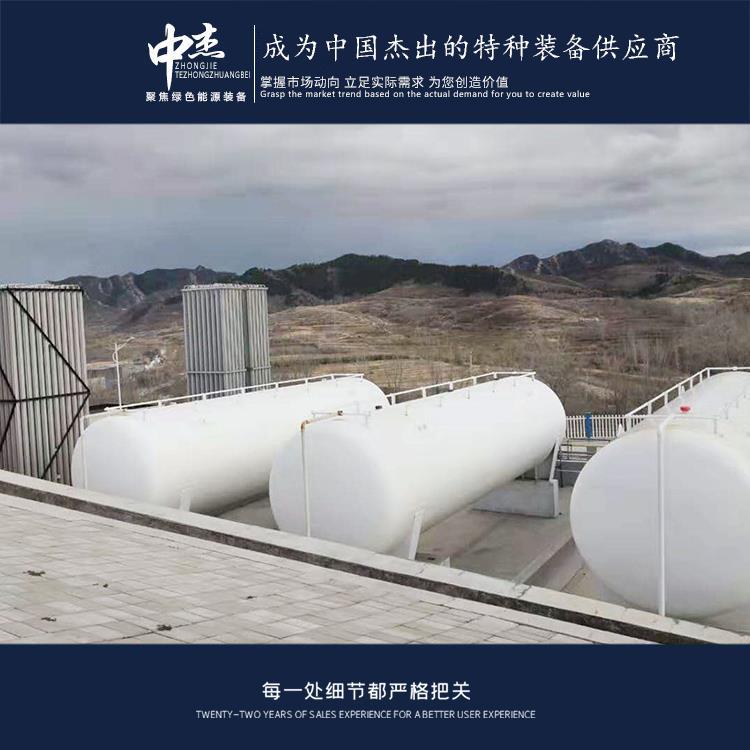

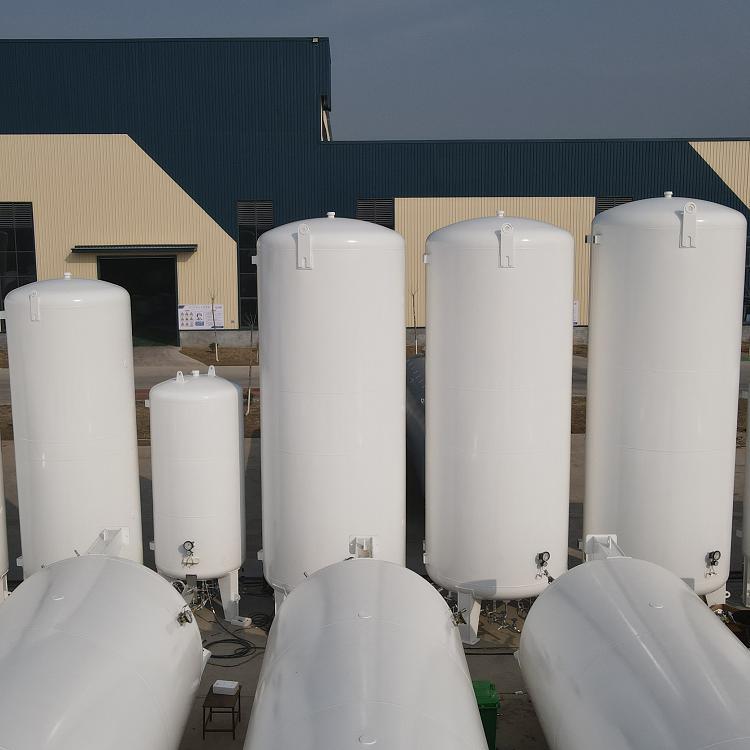
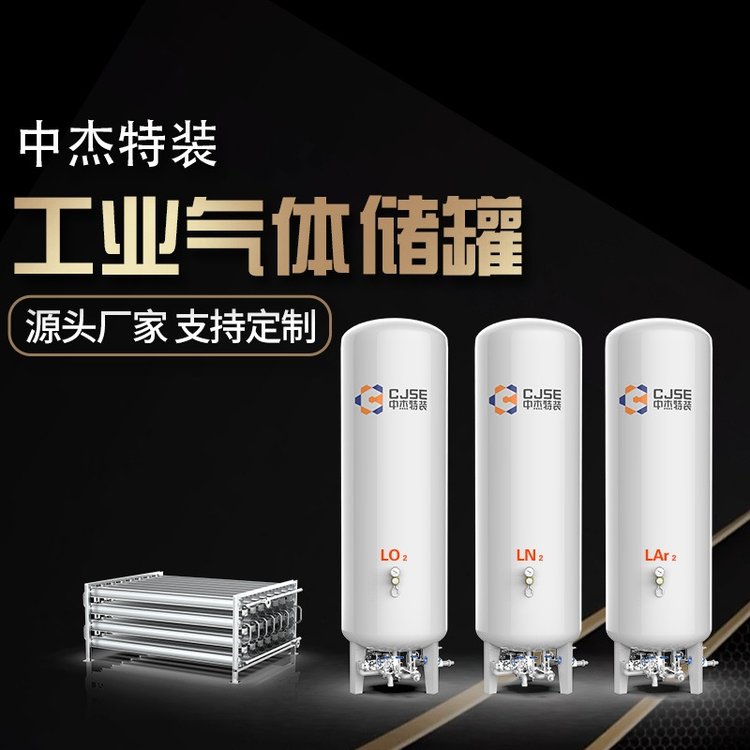


















Shandong Zhongjie Special Equipment (formerly Heze Boiler Factory Co., Ltd.) holds an A-grade boiler manufacturing license, an A2-grade pressure vessel manufacturing license, an A2-grade pressure vessel design license, a B-grade boiler installation license, and GB2/Class, GC2/Class pressure pipeline installation licenses, as well as a mechanical and electrical equipment installation contracting qualification. It is a member of the China Boiler and Water Treatment Association, the China Chemical Equipment Association, and the理事 unit of the Shandong Equipment Manufacturing Association. The company has also passed the ISO9001 Quality Management System, ISO14001 Environmental Management System, OHSAS18001 Occupational Health and Safety Management System certifications, and the American ASME/U2 certification.
The reasons for not allowing a liquid oxygen tank to be left empty for extended periods are mainly as follows:
Evaporation Loss of Liquid Oxygen: Liquid oxygen has a low boiling point, and prolonged storage without use will lead to continuous evaporation, resulting in a loss of liquid oxygen within the storage tank. The evaporation rate is relatively fast, with daily evaporation amounts potentially reaching several percent of the tank's capacity, leading to waste if left unused for extended periods.
Safety Risk: Liquid oxygen is a strong oxidizing agent with high flammability and explosiveness. Prolonged storage of liquid oxygen without proper venting increases the likelihood of contact between the liquid oxygen and the surrounding environment, thus raising the risk of accidental fires and explosions.
Risk of Tank Damage: Long-term emptying of liquid oxygen tanks can lead to internal oxidation reactions, accelerating corrosion and damage to the tank. Tank damage can affect its sealing performance and structural integrity, increasing the risk of leaks and safety accidents.
Therefore, to ensure the safe storage and effective use of liquid oxygen, liquid oxygen tanks should be regularly maintained and serviced to avoid long-term empty storage. When the tank is not in use, appropriate measures should be taken, such as sealing the tank and reducing evaporation of liquid oxygen, to minimize losses and safety risks.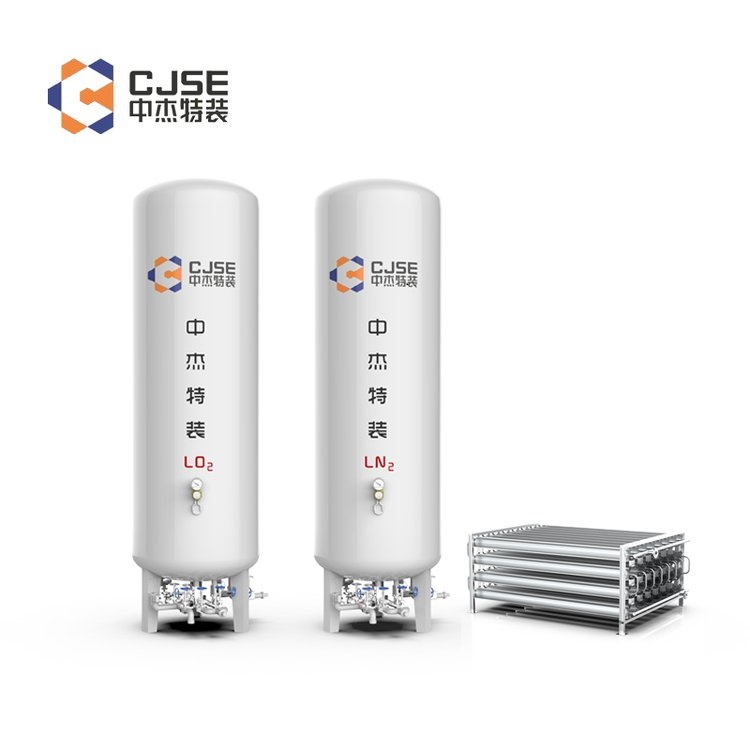
The process of using liquid oxygen storage tanks to regulate and supply oxygen typically includes the following steps:
Liquid Oxygen Storage Tank Oxygen Supply System: Typically, a liquid oxygen storage tank oxygen supply system is installed, which includes the liquid oxygen storage tank, liquid oxygen transport pipelines, and pressure regulating devices. The liquid oxygen in the storage tank is transported through the pipelines to the pressure regulating device.
Pressure Regulating Device: The pressure regulating device is used to convert high-pressure liquid oxygen into the required low-pressure oxygen. It typically includes a pressure regulator, a pressure reducer, and a flowmeter. The pressure regulator is for controlling the oxygen pressure, the pressure reducer is for reducing the high-pressure liquid oxygen to the required low pressure, and the flowmeter is for measuring the oxygen flow rate.
Oxygen Transmission Pipeline: Low-pressure oxygen released from the pressure-regulating unit is transported through the pipeline to areas requiring oxygen supply, such as patient rooms and operating theaters. The transmission pipeline is typically made of stainless steel or plastic, offering excellent airtightness and corrosion resistance.
Oxygen Interface: Install oxygen interfaces at locations requiring oxygen supply, such as hospital beds or operating tables. Oxygen interfaces typically include an oxygen flow regulator and oxygen connectors, used for adjusting oxygen flow and connecting oxygen masks or tubes.
Oxygen Supply and Regulation: Adjust oxygen pressure and flow rate via the pressure-reducing valve of the pressure regulator. Tailor oxygen flow and concentration according to the patient's needs, ensuring adequate oxygen supply.
Be mindful that when using liquid oxygen storage tanks for pressure-regulated oxygen supply, it is crucial to adhere to the relevant equipment operation and safety procedures. Operators must possess the necessary training and skills to ensure the smooth and safe operation of the oxygen supply system. Furthermore, schedule regular inspections and maintenance of the system's equipment and pipelines to guarantee proper functioning and safety.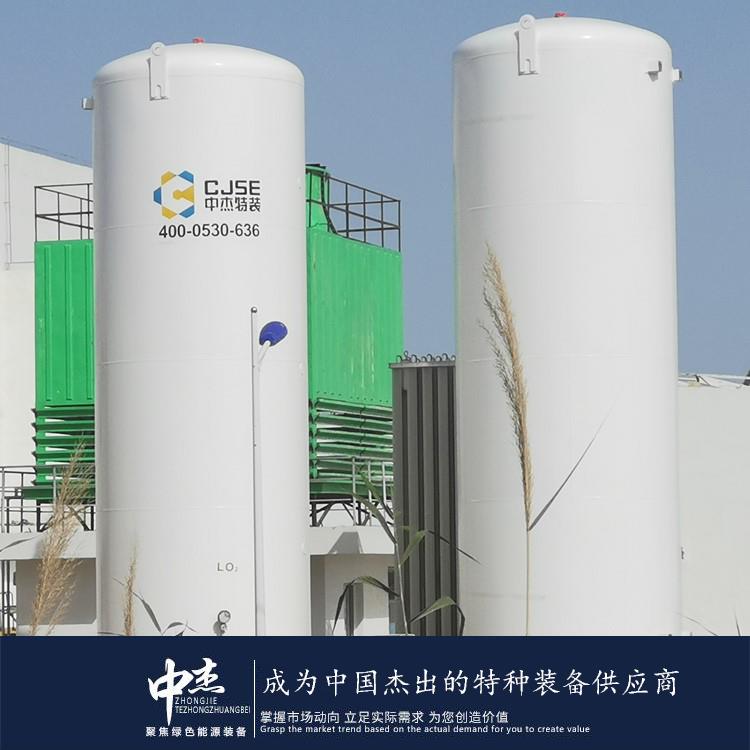
The daily inspection content of liquid nitrogen storage tanks mainly includes the following aspects:
Visual Inspection: Check for any visible damage, deformation, or corrosion on the tank's exterior, including the tank walls, valves, pipes, and joints.
Sealability Inspection: Check the tank's sealing performance, including inspecting for any leaks at valve and pipe connections, and verifying that the tank's exhaust valve and safety valve are functioning properly.
Pressure Check: Verify that the tank's pressure gauge is functioning correctly and that the pressure is within the normal range to ensure the tank operates properly.
Level Check: Monitor the liquid nitrogen tank's level to ensure it remains within the normal range, avoiding issues caused by levels that are too high or too low.
Insulation Layer Inspection: Verify the integrity of the storage tank's insulation layer, checking for any damage or detachment to ensure effective insulation and minimize evaporation losses of liquid nitrogen.
Leak Inspection: Check for signs of liquid nitrogen leakage around the storage tank, including any frost, ice, or liquid nitrogen stains on the ground.
Safety Equipment Inspection: Verify that the storage tank's safety equipment, such as leak detectors, alarm systems, and safety valves, is functioning properly to ensure the tank's safety.
Cleaning Inspection: Regularly clean the interior of the tank to remove accumulated impurities and dirt, maintaining the tank's cleanliness and sanitation.
Above are the key contents for the daily inspection of liquid nitrogen tanks. The specific inspection items should be adjusted and supplemented according to the tank's model, usage, and relevant regulations. During the inspection process, strict adherence to the operational procedures and safety operation requirements is essential to ensure the safe operation of the tank.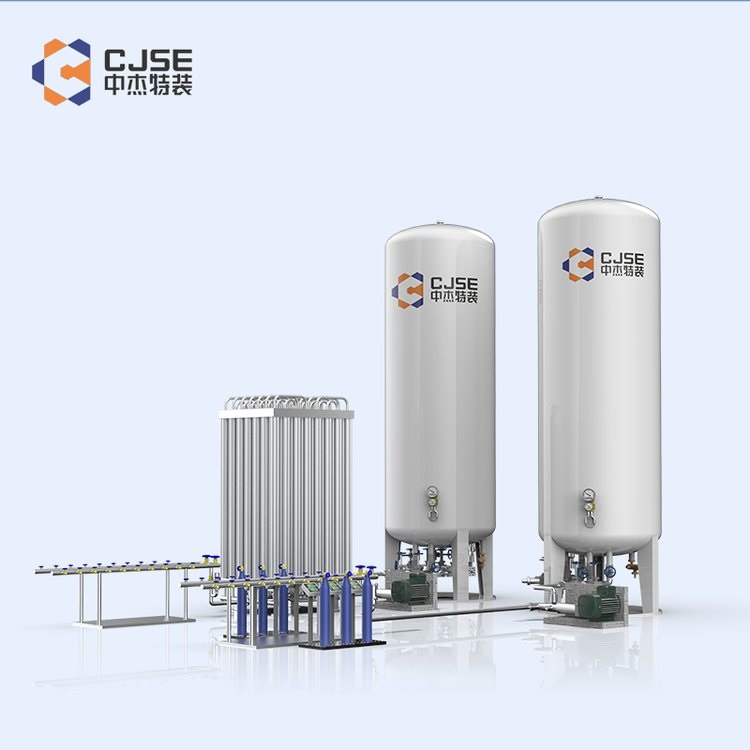
Liquid oxygen low-temperature storage tanks are primarily used for storing and supplying liquid oxygen, with their application methods varying according to specific needs and scenarios. Here are some common applications of liquid oxygen low-temperature storage tanks:
Applications: Liquid Oxygen Low-Temperature Storage Tanks are widely used in the field for cryogenic preservation of biological samples, cells, tissues, and vaccines. Institutions such as biopharmaceutical research organizations and biobanks utilize these tanks to store and protect these biological materials.
Experimental Research: Liquid Oxygen Low-Temperature Storage Tanks are used to provide low-temperature environments in scientific research and laboratories, for cryogenic preservation and experiments. These tanks play a crucial role in experimental research across various fields, including physics, chemistry, biology, and materials science.
Industrial Applications: Liquid Oxygen Low-Temperature Storage Tanks are used in the industrial field for providing low-temperature cooling, applicable in processes such as metalworking, welding, and heat treatment. These tanks can provide low temperatures, enabling metals to achieve the required hardness and toughness during processing.
The food industry: Liquid oxygen low-temperature storage tanks are used in the food industry for freezing and refrigeration of food products such as frozen meat, frozen fruits, and frozen seafood. The low temperature of liquid oxygen can quickly freeze the food, preserving its freshness and quality.
Liquid oxygen cryogenic storage tanks are used in the field for storing and supplying liquid oxygen as fuel. Liquid oxygen, as a high-energy fuel, is widely used in the propulsion systems of engines and devices.
During the operation of liquid oxygen low-temperature storage tanks, strict adherence to relevant safety regulations and operating guidelines is required to ensure the safe operation and use of the tanks. Liquid oxygen is highly flammable, so fire prevention measures must be taken when using liquid oxygen low-temperature storage tanks, and it must be ensured that there are no sources of fire around the tank.
Shandong Zhongjie Special Equipment, welcome customers to our factory for business discussions.
WeChat Official Account

Scan to follow Official Account



















