


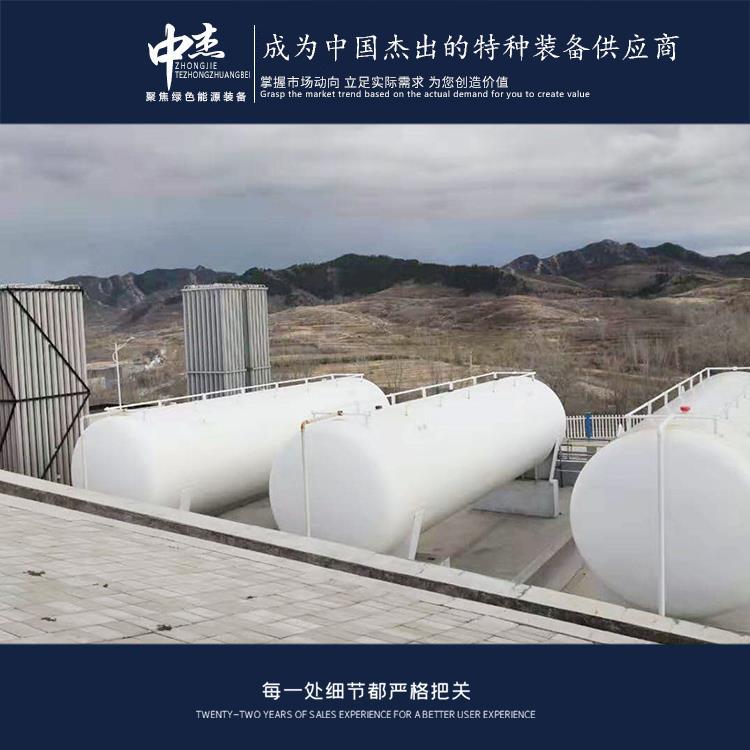

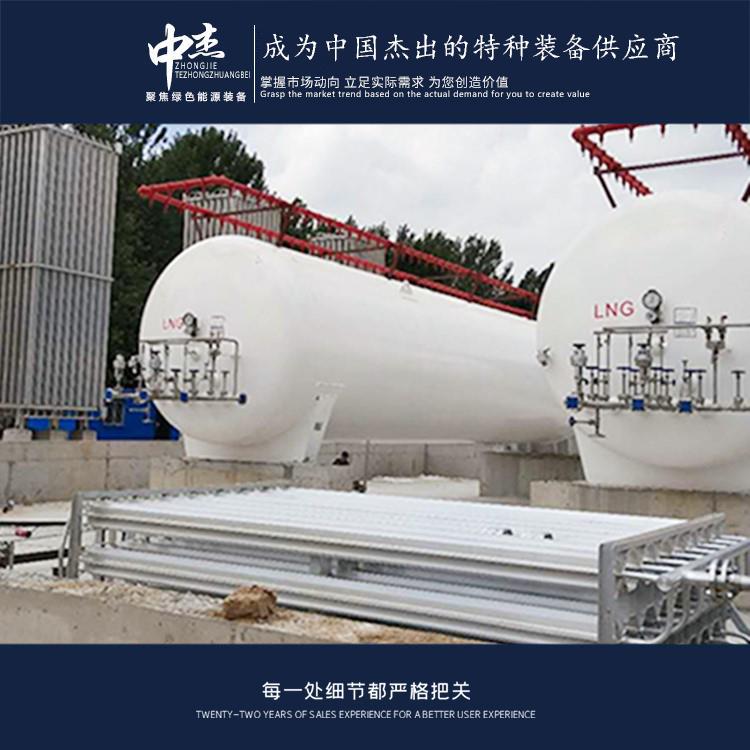
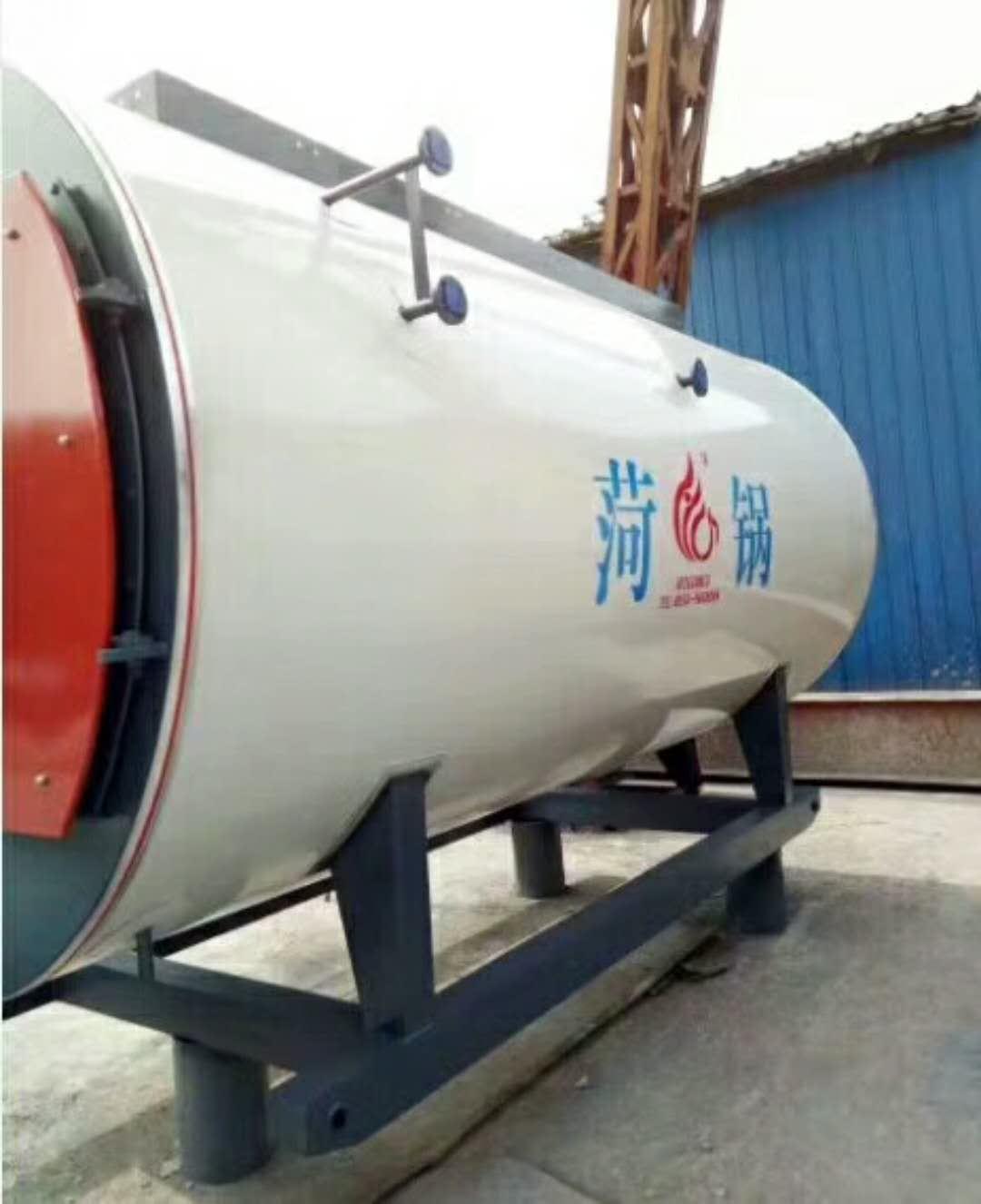


















Shandong Zhongjie Special Equipment specializes in: fuel (gas) boilers, organic heat carrier boilers, biomass boilers, waste heat recovery boilers, and other boiler products; vacuum insulated cryogenic pressure vessels such as LNG tanks, oxygen/nitrogen/argon tanks, and CO2 tanks; pressure vessel products including denitrification engineering equipment, heat storage and energy storage equipment, and complete chemical equipment; central air conditioning and ventilation equipment such as ground (water) source heat pumps, air source units, water-cooled screw units, and air-cooled modular units. Planned products include large-scale energy centers, LNG transport vehicles, LNG tank containers, and other green energy equipment.
The use of liquid nitrogen storage tanks in rapid freezing technology offers several advantages:
Rapid Freezing Speed: Liquid nitrogen has a low temperature of approximately -196 degrees Celsius. Using a liquid nitrogen tank for rapid freezing can quickly lower the surface temperature of food, achieving fast freezing. Compared to traditional freezing methods, liquid nitrogen rapid freezing can significantly reduce freezing time while preserving the quality and texture of the food.
Uniform Cryogenic Effect: The liquid nitrogen flash freezing technique achieves rapid and even freezing of food. Liquid nitrogen is喷射ed onto the food surface in a gaseous form, quickly absorbing heat and converting to a liquid state, thereby ensuring even freezing of the food and preventing crystallization and clumping during the freezing process.
Maintain Food Quality: Rapid freezing with liquid nitrogen quickly chills food, reducing crystallization and clumping during the freezing process, thereby preserving the quality and texture of the food. During the rapid freezing process, liquid nitrogen rapidly cools the surface temperature of the food, forming tiny frozen structures, effectively retaining the food's moisture and nutrients.
Flexibility and Adaptability: Liquid nitrogen tanks can be adjusted and controlled according to different types of food and freezing requirements. The injection speed and angle of liquid nitrogen can be adjusted based on the size, shape, and freezing needs of the food to achieve optimal freezing results.
Environmental Protection and Energy Efficiency: Liquid nitrogen rapid freezing technology is more energy and resource-saving compared to traditional freezing methods. Liquid nitrogen evaporates quickly during the freezing process, causing environmental pollution and generating waste water and gas.
Be mindful that when using liquid nitrogen tanks for rapid freezing, it is crucial to adhere to the relevant safety operating procedures and guidelines. Ensure that operators are equipped with the necessary safety awareness and operational skills to prevent accidental incidents. Additionally, consult
When initially using a liquid nitrogen tank, there are some precautions to consider for safe and effective operation. Here are some suggested precautions:
Safe Operation: Liquid nitrogen is a low-temperature liquid with strong refrigeration and asphyxiation effects. When handling liquid nitrogen tanks, appropriate personal protective equipment, such as insulated gloves and protective suits, must be worn. Avoid direct contact with liquid nitrogen to prevent injury or other harm.
Ventilation Environment: Liquid nitrogen, upon evaporation, produces a significant amount of gas which may displace other gases, leading to a decrease in oxygen levels in the air. Therefore, when using liquid nitrogen tanks, it is essential to ensure that the operating area is well-ventilated to prevent oxygen deficiency.
Tank Inspection: Before the first use of a liquid nitrogen tank, inspect its appearance and seal thoroughly. Ensure there are no visible damages, leaks, or other safety hazards. If any issues are found, they should be addressed promptly by repairing or replacing the tank.
Tank Filling: Prior to the initial use of a liquid nitrogen tank, it is necessary to fill it with liquid nitrogen. During the filling process, adhere to the correct operational steps and safety protocols to ensure the procedure is safe and reliable. Additionally, be mindful to control the filling rate and pressure to prevent excessive tank pressure and temperature rise.
Labeling and Documentation: Prior to the initial use of the liquid nitrogen tank, relevant information should be labeled on the tank, such as the storage medium, capacity, manufacturing date, etc. It is also recommended to establish a tank usage record, including filling dates, filling quantities, usage details, etc., for future tracking and management.
Note that the use of liquid nitrogen tanks involves safety risks such as low temperatures and high pressures. Operators should receive training and strictly adhere to the relevant operational procedures and safety measures. If you are unfamiliar with the operation or have any doubts, it is recommended to consult with individuals or relevant institutions for guidance.
Liquid Oxygen Stations are facilities designed for storing and supplying liquid oxygen, with the liquid oxygen storage tank being a crucial component of these stations. The liquid oxygen storage tanks possess several key functions and characteristics:
Store Liquid Oxygen: Liquid oxygen tanks are primarily used for storing liquid oxygen, cooling gaseous oxygen below its critical temperature to convert it into a liquid state. The storage density of liquid oxygen is high, allowing for the storage of large amounts of oxygen in a relatively small space.
Maintain Low Temperatures: Liquid oxygen tanks are typically double-walled, with a vacuum layer between the inner and outer walls to minimize heat transfer and maintain低温. This helps preserve the低温 state of the liquid oxygen and prevent premature vaporization.
Safety Design: Liquid oxygen tanks must be designed and manufactured with safety in mind. They are typically made from high-strength materials such as stainless steel or aluminum alloy to withstand high pressure and low-temperature requirements. Additionally, liquid oxygen tanks are equipped with safety valves, pressure sensors, and temperature sensors to ensure that the internal pressure and temperature of the tank remain within safe limits.
Supply System Connection: Liquid oxygen tanks are typically connected to the supply system to transport liquid oxygen to the required locations. The supply system includes equipment such as liquid oxygen pumps, pipelines, and valves, which are used to extract liquid oxygen from the tanks and deliver it to the user end.
Liquid oxygen storage tanks play a crucial role in storing and maintaining liquid oxygen at oxygen stations. Their design and use must strictly adhere to relevant safety regulations and operational procedures to ensure the safety and reliability of the storage and supply process.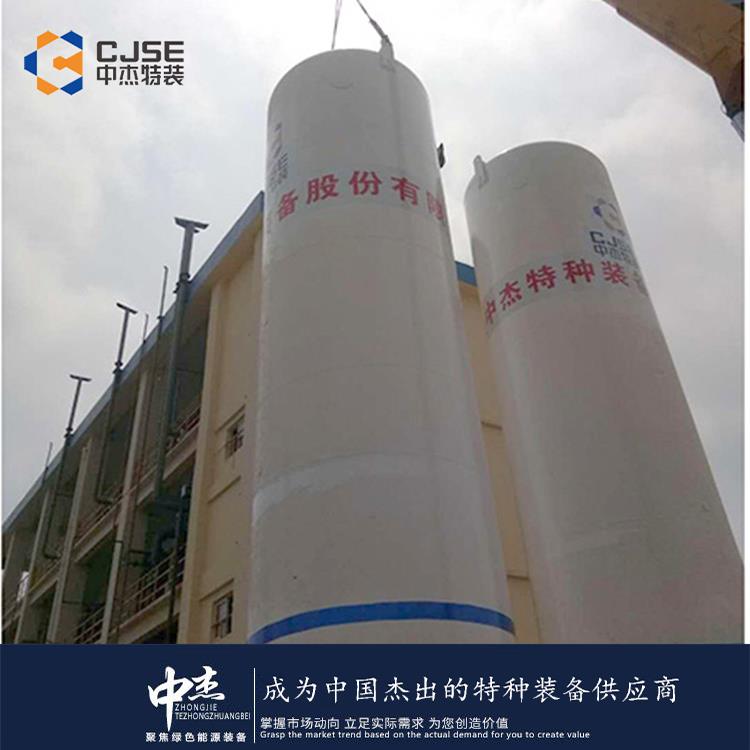
The methods for dealing with air leakage in liquid argon storage tanks mainly include the following steps:
Identified Air Leaks: Detected through odors, gas detection equipment, or abnormal pressure in liquid argon storage tanks, air leaks in the liquid argon storage tanks are identified.
Confirm Air Leaks: Use gas detection equipment or bubble leak detectors, etc., to pinpoint the location of air leaks. Inspect tank interfaces, valves, pipe connections, and other areas to locate air leak points.
Seal Air Leaks: Take appropriate measures to stop the air leak source based on the leak location. For instance, for leaks at interfaces, inspect and adjust sealing washers or tighten bolts; for valve leaks, check and replace seals.
Isolate Air Leaks: During the process of dealing with air leaks, it is necessary to isolate the leaky areas to ensure personnel safety. Set up warning signs, restrict access to the area, and take necessary protective measures, such as wearing protective masks and gloves.
If air leakage cannot be repaired immediately or the leakage volume is significant, consider evacuating liquid argon. By gradually reducing the pressure of liquid argon within the storage tank, convert it into a gas, and reduce the risk of air leakage.
Ventilation Treatment: During the air leakage treatment, ensure good ventilation and promptly exhaust the gases produced by the evaporation of liquid argon. Natural ventilation or the use of ventilation equipment can be employed to expel the evaporated gases of liquid argon outdoors.
Safety Assessment and Repair: After the air leakage treatment is completed, conduct a safety assessment to ensure the tank's safety. Based on the assessment results, carry out necessary repairs and maintenance to prevent the recurrence of air leakage.
Note that liquid argon is a low-temperature liquid with low boiling and freezing points. Caution is required when dealing with air leaks to prevent contact with liquid argon and resulting in coldness. When handling air leaks in liquid argon storage tanks, it should be operated by personnel and follow the relevant safety operation procedures and standards.
Our company attaches great importance to technological innovation and R&D, boasting 1 city-level technical center in Heze City. We have established testing facilities for non-destructive testing, physical and chemical testing, welding testing, hydrostatic testing, and more. We are equipped with over 600 types of equipment, including CNC machines, X-ray flaw detectors, digital ultrasonic flaw detectors, mechanical property testing machines, chemical analyzers, spectrometers, tensile testing machines, plasma welding machines, and others. The key products and technologies we have developed, such as temperature and pressure vessel welding, biomass boiler emissions reduction, and waste heat utilization, have successively been selected for multiple Shandong Provincial Department of Industry and Information Technology science and technology projects, Shandong Provincial key projects, and Heze City innovative and excellent projects. We have accumulated 27 authorized utility models, 16 authorized inventions, participated in drafting 2 standards, 2 industry standards, and registered 15 trademarks. Our technical team, in collaboration with Professor Yajiang Li from Shandong University, has developed deep cryogenic container processing technology using the international plasma arc + filler wire argon arc welding (PAW-GTAW) technology, which has been appraised as reaching international standards in the deep cryogenic container manufacturing field by the provincial scientific and technological achievements evaluation. Choose Zhongjietong for customization, and let's create brilliance together!
WeChat Official Account

Scan to follow Official Account



















