


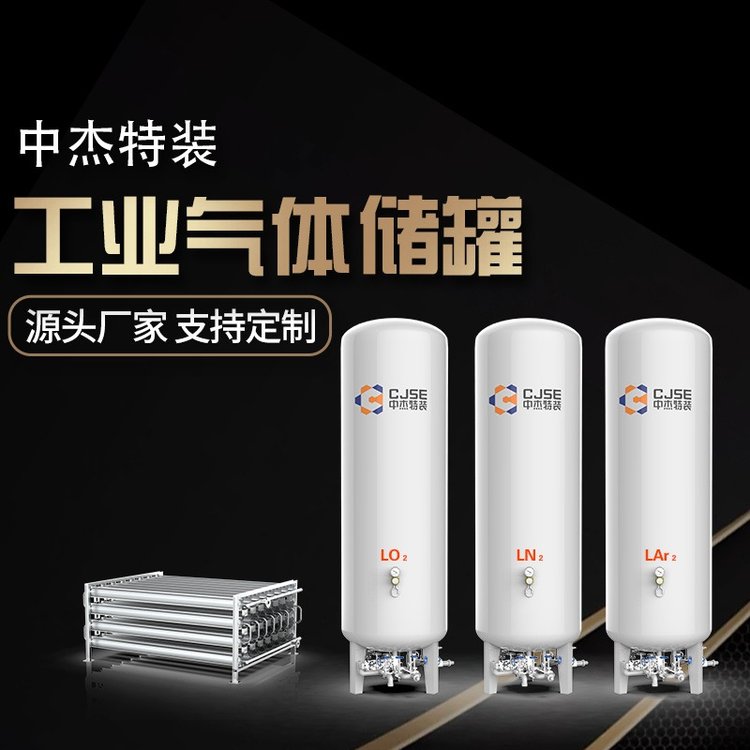

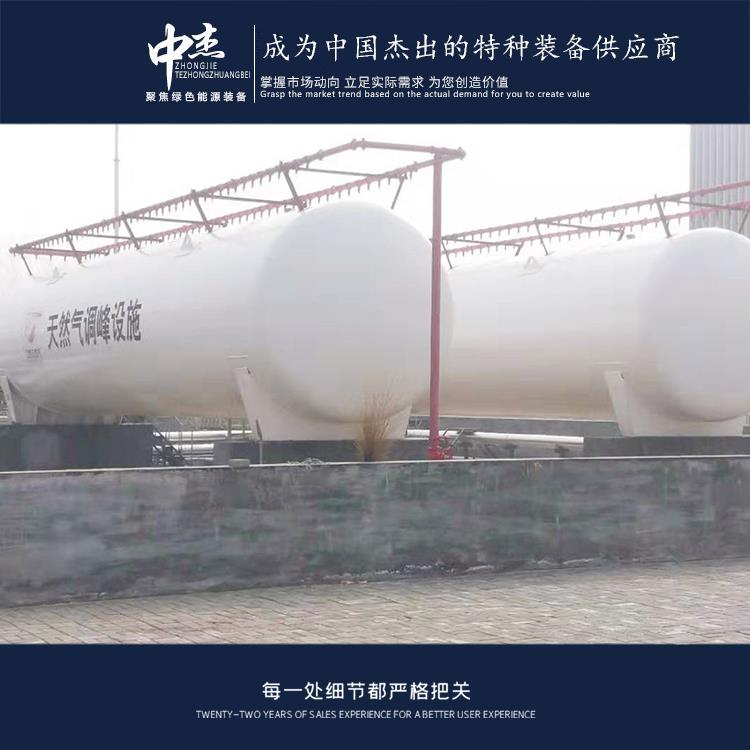
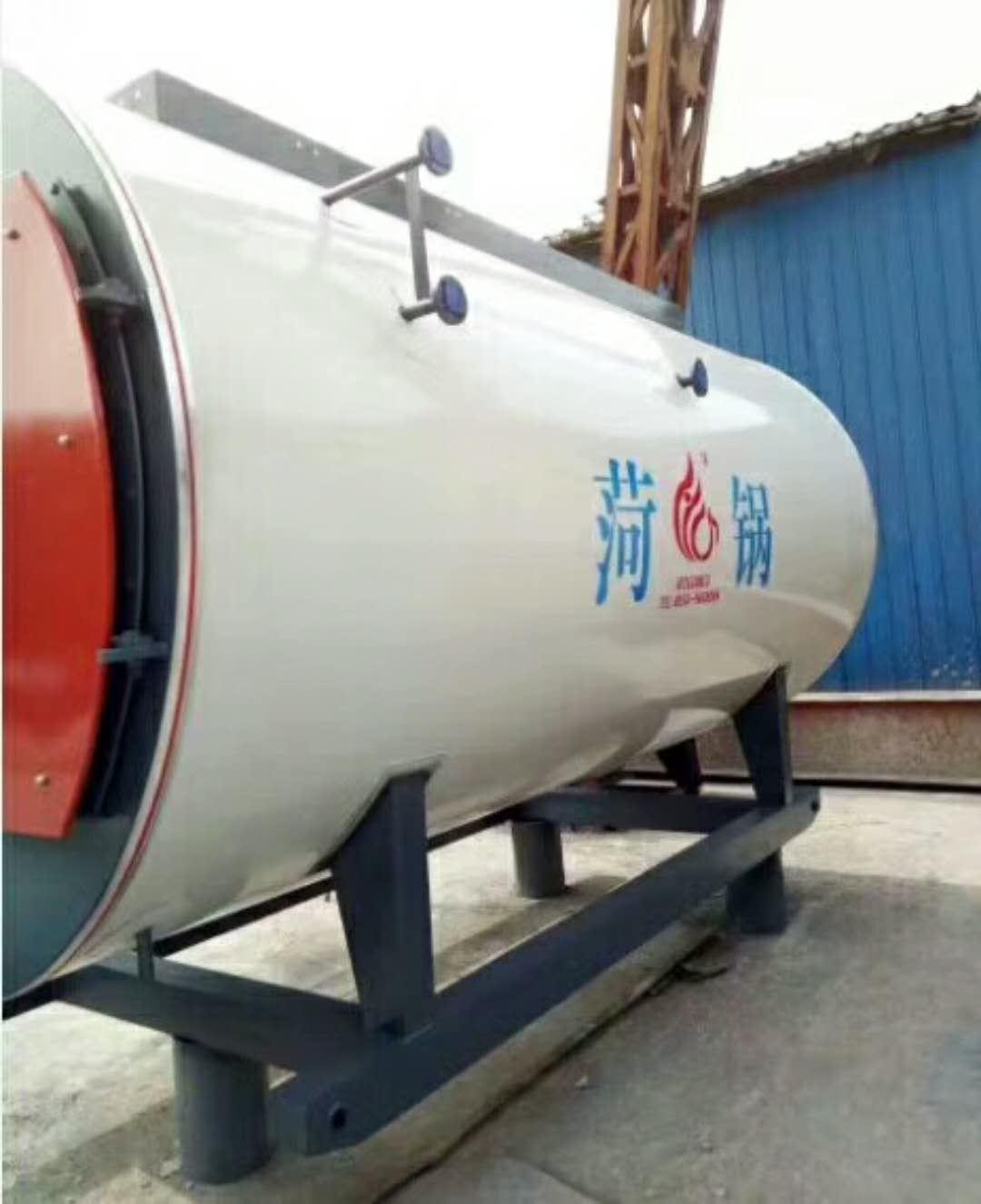


















Shandong Zhongjie Special Equipment (formerly Heze Boiler Factory Co., Ltd.) was established in 2001, located at No. 2218 Jinnan Road, Development Zone, Heze City, with a registered capital of 50 million yuan and total assets of 500 million yuan. The company has 7 business centers: boiler, deep-freeze container, pressure vessel, central air conditioning, engineering installation, international trade, and Internet of Things. It has three manufacturing sites on Jinnan Road, East Changjiang Road, and Bohai Road, covering a total area of 200,000 square meters, with the main workshop spanning 83,000 square meters. It currently employs 710 staff, including 247 engineers and technicians, and 82 intermediate-level technicians. In December 2016, it was recognized as a "High-tech Enterprise" by the Science and Technology Department. In June 2021, it was identified as a "Specialized and New Enterprise in Shandong Province" by the Ministry of Industry and Information Technology. In June 2022, it was named a "Gazelle Enterprise in Shandong Province," and in August 2022, it was recognized as a "Specialized and New Small Giant Enterprise" by the Ministry of Industry and Information Technology.
The liquid level of carbon dioxide tanks varies depending on specific design and operational requirements. Generally, the liquid level in a liquid carbon dioxide tank is typically maintained between 80% and 95%. There are several reasons for keeping the tank level within this range:
- Space Reserve: Maintaining a certain level of liquid provides steam space inside the tank to prevent overpressurization and the risk of tank explosion.
- Storage Capacity: Keeping a higher level maximizes the tank's capacity, allowing for more carbon dioxide storage.
- Stable Supply: Maintaining an appropriate level ensures a stable supply of carbon dioxide to meet usage demands.
However, specific level requirements may vary depending on different applications and industries. When using carbon dioxide tanks, it is essential to follow the manufacturer's recommendations and relevant regulations and standards to ensure the tank's level is controlled within a safe and appropriate range.
Carbon Dioxide Applications in the New Energy Sector: Carbon Capture and Storage (CCS): This technology reduces CO2 emissions by capturing CO2 from industrial sources and storing it in underground reservoirs, preventing it from entering the atmosphere. It aids in reducing greenhouse gas emissions and mitigating climate change. Carbon Utilization: CO2 can be utilized to produce valuable chemicals and fuels. For instance, through CO2 catalytic conversion technology, CO2 can be transformed into fuels like ethanol. This carbon utilization technique helps reduce reliance on traditional fossil fuels and promotes sustainable energy development. Carbon Dioxide Batteries: These are a new type of battery technology that uses CO2 as the battery's material. By converting CO2 into electrical energy, these batteries can serve as a sustainable energy storage solution, contributing to the advancement of electric vehicles and renewable energy. Carbon Dioxide Photocatalysis: This technology uses solar energy to convert CO2 into useful chemicals. By employing photocatalysts, CO2 and water can be transformed into combustible gases or organic compounds, achieving the resource utilization of CO2. These applications aim to reduce CO2 emissions, enhance energy efficiency, and promote the development of sustainable energy. However, these technologies are still in continuous development and research, requiring further technical breakthroughs and practical verification.
Under China's "Regulations for the Safety Supervision of Pressure Vessel Technologies," carbon dioxide storage tanks are classified as Category II pressure vessels. According to these regulations, pressure vessels are categorized as follows:
- Category I pressure vessels: Those with a working pressure of 10 MPa (MegaPascals) or higher, such as steam boilers and pressure vessels.
- Category II pressure vessels: Those with a working pressure of 0.1 MPa (MegaPascals) or higher but less than 10 MPa, such as air compressors and liquefied gas storage tanks.
- Category III pressure vessels: Those with a working pressure of 0.05 MPa (MegaPascals) or higher but less than 0.1 MPa, such as storage tanks.
- Category IV pressure vessels: Those with a working pressure of less than 0.05 MPa, such as gas cylinders.
Based on this classification, carbon dioxide storage tanks typically have a working pressure above 0.1 MPa, thus falling under Category II pressure vessels. It is important to note that specific classification criteria may vary depending on different regional regulations and standards. When using and managing carbon dioxide storage tanks, it is necessary to comply with the corresponding legal and standard requirements.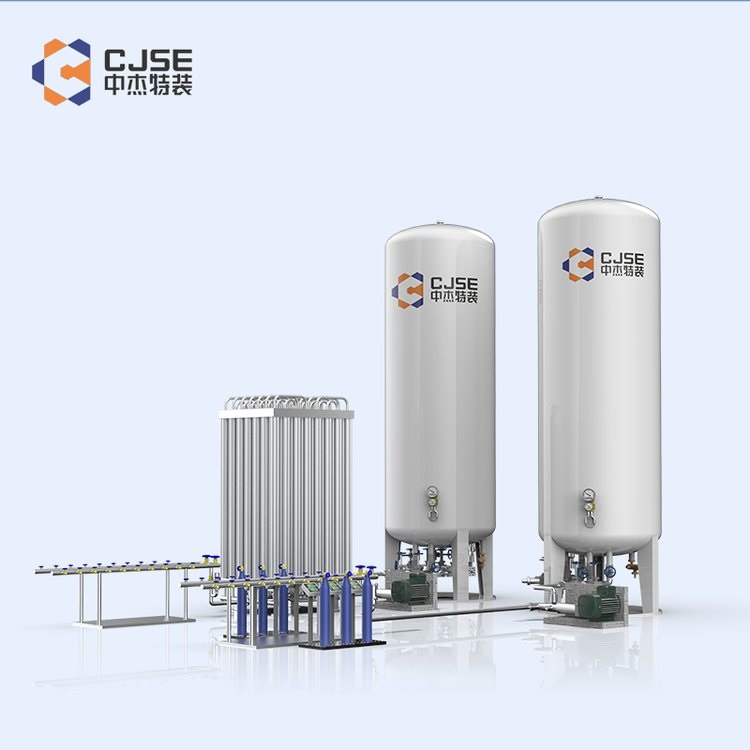
Prior to using the CO2 storage tank, the following preparations must be made:
- Inspect the tank: Check the tank's appearance for any signs of damage, corrosion, or oil leakage. Ensure the structural integrity and safety of the tank.
- Check valves and pipes: Verify that the tank's inlet and outlet valves and pipe connections are normal, with no leaks or loose fittings. Ensure valve operation is smooth and reliable.
- Inspect safety accessories: Check the functionality of the tank's safety accessories, such as safety valves, pressure sensors, and temperature sensors. Confirm that their set parameters meet requirements.
- Check the level measurement system: Verify the accuracy and reliability of the level measurement system. Calibrate the level sensors to ensure accurate level readings.
- Inspect the pressure relief device: Check that the tank's pressure relief device (such as the safety valve) is functioning properly. Confirm that the set pressure of the relief device meets requirements.
- Check gas quality: Ensure the CO2 gas in the tank meets quality standards, with no impurities or contaminants.
- Inspect fire protection equipment: Ensure the fire protection equipment around the tank is intact and check that extinguishers, sprinkler systems, etc., are operating normally.
- Train operators: Operators should receive training on the characteristics, operation requirements, and safety measures of the CO2 storage tank. Training should include safe operation procedures, leak handling, and emergency measures.
- These preparations ensure the CO2 storage tank is in good condition before use and guarantees the safety and reliability of operation. When conducting preparations, follow relevant safety operation procedures, and have personnel handle the operations.
Our company attaches great importance to technological innovation and R&D design, boasting 1 municipal-level enterprise technology center in Heze City. We have established testing facilities for non-destructive testing, physical and chemical testing, welding testing, hydrostatic testing, etc., and are equipped with over 600 various instruments and equipment, including CNC machine tools, X-ray flaw detectors, digital ultrasonic flaw detectors, mechanical property testing machines, chemical analyzers, spectrometers, tensile testing machines, plasma welding machines, and more. The key products and technologies we have developed, such as temperature and pressure vessel welding, biomass boiler emission reduction, and waste heat utilization, have successively been selected for multiple Shandong Provincial Department of Industry and Information Technology scientific and technological innovation projects, Shandong Provincial key projects, and Heze City innovative and excellent projects. We have accumulated a total of 27 authorized utility models, 16 authorized inventions, participated in drafting 2 standards, 2 industry standards, and registered 15 trademarks. Our technical team, in collaboration with Professor Li Yajiang of Shandong University, has jointly developed deep cryogenic vessel processing technology, utilizing the international plasma arc + filler wire argon arc welding (PAW-GTAW) technology, which has been appraised as an international-level technology in the field of deep cryogenic vessel manufacturing at the provincial level. Choose Zhongjietong, and let's create brilliance together!
WeChat Official Account

Scan to follow Official Account



















