


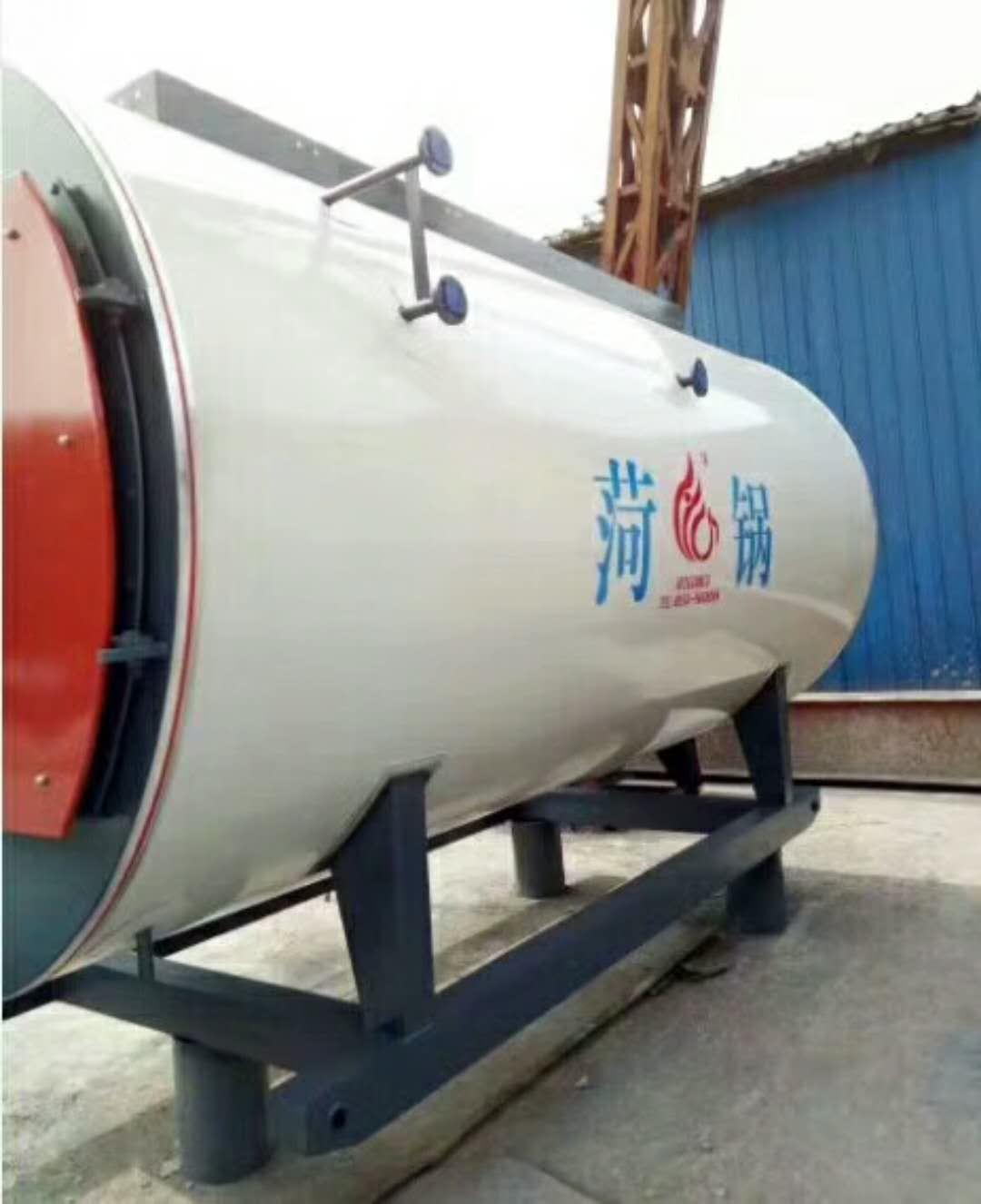

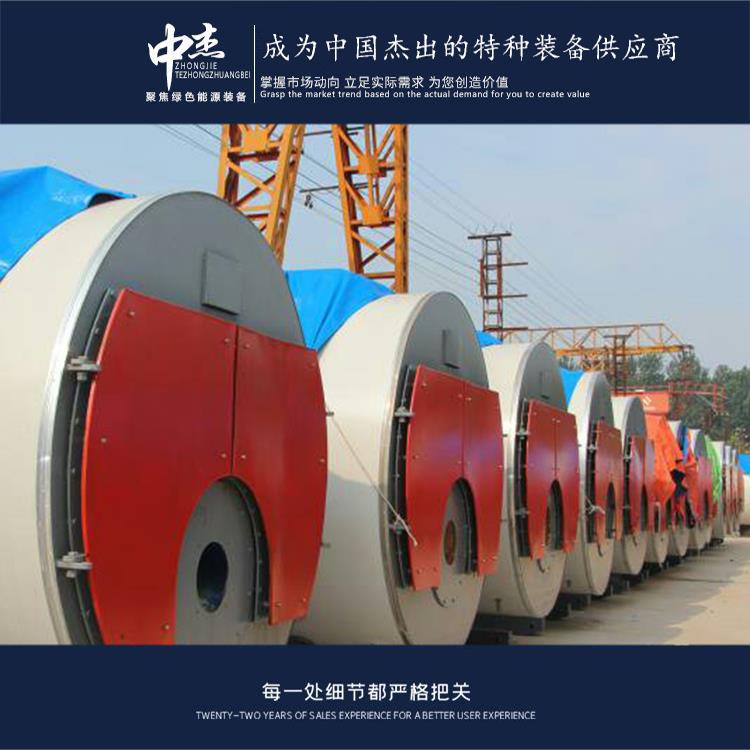
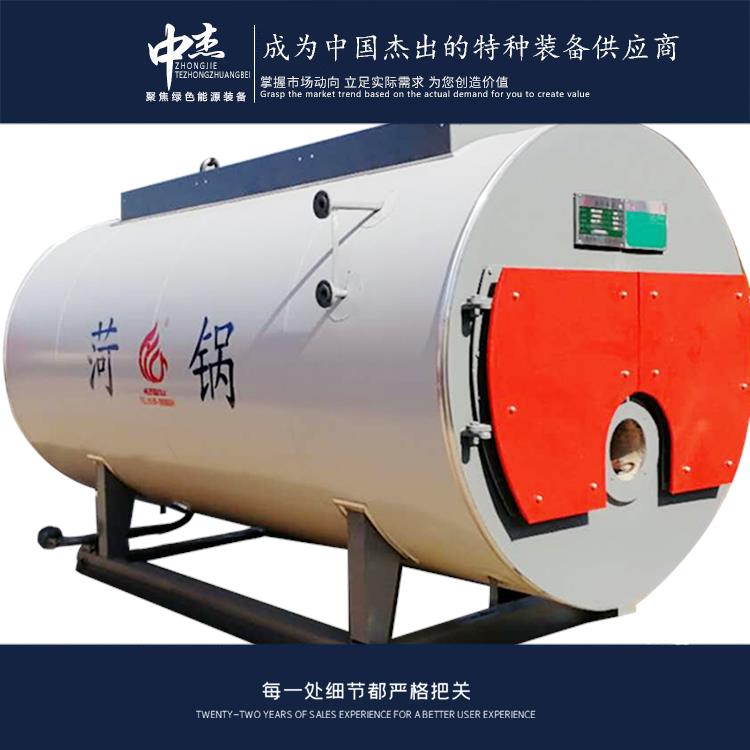


















Shandong Zhongjie Special Equipment's main products include: fuel (gas) boilers, organic heat carrier boilers, biomass boilers, waste heat boilers, and other boiler products; vacuum insulation cryogenic pressure vessels such as LNG tanks, oxygen-nitrogen-argon tanks, and CO2 tanks; pressure vessel products such as denitrification engineering equipment, heat storage and energy storage equipment, and complete chemical equipment; central air conditioning and HVAC equipment such as ground (water) source heat pumps, air source units, water-cooled screw units, and air-cooled modular units. Planned products include large-scale energy centers, LNG transport vehicles, LNG tank containers, and other green energy equipment.
Hot water boilers and steam boilers are two common types of boilers, differing in their working principles, application scenarios, and operating parameters:
Working Principle: Hot water boilers provide heat by heating water and then circulating it through the heating system. Steam boilers, on the other hand, heat water to produce steam, which is then circulated through the heating system.
Operating Temperature and Pressure: Hot water boilers typically operate at temperatures between 60°C and 100°C with lower pressure. Steam boilers usually operate at temperatures between 100°C and 200°C with higher pressure, generally between 0.7MPa and 2.5MPa.
Heating Method: Hot water boilers circulate hot water through the heating system using a circulating pump, with heat transfer primarily occurring through conduction and convection. Steam boilers deliver steam through steam pipes to the heating system, with heat transfer primarily through steam conduction.
Application Scenarios: Hot water boilers are suitable for heating, bathing, swimming pool heating, and other scenarios where hot water is needed in industrial production. Steam boilers are used in industrial processes requiring steam, such as power plants, chemical factories, and textile mills.
Equipment Structure: Hot water boilers are generally simpler and have a smaller structure and footprint. Steam boilers are typically more complex, with a larger structure and larger footprint.
It is important to note that hot water and steam boilers may overlap in certain special application scenarios, such as industrial processes that require both hot water and steam. Therefore, when selecting a boiler type, it is necessary to consider specific needs and application scenarios comprehensively.
The inspection contents and requirements for gas boilers typically include the following aspects:
- Safety valve and pressure gauge: Check the installation and fixation of the safety valve and pressure gauge to ensure their normal operation and accurate pressure display.
- Combustion system: Inspect the working condition of the burner, including ignition, combustion, and combustion stability. Check the connection of the gas supply pipeline and valves to ensure no leaks.
- Flue and heat exchanger: Examine the cleanliness of the flue and heat exchanger, including accumulated dust and dirt, to ensure heat exchange efficiency and smoke emissions meet requirements.
- Water level control system: Check the operation of the water level controller and gauge to ensure accurate and reliable water level control, preventing excessive or insufficient water levels.
- Gas supply system: Inspect the installation and connection of the gas supply pipeline and valves to ensure normal gas supply and no leaks.
- Electrical system: Check the wiring and connection of the electrical system, including power supply, controllers, and sensors, to ensure normal operation of electrical equipment and avoid electrical faults.
- Safety devices: Verify the operation of safety devices, including safety valves, pressure switches, and temperature controllers, to ensure they are functioning properly and ensure the safe operation of the boiler.
- Records and documents: Review the boiler's operating records, maintenance records, and inspection reports to ensure the completeness and accuracy of the operation and maintenance records.
The inspection of gas boilers should be conducted by an institution or personnel with the corresponding qualifications, in accordance with relevant laws, regulations, and standards. The frequency and specific requirements for inspections can be determined based on the boiler's usage and local regulations. Timely inspections and maintenance can ensure the safe operation and performance of gas boilers.
Based on the provided information, I cannot accurately determine the heating area for a 40-ton gas-fired hot water boiler or the gas pressure for an atmospheric pressure gas boiler. Establishing these parameters requires considering multiple factors, including the boiler's design specifications, the type and quality of the gas, and the heating system requirements. The heating area is typically calculated based on the size of the building or industrial production facility to be heated, along with the heat load calculations. Common methods include calculating heat load based on the building's floor area, the climate conditions of the region, and the required indoor temperatures. The gas pressure depends on the type of gas and the design of the gas supply system. Different types of gas require different pressure levels. The gas pressure also needs to consider factors such as the distance of the gas pipeline, the pipeline diameter, and the material of the pipeline. Therefore, to accurately determine the heating area for the 40-ton gas-fired hot water boiler and the gas pressure for the atmospheric pressure gas boiler, it is recommended to consult the boiler manufacturer or engineer, who can calculate and design based on the specific situation.
Industrial boilers, during long-term operation, can accumulate scale and deposits, affecting heat exchange efficiency and the normal operation of the boiler. Here are some effective descaling methods:
1. Mechanical Cleaning: Utilizing cleaning equipment and tools, this method employs high-pressure water or mechanical brushing to remove scale and deposits from within the boiler. Suitable for lighter scale and deposits.
2. Chemical Cleaning: Using chemical cleaning agents, this method dissolves scale and deposits through chemical reactions. Select an appropriate cleaning agent based on the composition and nature of the scale, and follow the instructions provided. Chemical cleaning requires safe operation to avoid damage to equipment and the environment.
3. Acid Cleaning: Acid cleaning is a common descaling method, suitable for certain types of scale and deposits that are difficult to dissolve. Common acid cleaning agents include (list any specific agents), choose the appropriate agent and concentration based on the situation. Acid cleaning must be conducted safely to prevent harm to equipment and personnel.
4. Alkaline Cleaning: Alkaline cleaning is a descaling method for specific types of scale, suitable for alkaline scale. Common alkaline cleaning agents include (list any specific agents), select the appropriate agent and concentration based on the situation. Alkaline cleaning must be conducted safely to prevent harm to equipment and personnel.
5. Physical Descaling: Physical descaling methods include ultrasonic cleaning and electro-dissolution. Ultrasonic cleaning uses the vibration of ultrasound to shake the scale to pieces. Electro-dissolution utilizes the principle of electrolysis to dissolve scale through the application of electricity. These physical descaling methods are suitable for certain special situations and specific types of scale.
When selecting a descaling method, consider the specific conditions of the boiler.
Our company highly values technological innovation and research and development, boasting one municipal-level enterprise technology center in Heze City. We have established testing facilities for non-destructive testing, physical and chemical testing, welding testing, hydrostatic testing, and more. Equipped with over 600 pieces of various equipment including CNC machine tools, X-ray flaw detectors, digital ultrasonic flaw detectors, mechanical property testing machines, chemical analyzers, spectrometers, tensile testing machines, plasma welding machines, and others, our key products and technologies such as temperature and pressure vessel welding, biomass boiler emission reduction, and waste heat utilization have successively been selected for multiple Shandong Provincial Department of Industry and Information Technology science and technology projects, Shandong key projects, and Heze City innovation and excellence projects. We have accumulated 27 authorized utility model patents, 16 authorized invention patents, participated in drafting 2 standards, 2 industry standards, and registered 15 trademarks. The technical team, in collaboration with Professor Yajiang Li from Shandong University, has developed deep cryogenic container processing technology using the international plasma arc + filler wire tungsten inert gas (PAW-GTAW) welding technique, which has been appraised as reaching international standards in the field of deep cryogenic container manufacturing at the provincial level.
Choose ZJET for your customized needs, let's create brilliance together!
WeChat Official Account

Scan to follow Official Account



















