


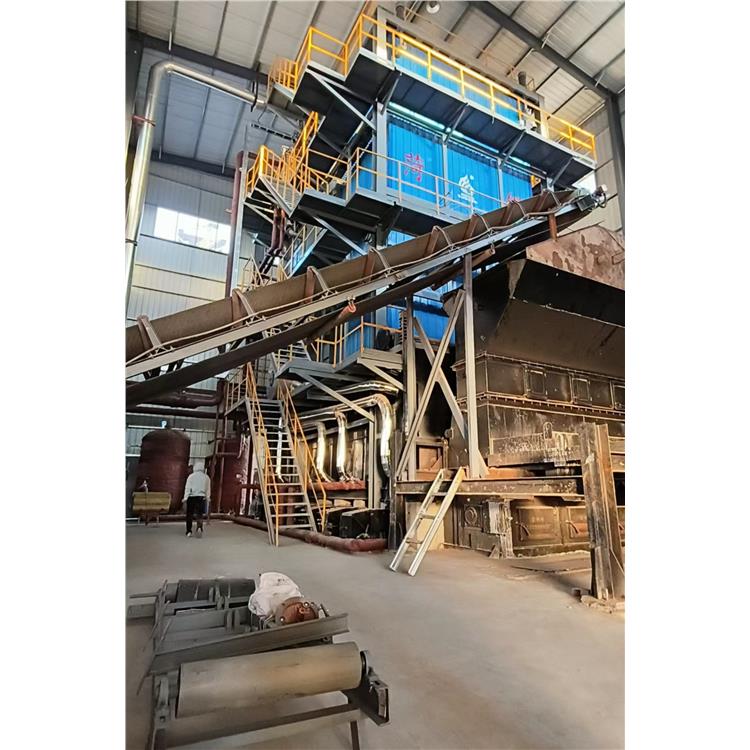

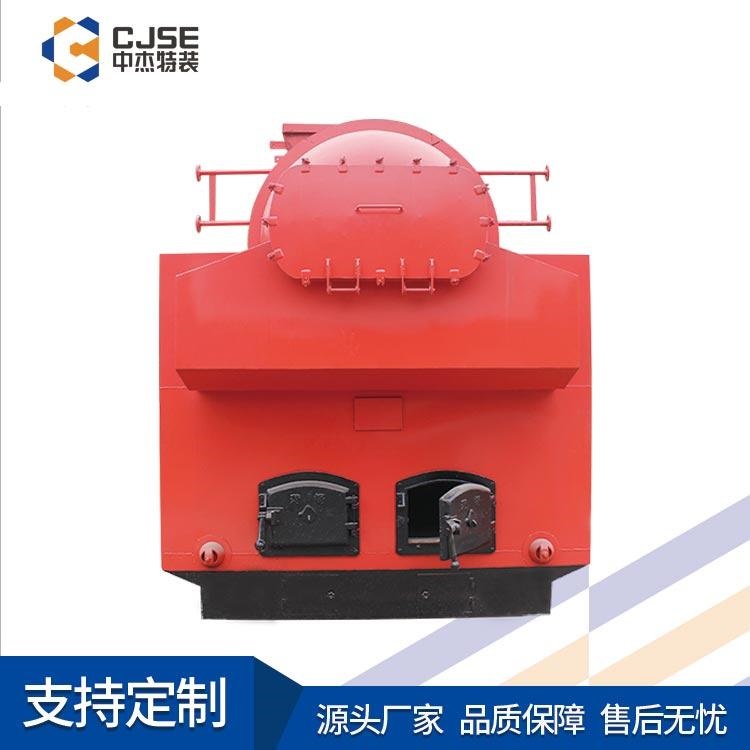
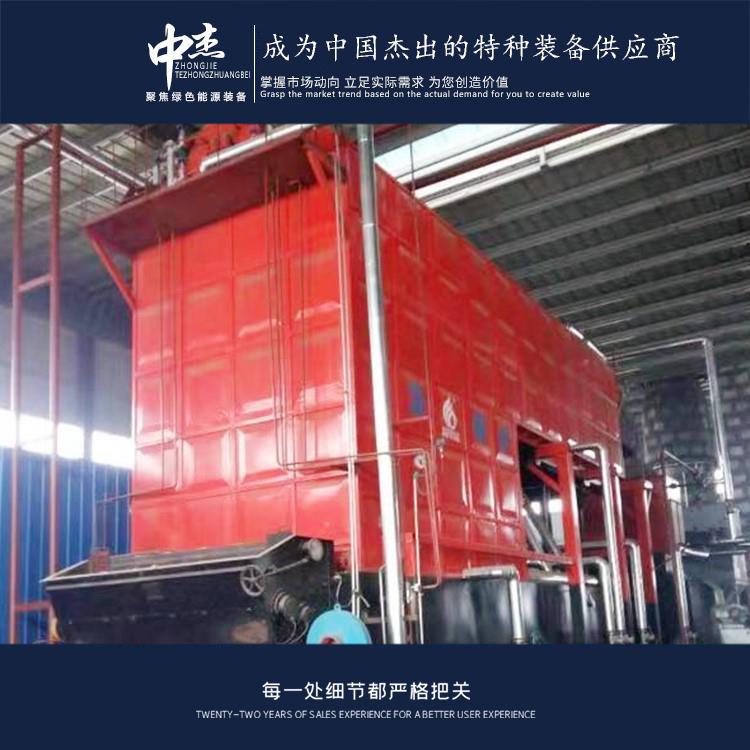


















Shandong Zhongjie Special Equipment Co., Ltd. (formerly Heze Boiler Factory Co., Ltd.) was established in 2001, located at No. 2218 Jinnan Road, Economic and Technological Development Zone, Heze City. With a registered capital of 50 million yuan and total assets of 500 million yuan, the company has 7 business centers: boilers, deep-freezing containers, pressure vessels, central air conditioning, engineering installation, international trade, and Internet of Things. It has three factory sites on Jinnan Road, East Changjiang Road, and Bohai Road, covering a total of 200,000 square meters. The main workshop spans 83,000 square meters. It currently employs 710 people, including 247 engineering and technical personnel and 82 intermediate-level technicians. In December 2016, it was recognized as a "High-Tech Enterprise" by the Science and Technology Department. In June 2021, it was identified as a "Specialized and New Enterprise in Shandong Province" by the Ministry of Industry and Information Technology. In June 2022, it was recognized as a "Gazelle Enterprise in Shandong Province" and in August 2022, as a "Specialized and New Small Giant Enterprise" by the Ministry of Industry and Information Technology.
During operation, biomass thermal oil heaters are prone to scaling due to the high temperature of the thermal oil and long-term use. To prevent scaling, manufacturers typically adopt the following measures:
Selecting the appropriate thermal oil: Manufacturers choose thermal oils with good thermal stability and antioxidant properties to minimize scale formation. The selection of thermal oil should be reasonably matched based on actual operating conditions and requirements.
Regulate oil temperature and flow rate: Manufacturers will control the temperature and flow rate of the heat transfer oil based on its characteristics and operational requirements. Excessive temperature and rapid flow can lead to the formation of scale, so appropriate adjustments are necessary.
Regular Cleaning and Maintenance: Manufacturers recommend users to regularly clean and maintain biomass thermal oil heaters to remove scale that has formed. Cleaning agents and equipment that can be used during the cleaning process, along with the scale removal, will restore the normal operation of the thermal oil heater.
Install filters and descaling devices: Manufacturers may install filters and descaling devices in biomass thermal oil heaters to filter out impurities and scale from the thermal oil. These devices can effectively prevent scale buildup, extending the lifespan of the thermal oil heater.
Regular Monitoring and Analysis: Manufacturers may advise users to regularly monitor and analyze the properties and quality of thermal oil, to promptly identify any anomalies and take appropriate actions.
Current biomass boilers face the following issues in practical application:
Fuel supply instability: The supply of biomass fuel is subject to seasonal and regional limitations, leading to an unstable fuel supply for biomass boilers. This may result in the biomass boilers being unable to operate continuously or requiring frequent fuel switching, which increases operating costs and management challenges.
Low combustion efficiency: Due to the characteristics of biomass fuel and the complexity of the combustion process, the combustion efficiency of biomass boilers is relatively low. Some fuels have high volatile content and ash content, which may produce excessive ash and particulate matter during combustion, reducing the combustion efficiency and energy utilization rate.
NOx Emission Issue: Biomass boilers produce a high amount of nitrogen oxides (NOx) during the combustion process, which has a certain impact on the environment. Controlling and reducing NOx emissions is an important issue that biomass boilers face.
Combustion Equipment Wear: The high ash content in biomass fuel can cause wear and clogging in the combustion process, which may shorten the lifespan of the equipment and necessitate frequent maintenance and cleaning.
Ash residue from combustion: Ash residue from biomass boiler combustion requires proper handling and disposal. Improper treatment may lead to environmental pollution and harm.
Lack of unified technical standards and specifications: Currently, there is a lack of unified technical standards and specifications for biomass boilers.
Bio-mass boiler tube end reduction refers to the process of reducing the diameter of the tube ends within a certain length range. This treatment enhances the tube's strength and rigidity, reduces stress concentration, and improves the tube's vibration resistance and durability.
Specific methods for reducing the neck size include:
Cold shrinking joint: A mechanical method of cold working the end of a pipe to gradually reduce its diameter and form a shrinkage joint. This method is simple and straightforward, suitable for general shrinkage requirements.
Shrink Ends: By heating the end of the tube to soften it, it is then mechanically formed into a shrink end shape. This method allows for more complex shrink end shapes, but requires equipment and technology.
The benefits of a tapered design include:
Enhance the tube's strength and rigidity, reduce stress concentration in the tube, and lower the risk of deformation and rupture.
Enhance the tube's vibration resistance, reduce vibration and resonance during operation, and extend the tube's service life.
Reduce the risk of pipe leakage and enhance the sealing performance of the pipeline system.
Note that the reduction joint treatment must be tailored to the specific boiler design and operational requirements to ensure the dimensions and shape of the joint meet design specifications, and that the wall thickness at the joint is not less than the standard requirements to guarantee the safe and reliable operation of the pipe.
Biomass boilers promote environmental protection in the following aspects:
Renewable Energy Utilization: Biomass boilers utilize biomass fuels such as wood chips, straw, wheat straw, fruit shells, etc., which are renewable resources. Compared to fossil fuels, biomass fuels emit less carbon dioxide during combustion, resulting in a smaller impact on climate change.
Reducing Greenhouse Gas Emissions: The carbon dioxide produced during the combustion of biomass boilers can be reabsorbed through the regeneration process of biomass, creating a closed loop. This helps decrease greenhouse gas emissions and has a cumulative effect on slowing down climate change.
Low Pollution Emissions: The combustion process of biomass boilers results in relatively low emissions of pollutants in the flue gas. By means of reasonable combustion adjustment and auxiliary pollution control equipment such as dust collectors and nitrogen oxide control devices, the emissions of particulates and nitrogen oxides in the flue gas can be further reduced.
Recycling Waste: Biomass boilers can utilize waste and by-products as fuel, such as crop straw, wood processing waste, etc. This approach promotes the recycling of waste, reducing the issues related to waste disposal and storage.
Energy Efficiency Enhancement: The combustion process of biomass boilers can be optimized through technologies like heat recovery and waste heat utilization, thereby enhancing energy utilization efficiency. This aids in reducing energy consumption and diminishing reliance on conventional energy sources.
Overall, biomass boilers, as a renewable energy utilization technology, offer advantages such as low carbon and low pollution emissions, as well as waste recycling, thereby positively promoting environmental protection and sustainable development.
Shandong Zhongjie Special Equipment, welcome clients to visit our factory for business discussions.
WeChat Official Account

Scan to follow Official Account



















