


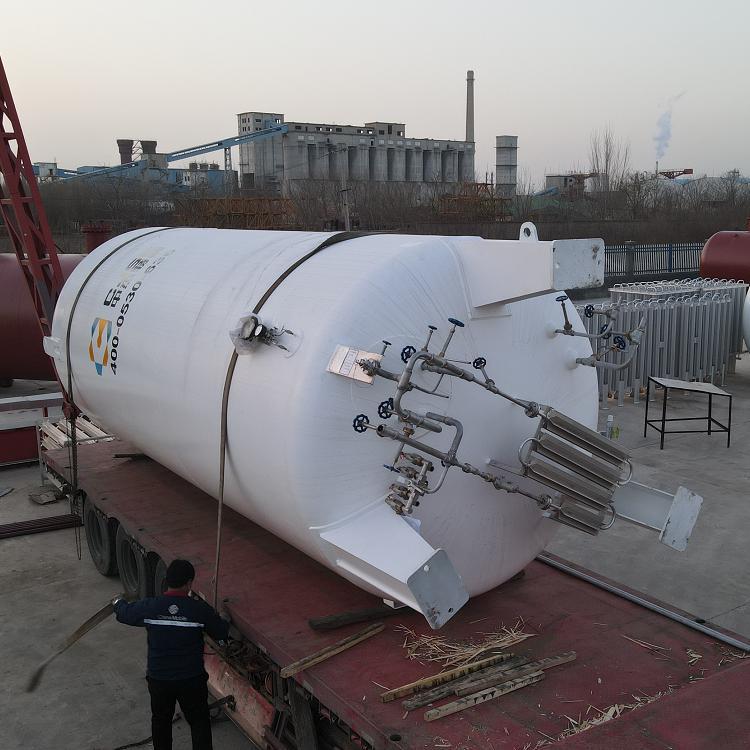

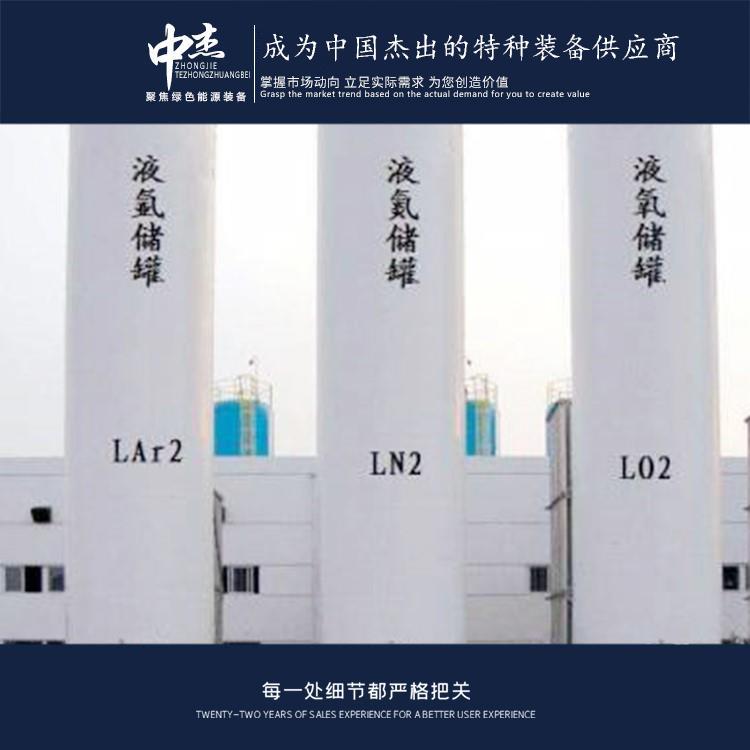
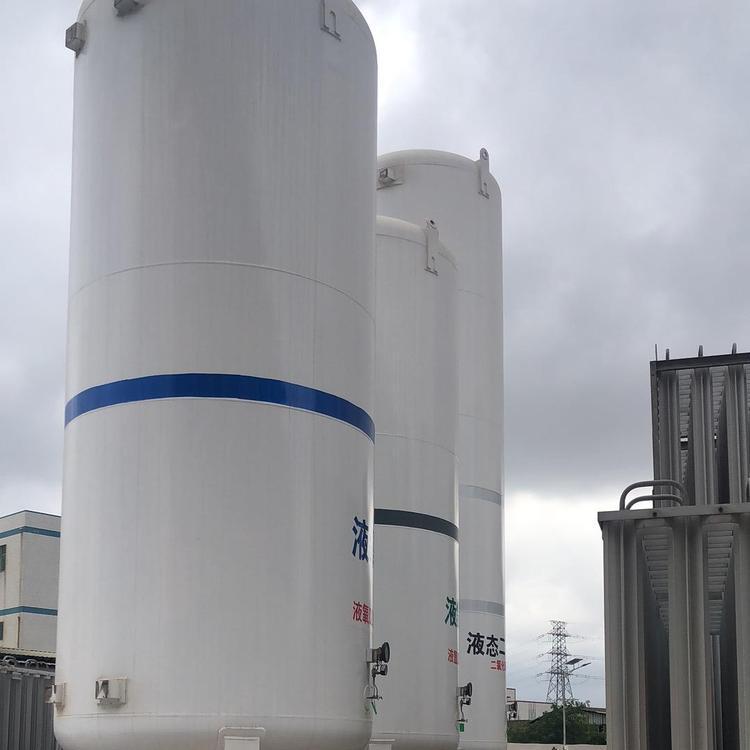


















Shandong Zhongjie Special Equipment (formerly Heze Boiler Factory Co., Ltd.) was established in 2001, located at No. 2218 Jinnan Road, Economic and Technological Development Zone, Heze City. With a registered capital of 50 million yuan and total assets of 500 million yuan, the company has seven business centers: boilers, deep-freeze containers, pressure vessels, central air conditioning, engineering installation, international trade, and the Internet of Things. It has three factory sites on Jinnan Road, East Changjiang Road, and Bohai Road, covering a total of 200,000 square meters, with the main workshop spanning 83,000 square meters. The company currently employs 710 people, including 247 engineers and technicians and 82 intermediate-level technicians. In December 2016, it was recognized as a "High-tech Enterprise" by the Science and Technology Department. In June 2021, it was identified as a "Specialized and New Enterprise in Shandong Province" by the Ministry of Industry and Information Technology. In June 2022, it was recognized as a "Gazelle Enterprise in Shandong Province" and in August 2022, it was identified as a "Specialized and New Small Giant Enterprise" by the Ministry of Industry and Information Technology.
Liquid oxygen storage tanks are high-pressure, highly oxidizing equipment that require special attention to safety during use. Here are some safety precautions for liquid oxygen storage tanks:
- Operation: The operation of liquid oxygen storage tanks should be carried out by trained and experienced personnel. Operators should be familiar with the tank's structure, performance, and operating procedures, and operate strictly according to the operation manual and safety regulations.
- Fire Prevention Measures: Liquid oxygen is highly oxidizing and can easily cause fires and explosions. Open flames and hot objects should be prohibited around liquid oxygen storage tanks to prevent sparks and contact with the tank. Fire prevention facilities and fire extinguishing equipment should be established, and regular inspections and maintenance should be conducted.
- Leak Control: In the event of a leak in a liquid oxygen storage tank, immediate measures should be taken to control the leak. Leaks can cause the evaporation of liquid oxygen and an increase in oxygen concentration, increasing the risk of fire and explosion. A leak detection system should be established, and leak control devices and personal protective equipment should be provided.
- Insulation Protection: Liquid oxygen storage tanks should have good insulation protection to reduce evaporation and maintain low temperatures. The insulation layer should be inspected and maintained regularly to ensure its integrity and insulating performance.
- Safety Distance: A certain safety distance should be maintained around liquid oxygen storage tanks to prevent the spread of fires, explosions, and leaks. The specific requirements for safety distances should be assessed and determined according to local regulations and standards.
- Regular Inspections and Maintenance: Liquid oxygen storage tanks should be inspected and maintained regularly, including checking the structural integrity of the tank, valves, and pipelines for tightness.
To prevent the dangers associated with liquid oxygen tanks, the following precautions can be taken:
Safe Operation and Management: Establish and implement rigorous safety operation and management systems, including the proper use of storage tanks, operational procedures, and safety training. Ensure operators possess the necessary safety awareness and skills, adhere to operational procedures, and reduce the likelihood of operational errors and accidents.
Regular inspections and maintenance: Conduct regular inspections and maintenance on liquid oxygen tanks, including visual inspections, pressure tests, and leak detection. Promptly identify and address any issues with the tanks to ensure their safety and reliability.
Safety devices and protective equipment: Tanks should be equipped with necessary safety devices, such as pressure relief valves, level alarms, etc., as well as protective equipment, like firewalls, explosion-proof devices, etc. These devices and equipment can take timely measures in abnormal situations to ensure the safety of the tank.
Fire Prevention Measures: Liquid oxygen contains a high oxygen content and is prone to cause fires. Therefore, fire prevention measures such as fire walls and fire extinguishers should be set up around the storage tanks to prevent the spread and expansion of fires.
Leakage Control and Emergency Response Plan: Establish a liquid oxygen tank leakage control and emergency response plan, including leakage control measures, emergency response procedures, evacuation plans, etc. In the event of a leakage incident, the plan enables prompt action to control the leakage and ensure personnel safety.
Training and Awareness Enhancement: Conduct regular safety training for personnel using liquid oxygen tanks to enhance their safety awareness and emergency response capabilities. Strengthen safety
Liquid nitrogen storage tanks are widely used in meat freezing. The following are several main applications of liquid nitrogen storage tanks in meat freezing:
Rapid Freezing: Liquid nitrogen tanks can provide low temperatures to quickly freeze meat to the required temperature. Due to the low-temperature properties of liquid nitrogen, the temperature of the meat can be rapidly reduced in a short time, effectively preserving the quality and texture of the meat.
Chilled Storage: Liquid nitrogen tanks are suitable for long-term storage of meat products. Placing the meat in a liquid nitrogen tank helps maintain low temperatures, preventing the growth of bacteria and microorganisms, thereby extending the shelf life of the meat.
Chilled Transport: Liquid nitrogen tanks are suitable for the cold transport of meat products. Placing meat in a liquid nitrogen tank maintains its低温 state, ensuring the quality and freshness of the meat throughout transportation.
Chilled Processing: Liquid nitrogen tanks can be used for meat chilling. By exposing meat to liquid nitrogen, the surface can be quickly frozen, forming a frost layer, thereby preserving the meat's moisture and nutritional content.
Chilled Processing: Liquid nitrogen tanks are suitable for meat freezing processing. Placing meat in liquid nitrogen makes it harder and more brittle, facilitating cutting, slicing, and processing.
It's important to note that when using liquid nitrogen tanks for meat freezing, you should follow the relevant safety operation procedures and guidelines. Ensure that the operators are equipped with the necessary safety awareness and operational skills to prevent accidents. Additionally, consult the food safety authority for further guidance.
Safety operation and transportation of liquid oxygen tanks should be mindful of the following points:
Safe Usage Instructions:
Tank Selection: Choose liquid oxygen tanks that meet specifications and standards, ensuring their quality and safety performance.
Tank Installation: Tanks should be installed on a solid foundation to ensure stability. Additionally, good ventilation should be maintained around the tank, and it should be kept away from flammable materials and heat sources.
Sealability Inspection: Regularly inspect the storage tank's sealing performance to ensure there are no leaks at valve and pipe connections.
Pressure Control: Tanks should be equipped with pressure gauges and safety valves, with regular inspections and maintenance to ensure pressure remains within safe limits.
Fire Prevention Measures: Liquid oxygen contains a high oxygen content and is highly flammable. Establish fire barriers around the storage tanks, prohibit smoking and open flames, and ensure safety.
Static Dissipation: During the transportation and use of liquid oxygen, static electricity can cause sparks, increasing the risk of fire. Measures such as using static-conductive materials and anti-static equipment are taken to reduce the accumulation and release of static electricity.
Shipping Precautions:
Transportation Vehicle Selection: Choose transportation vehicles that meet the requirements for liquid oxygen transport, ensuring their safety and seal integrity.
Loading and unloading: During the transportation of liquid oxygen, the following loading and unloading measures should be taken:
Our company attaches great importance to technological innovation and R&D design. We have one municipal-level enterprise technology center in Heze City, equipped with non-destructive testing, physical and chemical testing, welding testing, hydrostatic testing, and other testing facilities. We have over 600 various instruments and equipment, including CNC machine tools, X-ray flaw detectors, digital ultrasonic flaw detectors, mechanical property testing machines, chemical analyzers, spectrometers, tensile testing machines, plasma welding machines, etc. The key products and technologies we have developed, such as welding of temperature and pressure vessels, biomass boiler emission reduction, and waste heat utilization, have successively been shortlisted for multiple Shandong Provincial Department of Industry and Information Technology science and technology innovation projects, Shandong Provincial key projects, and Heze City innovation and excellence projects. We have cumulatively obtained 27 authorized utility model patents, 16 authorized invention patents, participated in drafting 2 standards, 2 industry standards, and registered 15 trademarks. The technical team of our company, in collaboration with Professor Li Yajiang of Shandong University, has developed deep cryogenic container processing technology, which adopts the international plasma arc + wire filling argon arc welding (PAW-GTAW) technology. After being appraised as a provincial-level scientific and technological achievement, the technology level has reached an international standard in the field of deep cryogenic container manufacturing. Choose Zhongjie Special Equipment, and let's create brilliance together!
WeChat Official Account

Scan to follow Official Account



















