


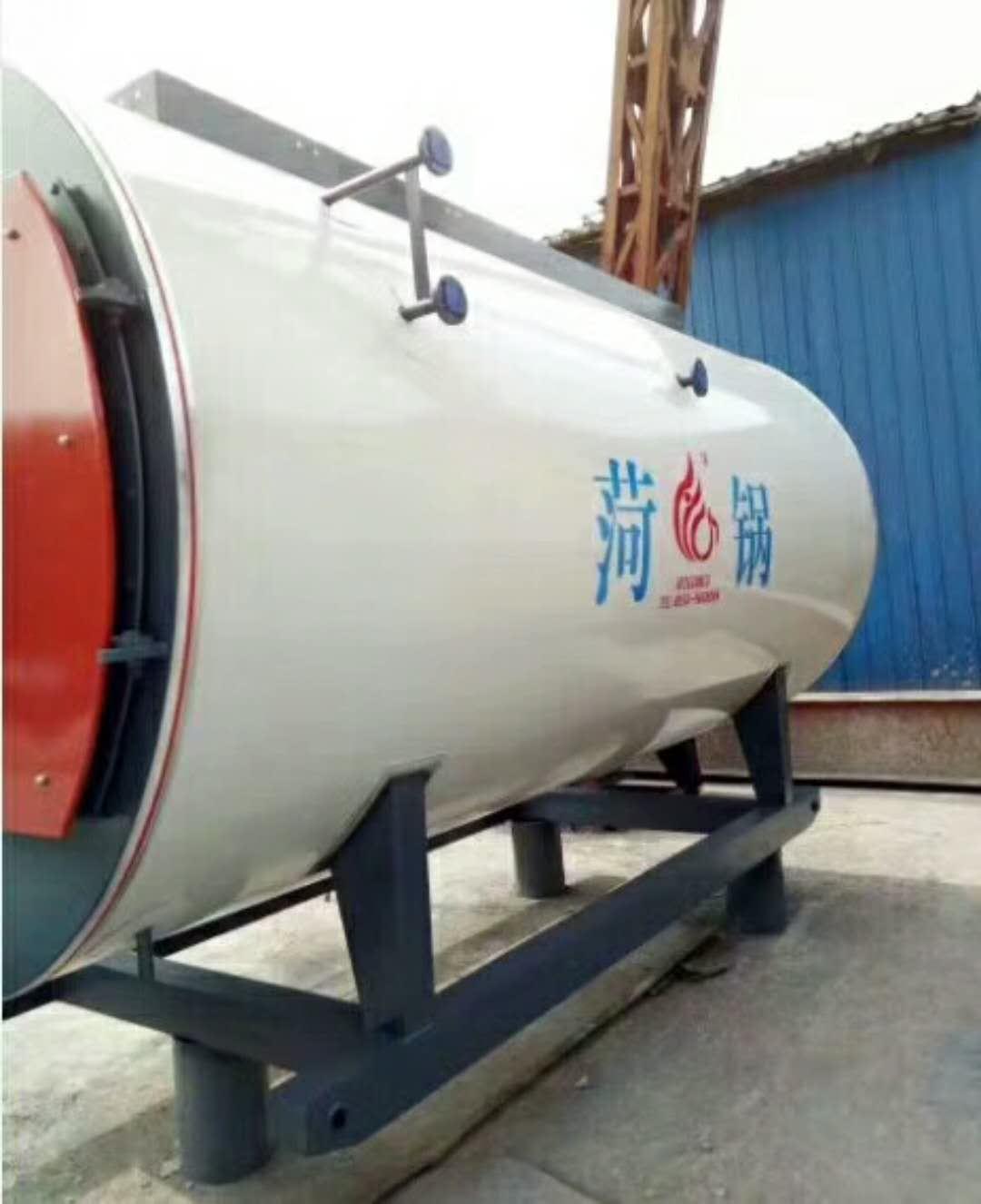

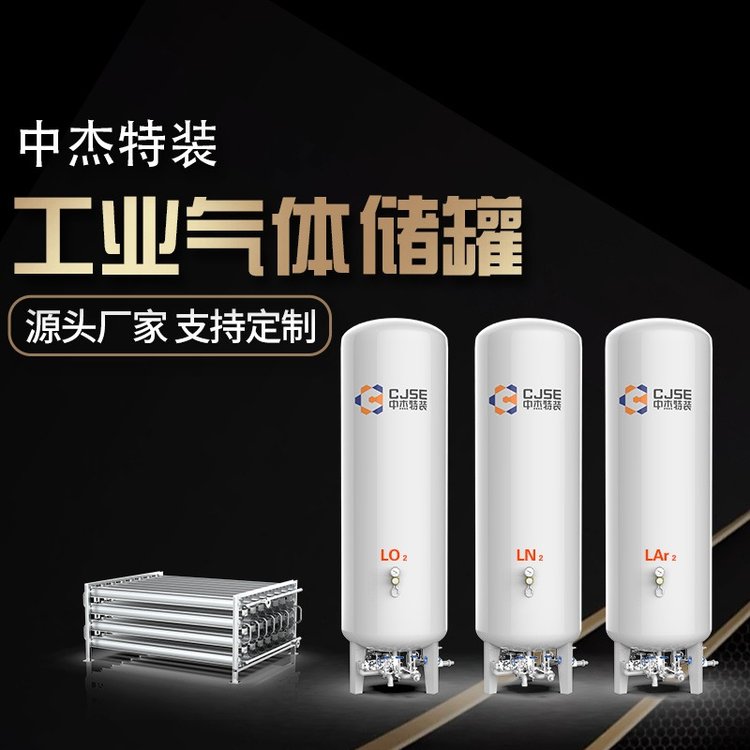
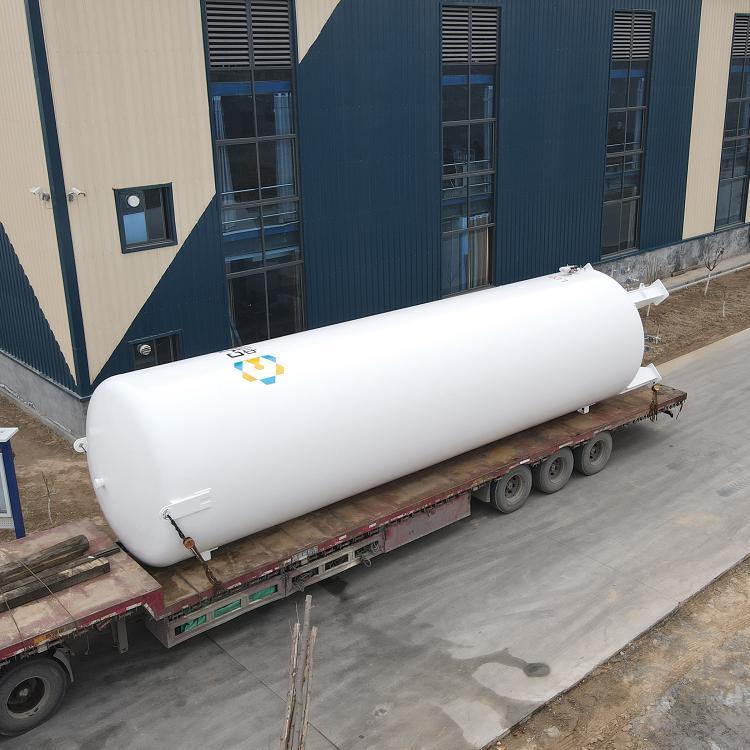


















Shandong Zhongjie Special Equipment (formerly Heze Boiler Factory Co., Ltd.) holds an A-grade boiler manufacturing license, an A2-grade pressure vessel manufacturing license, an A2-grade pressure vessel design license, a B-grade boiler installation license, and GB2/Class and GC2/Class pressure pipeline installation licenses, as well as a mechanical and electrical equipment installation contracting qualification. It is a member of the China Boiler and Water Treatment Association, the China Chemical Equipment Association, and the director unit of the Shandong Equipment Manufacturing Association. The company has also passed the ISO9001 Quality Management System, ISO14001 Environmental Management System, OHSAS18001 Occupational Health and Safety Management System certifications, and the American ASME/U2 certification.
Carbon dioxide tanks possess the following characteristics:
- High-pressure Vessel: Carbon dioxide tanks are typically designed as high-pressure vessels, capable of withstanding high pressure. This is because carbon dioxide requires high pressure at room temperature to maintain a liquid state.
- High Oxidizing: Carbon dioxide has a high oxidizing nature, which supports combustion. Therefore, when handling and storing carbon dioxide, precautions must be taken to prevent contact to avoid the risk of fire and explosion.
- Low-Temperature Storage: Carbon dioxide is a gas at room temperature but can be compressed into a liquid at lower temperatures. Consequently, carbon dioxide tanks usually need to have good insulation properties to maintain the low-temperature liquid state of stored carbon dioxide.
- High Density: Liquid carbon dioxide has a high density, allowing for the storage of large amounts of carbon dioxide in a relatively small volume. This makes carbon dioxide tanks useful in scenarios requiring substantial carbon dioxide supplies.
- Safety Valves and Pressure Control: To ensure the internal pressure of the tank remains within a safe range, carbon dioxide tanks are usually equipped with safety valves and pressure control devices. These devices monitor and control the internal pressure of the tank to prevent excessive pressure from causing the tank to burst.
- Corrosiveness: Carbon dioxide has some degree of corrosiveness, particularly in high humidity environments. Therefore, the materials and corrosion prevention measures for the tank must consider the corrosiveness of carbon dioxide to ensure the tank's durability and safety.
These characteristics make carbon dioxide tanks widely applicable in many industries, such as the food and beverage industry, fire suppression, and the gas industry. When using carbon dioxide tanks, it is necessary to follow relevant safety operation procedures and standards to ensure operational safety.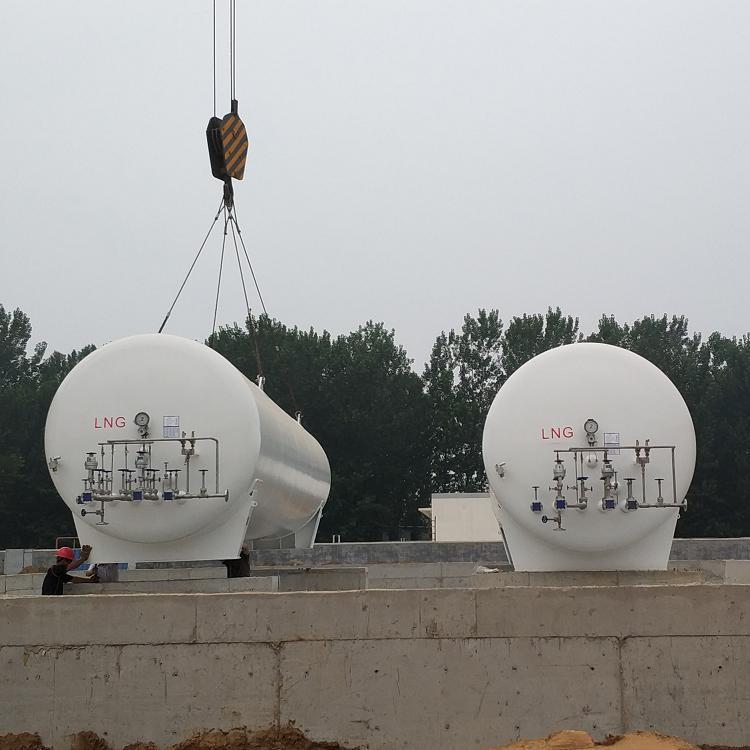
Carbon dioxide storage tanks are devices used for storing carbon dioxide gas. They are typically made of high-strength materials with sealing capabilities to prevent the leakage of stored CO2. The design and capacity of the tanks can be adjusted as needed to accommodate various applications. Carbon dioxide storage tanks are widely used across various industries, including industrial production, food processing, and more. In the industrial sector, these tanks are commonly used for storing and supplying CO2 gas for processes such as welding, gas shielding, and fire extinguishing. In the food processing industry, they are used to produce carbonated beverages and frozen foods. In the medical field, CO2 tanks can be used to manufacture medical gases like breathing gases and anesthetic gases. The development and manufacturing of carbon dioxide storage tanks involve multiple manufacturers and technologies. Different companies may employ various design and manufacturing processes to meet the diverse needs of users. Additionally, relevant safety standards and regulations must be adhered to ensure the safe operation and use of the tanks.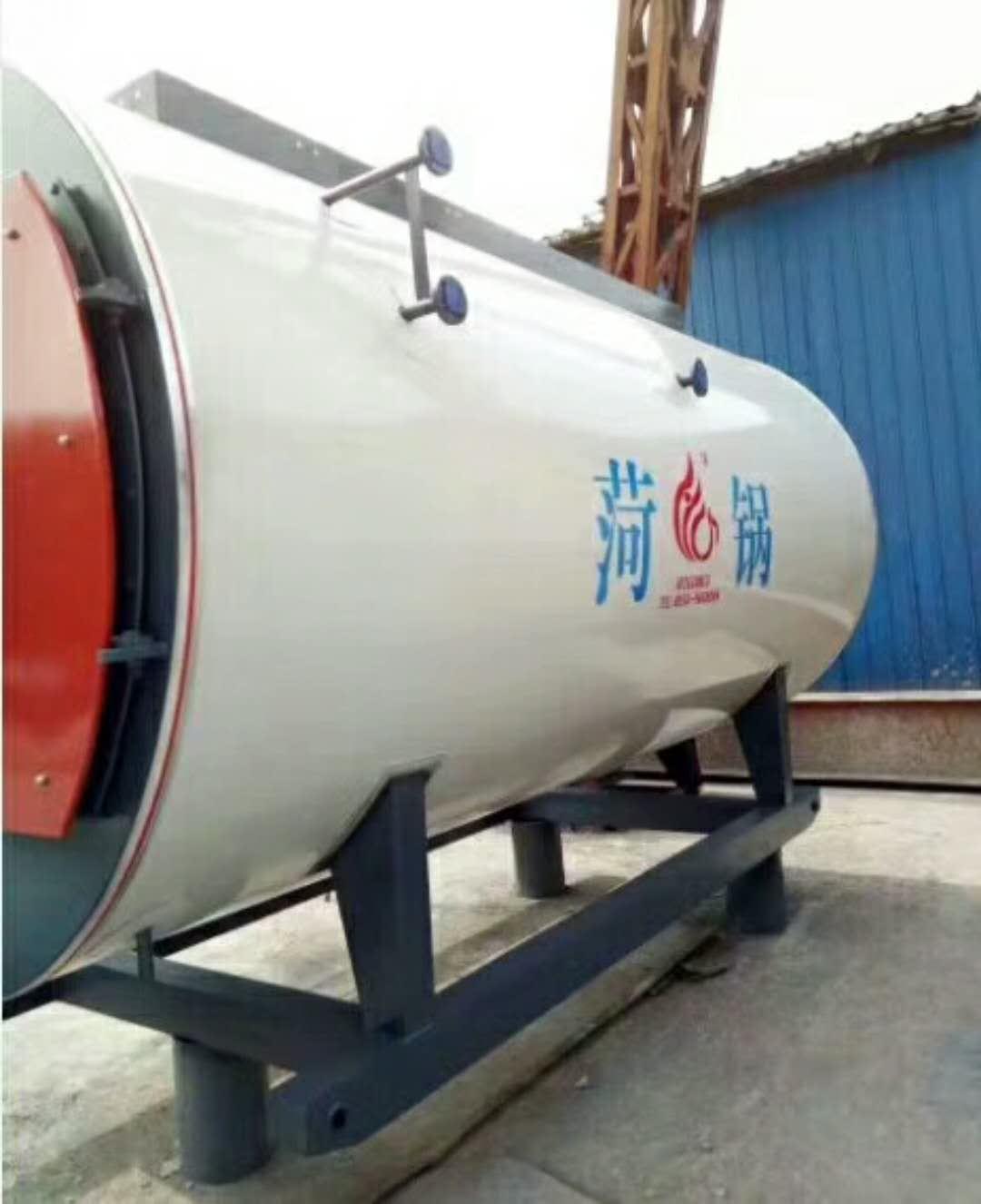
Carbon dioxide storage tanks' standard specifications can vary depending on different design and application requirements. Here are some common standard parameters:
- Tank Capacity: The capacity of carbon dioxide storage tanks is typically expressed in kiloliters (L) or cubic meters (m). Common capacity ranges vary from a few thousand to tens of thousands of liters.
- Operating Pressure: The operating pressure of carbon dioxide storage tanks is usually around 20 to 25 MPa (megapascals) at room temperature, with the specific pressure determined by application needs and design standards.
- Design Temperature: The design temperature of carbon dioxide storage tanks is generally in the low-temperature range, typically between -40°C and -60°C, to accommodate the liquefaction and storage requirements of carbon dioxide.
- Material: Carbon dioxide storage tanks are commonly made of high-strength steel or alloy materials to withstand the stresses and loads under high pressure and low-temperature environments.
- Insulation: The interior of the tank is equipped with an insulation layer to reduce heat transfer and liquid evaporation. The insulation layer is typically a multi-layer structure, including thermal insulation materials and an external protective layer.
- Safety Valves and Pressure Relief Devices: The tank is equipped with safety valves and pressure relief devices to control internal tank pressure and prevent overpressure and explosion.
- Level Monitoring and Control: The tank is equipped with level monitoring devices to monitor the liquid level within the tank. Timely monitoring and control of the level ensure that the liquid storage volume within the tank remains within a safe range.
It should be noted that the specific standard parameters of carbon dioxide storage tanks may vary due to different design standards, application requirements, and manufacturers. When selecting and using carbon dioxide storage tanks, it is important to consider these factors.
The application standards for liquid carbon dioxide storage tanks primarily include the following aspects:
Our company attaches great importance to technological innovation and R&D design. We have one municipal enterprise technology center in Heze City, equipped with testing facilities for non-destructive testing, physical and chemical testing, welding testing, hydrostatic testing, etc. We have over 600 types of equipment including CNC machine tools, X-ray flaw detectors, digital ultrasonic flaw detectors, mechanical property testing machines, chemical analyzers, spectrometers, tensile testing machines, plasma welding machines, and more. Our key products and technologies such as welding of temperature and pressure vessels, biomass boiler emissions reduction, and waste heat recovery have successively been selected for multiple Shandong Provincial Department of Industry and Information Technology scientific and technological innovation projects, Shandong Provincial key projects, and Heze City innovative and excellent projects. We have accumulated 27 authorized utility models, 16 authorized inventions, participated in drafting 2 standards, 2 industry standards, and registered 15 trademarks. Our technical team, in collaboration with Professor Li Yajiang of Shandong University, has developed deep cryogenic container processing technology using the internationally recognized plasma arc + wire filling tungsten inert gas arc welding (PAW-GTAW) technology. After provincial-level scientific and technological achievement evaluation, the technology level has reached international standards in the field of deep cryogenic container manufacturing. Choose Zhongjie Special Equipment, and let's create brilliance together!
WeChat Official Account

Scan to follow Official Account



















