


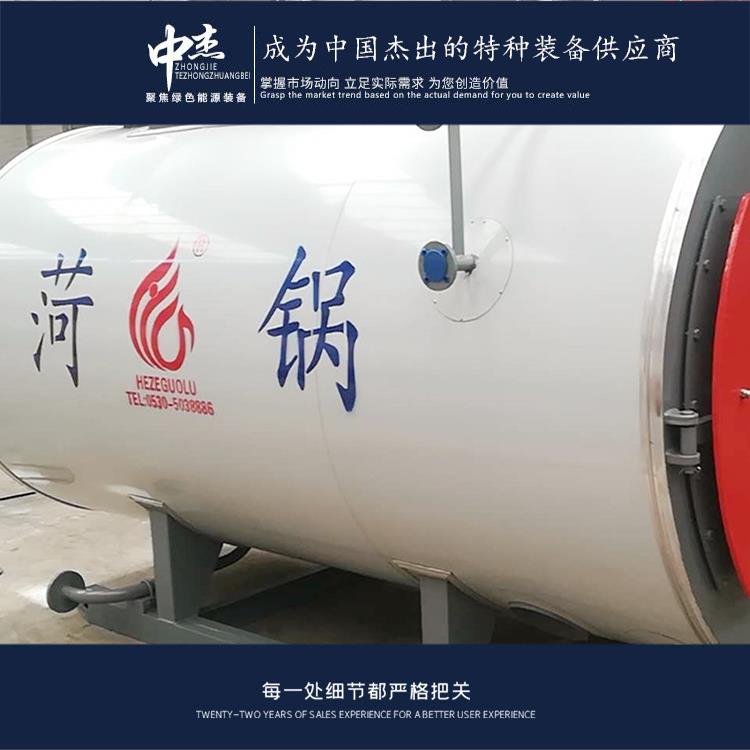

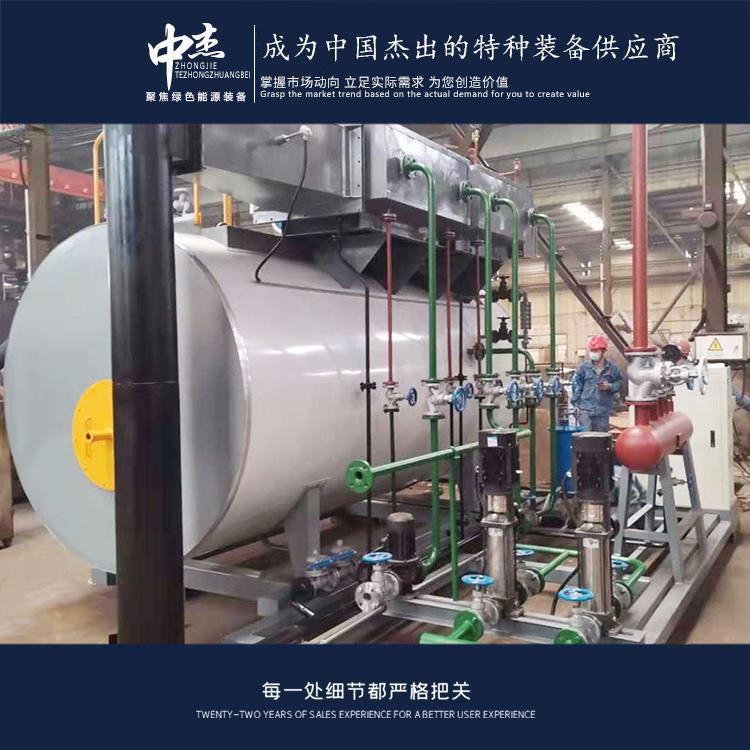
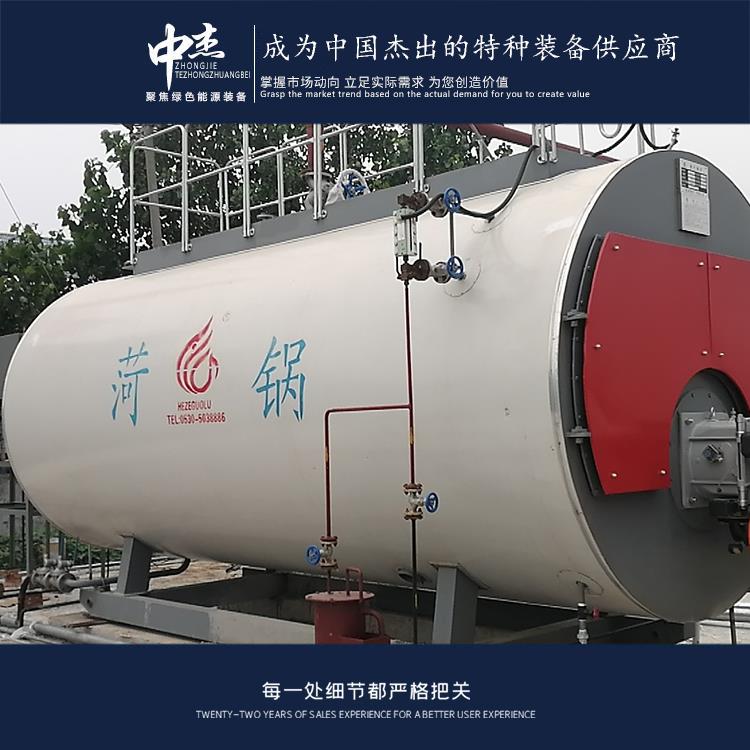


















Shandong Zhongjie Special Equipment (formerly Heze Boiler Factory Co., Ltd.) holds an A-grade boiler manufacturing license, an A2-grade pressure vessel manufacturing license, an A2-grade pressure vessel design license, a B-grade boiler installation license, and GB2/Class and GC2/Class pressure pipeline installation licenses, as well as an electromechanical equipment installation contracting qualification. It is a member of the China Boiler and Water Treatment Association, the China Chemical Equipment Association, and a council member of the Shandong Equipment Manufacturing Association. The company has also passed certifications for the ISO9001 Quality Management System, ISO14001 Environmental Management System, OHSAS18001 Occupational Health and Safety Management System, and the U.S. ASME/U2 certification.
Clean and environmental-friendly gas boilers offer several advantages:
- Low emissions: Gas combustion produces relatively low exhaust emissions, with reduced amounts of pollutants such as nitrogen oxides and particulate matter. Compared to coal or oil-fired boilers, gas boilers have lower emission levels, causing less environmental pollution.
- High thermal efficiency: Gas combustion has a high thermal efficiency, effectively utilizing the energy of the fuel and reducing energy waste. The combustion efficiency of gas is higher than that of other traditional fuels like coal and oil, providing more heat energy.
- Clean combustion: Gas combustion does not produce ash and smoke, reducing carbon deposits and dirt in the boiler interior and flue. This minimizes the cleaning and maintenance work required for the boiler, extending its lifespan.
- Combustion stability: The combustion performance of gas is stable, eliminating the risk of significant flame fluctuations and explosions during operation. This makes gas boilers safer and more reliable in operation.
- Fast start-up and shutdown: Compared to other fuels, gas boilers have a quicker and more flexible start-up and shutdown process. This makes them suitable for scenarios requiring frequent start-ups and shutdowns, such as seasonal heating and hot water needs.
- Renewable energy integration: As a clean fuel, gas can be combined with renewable energy sources, such as solar hot water systems and biomass fuel. This integration can further enhance energy utilization efficiency and environmental friendliness.
During the operation of a thermal oil furnace, several important matters should be noted:
- Temperature Control: Close attention and control of the thermal oil temperature is required during the operation of the furnace. Ensure the temperature remains within a safe range, avoiding excessive heat that could cause oil decomposition or low temperatures that lead to condensation and scaling. Regularly inspect and calibrate temperature sensors to ensure accurate temperature readings.
- Pressure Control: Maintain an appropriate working pressure during the operation of the furnace. Excessive pressure can lead to equipment damage or leaks, while low pressure can decrease heat transfer efficiency. Regularly inspect and maintain pressure gauges and safety valves to ensure accurate and safe pressure control.
- Oil Quality and Cleanliness: The quality and cleanliness of the thermal oil are crucial for the normal operation of the furnace. Regularly inspect and replace the thermal oil to ensure it meets quality and performance requirements. Regularly clean and maintain heat exchangers, burners, and flues to prevent the accumulation of dust and debris, which can affect heat transfer efficiency.
- Regular Maintenance and Inspection: Regular maintenance and inspections are necessary for the thermal oil furnace to ensure proper operation and extend its lifespan. Regularly inspect and clean burners, flues, and heat exchangers, check and replace seals and valves, inspect and calibrate safety devices, to ensure equipment safety and reliability.
- Safe Operation: Strict adherence to operational procedures and safety protocols is required during the operation of the thermal oil furnace. Operators must possess relevant skills and knowledge.
The decline in the consumption of thermal oil boilers can be attributed to several factors:
1. Combustion Technology: Modern thermal oil boilers utilize advanced combustion technologies such as premixed combustion and afterburning, which ensure complete fuel combustion, enhance energy utilization, and reduce energy consumption.
2. Heat Recovery: Thermal oil boilers often generate a significant amount of excess heat during flue gas emissions. By employing heat recovery systems like flue gas heat recovery boilers or heat exchangers, the excess heat can be recovered and utilized, improving energy efficiency and reducing consumption.
3. Intelligent Control Systems: Modern thermal oil boilers are equipped with intelligent control systems that can monitor and adjust operating parameters in real-time, such as temperature, pressure, and flow rates. This allows for optimal boiler operation, avoiding unnecessary energy waste and loss.
4. Energy-saving Retrofitting and Optimization: Older thermal oil boilers can be retrofitted and optimized for energy efficiency. This includes installing energy-saving equipment like variable-speed drives and modified burners, as well as optimizing the boiler system, such as improving pipe insulation and reducing leaks to minimize energy loss.
5. Energy Management and Maintenance: Effective energy management and regular equipment maintenance are crucial in reducing energy consumption. Implementing energy management measures like monitoring, metering, and promoting energy-saving awareness can identify and resolve energy waste issues. Regular equipment maintenance ensures proper operation and prevents unnecessary energy loss.
In summary, the decrease in consumption of thermal oil boilers can be achieved through combustion technology, heat recovery, intelligent control, energy-saving retrofitting, and effective energy management.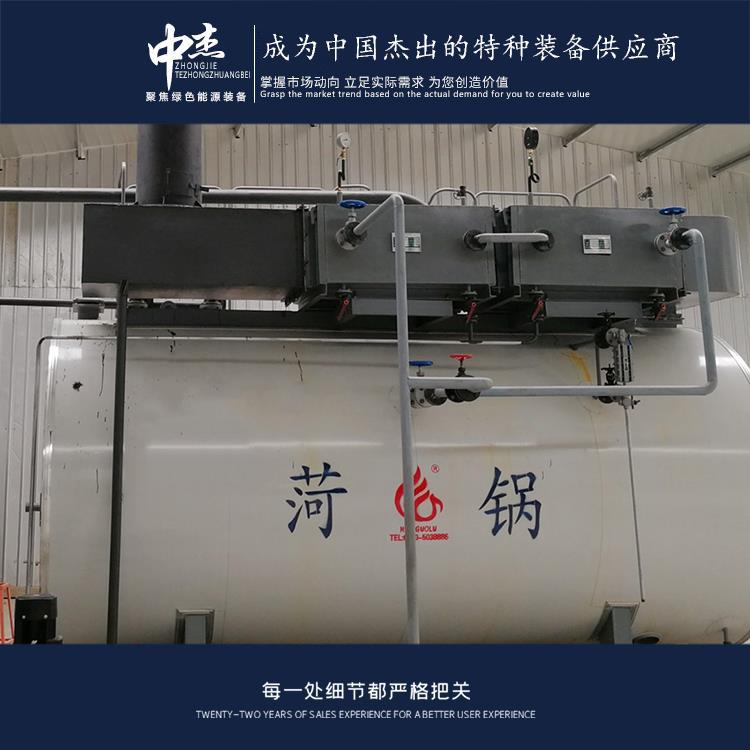
When selecting a suitable gas-fired steam boiler, consider the following factors:
- Steam Demand: First, determine your steam requirements, including steam pressure and evaporation rate. Choose a boiler with a rated evaporation capacity and steam pressure that align with your actual needs, ensuring it meets your production or heating requirements.
- Fuel Type: Gas-fired steam boilers use gas as fuel, with common types including natural gas and LPG. Select the appropriate fuel type based on available resources and cost considerations.
- Boiler Efficiency: Boiler efficiency directly impacts energy utilization and operating costs. Opt for a high-efficiency gas-fired steam boiler to reduce energy consumption and operating costs. Pay attention to the boiler's thermal and combustion efficiency.
- Boiler and Manufacturer Quality: Choose a gas-fired steam boiler from a reputable manufacturer to ensure product quality and reliability. Understand the manufacturer's production capacity, after-sales service, and technical support to select a reliable supplier.
- Safety and Environmental Protection: Pay attention to the safety and environmental performance of the boiler. Ensure the boiler has necessary safety protection devices and monitoring systems, as well as a combustion system that meets environmental standards to minimize environmental impact.
- Economic Viability: Consider not only the purchase cost but also the operating and maintenance costs of the boiler. Consider the overall energy consumption of the boiler.
ZJ Special Equipment upholds the great vision of "realizing the dreams of our employees, creating value for our customers, and striving for the prosperity and strength of our motherland," wholeheartedly dedicated to the development of green energy equipment. We commit to society with high-value products and services!
WeChat Official Account

Scan to follow Official Account



















